
Introduction
You have a great product idea. You need prototypes fast, but you also want them to look and feel like the real thing. Maybe you need 20 or 30 copies for market testing. Traditional injection molding costs too much and takes too long. CNC machining each part by hand? Also expensive. This is where silicone duplexing enters the picture. Also called vacuum casting or silicone replication, this method sits right between one-off prototyping and full production. It gives you accurate copies quickly, without breaking your budget. In this guide, we’ll walk through how it works, when to use it, and whether it fits your specific project needs.
What Is Silicone Duplexing and How Does It Work?
Understanding the Basic Concept
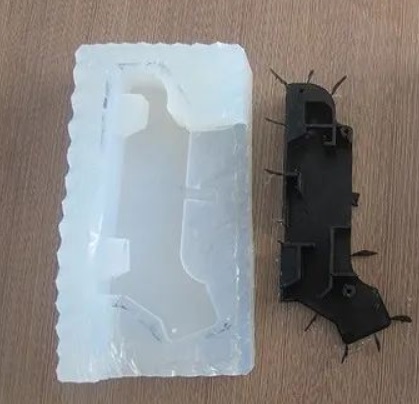
Silicone duplexing is a replication process that uses flexible silicone molds to create copies of an original part. Think of it as making a rubber negative of your prototype, then using that negative to cast duplicates.
The magic happens under vacuum conditions. You pour liquid material into the mold while removing all air. This prevents bubbles that would ruin your part’s surface. The result? Copies that match the original with 99.8% accuracy. That’s about as close as you can get without production tooling.
Why It’s Called Vacuum Casting
The terms get used interchangeably, but here’s the distinction:
- Silicone duplexing refers to the whole process—making the mold and casting parts
- Vacuum casting specifically describes the step where you pour material under vacuum
Both terms point to the same core idea: using silicone molds in a vacuum to produce high-quality replicas.
The Three Key Elements
Every silicone duplexing project needs three things:
- A master prototype: The original part you want to copy
- A silicone mold: The flexible negative created from your master
- Casting material: Liquid resin that hardens into your final part
Get these right, and the process flows smoothly. Miss any detail, and problems follow.
How Do You Make Parts with Silicone Duplexing?
Step 1: Creating the Master Prototype
The master determines everything. Flaws in the master become flaws in every copy.
Common master-making methods include:
- CNC machining: Best for tight tolerances and engineering plastics. Takes 3-7 days. Costs $500-$2,000 typically.
- SLA 3D printing: Excellent for complex shapes and smooth surfaces. Takes 1-3 days. Costs $200-$800.
- Manual fabrication: Works for simple shapes. Takes variable time. Costs mostly labor.
Real-world example: A medical device company needed handles for surgical tools. They tried CNC machining each prototype at $400 each. For 20 design iterations, that’s $8,000. Switching to SLA-printed masters for silicone duplexing cut prototype costs to $150 each—saving $5,000 while getting better surface finish.
Critical tip: Seal your master before making the mold. Porous materials like printed resin absorb silicone and ruin the mold. One coat of clear acrylic spray prevents this.
Step 2: Building the Silicone Mold
With your master ready, it’s time to create the mold.
The process includes:
- Mount the master in a mold box using clay or tape
- Mix silicone rubber according to manufacturer ratios
- Degas the silicone under vacuum to remove bubbles
- Pour carefully over the master, starting at the lowest point
- Cure for 8-16 hours at room temperature
- Cut along parting lines and remove the master
Mold quality checklist:
- No bubbles on cavity surfaces
- Clean parting lines without gaps
- Adequate wall thickness (minimum 5-8mm)
- Smooth texture with no rough spots
A good mold produces 15-25 parts before wearing out. With care, some reach 30-35 cycles.
Step 3: Casting Parts Under Vacuum
Now the actual duplication begins.
The vacuum casting cycle:
- Mix casting material (usually two-part polyurethane resin)
- Place mold in vacuum chamber
- Pour material through the sprue while vacuum pulls out air
- Release vacuum to allow atmospheric pressure to fill details
- Cure in oven at 60-70°C for 30-60 minutes
- Demold carefully and repeat for next part
Temperature matters: Different materials need different cure schedules. Always follow the technical data sheet for best results.
What Materials Can You Use in Silicone Duplexing?
Polyurethane Resins: The Workhorse
Polyurethane (PU) resins dominate silicone duplexing. They come in many formulations to mimic production plastics.
Common PU types include:
- Rigid resins: Mimic ABS, polycarbonate, or nylon. Shore D hardness 70-85.
- Flexible resins: Mimic rubber or TPU. Shore A hardness 30-90.
- Transparent resins: Mimic PMMA or polycarbonate. Optical clarity varies.
- High-temperature resins: Withstand up to 120-150°C continuous use.
Key properties vary widely:
- Tensile strength: 20-65 MPa depending on formulation
- Elongation: 10% for rigid types to 500% for flexible
- Heat deflection: 50°C to 150°C
Silicone for Flexible Parts
Sometimes you need the final part to be silicone itself. This works well for:
- Gaskets and seals
- Soft-touch overmolds
- Medical device components
- Flexible prototypes
Casting silicone into silicone molds requires careful release agent application. Otherwise, they bond permanently.
ABS-Like and Engineering Resins
For functional testing, you need parts that behave like production materials.
ABS-like resins offer:
- Impact resistance similar to molded ABS
- Good surface finish for painting
- Machinability for secondary operations
Nylon-like resins provide:
- Higher strength and stiffness
- Better wear resistance
- Improved chemical resistance
Real-world example: An automotive supplier needed 50 clip prototypes for testing. Injection molding would cost $8,000 and take 6 weeks. Silicone duplexing with nylon-like resin produced all 50 in 5 days for $2,200. The clips survived 10,000 cycle tests, validating the design before steel tooling.
| Material Type | Tensile Strength | Elongation | Heat Resistance | Typical Use |
|---|---|---|---|---|
| Rigid PU (ABS-like) | 45-65 MPa | 10-30% | 70-90°C | Housings, enclosures |
| Flexible PU | 5-20 MPa | 200-500% | 60-80°C | Grips, soft-touch parts |
| Transparent PU | 40-55 MPa | 15-40% | 60-80°C | Lenses, display covers |
| High-temp PU | 50-70 MPa | 10-20% | 120-150°C | Under-hood components |
| Cast Silicone | 4-10 MPa | 300-800% | 200-250°C | Seals, gaskets |
When Should You Use Silicone Duplexing?
Prototyping and Design Validation
The most common use case: getting realistic prototypes in your hands.
Perfect for:
- Form testing: Does it feel right in the hand?
- Fit checking: Do parts assemble correctly?
- Function basics: Does it move as designed?
- Appearance models: How does it look in final colors?
When to avoid: If you need production-equivalent material properties for safety testing, duplexing parts may not suffice. The resins are close but not identical to molded thermoplastics.
Small-Batch Production (10-100 Parts)
Sometimes you don’t need thousands of parts. You need dozens.
Ideal scenarios include:
- Limited releases: 50 units for a crowdfunding campaign
- Custom products: 20 pieces for specific clients
- Replacement parts: 30 units for legacy equipment
- Test market samples: 100 units for store testing
Cost comparison for 50 parts:
- CNC machining each: $200 × 50 = $10,000
- Injection molding tool: $8,000 + $5 × 50 = $8,250
- Silicone duplexing: $1,500 mold + $30 × 50 = $3,000
Savings: $5,250 to $7,000. That’s real money for a startup.
Bridge Tooling While Waiting for Production
Steel molds take 8-16 weeks. Silicone duplexing fills the gap.
Use it for:
- Early sales while waiting for production tooling
- Trade show samples to generate orders
- Field testing with real users
- Assembly line setup before parts arrive
Real-world example: A consumer electronics company needed 200 units for a product launch. Steel molds would take 12 weeks, missing the launch date. Silicone duplexing produced all 200 in 3 weeks. They launched on time, generated $50,000 in pre-orders, and paid for steel tooling with the revenue.
What Are the Key Advantages of Silicone Duplexing?
Cost-Effectiveness for Low Volumes
The math works in your favor for runs under 500 parts.
Cost drivers:
- Mold cost: $500-$2,000 versus $5,000-$50,000 for steel
- Part cost: $20-$100 depending on size and complexity
- Setup cost: Minimal compared to production tooling
Break-even point: For most parts, injection molding becomes cheaper around 500-2,000 units. Below that, duplexing wins.
Speed from Design to Parts
Time matters in product development.
Typical timeline:
- Master prototype: 2-5 days
- Silicone mold: 1-2 days
- First parts: 1 day
- Total: 4-8 days from file to parts
Compare to injection molding at 8-16 weeks. That’s 10-20 times faster.
Detail Reproduction That Impresses
Silicone captures features down to 0.1mm reliably.
What transfers well:
- Textures: Leather grain, knurling, logos
- Fine details: Small text, surface patterns
- Sharp corners: Down to 0.2mm radius
- Undercuts: Flexible mold releases easily
What’s challenging:
- Extreme aspect ratios (deep, thin holes)
- Zero-draft vertical walls over 50mm tall
- Microscopic features under 0.05mm
Material Flexibility
One mold works with many materials.
You can test:
- Rigid and flexible versions from the same mold
- Different colors without new tooling
- Transparent and opaque materials
- Various hardnesses for user testing
This flexibility helps you optimize material selection before production.
What Limitations Should You Know About?
Limited Mold Life
The biggest constraint: molds wear out.
Typical mold life by material:
- Soft, unfilled resins: 20-25 parts
- Rigid, filled resins: 15-20 parts
- Abrasive materials (glass-filled): 10-15 parts
- High-temperature resins: 8-12 parts
After this, detail degrades and parts may show flash or surface defects.
Size Constraints
Silicone duplexing works best for small to medium parts.
Practical limits:
- Maximum part size: About 400mm in any dimension
- Typical part size: Under 200mm works best
- Weight limit: Under 5kg per part
Larger parts require bigger vacuum chambers and more complex mold handling. Costs rise quickly.
Material Property Gaps
Duplexing resins are close but not identical to production materials.
Differences include:
- Long-term aging behavior
- UV resistance
- Chemical resistance
- Fatigue life
- Exact melt flow characteristics
For basic function testing, they’re usually fine. For certification testing, you may need molded parts.
Post-Processing Requirements
Parts rarely come out perfect.
Common post-processing steps:
- Sprue removal: Cutting off the pour stalk
- Flash trimming: Removing thin excess at parting lines
- Sanding: Smoothing rough spots
- Painting: Adding color or texture
- Assembly: Putting multi-part components together
Factor 1-2 hours of post-processing per 10-20 parts.
How Does Silicone Duplexing Compare to Other Methods?
Versus CNC Machining
CNC machining cuts parts from solid material.
Duplexing wins when:
- You need multiple identical parts
- Part geometry is complex
- Material waste matters
- Cost per part above 5-10 units
CNC wins when:
- You need one or two parts only
- Production materials required
- Very tight tolerances needed (±0.01mm)
- Parts are very large
Versus 3D Printing
3D printing builds parts layer by layer.
Duplexing wins when:
- You need consistent mechanical properties
- Surface finish matters
- Multiple identical parts needed
- Layer lines unacceptable
3D printing wins when:
- Extreme complexity (lattices, internal channels)
- One-off parts only
- Quick iteration with design changes
- No mold investment desired
Versus Injection Molding
Injection molding uses steel or aluminum tools.
Duplexing wins when:
- Volume under 500 parts
- Speed matters more than per-part cost
- Design not finalized
- Budget for tooling limited
Injection molding wins when:
- Volume over 1,000-5,000 parts
- Production materials required
- Tight tolerances needed
- Long-term program stability
| Method | Per Part Cost (100 pcs) | Lead Time | Material Properties | Best Volume |
|---|---|---|---|---|
| Silicone Duplexing | $30-100 | 1-2 weeks | Near-production | 10-500 |
| CNC Machining | $100-500 | 2-4 weeks | Production-grade | 1-50 |
| 3D Printing | $50-300 | 1-3 weeks | Varies by process | 1-20 |
| Injection Molding | $5-20 | 8-16 weeks | Production-grade | 1,000+ |
What Industries Rely on Silicone Duplexing?
Consumer Electronics
Applications include:
- Phone case prototypes
- Remote control housings
- Wearable device bands
- Speaker enclosures
Why it works: Fast turnaround matches rapid product cycles. Good surface finish matches consumer expectations.
Automotive
Applications include:
- Interior trim prototypes
- Button and knob testing
- Vent component validation
- Small bracket production
Why it works: Flexible resins mimic soft-touch materials. Rigid resins match engineering plastics for testing.
Medical Devices
Applications include:
- Surgical tool handles
- Device housing prototypes
- Ergonomic testing models
- Short-run custom instruments
Why it works: Biocompatible resins available. Quick iterations for user feedback. Small volumes match specialty device runs.
Consumer Goods
Applications include:
- Kitchen utensil prototypes
- Toy samples
- Cosmetic packaging
- Sporting goods components
Why it works: Cost-effective for market testing. Easy color matching. Fast design changes based on feedback.
How Do You Get the Best Results?
Master Preparation Matters Most
Invest time in your master. It determines everything.
Best practices:
- Surface finish: Polish to at least 400-grit
- Sealing: Apply barrier coat to porous materials
- Undercuts: Consider how mold will release
- Parting lines: Plan where mold will split
A perfect master costs more upfront but saves endless headaches later.
Mold Design Decisions
Critical choices include:
- Gate location: Where material enters. Should fill thickest section first.
- Vent placement: Allows air to escape. Critical for complex shapes.
- Parting line position: Should avoid cosmetic surfaces.
- Wall thickness: Minimum 5mm for small molds, more for large.
Real-world example: A designer placed the gate at a thin wall section. Parts consistently showed incomplete fills. Moving the gate to the thickest section solved the problem instantly.
Process Control During Casting
Success factors:
- Vacuum level: Maintain -0.1 MPa or better
- Material temperature: Follow recommended mixing and use temperatures
- Cure schedule: Don’t rush. Undercured parts deform.
- Demolding technique: Gentle and consistent to avoid mold damage
Post-Processing Planning
Plan for finishing work early.
Common steps to anticipate:
- Sprue cutting fixtures
- Sanding sequences (coarse to fine grits)
- Painting masks or fixtures
- Assembly jigs
Conclusion
Silicone duplexing fills a vital gap in product development. It sits between one-off prototyping and full production, offering speed and quality when you need 10 to 100 parts. The process delivers near-production parts in days, not months, at costs that make sense for small runs.
The key takeaways:
- Start with a perfect master—flaws multiply in every copy
- Match materials to needs—PU resins cover most requirements
- Plan for 15-25 parts per mold—budget accordingly
- Use it for volumes under 500—injection molding wins above that
- Expect some post-processing—parts need trimming and finishing
For product developers, silicone duplexing means faster iterations, better testing, and lower risk. For small businesses, it means bringing products to market without six-figure tooling investments. For engineers, it means realistic prototypes that behave like production parts.
When you need quality copies quickly, without the cost and wait of production tooling, silicone duplexing delivers.
Frequently Asked Questions
How many parts can I make from one silicone mold?
Most molds produce 15-25 good parts before detail degrades. Simple shapes in soft materials may reach 30-35. Complex parts with thin walls or abrasive fillers may only yield 10-15. Plan your quantities accordingly.
What’s the maximum part size for silicone duplexing?
Practical limits are about 400mm in any dimension, though 200mm and under works best. Larger parts require bigger vacuum chambers and more complex handling. Costs rise significantly above 300mm.
Can silicone duplexing match production material properties?
Close but not exact. Duplexing resins mimic properties like stiffness, color, and surface finish well. Long-term properties like UV resistance, fatigue life, and chemical resistance may differ. For basic function testing, it’s usually fine. For certification, use molded parts.
How much does silicone duplexing cost per part?
For 50 parts, expect $20-$100 each depending on size and complexity. The mold costs $500-$2,000 spread across the run. Small, simple parts cost less. Large, complex parts cost more. Get quotes for your specific part.
What’s the turnaround time from file to parts?
Typically 5-10 business days. Master prototyping takes 2-5 days. Mold making takes 1-2 days. Casting takes 1-2 days. Rush service can cut this to 3-5 days for simple parts.
Can I get transparent parts with silicone duplexing?
Yes. Transparent PU resins provide optical clarity similar to polycarbonate or acrylic. Results depend on mold surface finish and casting conditions. Polished molds give clearer parts.
Is silicone duplexing suitable for food contact parts?
Some resins are food-contact certified. Always verify specific certifications (FDA, LFGB) before using for food applications. Standard prototyping resins are not food-safe.
Discuss Your Projects with Yigu Rapid Prototyping
Need parts fast? Want to test designs without breaking the bank? At Yigu Rapid Prototyping, we’ve completed thousands of silicone duplexing projects across every industry imaginable.
Our team offers:
- Expert master fabrication—CNC, SLA, or SLS as needed
- Quality silicone molds—built for 20+ parts minimum
- Wide material selection—rigid, flexible, transparent, high-temp
- Fast turnaround—parts in as little as 5 days
- Competitive pricing—transparent quotes with no surprises
Contact Yigu today to discuss your project. Send us your files, and we’ll recommend the best approach. Whether you need 5 parts for testing or 200 for a product launch, we’ll help you get there quickly and cost-effectively.