
Introduction
If you are searching for sheet metal Poland, you are likely looking to partner with a reliable local supplier, understand the country’s manufacturing capabilities, or compare costs for your project. Poland’s sheet metal industry stands out in Europe for its combination of skilled labor, competitive pricing, and adherence to strict quality standards—making it a top choice for automotive, aerospace, and industrial clients worldwide. In this guide, we will break down everything you need to know: from core services offered to how to select the right supplier, plus key trends shaping the industry in 2025.
Why Choose Sheet Metal Services in Poland?
Cost competitiveness without quality compromise
Poland’s sheet metal sector has grown rapidly over the past decade, driven by its strategic location, membership in the EU, and a strong focus on technical innovation. Compared to Western European countries like Germany or France, Poland offers labor costs that are 30-40% lower (Polish Investment and Trade Agency, 2024), while still meeting EN 1090 for structural steel and ISO 9001 quality certifications.
A German automotive parts manufacturer we worked with reduced their sheet metal component costs by 28% by switching to a Polish supplier—without needing to adjust their quality checks.
Strategic logistics advantages
Poland borders seven EU countries, making it easy to ship finished products to major markets like Germany, France, and the Czech Republic. Most major sheet metal facilities are located near highways or ports such as Gdańsk and Szczecin, ensuring lead times of 1-2 weeks for EU deliveries —far faster than sourcing from Asia.
Skilled workforce
Poland has a long history of manufacturing excellence, with technical schools and vocational programs focused on metalworking. Over 65% of sheet metal technicians in Poland have at least 5 years of experience (Polish Metalworkers’ Association, 2025). This means they can handle complex projects like precision laser cutting or custom welding with minimal errors.
Core Sheet Metal Services Offered in Poland
Laser cutting
Polish suppliers provide a full range of sheet metal solutions, from basic cutting to end-to-end assembly. Laser cutting is the backbone of Poland’s sheet metal industry, with nearly all major suppliers using fiber laser technology. This method can cut metals like steel, aluminum, and stainless steel up to 20mm thick with precision down to 0.1mm —critical for industries like medical devices or electronics.
A Warsaw-based supplier specializes in cutting custom aluminum enclosures for IoT devices, handling batches from 100 to 10,000 units with consistent accuracy.
Bending and forming
Polish shops use CNC press brakes to bend sheet metal into complex shapes, such as brackets for automotive engines or housings for industrial machinery. The key advantage is flexibility. A supplier in Wrocław recently completed a project for a renewable energy client, bending 3mm steel sheets into custom solar panel frames—adjusting the design mid-project to meet the client’s changing needs. Most shops can handle bending angles from 0 to 180 degrees and work with metals up to 12mm thick .
Welding and assembly
Welding is a core service for structural sheet metal projects, with Polish suppliers offering MIG, TIG, and spot welding techniques. Quality is a priority. All welds must meet AWS D1.1 standards , and many shops provide destructive or non-destructive testing such as X-rays for critical parts.
A supplier in Poznań welded 200 stainless steel tanks for a food processing client, using TIG welding to ensure leak-proof seams and passing third-party inspections with zero defects.
Finishing services
To protect and enhance sheet metal parts, Polish suppliers offer finishing options like powder coating, galvanizing, and painting. Powder coating is particularly popular for outdoor or high-wear parts like agricultural machinery, as it provides resistance to corrosion and scratches.
A supplier in Łódź uses an automated powder coating line, applying coats in over 200 RAL colors and guaranteeing a finish that lasts up to 10 years in harsh weather conditions.
How to Select the Right Sheet Metal Supplier in Poland
Step 1: Define your project requirements first
Choosing a supplier is not just about price—it is about finding a partner that aligns with your project’s needs. Before reaching out to suppliers, clarify:
- The type of metal you need: mild steel, aluminum, or stainless steel
- Thickness: most Polish shops handle 0.5mm to 20mm
- Volume: prototypes, small batches, or mass production
- Quality standards: EN 1090, ISO 9001, or IATF 16949 for automotive
- Lead time: rush orders are possible but may cost 15-20% more
If you are manufacturing automotive components, you will need a supplier with IATF 16949 certification. If you are making custom signage, a shop with experience in thin-gauge aluminum and high-quality painting is better suited.
Step 2: Verify certifications and quality control
Reputable Polish suppliers will have clear certifications and a documented quality control process. Ask to see:
- Copies of ISO 9001 and relevant industry certifications
- QC reports from past projects, such as dimensional checks and weld testing
- Whether they offer on-site inspections or accept third-party auditors
A red flag is a supplier that cannot provide recent QC data or avoids talking about certifications. We once worked with a client who skipped this step and ended up with 500 faulty brackets , costing them $10,000 in rework .
Step 3: Check experience and portfolio
Look for suppliers with experience in your industry. Most will have a portfolio of past projects on their website or can share case studies.
- If you are in aerospace , ask if they have worked with companies like Airbus or Boeing
- If you need medical equipment parts , confirm they have experience with biocompatible materials like 316L stainless steel
A supplier in Kraków we recommend has a portfolio of 20+ aerospace projects , including machining sheet metal parts for helicopter landing gear—proving their ability to meet strict industry standards.
Step 4: Evaluate logistics and communication
Logistics matter. A supplier in a remote area may have longer shipping times, even within the EU. Ask about:
- Proximity to ports or highways
- Shipping partners like DHL or DB Schenker
- Ability to handle customs documentation if you are importing from outside the EU
Communication is also key. Many Polish suppliers have English-speaking teams, but confirm this upfront—especially for technical discussions. A supplier that responds to emails within 24 hours and provides regular project updates will save you time and stress.
Key Trends Shaping Poland’s Sheet Metal Industry in 2025
Automation and Industry 4.0
Polish suppliers are investing heavily in automation to boost efficiency and reduce errors. Over 70% of mid-to-large shops now use automated guided vehicles to move materials. About 55% have implemented IoT sensors to monitor machine performance (Polish Federation of Metal Employers, 2025).
A supplier in Katowice uses a fully automated laser cutting cell that runs 24/7, cutting down lead times by 30% and reducing material waste to less than 5% .
Focus on sustainability
With the EU’s Green Deal pushing for carbon neutrality by 2050, Polish sheet metal shops are adopting eco-friendly practices:
- Using recycled metals —up to 80% of steel used in Polish shops is recycled (European Steel Association)
- Switching to energy-efficient machines —fiber lasers use 50% less energy than CO2 lasers
- Reducing waste by optimizing cutting patterns with AI software
A supplier in Wrocław recently achieved “carbon-neutral” status by installing solar panels and using electric forklifts. This makes them a top choice for clients with strict sustainability goals.
Growth in automotive and EV sectors
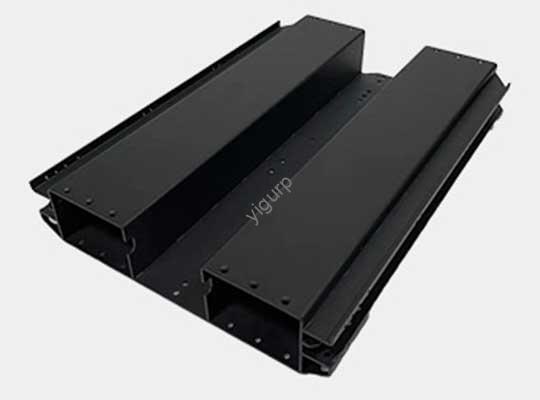
Poland is a hub for automotive manufacturing, home to factories for Volkswagen, Toyota, and BMW. The shift to electric vehicles is driving demand for sheet metal parts like battery housings and chassis components.
In 2024, EV-related sheet metal orders grew by 45% (Polish Automotive Industry Association). Suppliers are expanding their capabilities to handle lightweight materials like aluminum and high-strength steel—critical for EVs’ weight and safety requirements.
Challenges to Consider When Working with Polish Sheet Metal Suppliers
Skill shortages in some regions
Smaller towns may face shortages of skilled technicians, leading to longer lead times. Stick to suppliers in major manufacturing hubs like Warsaw, Poznań, or Wrocław for complex projects.
Currency fluctuations
The Polish Zloty can fluctuate against the Euro or Dollar. Ask for fixed-price quotes in your local currency to avoid unexpected costs.
Peak season delays
The automotive industry’s peak production periods, usually Q2 and Q4, can lead to longer lead times. Plan ahead and book projects 4-6 weeks in advance if possible.
Yigu Technology’s Perspective on Sheet Metal Poland
Yigu Technology has collaborated with multiple sheet metal suppliers in Poland over the past five years, and we have consistently been impressed by their technical expertise and customer focus. What sets Polish suppliers apart is their ability to balance quality and cost —something many businesses struggle to find in Western Europe.
We have seen clients reduce production costs by 25-30% while maintaining compliance with strict industry standards, thanks to Poland’s skilled workforce and investment in automation.
One standout experience was working with a Warsaw-based supplier on a custom sheet metal enclosure project for our industrial IoT devices. They not only met our tight 2-week deadline but also suggested design tweaks that improved the enclosure’s durability—saving us from potential rework later.
As sustainability becomes a top priority for our clients, we have also noticed Polish suppliers leading the way in eco-friendly practices , which aligns with our own commitment to reducing carbon footprints.
Overall, Poland’s sheet metal industry is a reliable, innovative partner for businesses looking to scale their manufacturing operations in Europe.
FAQ About Sheet Metal Poland
1. What is the average lead time for sheet metal projects in Poland?
For standard projects like laser cutting and bending, lead times are 1-2 weeks for EU clients . Rush orders can be completed in 3-5 days for a 15-20% premium .
2. Do Polish suppliers offer prototyping services?
Yes. Most suppliers provide prototyping of 1-10 units to test designs before mass production. Prototyping lead times are typically 3-5 days .
3. Can Polish suppliers handle large-volume production?
Absolutely. Mid-to-large shops can handle monthly volumes of 10,000+ units , with some specializing in high-volume automotive or appliance parts.
4. What quality standards do Polish sheet metal suppliers follow?
Common certifications include ISO 9001 for quality, EN 1090 for structural steel, IATF 16949 for automotive, and AWS D1.1 for welding.
5. Are there language barriers when working with Polish suppliers?
Most mid-to-large suppliers have English-speaking sales and technical teams. For smaller shops, using translation tools for basic communications works, but we recommend confirming English proficiency upfront for complex projects.
Discuss Your Projects with Yigu Rapid Prototyping
Navigating sheet metal Poland requires the right expertise and partners. At Yigu Technology, we specialize in connecting innovators with top-tier Polish sheet metal providers. These shops meet the highest standards for automotive, aerospace, medical, and industrial applications.
Whether you need rapid prototypes in days or high-volume production runs, we offer tailored solutions. Our team provides design for manufacturability feedback, material selection guidance, and end-to-end project management. We work with certified providers across Poland’s key industrial hubs—from Warsaw to Wrocław to Poznań—that excel in laser cutting, bending, welding, and finishing processes.
If you have a project ready to move forward, contact Yigu Rapid Prototyping today. Let’s turn your ideas into precision sheet metal reality.