
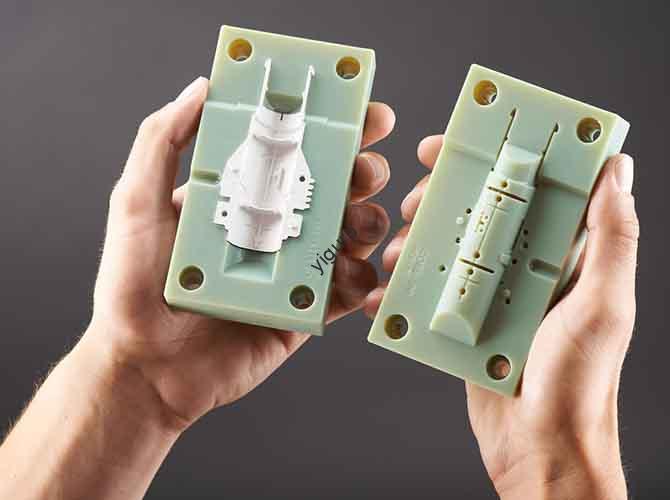
If you are a business looking to bring a product to market quickly in Mexico or serve North American markets from a Mexican base, rapid prototyping is your key to accelerating development, cutting costs, and reducing risks. Mexico offers a unique blend of skilled labor, proximity to the U.S., competitive pricing often 20-30% lower than U.S. providers, and access to modern additive and subtractive prototyping technologies. Whether you are in automotive, aerospace, medical devices, or consumer products, Mexico’s rapid prototyping ecosystem has grown significantly in the last five years—with major hubs in cities like Monterrey, Mexico City, and Guadalajara. This guide covers available technologies, choosing the right partner, and real-world success stories.
What Key Rapid Prototyping Technologies Are Available in Mexico?
| Technology | Best For | Typical Lead Time | Material Range |
|---|---|---|---|
| FDM | Functional parts, large prototypes, low-cost testing | 1-3 days | PLA, ABS, PETG, Nylon, Carbon-Fiber Blends |
| SLA | High-detail parts, smooth surfaces like medical devices | 2-4 days | Rigid, flexible, biocompatible resins |
| SLS | Durable, heat-resistant parts like automotive components | 3-5 days | Nylon, TPU, Polypropylene |
| CNC Machining | Metal prototypes, high-precision parts like aerospace | 2-5 days | Aluminum, Steel, Brass, Acrylic |
| Vacuum Casting | Low-volume production runs of 10-100 units | 5-7 days | Urethane resins mimicking ABS, PC, rubber |
A startup in Mexico City developing a new smartwatch casing might use SLA for high-detail prototypes to test fit and finish, then switch to FDM with carbon-fiber for durability testing. An automotive supplier in Monterrey could rely on CNC machining for metal prototypes of engine components—all with lead times rivaling U.S. providers at lower cost.
Why Choose Mexico for Rapid Prototyping?
Proximity to North American Markets
Mexico’s location next to the U.S. and Canada cuts shipping times and costs dramatically. For a U.S.-based electronics company, sending a prototype from Guadalajara to Austin, Texas, takes just 2-3 days via ground shipping compared to 7-10 days from Asia. This speed is a game-changer for iterative projects where engineers need to test a prototype, make tweaks, and get a new version quickly.
Case Study: A Detroit-based automotive parts manufacturer switched to a Monterrey-based prototyping shop in 2024. Previously using a Chinese supplier with lead times of 14 days for CNC-machined metal prototypes, Mexico dropped lead times to 5 days and shipping costs fell by 60% . This reduced their product development cycle by 3 weeks.
Cost Competitiveness
Rapid prototyping in Mexico typically costs 20-35% less than in the U.S. without sacrificing quality. This stems from lower labor costs and reduced overhead for providers. An SLA prototype costing $300 in California might cost $200-$220 in Mexico City. For small businesses or startups with tight budgets, this savings can mean the difference between testing one prototype or three.
According to the Mexican Association of Advanced Manufacturing (AMFA), the average hourly rate for a skilled rapid prototyping technician in Mexico is $12-$18, compared to $25-$35 in the U.S. This cost difference translates directly to lower project prices for clients.
Skilled Talent and Growing Ecosystem
Mexico’s government and private sector have invested heavily in STEM education, leading to a growing pool of skilled engineers and technicians trained in additive manufacturing. Major universities like the Monterrey Institute of Technology (ITESM) now offer specialized courses in 3D printing and rapid prototyping, ensuring a steady pipeline of talent.
Mexico’s prototyping hubs—Monterrey, Mexico City, and Guadalajara—are home to over 50 established providers, many ISO-certified such as ISO 9001 for quality and ISO 13485 for medical devices. Businesses can find partners meeting global quality standards without looking outside the country.
How to Choose the Right Rapid Prototyping Partner in Mexico?
Define Your Project Requirements First
Before reaching out to providers, clarify:
- The technology needed such as FDM or CNC machining
- Material specifications like biocompatible resin for medical parts
- Quantity for one prototype or 50 vacuum-cast units
- Deadline critical for time-sensitive projects
- Quality standards like ISO certifications or dimensional accuracy tolerances
For medical devices, you need a partner with ISO 13485 certification and experience with biocompatible materials. Consumer product companies might prioritize SLA expertise for high-detail parts.
Verify Certifications and Experience
Check a provider’s certifications and past work. Look for:
- ISO 9001 for quality management or industry-specific certifications like ISO 13485 for medical or AS9100 for aerospace
- Case studies or a portfolio of projects similar to yours
- Client references to confirm reliability
Example: An aerospace startup in Baja California vetted three prototyping shops. They eliminated one lacking AS9100 certification and another with no experience in heat-resistant SLS materials. The third shop—with both certification and a portfolio of aerospace parts—delivered prototypes meeting all requirements.
Evaluate Communication and Project Management
Clear communication is critical, especially if you are based outside Mexico. Choose a partner that:
- Has English-speaking staff to avoid translation errors
- Uses project management tools like Trello or Asana to share updates
- Provides regular progress reports with photos of prototypes mid-production
A common pain point for U.S. clients is miscommunication about design files. A good partner reviews your CAD files upfront, flags potential issues like unprintable features, and suggests fixes—saving time and money.
Compare Pricing and Lead Times
Get quotes from 2-3 providers to compare pricing, but avoid choosing the cheapest option outright. A slightly higher price might mean better quality, faster lead times, or more responsive customer service. Ask for a detailed breakdown of costs including material, labor, and shipping to ensure no hidden fees.
Real-World Success Stories: Rapid Prototyping in Mexico
Case Study 1: Medical Device Startup Reduces Time-to-Market
A Mexican startup in Guadalajara was developing a portable blood glucose monitor for rural clinics. They needed to test 5 iterations of the device’s casing and internal components before finalizing the design.
Challenge: The startup had a tight 3-month timeline to get the prototype approved by Mexico’s regulatory body COFEPRIS and needed high-detail parts meeting medical standards.
Solution: They partnered with a local prototyping shop specializing in SLA and biocompatible resins. The shop reviewed their CAD files, suggested minor design tweaks like rounding sharp edges for patient comfort, and delivered each prototype in 3 days.
Result: The startup tested all 5 iterations in 6 weeks—half the planned time—got COFEPRIS approval, and launched the product 2 months ahead of schedule. Prototyping costs were 25% lower than quotes from U.S. providers.
Case Study 2: U.S. Automotive Supplier Cuts Costs
A U.S.-based supplier of automotive sensors needed to prototype a new temperature sensor for electric vehicles. They previously used a U.S. CNC machining shop but faced high costs and long lead times.
Challenge: The sensor’s metal housing required tight tolerances of ±0.001 inches to fit EV engines, and the supplier needed 10 prototypes for testing.
Solution: They switched to a Monterrey-based shop with ISO 9001 and IATF 16949 automotive quality certifications. The shop used CNC machining with aluminum alloy and delivered the prototypes in 4 days.
Result: The supplier saved 30% on prototyping costs and reduced lead times by 50%. The prototypes met all tolerance requirements, and the sensor was approved for production 1 month earlier than expected.
Conclusion
Mexico’s rapid prototyping ecosystem offers strategic advantages including proximity to U.S. markets with 2-3 day ground shipping, cost savings of 20-35% versus U.S. providers, and a skilled workforce from institutions like ITESM. With over 50 established providers in hubs like Monterrey, Mexico City, and Guadalajara, technologies range from FDM and SLA to CNC machining and vacuum casting with lead times of 1-7 days. Certifications including ISO 9001, ISO 13485, AS9100, and IATF 16949 ensure quality for automotive, medical, aerospace, and consumer sectors. Choosing the right partner means defining requirements, verifying certifications, evaluating communication, and comparing pricing—with real-world results like 50% lead time reduction and 2-month early product launches.
FAQ About Rapid Prototyping in Mexico
What’s the typical lead time for a rapid prototype in Mexico?
Lead times vary by technology but generally range from 1-7 days. FDM and SLA prototypes are fastest at 1-3 days, while CNC machining and vacuum casting take 2-7 days. For urgent projects, most shops offer expedited services like 24-hour turnaround for small FDM parts at an additional fee.
Do Mexican prototyping shops work with international clients?
Yes—many shops have experience with U.S., Canadian, and European clients. They accept CAD files in common formats like STL and STEP, offer English-speaking support, and handle international shipping via carriers like FedEx or DHL.
Are there any quality risks with rapid prototyping in Mexico?
Not if you choose a certified provider. Look for shops with ISO 9001, ISO 13485 for medical, or IATF 16949 for automotive certifications. Most reputable shops offer quality checks such as dimensional testing and visual inspections, sharing photos or reports before shipping.
Can Mexican shops handle large or complex prototypes?
Yes. Many shops have industrial-grade equipment like large-format FDM printers capable of parts up to 1m in size and 5-axis CNC machines for complex metal parts. For extremely large prototypes, some shops offer assembly services to piece together multiple components.
How do I send my design files to a Mexican prototyping shop?
Most shops accept files via email, cloud storage like Google Drive or Dropbox, or project management tools. Send CAD files in STL, STEP, or IGES format as these are widely compatible. If unsure about your design, ask the shop for a design review—many offer this service for free or at low cost.
Discuss Your Projects with Yigu Rapid Prototyping
Ready to start your rapid prototyping project in Mexico? Yigu Technology combines global manufacturing expertise with practical support for businesses seeking North American innovation partners. We help automotive suppliers, medical device companies, aerospace manufacturers, and consumer product firms select the right prototyping technologies and Mexican partners. Our AI-powered design tools optimize your parts for prototyping—reducing defects and speeding up iterations. We connect you with vetted Mexican providers holding ISO 9001, ISO 13485, AS9100, or IATF 16949 certifications matching your industry requirements. From design review to finishing and assembly, our team ensures your prototypes meet quality standards. Contact Yigu Rapid Prototyping today to discuss your prototyping needs and discover how we can help you innovate faster, more sustainably, and cost-effectively in Mexico.