
Introduction
In product development, choosing the right method to create your prototypes is a critical decision. Two of the most common approaches are rapid prototyping and traditional machining. They work in fundamentally different ways. Machining is subtractive—it cuts away material from a solid block. Rapid prototyping is additive or near-net-shape—it builds parts layer by layer or uses molds. Each has strengths and weaknesses. The right choice affects your timeline, budget, design flexibility, and final product quality. This guide will compare them across key characteristics: speed, cost, design complexity, materials, accuracy, and waste. By the end, you will know when to use each method to get your product to market faster and smarter.
What Are We Comparing? Understanding the Basics
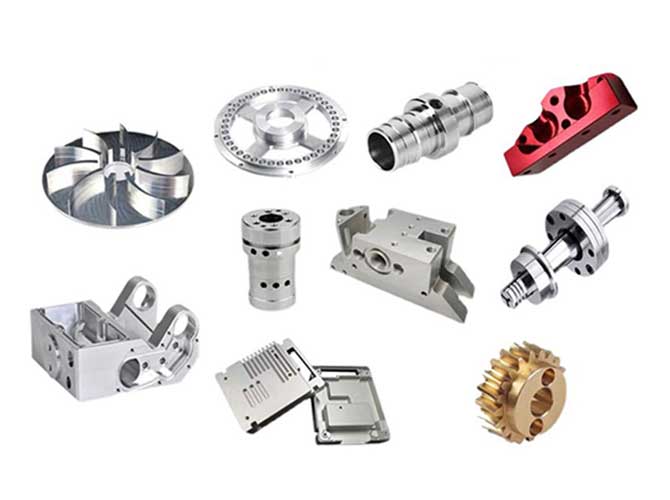
Machining is a traditional subtractive process. It starts with a solid block of material—metal, plastic, or wood—and removes material using tools like lathes, mills, or CNC machines. It is valued for its precision and ability to create functional parts from production materials.
Rapid Prototyping (RP) is an additive or near-net-shape process. It builds parts layer by layer directly from digital designs (CAD files) or uses molds to create complex shapes. Technologies include 3D printing (SLA, SLS, FDM), investment casting, and stereolithography. Speed and flexibility are its defining traits.
How Do They Compare on Speed and Lead Time?
Time is often the most critical factor in product development. Here, rapid prototyping has a clear advantage.
Machining requires extensive setup: programming CNC machines, preparing fixtures, and often creating custom tooling. For a complex prototype, machining can take 2 to 6 weeks from design to part. Intricate geometries can stretch this timeline further as machinists navigate cutting hard materials without damaging tools.
Rapid prototyping eliminates much of this wait. With 3D printing or investment casting, you can go from CAD file to physical part in 3 to 7 days. The additive nature means no time-consuming tooling setup—machines simply build the part layer by layer. This speed is a game-changer for iterative design, where engineers need to test, modify, and retest quickly.
Real-world example: A medical device company needed a prototype of a new surgical instrument with tiny, curved channels. Machining quoted a 4-week turnaround. Using rapid prototyping, they had the first prototype in 5 days, starting testing two weeks earlier.
How Do Costs Compare?
Cost depends heavily on production volume.
Machining has significant upfront costs. Custom tooling, CNC programming, and skilled labor make small-batch prototyping expensive. A single complex machined part can cost (500 to )2,000, with most of that going toward setup, not material. These costs make sense for large runs (1,000+ units), where the upfront investment is spread across many parts.
Rapid prototyping flips this model. With no custom tooling, the cost per part is much lower for small runs. A 3D-printed or investment-cast prototype might cost (100 to )500 for a single unit. The price remains relatively stable even for 10 to 50 units. This makes rapid prototyping ideal for testing multiple design iterations without breaking the budget.
| Production Volume | Machining Cost Range | Rapid Prototyping Cost Range |
|---|---|---|
| 1–10 units | (500–)3,000 | (100–)800 |
| 50–100 units | (3,000–)8,000 | (800–)2,500 |
| 1,000+ units | (10,000–)30,000 | (5,000–)20,000 |
Note: For large runs, machining often becomes more cost-effective. Rapid prototyping costs per unit remain stable but do not offer the same economies of scale.
Which Method Offers More Design Flexibility?
Rapid prototyping wins on design flexibility.
Machining is limited by its subtractive nature. Creating internal channels, undercuts, or organic shapes requires specialized tools and multiple setups. In some cases, complex parts must be machined in pieces and then assembled, introducing potential weak points. A part with a hollow interior and intricate lattice structure would be extremely difficult to machine.
Rapid prototyping thrives on complexity. Additive processes build from the bottom up, so internal features, curved surfaces, and complex geometries are just as easy as simple shapes. Investment casting uses wax patterns to replicate even the tiniest details—down to 0.1mm tolerances. This flexibility lets engineers push design boundaries and test innovative concepts that would be too risky with traditional methods.
Complex features easily achieved with rapid prototyping:
- Internal cavities and channels.
- Organic, ergonomic shapes.
- Lattice structures for weight reduction.
- Overhangs and undercuts without additional support.
How Do Materials Compare?
Both methods offer material options, but rapid prototyping provides more flexibility for early-stage testing.
Machining is limited to materials that can be cut with traditional tools. Metals like aluminum, steel, and titanium are common, as are plastics like ABS and PEEK. Each material requires specific tooling and settings, and switching between materials mid-project can be time-consuming and costly.
Rapid prototyping supports a wide range of materials, from standard plastics to high-performance metals and composites. 3D printers can use ABS, PLA, nylon, and resin. Investment casting works with stainless steel, bronze, and even superalloys like Inconel. This variety allows engineers to test different materials early, ensuring the final product meets performance requirements.
Which Method Is More Accurate?
Both have strengths, but the gap is narrowing.
Traditional machining is the gold standard for tight tolerances, achieving accuracy of ±0.0005 inches (0.0127mm) for metal parts. This precision is critical for parts that must fit together perfectly, like gears or aerospace components.
Modern rapid prototyping methods are catching up. High-end 3D printers and investment casting can achieve tolerances of ±0.001 to 0.005 inches (0.025–0.127mm), sufficient for most prototyping needs. For applications requiring extreme precision, rapid prototypes can often be post-processed with machining to refine critical surfaces.
Which Method Produces Less Waste?
Sustainability is increasingly important. Here, rapid prototyping has a clear advantage.
Machining is subtractive. It removes material from a larger block, which can waste 70 to 90 percent of the original material for complex parts. While some materials can be recycled, the energy and resources used in machining and waste disposal add up.
Rapid prototyping, especially additive methods, builds parts layer by layer, using only the material needed. Waste is typically 5 to 10 percent. Investment casting also minimizes waste by reusing ceramic molds and recycling excess metal.
When Should You Choose Rapid Prototyping Over Machining?
Choose rapid prototyping when:
- You are in early-stage design iterations and need to test multiple concepts quickly and affordably.
- Your part has complex geometries like internal features, organic shapes, or intricate details.
- You need a small production run (1–50 units) without large-scale tooling.
- Your project is time-sensitive—getting to market faster is critical.
- You want to test different materials before committing to mass production.
Machining remains the better choice for large production runs, parts requiring extreme precision, or when working with materials not yet compatible with rapid prototyping.
Conclusion
Rapid prototyping and machining are both essential tools in product development, but they serve different needs. Rapid prototyping excels in speed, design flexibility, cost for small runs, and sustainability. It lets you iterate quickly, test complex designs, and get to market faster. Machining is the choice for large-scale production, extreme precision, and parts that must be made from specific materials. Understanding their differences helps you make smart decisions at every stage of development. Often, the best approach is to use both—rapid prototyping for early iterations, machining for final validation and production.
FAQ About Rapid Prototyping and Machining
Q1: Is rapid prototyping as strong as machined parts?
A: It can be, depending on the material and technology. Investment-cast metal prototypes offer strength comparable to machined parts. High-performance 3D-printed plastics can also rival traditional materials for many applications.
Q2: How does the cost of rapid prototyping compare for large production runs?
A: For large runs (1,000+ units), machining often becomes more cost-effective because the upfront tooling costs are spread over many parts. Rapid prototyping costs per unit remain relatively stable but do not offer the same economies of scale.
Q3: Can rapid prototyping be used for functional testing?
A: Absolutely. Modern methods produce functional prototypes that can withstand rigorous testing, including mechanical stress, temperature variations, and chemical exposure. This lets engineers validate designs before mass production.
Q4: What are the main rapid prototyping technologies?
A: Common ones include stereolithography (SLA), fused deposition modeling (FDM), selective laser sintering (SLS), multi-jet fusion (MJF), and investment casting. Each has strengths in speed, accuracy, and material options.
Q5: When should I use machining instead of rapid prototyping?
A: Use machining for large production runs, parts requiring extreme precision (below ±0.001 inches), or when you need to use materials that are not yet compatible with rapid prototyping technologies.
Discuss Your Projects with Yigu Rapid Prototyping
At Yigu Rapid Prototyping, we offer both rapid prototyping and precision machining services to support your product development journey. Our advanced 3D printers (SLA, SLS, MJF) and investment casting capabilities deliver fast, flexible prototypes with complex geometries. Our CNC machining center produces high-precision parts from production materials. Whether you need quick iterations or final validation, we help you choose the right method for your project. Contact Yigu today to discuss your needs and get a free quote.