
Introduction
Product development demands precision. Your designs exist as ideas, then as CAD models. The next step matters most—turning those digital files into physical parts that you can hold, test, and evaluate.
Precision sheet metal prototype parts forming makes this transition possible. It transforms complex, customized sheet metal designs into high-quality physical prototypes. The parts come out accurate. They look professional. They perform as intended.
This guide explains how the process works. You will learn about design fundamentals, material selection, CNC machining, welding, surface treatment, and quality control. Real examples show how each step contributes to successful prototypes.
What Makes Precision Sheet Metal Prototype Parts Forming Different?
The Definition
Precision sheet metal prototype parts forming is a manufacturing process that creates custom metal components with high accuracy. It focuses on prototypes and low-volume production rather than mass manufacturing.
The key word is precision. Dimensions hold tight tolerances. Features align exactly as designed. Surfaces are smooth and consistent. Every detail matches the original intent.
Why Precision Matters
Prototypes serve critical purposes. They validate designs before tooling investment. They demonstrate concepts to investors and customers. They undergo testing to reveal flaws. If prototypes lack precision, these purposes fail.
A prototype with wrong dimensions misleads testing. A rough surface hides fit issues. Poor accuracy undermines confidence in the design. Precision ensures prototypes provide reliable information.
How Does Design and Planning Lay the Foundation?
Step 1: 3D Modeling
Every precision prototype starts as a digital model. Advanced CAD software like SolidWorks or AutoCAD builds these models. Every dimension, every hole, every curve exists in the virtual space.
The goal is accuracy. The model must reflect design intent completely. No features are too small to include. No details are too minor to capture. This model becomes the master reference for everything that follows.
Step 2: Design Optimization
Creating the model is not enough. The design must also be manufacturable. Professional software analyzes the model for potential problems.
Mold flow analysis checks whether material will flow smoothly during forming. It identifies areas where material might pool, stall, or tear. Designers adjust these areas before any metal is cut.
Structural analysis tests whether the prototype will survive its intended use. A shell that looks good but collapses under light pressure fails its purpose. Analysis finds weak points so designers can strengthen them.
Example: A company developing a custom sheet metal shell for a new electronic device started with a basic CAD model. Mold flow analysis revealed a sharp corner where material would likely tear during forming. Structural analysis showed the bottom panel would flex too much under normal use. Both issues were fixed in the design phase, saving weeks of rework later.
| Design Stage | Specific Operations | Core Objectives |
|---|---|---|
| 3D Modeling | Build precise model in CAD software | Capture all dimensions and features accurately |
| Design Optimization | Run mold flow and structural analysis | Verify manufacturability, improve structural strength |
What Materials Work Best for Precision Prototypes?
Material Selection Principles
Two principles guide material selection for precision prototypes.
First, match design requirements. Consider the product’s use environment and performance needs. If the prototype needs corrosion resistance, stainless steel is the choice. If lightweight matters most, aluminum alloy works better.
Second, consider processability. The material must be easy to cut, bend, and weld. Difficult materials slow production and increase costs. They may also compromise precision.
Common Material Choices
Stainless steel offers excellent corrosion resistance. It works for medical devices, food equipment, and outdoor applications. SUS 304 is the most common grade.
Aluminum alloy provides light weight and good formability. 6061 aluminum works for aerospace, automotive, and consumer products where weight matters.
Mild steel is economical and easy to process. It suits prototypes where corrosion resistance is not critical and cost is a concern.
Copper conducts electricity and heat exceptionally well. It works for electrical components and heat transfer applications.
Material Pretreatment Steps
Before processing, materials need preparation.
Deburring removes sharp edges and burrs from raw sheets. This prevents scratches during handling and ensures operator safety.
Cleaning removes oil, dust, and other impurities. Clean surfaces improve adhesion for later surface treatments.
Preliminary surface treatment like pickling or passivation may be needed. These processes enhance rust resistance before fabrication begins.
How Does CNC Machining Achieve High Precision?
CNC machining is the core of precision prototype forming. Computer-controlled equipment performs cutting and bending operations with accuracy impossible by hand.
Precise Cutting
CNC laser cutting uses a high-powered laser beam to cut metal. The laser follows paths programmed from your CAD model. It cuts complex shapes with accuracy up to ±0.1mm. Intricate contours, small holes, and tight corners are all possible.
CNC punching works faster for simple shapes. It uses tools to punch holes and cut outlines. Quality remains consistent across multiple parts.
Question: Why is CNC cutting more accurate than traditional manual cutting?
Answer: CNC cutting eliminates human error. Computer programs control every movement precisely. Advanced sensors monitor the cutting process in real time. They adjust parameters automatically to maintain accuracy. Manual cutting depends on operator skill and varies from part to part.
Fine Bending
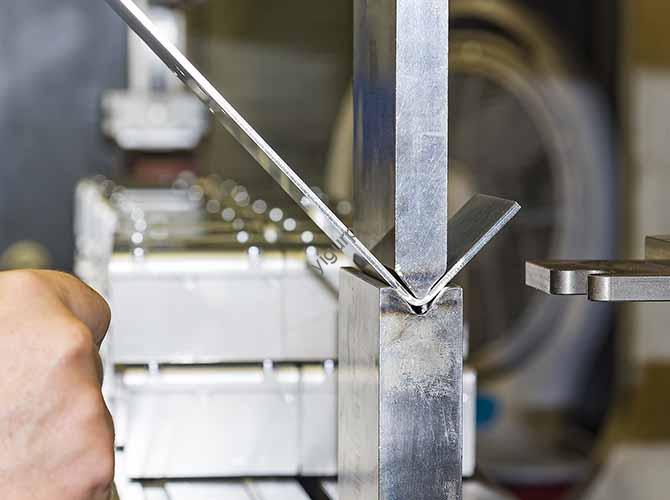
CNC press braking forms bends in the cut metal. The machine holds the material and applies force through a punch and die. Computer controls determine exactly how far the punch descends. This controls the final angle precisely.
Bending angle errors stay within ±0.5 degrees. This consistency matters when prototypes must fit together perfectly.
Operators simply load the material and start the program. The machine handles the rest, repeating the same bend accurately across multiple parts.
How Does Welding and Assembly Combine Parts?
Many prototypes consist of multiple components. Welding and assembly join these pieces into complete functional parts.
Precision Welding
TIG welding (tungsten inert gas) works well for thin materials and stainless steel. It provides excellent control and produces clean, strong welds.
MIG welding (metal inert gas) is faster and works well for aluminum and thicker materials.
Both techniques control heat input carefully. Too much heat causes distortion. Too little creates weak joints. Precision welding balances these factors for optimal results.
Quality requirements: Welds must be smooth and uniform. No pores, cracks, or slag inclusion are acceptable. Weld tensile strength should be at least 80% of the base material strength.
Careful Assembly
Assembly follows design drawings precisely. Precision measuring tools like calipers, micrometers, and coordinate measuring machines verify positions during assembly.
The core goal is accurate fit. Each component must align correctly. Assembly gaps should stay within design limits—typically not more than 0.2mm.
Example: A robotics company needed a prototype arm assembly with four moving joints. Precision welding created strong connections. Careful assembly ensured each joint moved freely without binding. The prototype performed exactly as the design predicted.
How Does Surface Treatment Enhance Appearance and Performance?
After welding and assembly, prototypes receive surface treatment. This step improves both appearance and durability.
Advanced Polishing
Polishing smooths welding seams, cut edges, and other surfaces. Professional tools like polishing machines and sandpaper remove imperfections.
The result is a smooth, flat surface without scratches or bumps. Consumer product prototypes often need this level of finish for presentations and user testing.
Special Coatings
Different coatings serve different purposes.
Anti-rust coatings improve corrosion resistance. They extend prototype life in humid or corrosive environments.
Conductive coatings provide electrical conductivity. They work for electronic product shells that must shield or ground components.
Decorative coatings enhance appearance. They make prototypes look like production parts, supporting market research and investor presentations.
How Does Quality Control Ensure Final Quality?
Quality control runs through every step of the process. Final inspection is particularly critical.
Thorough Inspection
Dimensional inspection uses high-precision equipment. Coordinate measuring machines and laser measuring instruments check all key dimensions. Every measurement must fall within design tolerance.
Visual inspection examines appearance. Surface smoothness, weld quality, and coating uniformity all matter. Prototypes with obvious defects are rejected or reworked.
Functional Testing
Testing verifies that prototypes perform as intended.
Load-bearing tests check brackets and structural parts. Can they support required weights without bending?
Waterproof and dustproof tests check enclosures. Do they protect internal components as designed?
Movement tests check hinges and moving parts. Do they operate smoothly through their full range?
Purpose: Functional testing validates performance and durability. It reveals problems before production tooling is committed. Issues found at this stage cost little to fix. Issues found after mass production cost thousands.
Yigu Technology’s Perspective on Precision Prototype Forming
At Yigu Technology, we view precision sheet metal prototype parts forming as essential for efficient product development. It bridges the gap between design concepts and physical reality.
Our approach combines three elements. Advanced CAD design captures every detail of your vision. High-precision CNC machining creates parts with accuracy you can measure. Strict quality control ensures every prototype meets requirements.
For each project, we focus on matching materials to design needs. Aluminum for lightweight applications. Stainless steel for corrosion resistance. Copper for conductivity. The right material makes the prototype perform as intended.
We also optimize processes for precision. Cutting parameters, bending sequences, welding techniques—all are tuned for your specific part. This attention to detail produces prototypes that look and function like production parts.
Our goal is simple. Help customers turn design concepts into high-quality prototypes quickly. Shorten development cycles. Enhance market competitiveness. Deliver parts that impress.
Conclusion
Precision sheet metal prototype parts forming transforms custom designs into physical reality through a structured process.
Design and planning create the digital foundation. Material selection chooses the right raw materials. CNC machining achieves precise cutting and bending. Welding and assembly combine components. Surface treatment enhances appearance and performance. Quality control verifies everything meets requirements.
Each step builds on the previous one. Skipping or rushing any step compromises the final result. Following the complete process delivers prototypes that match your design, perform as intended, and provide reliable information for development decisions.
Whether you need a single prototype for testing or a small batch for market validation, precision forming delivers quality parts you can trust.
Frequently Asked Questions
What industries use precision sheet metal prototype parts forming?
The process serves many industries. Electronics companies use it for device enclosures and brackets. Automotive firms need it for instrument panels and structural components. Aerospace applications include custom brackets and housings. Medical equipment manufacturers rely on it for device shells and supports. Industrial equipment producers use it for machine components and guards.
How long does precision prototype forming take?
Time varies with complexity. A simple prototype with few features can be ready in three to five days. A complex part with multiple components, tight tolerances, and special finishes may take ten to fifteen days. Discuss your timeline early with your fabrication partner.
Can precision forming handle mass production?
Precision sheet metal prototype forming is optimized for development, prototyping, and low-volume production—typically under 100 pieces. For mass production, dedicated stamping dies and assembly lines are more economical. However, the process parameters and experience gained during prototyping provide valuable references for scaling up.
What tolerance can precision forming achieve?
CNC laser cutting holds ±0.1mm accuracy for most features. CNC press braking achieves bend angles within ±0.5 degrees. Assembly gaps typically stay under 0.2mm. These tolerances satisfy most prototype requirements including electronics, automotive, and medical applications.
How do I choose the right material for my prototype?
Consider your end-use requirements first. Corrosion resistance? Choose stainless steel. Light weight? Choose aluminum. Electrical conductivity? Choose copper. Then discuss processability with your fabrication partner. They can advise if your chosen material works well with the required forming operations.
Discuss Your Projects with Yigu Rapid Prototyping
At Yigu Rapid Prototyping, we specialize in precision sheet metal prototype parts forming. Our team brings years of experience turning complex designs into high-quality physical parts.
When you work with us, you gain partners who understand precision. We review your designs for manufacturability. We recommend materials that match your performance needs. We control every process step to ensure accuracy. We inspect thoroughly before shipping.
Contact Yigu Rapid Prototyping to discuss your upcoming precision prototype projects. Whether you need a single part for validation or a small batch for testing, we deliver quality results on schedule. Let us help you turn your design concepts into prototypes that perform.