
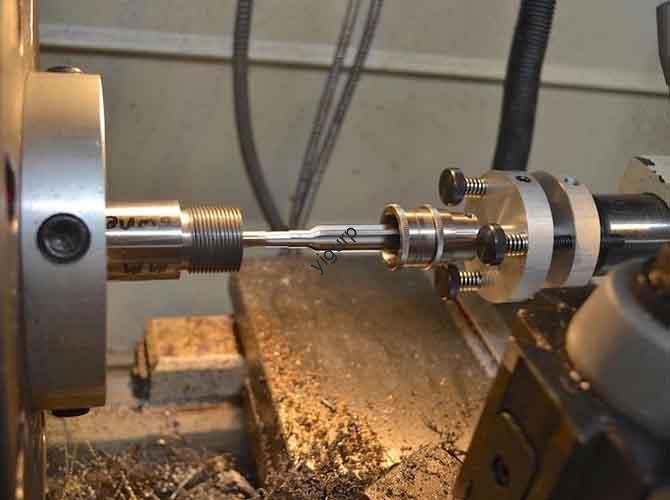
1. What is precision machining? Core concepts that must be understood to get started
For senior practitioners engaged in manufacturing and engineering-related work, precision processing is by no means an unfamiliar word, but to truly understand its essence, it is necessary to dismantle it one by one from the core definition to the key influencing factors.
The core of the definition of precision machining is “high-precision molding of part size, shape, and position within specified tolerances”, simply put, so that the deviation between the actual parameters of the workpiece and the design standard is negligible. For example, in the processing of aero engine blades, the curved contour error needs to be controlled within 0.005mm, which is a typical precision machining scenario.
In the internationally accepted ISO tolerance standard, there are a total of 20 levels from IT01 to IT18, and precision machining is mostly concentrated in IT5-IT7 (tolerance value 0.009-0.03mm). For a straightforward example: a shaft part with a tolerance of IT5 has a allowable deviation of only 0.011mm at a diameter of 100mm, which is equivalent to 1/5 of the diameter of a hair strand (the diameter of the hair strand is about 0.05mm).
Tolerance and fit are the soul of precision machining. According to the functional requirements of parts, common fit types are divided into clearance fit (such as the assembly of bearings and shafts), transition matches (such as the connection between gears and shafts) and interference matches (such as the pressing of motor rotors and shafts). An auto parts factory once confused the transition fit and interference fit, resulting in the engine camshaft being unable to rotate after assembly, which directly caused millions of losses – this is the painful lesson of ignoring the importance of tolerance matching.
The influence of material properties cannot be ignored. Although materials with high hardness (such as titanium alloy and hardened steel) are wear-resistant, they are prone to excessive cutting force and fast tool wear during processing, affecting the accuracy. while soft materials such as aluminum alloy and copper alloy, although the cutting resistance is small, are prone to sticking knives and exceeding the surface roughness. When processing surgical instruments for a medical device customer, we solved the problem of unstable machining accuracy of stainless steel materials by using PCD tools (polycrystalline diamond).
The sources of machining errors are mainly divided into three categories: machine tool errors (such as spindle runout, guide rail straightness deviation), tool errors (such as tool edge wear, installation eccentricity) and process errors (such as unreasonable cutting parameters and excessive clamping force caused by part deformation). An aviation parts company once reported that the size of the aircraft landing gear parts it processed fluctuated greatly, and after investigation, it was found that the machine tool guide rail was worn after long-term use, and the error was controlled within the allowable range by regularly calibrating the accuracy of the guide rail.
2. Achieve high-precision core technology and equipment selection
After mastering the basic concepts of precision machining, choosing the right technology and equipment is the key to implementation. The following is an explanation from the aspects of core technology, equipment type, tool selection, etc., combined with actual application scenarios.
(1) Core technology: “soft power” that determines machining accuracy
CNC technology is the core of precision machining, which controls machine tool movements through computer programs to achieve automated and high-precision machining. Compared to traditional manual operations, CNC technology can achieve a repeatable positioning accuracy of ±0.001mm, greatly improving machining consistency. At present, the mainstream CNC systems include FANUC, Siemens, Mitsubishi, etc., among which the FANUC 0i-MF system is widely used in small and medium-volume precision parts processing due to its convenient operation and strong stability. Our CNC machining line for an electronic component customer increased the processing efficiency of the chip pin holder by 30% and increased the pass rate from 95% to 99.8% by using the FANUC system with a high-speed spindle.
The core advantage of high-speed cutting processes is “speed for precision”. When the cutting speed reaches 5-10 times that of traditional cutting, a large amount of cutting heat will be carried away by chips, reducing the thermal deformation of the part, and reducing the cutting force to avoid the accuracy deviation caused by the force deformation of the part. For example, when machining mold cavities, a high-speed cutting process (cutting speed of 1000-3000m/min) can not only obtain a surface roughness of less than Ra0.8μm, but also shorten the machining time by more than 40%. However, it should be noted that high-speed cutting has extremely high requirements for machine tool rigidity and tool quality, and requires the use of high-speed spindle (rotation speed ≥ 15000rpm) and special tools.
Automation and robot integration are important means to improve the stability of precision machining. Manual operations are susceptible to fatigue and human error, while the integration of robot loading and unloading and automated inspection enables 24-hour uninterrupted machining with a repeatability of up to ±0.002mm. An automotive engine factory has increased the per capita efficiency of crankshaft machining by 50% and reduced scrap caused by human error by 80% by introducing KUKA robots in conjunction with CNC machines.
(2) Key equipment: “hardware support” for precision processing
The choice of precision machine type should be combined with the machining needs:
- Vertical machining center: suitable for milling, drilling, boring of small and medium-sized parts, such as mobile phone middle frames, precision fixtures, representative models are DMG MORI DMC 635 V eco, positioning accuracy ±0.003mm;
- Horizontal machining center: suitable for multi-faceted machining of large, complex parts, such as aero engine receivers, representative models are MAZAK HCN 6800, with a repeat positioning accuracy of ±0.002mm;
- Grinding machine: used for high-precision grinding processing, such as bearing inner and outer rings, precision shaft parts, representative models are Okuma GA26W, grinding accuracy up to IT5 level;
- Electrical Discharge Machining Machine (EDM): Suitable for machining parts with high hardness and complex shapes, such as mold cavities and carbide tools, the representative model is Sodick AG60L, with a machining accuracy of ±0.001mm.
(3) Tool selection and wear control: the “last line of defense” of precision
Tools are components that come into direct contact with the workpiece, and their quality and wear state directly affect machining accuracy. The tool selection for different materials is shown in the table below:
| Workpiece material | Recommended tool material | Applicable processing methods | Wear control points |
| stainless steel | PCD (polycrystalline diamond), carbide (carbide) | Milling, turning | It is cooled by emulsion to control the cutting speed ≤ 300m/min |
| Titanium alloy | Coated carbide (TiAlN coating) | Milling, drilling | Reduced feed rate and high-pressure cooling system |
| Aluminum alloy | diamond tools, high-speed steel tools | Milling, turning | Avoid sticking knives and increase cutting speed |
| Hardened steel | CBN (cubic boron nitride) cutter | Grinding and turning | Control the cutting temperature to avoid tool chipping |
Tool wear monitoring can be done in two ways: first, using a real-time monitoring system (such as Renishaw tool wear detection device) to detect tool length changes through lasers, and automatically alarm when the wear amount exceeds the set threshold; The second is to judge by the change of machining parameters, such as the sudden increase in cutting force and the deterioration of surface roughness, which may be caused by tool wear and need to be replaced in time.
3. Quality control of precision processing: the whole process from testing to certification
After the processing is completed, how to ensure that the product meets the precision requirements? This requires a perfect quality control system, covering three major links: testing methods, monitoring systems and quality certification.
(1) Core testing equipment and methods
Coordinate measuring machine (CMM) is the most commonly used inspection equipment in precision machining, which touches the surface of the workpiece through a probe to measure the dimensions, shape, and position tolerances of the three-dimensional space, with a measurement accuracy of up to ±0.001mm. For example, when inspecting automotive transmission gears, CMMs can quickly measure key parameters such as gear pitch deviation and profile accuracy to ensure smooth gear engagement. At present, the mainstream CMM brands include Hexagon, Zeiss, and Mitoyo, among which ZEISS CONTURA G2 is widely used in high-end manufacturing due to its fast measurement speed and high stability.
Optical measurement technology is suitable for non-contact inspection, especially for thin-walled parts and soft material parts, to avoid part deformation caused by contact measurement. Common optical measuring equipment includes:
- Projector: Measure two-dimensional dimensions, such as aperture and groove width of parts, with a measurement accuracy of ±0.002mm;
- Laser interferometer: detect the positioning accuracy and repeat positioning accuracy of the machine tool, such as detecting the straightness of the guide rail of the CNC machine tool;
- White light interferometer: Measures surface roughness and microscopic profile, with measurement accuracy down to the nanometer level.
Surface roughness testing is an important indicator for evaluating machining quality, and the commonly used parameters are Ra (Average Deviation of Contour Arithmetic) and Rz (Maximum Height of Contour). Different application scenarios have different requirements for surface roughness: the Ra of aero engine blades is ≤ 0.2 μm, the Ra of automobile engine blocks is ≤ 0.8 μm, and the Ra of electronic component housings is ≤ 1.6 μm. The inspection tool can be a portable roughness meter (such as the TR200), which is easy to operate and suitable for on-site inspection in the workshop.
(2) Real-time monitoring system: the “patron saint” of process quality
The real-time monitoring system collects cutting force, temperature, vibration and other data during the processing process through sensors, and analyzes and warns of abnormal situations in real time. For example, the real-time monitoring system introduced by a mold factory monitors the vibration amplitude during the cutting process through the vibration sensor installed on the spindle, and when the vibration exceeds the set value, the system automatically reduces the cutting speed or stops the machine, avoiding the machining error caused by tool wear and loose clamping, and reducing the scrap rate from 3% to 0.5%.
(3) ISO quality certification standard: industry-recognized “pass”
Precision machining companies need to pass relevant ISO certifications to ensure quality system compliance. Core certifications include:
- ISO 9001: Quality Management System Certification, which is a basic certification requirement;
- ISO/TS 16949: Quality management system certification for the automotive industry, suitable for auto parts processing enterprises;
- ISO 13485: Quality Management System certification for the medical device industry, which requires higher precision and safety in precision machining.
In order to enter the European and American markets, a medical device company has passed ISO 13485 certification, and its orthopedic implants (such as artificial joints) must meet the requirements of dimensional tolerance of ±0.005mm and surface roughness Ra≤0.1μm.
4. Application fields and practical cases of precision machining
The value of precision machining is ultimately reflected in practical applications, and the following combines five core areas to share real cases and technical points.
(1) Aerospace components: “demanding requirements” for ultimate precision
Aerospace components (such as engine blades, landing gear, and satellite mounts) have extremely high machining accuracy, and because the parts work in high-temperature, high-pressure, and high-speed environments, accuracy deviations may lead to serious safety accidents. The turbine blades processed by an aero engine manufacturer are made of titanium alloy materials, and the blade surface profile error needs to be controlled ≤0.005mm and the wall thickness tolerance is ≤0.01mm. By using a five-axis linkage machining center (DMG MORI DMU 85 monoBLOCK), CBN tools, and a real-time monitoring system, mass production was finally achieved, and the product qualification rate reached 99.5%, meeting the stringent requirements of aircraft engines.
(2) Medical device manufacturing: the “double guarantee” of safety and precision
Medical devices (such as surgical instruments, implants, and diagnostic equipment parts) are directly related to patient life safety, and precision and biocompatibility are the core requirements. The artificial hip prosthesis produced by a company uses cobalt-chromium-molybdenum alloy material to process a curved surface that conforms to the human bone structure, with a dimensional tolerance of ±0.003mm and a surface roughness of Ra≤0.05μm. By using electrical discharge machining (EDM) + polishing process, combined with coordinate measuring machine to ensure that each product meets medical standards, the product has been used in more than 200 hospitals across the country, with a total of more than 100,000 implants, and there has been no medical accident caused by processing accuracy problems.
(3) Precision machining of automobile engines: efficient and reliable “balancing”
The core components of automobile engines (such as crankshafts, camshafts, and pistons) need to be stable during high-speed operation, and the machining accuracy directly affects the power, economy, and reliability of the engine. The engine crankshaft processed by an automobile factory is made of 42CrMo alloy steel, with a spindle journal roundness tolerance of ≤ 0.002mm and a cylindricity tolerance of ≤0.003mm. By using the combined processing of CNC lathe + grinder and the automatic loading and unloading system, the annual production capacity of 500,000 crankshafts has been achieved, the scrap rate is controlled below 0.3%, and the engine fuel consumption is reduced by 5%.
(4) Micromachining of electronic components: “precise control” of small size
Electronic components (such as chip pins, connectors, sensors) are small in size, and the processing accuracy needs to reach the micrometer or even nanometer level. The chip connector produced by an electronics company has a pin spacing of only 0.1mm, a pin width of 0.05mm, and a dimensional tolerance of ±0.001mm. By using micro milling technology, high-speed spindle (speed 60,000rpm) and optical measurement equipment, the problem of difficult machining of small structures and unstable accuracy is solved, and the products have been supplied to world-renowned chip manufacturers.
(5) Mold manufacturing and repair: “synergistic improvement” of precision and efficiency
Molds are the basis of mass production, and the processing accuracy of mold cavities directly determines product quality. The injection mold of the mobile phone shell produced by a mold factory has a cavity surface roughness of Ra≤0.1μm and a dimensional tolerance of ±0.002mm. By adopting high-speed cutting + EDM + polishing process, the service life of the mold has been increased from 100,000 to 500,000 cycles, and the qualified rate of mobile phone cases produced has increased from 98% to 99.8%. In addition, for worn molds, laser cladding technology can be used to repair, and the repaired mold accuracy is consistent with the new mold, which greatly reduces the production cost.
5. Future trends and innovation directions of precision processing
With the development of science and technology, precision machining is evolving in the direction of intelligence, efficiency and greening, and the following is an in-depth analysis of the five core trends.
(1) Intelligent machining and IoT integration: data-driven precision improvement
Intelligent machining uses IoT (Internet of Things) technology to connect machine tools, tools, testing equipment, computers, etc. into an intelligent network to achieve real-time data collection, analysis, and optimization. For example, by installing temperature, vibration, and cutting force sensors on the machine tool, real-time monitoring of machining status, combined with AI algorithms to predict tool wear trends, and tool replacement in advance; By linking with CMM data, it automatically compensates for machining errors and realizes “processing-detection-compensation” closed-loop control. After introducing an intelligent machining system, a machining plant increased its overall equipment effectiveness (OEE) from 65% to 85%, and reduced machining accuracy fluctuations by 40%.
(2) Combination of additive and subtractive technology: efficient manufacturing of complex structures
Additive manufacturing (3D printing) excels in creating complex structural parts but lacks precision and surface quality; Subtractive manufacturing (milling, turning, etc.) has high precision, but complex structures are difficult to process. The combination of the two can achieve complementary advantages: rapid prototyping of complex structural blanks through additive manufacturing, followed by finishing through subtractive manufacturing to improve accuracy and surface quality. For example, an aviation company used the “3D printing + 5-axis milling” process to manufacture aircraft fuel nozzles, which not only shortened the manufacturing cycle by 60%, but also reduced material waste by 50%, and improved the fuel injection accuracy of the nozzles by 20%.
(3) The development of nanoscale processing: a breakthrough in the limit of precision
With the demand of electronics, optics, biology and other fields, nanoscale processing (processing accuracy ≤ 100nm) has become a research hotspot. At present, nanoscale processing technology mainly includes:
- Nano cutting: using diamond tools, the cutting thickness reaches the nanometer level, suitable for processing optical lenses and semiconductor chips;
- Nanolithography: Etching tiny structures on the surface of materials by laser or electron beam, suitable for chip manufacturing;
- Atomic Layer Deposition (ALD): Nanoscale thin film preparation is achieved by depositing atoms layer by layer, suitable for coating electronic components.
(4) Sustainable manufacturing practices: balancing green and precision
Sustainable manufacturing requires precision while reducing energy consumption, reducing pollution, and improving material utilization. For example, using dry cutting technology to replace traditional wet cutting and reducing the use of cutting fluids (cutting fluid pollution accounts for 40% of pollution in manufacturing); Reduced machine energy consumption by optimizing cutting parameters (30% lower energy consumption for high-speed cutting than conventional cutting); Processed with recycled materials to improve material utilization. An auto parts company has reduced cutting fluid emissions by 100 tons per year by using dry cutting + recycled aluminum alloy materials, increased material utilization from 70% to 90%, and saved 2 million yuan in annual costs.
(5) Artificial intelligence optimization process: integration of experience and data
The application of AI technology in precision machining mainly includes process parameter optimization, fault diagnosis, and quality prediction. For example, by collecting a large amount of machining data (materials, tools, parameters, and accuracy), AI models are trained to automatically generate optimal cutting parameters; AI algorithms are used to analyze machine tool vibration, temperature, and other data to diagnose equipment failures and provide early warnings; and AI models are used to predict machining quality and adjust processes in advance. After a mold factory adopted the AI process optimization system, new employees could quickly set optimal parameters without accumulating experience, increasing processing efficiency by 25% and reducing scrap rate by 60%.
6. Yigu Technology’s views
Precision machining is the core support for the high-quality development of the manufacturing industry, and its essence is “collaborative optimization of technology, equipment, and management”. At present, although the domestic precision machining industry has achieved scale in the low-end market, the high-end field still faces the problem of relying on imports of core technologies (such as high-precision sensors, high-end tools) and equipment. In the future, enterprises need to focus on “intelligent upgrading” and “core technology autonomy”, and improve accuracy stability and production efficiency through the deep integration of IoT, AI and processing technology; at the same time, increase investment in research and development to break through the “bottleneck” links such as high-end tools and precision testing equipment. In addition, the development of precision machining needs to take into account sustainability, reduce environmental impact while pursuing precision, and achieve the unity of economic and social benefits.
7. FAQ (Frequently Asked Questions)
- Q: How to choose the tolerance level for precision machining?
Answer: According to the application scenario, it is determined that the aerospace and medical devices should be selected from IT5-IT6 (tolerance ≤0.015mm), the automotive core parts should be selected from IT6-IT7 (tolerance ≤0.03mm), and the general mechanical parts should be selected from IT7-IT9 (tolerance ≤0.08mm).
- Q: How to solve the problem of part deformation in precision machining?
Answer: The core measures include: selecting rigid machine tools and fixtures; optimizing clamping methods (such as using soft jaws and multi-point support); controlling cutting parameters (reducing cutting force and reducing heat input); selecting appropriate material heat treatment processes (such as aging treatment to eliminate internal stress).
