
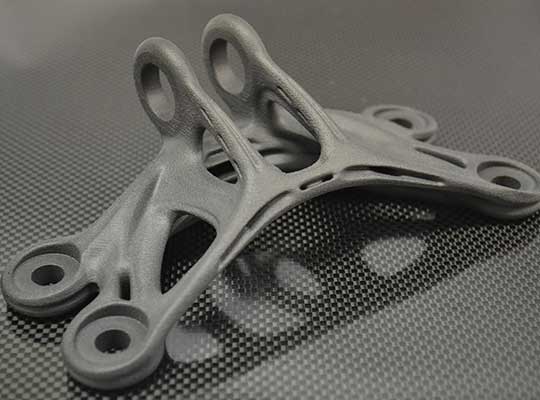
Finding a precision machining partner is more than just a vendor search—it’s choosing a critical extension of your own engineering and production team. The right partner ensures your most demanding components are made correctly, on time, and to budget. The wrong one can lead to costly delays, failed products, and reputational damage. So, what truly separates a top-tier precision machining company from the rest? It’s a blend of cutting-edge technology, deeply skilled people, and a proven process that prioritizes your success. This guide will walk you through the essential criteria, from understanding core capabilities and global benchmarks to evaluating real-world problem-solving skills. By the end, you’ll have a clear framework to select a partner who not only makes precise parts but also becomes a trusted ally for your manufacturing challenges.
What Is Precision Machining, Really?
Let’s start with the basics. If traditional machining is like carving with a chisel, precision machining is like micro-sculpting with a laser-guided scalpel. It’s a subtractive manufacturing process where material is removed from a solid block using computer-controlled machines to create parts with exceptionally tight dimensional tolerances.
Why does this matter? In industries like aerospace, medical devices, and automotive, a deviation as thin as a human hair can cause catastrophic failure. A reliable precision machining company achieves accuracies down to ±0.0001 inches (2.54 microns). They use advanced CNC (Computer Numerical Control) machines, sophisticated software, and rigorous quality protocols to ensure every part—from a prototype to a production run of 100,000—is identical.
- Key Stat: The global precision machining market is expected to reach $189.8 billion by 2030, driven by demand from these high-stakes sectors (Source: Grand View Research).
Key Methods: What’s in Their Toolkit?
A true partner offers a versatile portfolio of methods. The right technique depends on your part’s geometry, material, and tolerance needs. Here’s a breakdown of core services:
| Machining Method | How It Works | Ideal For | Tolerance Range |
|---|---|---|---|
| CNC Milling | A rotating cutter removes material from a stationary workpiece. Multi-axis (3-5 axis) machines create complex 3D shapes. | Engine blocks, aerospace brackets, mold tools. | ±0.0002–±0.001 in. |
| CNC Turning | The workpiece spins while a stationary cutting tool shapes it. Perfect for cylindrical parts. | Shafts, pins, medical implant stems. | ±0.0001–±0.0008 in. |
| Swiss Machining | A specialized type of turning where the material bar is guided for extreme stability. Excels at tiny, complex parts. | Watch components, dental implants, electronic connectors. | ±0.0001–±0.0003 in. |
| EDM (Electrical Discharge Machining) | Uses controlled electrical sparks to erode material. Can cut ultra-hard metals and intricate shapes. | Injection molds, turbine blade details, precision gears. | ±0.0001–±0.0005 in. |
| Precision Grinding | Uses an abrasive wheel to achieve ultra-smooth surfaces and the tightest tolerances. | Bearings, valve seats, surgical tool tips. | ±0.00005–±0.0002 in. |
The best partners don’t just list these services; they advise you on the most efficient and cost-effective method for your specific project.
Where Does the Best Work Come From?
When sourcing globally, it’s useful to know the strengths of different regions. While China is a volume leader, precision excellence is more specialized.
- United States & Germany: Lead in high-precision, advanced machining for aerospace, medical, and automotive. They excel in innovation, R&D investment, and extreme tolerances for critical applications.
- Japan & Switzerland: Renowned for micro-precision machining and ultra-reliable machine tools (like Fanuc and Swiss-type lathes). They dominate in electronics and intricate medical devices.
- Key Takeaway: Location is less important than capability. A trustworthy partner, whether local or overseas, will have modern equipment, adhere to international quality standards (like ISO 9001), and possess deep expertise in your industry.
Who’s Actually Making Your Parts?
The machines are only as good as the people running them. The skill of the machinist is your greatest safeguard. Look for partners who invest in certified, experienced professionals with these core competencies:
- Advanced CNC Programming: They should master G-code and CAM software to optimize tool paths for speed and accuracy.
- Expert Blueprint Reading: Fluency in GD&T (Geometric Dimensioning & Tolerancing) is non-negotiable for interpreting complex designs.
- Precision Tool Selection & Setup: Knowing the exact cutter, speed, and feed for materials like titanium or PEEK plastic prevents errors.
- Meticulous Quality Control: They must be proficient with CMMs (Coordinate Measuring Machines) and micrometers, performing checks during production.
What Services Mark a True Partner?
Beyond basic cutting, a full-service partner provides solutions that simplify your supply chain.
- Design for Manufacturability (DFM) Feedback: They should proactively suggest design tweaks to improve durability, lower cost, and speed production.
- End-to-End Production: From rapid prototyping to high-volume manufacturing, ensuring consistency from first part to last.
- Secondary & Value-Added Services: Look for in-house heat treating, plating, precision grinding, and assembly. This single-point accountability reduces risk.
- Comprehensive Quality Assurance: This includes material certifications, first-article inspection reports, and full lot traceability.
Can They Solve Real-World Problems?
Let’s move from theory to practice. A partner’s worth is proven in challenging projects.
Case Study 1: Oilfield Tool Refurbishment
A North American energy company was spending over $750,000 monthly replacing worn drill bits. Our team implemented a precision refurbishment program:
- Inspection & Mapping: Using laser scanners to measure wear.
- Precision Re-machining: CNC turning to restore critical dimensions and threads.
- Advanced Re-coating: Applying a proprietary wear-resistant coating.
- Rigorous Final QC: Pressure testing and dimensional verification.
Result: Bit life was extended by 80%, saving the client $825,000 annually with a 48-hour turnaround.
Case Study 2: High-Volume Automotive Sensor Housings
An EV manufacturer needed 500,000 aluminum sensor housings per month with zero defects.
- Our Solution: We conducted a DFM analysis, simplifying the part for faster machining. We then deployed a fully automated cell with robotic part loading and in-process CMM verification.
- Result: We achieved a scrap rate below 0.3%, reduced per-part cost by 18%, and provided full traceability data for industry compliance.
How Do You Evaluate a Potential Partner?
Armed with this knowledge, use a concrete checklist:
- Ask for Certifications: ISO 9001 is basic. For medical, demand ISO 13485; for aerospace, AS9100.
- Review Their Equipment List: Look for modern, multi-axis CNC machines and advanced metrology tools.
- Demand Industry-Specific Case Studies: Ask for examples that mirror your project’s complexity.
- Request a Sample & Full Report: Have them machine a test part and provide the complete inspection data packet.
- Assess Communication: Do they ask insightful DFM questions? Are they a transparent, collaborative problem-solver?
Conclusion
Choosing a precision machining partner is a strategic decision. The best are defined not just by their machine shop floor, but by their engineering mindset, commitment to quality, and desire to be a true collaborator. They bring experience, expertise, and a trustworthy process to the table, transforming your designs into flawless, reliable components. By focusing on the criteria outlined—technical capabilities, skilled personnel, full-service offerings, and proven problem-solving—you can confidently select a partner who will be instrumental in your manufacturing success.
FAQ: Precision Machining Partners
What’s the biggest red flag when choosing a precision machining company?
Beware of a lack of communication or transparency. If they don’t ask detailed questions about your application, refuse to provide inspection reports, or are vague about their process, it indicates potential quality and reliability issues.
How do lead times typically work for precision projects?
It varies: Prototypes can take 1-3 days, low-volume batches (100-1,000 parts) 1-3 weeks, and high-volume production (10,000+) 4-8 weeks. A trustworthy partner will give you a realistic timeline and stick to it.
Is it more cost-effective to source domestically or overseas?
For simple, high-volume parts, overseas sourcing may offer lower initial costs. For complex, high-tolerance, or low-volume parts, domestic partners often provide better total value through reduced risk, faster iteration, easier communication, and stronger IP protection.
What documentation should I expect from my machining partner?
You should always receive a First Article Inspection (FAI) report, material certifications, and certificates of conformity. For regulated industries, expect full device history records and lot traceability.
Can one partner handle both my prototype and full production run?
Absolutely. In fact, using the same partner for both phases is a major advantage. It ensures seamless knowledge transfer, consistent quality, and avoids the costly requalification process that comes with switching vendors.
Discuss Your Projects with Yigu Rapid Prototyping
At Yigu, we live and breathe precision. For over a decade, we’ve partnered with innovators in medical, aerospace, automotive, and energy to turn complex challenges into manufacturing successes. Our approach combines state-of-the-art CNC technology, a team of highly certified machinists and engineers, and a meticulous, process-driven quality system.
We don’t just make parts; we become an integral part of your product development cycle. From initial DFM consultation through precision prototyping and scalable, automated production, we ensure your project benefits from seamless integration, risk reduction, and unwavering commitment to quality.
Ready to see the difference a true partner can make? Contact us today for a free, detailed project review. Let’s discuss how we can help you achieve precision, reliability, and peace of mind.