
Introduction
In furniture manufacturing, the plastic chair mould is everything. It determines whether your chairs have smooth surfaces, consistent dimensions, and structural strength. It controls your cycle times, production costs, and profit margins.
But finding a reliable mould is hard. Manufacturers struggle with uneven wall thickness, poor parting lines, short mould life, and excessive cycle times. Many suppliers claim quality—few deliver.
This guide cuts through the confusion. You’ll learn about materials, design essentials, manufacturing processes, quality control, and maintenance—everything needed to select and work with plastic chair moulds that perform.
What Materials Make a High-Quality Plastic Chair Mould?
The foundation of a great mould lies in its materials and composition. These directly impact durability, performance, and part quality.
Key Steels for Mould Construction
Premium moulds use high-grade steels with excellent wear resistance and heat tolerance. These maintain precision over hundreds of thousands of cycles.
| Steel Grade | Properties | Best For |
|---|---|---|
| DIN 1.2316 | Corrosion-resistant, high polishability | High-gloss finishes, humid environments |
| DIN 1.2738 | Pre-hardened, good machinability | Large chair moulds, general purpose |
| DIN 1.2344 | Hot-work steel, high wear resistance | High-volume production, abrasive materials |
| M300 | Premium corrosion resistance, excellent polish | Medical-grade, optical surfaces |
| 718 | Pre-hardened, uniform hardness | Large cavities, complex geometries |
| P20 | General purpose, cost-effective | Prototype moulds, low-volume runs |
Hardness Requirements
Cavity and core components: Optimal hardness is 32-50 HRC. This range balances wear resistance with machinability.
Wear parts: Need 55-60 HRC for extended durability. This includes:
- Cutting edges
- Slide faces
- High-wear areas near gates
Plastic Resin Compatibility
Moulds must work with various plastics. Common materials for plastic chairs include:
- PP (Polypropylene) : Most common for chairs. Low MFI (Melt Flow Index 4-6) preferred for strength, though it flows poorly.
- PE (Polyethylene) : Used for outdoor furniture, weather-resistant applications.
- ABS: For chairs requiring higher impact strength and better surface finish.
- PVC: For specialty applications requiring chemical resistance.
- PS (Polystyrene) : For low-cost, indoor-only chairs.
- POM (Acetal) : For components requiring stiffness and low friction.
Surface Treatments
Hard chrome plating is recommended for moulds used with recycled materials. Recycled plastics contain contaminants that accelerate wear. Chrome plating:
- Prevents premature wear
- Resists rust and corrosion
- Extends finish life
Expected Lifespan
With proper materials and maintenance, a quality plastic chair mould should last 500,000 to 5,000,000 shots. The wide range depends on:
- Materials processed (reinforced plastics wear faster)
- Maintenance frequency
- Production volume
- Cooling system effectiveness
What Design Elements Make a Plastic Chair Mould Exceptional?
Superior design distinguishes an average mould from an exceptional one. It impacts both functionality and visual appeal.
Ergonomic Considerations
Mould designs must incorporate ergonomic principles:
- Comfortable seating angles
- Proper lumbar support
- Smooth edges that won’t catch clothing
- Structural integrity under load
Parting Line Excellence
Smooth parting lines without sharp edges require precision manufacturing. The process involves:
Stage 1: Rough milling —Remove bulk material quickly.
Stage 2: Stress-relieved half-precise milling —Leave 0.3mm for finishing. Stress relief is critical—it prevents steel deformation during final cuts.
Stage 3: Final precise milling —Cutting depths no greater than 0.08mm. This ensures:
- Smooth surfaces
- Precise fit between mould halves
- No visible witness lines on finished chairs
Wall Thickness Uniformity
Uneven wall thickness causes multiple problems:
- Injection imbalances
- Extended cooling times
- Shrinkage marks (sink marks)
- Warping and dimensional variation
Proper 3D design and precise CNC machining prevent these issues. Uniform walls mean:
- Faster cycles
- Consistent quality
- Better structural strength
Stackability Engineering
Chairs must stack without damage—both during shipping and in use. This requires careful consideration of:
- Chair geometry: Taper and nesting angles
- Moulding deformation: How the part shrinks affects stack height
- Contact points: Where stacked chairs touch (and potentially scratch)
Specialized Features
Interchangeable chair back inserts allow cost-effective customization. One base mould with multiple inserts produces different chair styles—saving tooling costs.
Gas-assisted molding creates complex hollow structures. Benefits:
- Reduced weight
- Material savings
- Improved surface finish
- Reduced sink marks on thick sections
How Are Precision Plastic Chair Moulds Manufactured?
The manufacturing process is a complex sequence requiring precision, expertise, and advanced technology.
Step-by-Step Mould Production
Step 1: Design and Analysis
Use software like Pro/Engineer, UG, and Moldflow for:
- 3D modelling
- Plastic flow simulation
- Deformation analysis
- Cooling optimization
Step 2: Material Selection and Preparation
Choose appropriate steels. Conduct metallurgical analysis to ensure:
- No segregation in core materials
- No internal scars or inclusions
- Consistent composition throughout
Step 3: CNC Machining
Multi-stage milling with strict cooling requirements to prevent steel deformation during processing. Heat buildup during machining can distort the steel—cooling controls this.
Step 4: Heat Treatment
Achieve precise core hardness (typically 46-50 HRC) with uniform distribution. Variation should be less than 1 HRC across 9 measurement points.
Step 5: Electrode Processing
Fine and rough electrode machining with precise benchmarks and post-processing inspection. Electrodes create the detailed cavity shapes through EDM (electrical discharge machining).
Step 6: Finishing Operations
- EDM processing: Controlled spark gap of 0.03-0.05mm
- Polishing: Runner surfaces to ▽6 or ▽7 finish (mirror-like)
- Verticality: Ensure within 0.02mm
Step 7: Assembly and Quality Inspection
Comprehensive cleaning, anti-rust treatment, and inspection of all components before assembly.
Step 8: Tryout and Validation
Test with 100-150 cycles to ensure defect-free production before final approval.
Typical Timeline
Quality plastic chair moulds typically require 60 working days for delivery. Rushed jobs often compromise quality.
Performance Expectations
With proper design and manufacturing:
- Cycle times: 35-50 seconds for chairs weighing 1700-2400g
- Cooling water temperature: 8-12°C optimal
- Machine requirements: Accumulators recommended for faster plastic melt and injection
What Types of Plastic Chair Moulds Exist?
Plastic chair moulds cater to a wide range of applications, each with specific requirements.
Specialized Mould Types
| Mould Type | Key Requirements | Typical Applications |
|---|---|---|
| Arm Chair Moulds | Ergonomic arm support, smooth finish | Living rooms, waiting areas |
| Armless Chair Moulds | Stackable design, lightweight | Cafeterias, event seating |
| Dinner Chair Moulds | Comfortable seating height, easy-clean surfaces | Restaurants, dining rooms |
| Children Chair Moulds | Safety features, smaller dimensions, durable | Schools, daycares, homes |
| Gas-Assisted Chair Moulds | Complex hollow sections, reduced weight | Modern designs, premium products |
| Plastic Rattan Chair Moulds | Natural rattan mimicry, weather resistance | Patios, outdoor cafes |
| Foldable Chair Moulds | Hinge integration, locking mechanisms | Multipurpose rooms, events |
| Bus Chair Moulds | High durability, safety compliance | Public transportation |
| Beach Chair Moulds | UV resistance, lightweight, portable | Resorts, outdoor recreation |
Application Requirements
| Application | Key Requirements | Typical Materials |
|---|---|---|
| Indoor Seating | Ergonomic design, smooth finish, comfort | PP, ABS |
| Outdoor Furniture | Weather resistance, UV stabilization | UV-stabilized PP, PE |
| Commercial Use | High durability, stackability, fire resistance | Reinforced PP, flame-retardant grades |
| Medical Facilities | Easy-clean surfaces, chemical resistance | PVC, PP, antimicrobial additives |
| Industrial Settings | Heavy-duty construction, impact resistance | High-impact PP, glass-filled grades |
How Is Quality Controlled in Plastic Chair Mould Manufacturing?
Maintaining strict quality control throughout the process is essential for producing reliable, high-performance moulds.
Critical Quality Assurance Measures
Dimensional Accuracy
Use precision tools to maintain tolerances within ±0.01mm for critical components. This includes:
- Cavity dimensions
- Core dimensions
- Guide pin locations
- Ejector pin positions
Steel Hardness Verification
Measure hardness at multiple points to ensure:
- Cavity and core meet specified requirements
- Variation less than 1 HRC across the component
- Proper heat treatment throughout
Cooling System Validation
Check that cooling systems function properly:
- In-core baffle cooling: Ensures uniform temperature in deep cores
- Cavity plate chain drilling: Provides consistent cooling across large surfaces
- Flow rate: Adequate water flow for heat removal
- Temperature uniformity: No hot spots
Venting System Inspection
Verify adequate air venting in complex areas (like backrests) to prevent air traps during injection. Trapped air causes:
- Burn marks
- Incomplete filling
- Weak weld lines
Parting Line Inspection
Ensure smooth transitions without sharp edges that could:
- Cause injury to users
- Create visible witness lines
- Lead to premature wear
Functional Testing
Evaluate moving components:
- Core pulling systems (motor, oil cylinder, stripping plate)
- Slide actions
- Ejector systems
- Hydraulic or pneumatic circuits
Certification Compliance
Adhere to quality standards with proper documentation. ISO certifications provide third-party verification of quality systems.
How Do You Maintain a Plastic Chair Mould for Maximum Life?
Proper maintenance is key to extending mould life and ensuring consistent production quality.
Essential Maintenance Practices
Regular Cleaning
Remove residual plastic and debris. Buildup affects:
- Part quality (surface defects)
- Ejection (sticking parts)
- Cooling efficiency
Lubrication
Properly lubricate moving components:
- Core pulling systems
- Slide mechanisms
- Ejector pins
- Guide pins and bushings
Rust Prevention
Maintain anti-rust treatments, especially in high-humidity environments. Even minor rust affects:
- Surface finish
- Part release
- Dimensional accuracy
Periodic Inspection
Check for signs of wear, particularly in:
- High-stress areas
- Parting lines
- Gate locations
- Ejector pin holes
Polishing Maintenance
Re-polish surfaces as needed. This is especially important for moulds without hard chrome plating. Polishing restores:
- Surface finish quality
- Release properties
- Appearance of finished parts
Cooling System Maintenance
Ensure unobstructed water flow and proper temperature control. Mineral deposits and debris can:
- Reduce cooling efficiency
- Extend cycle times
- Cause uneven cooling
Storage Practices
Use appropriate storage methods when moulds are not in use:
- Clean thoroughly before storage
- Apply rust preventive
- Store in dry, temperature-controlled environment
- Protect critical surfaces from damage
Special Considerations for Recycled Materials
Moulds used with recycled materials require more frequent maintenance. Recycled plastics contain contaminants that:
- Accelerate wear
- Cause buildup on surfaces
- Increase corrosion risk
Hard chrome plating significantly reduces these issues by providing a hard, corrosion-resistant surface.
Conclusion: Quality Moulds Are Investments, Not Expenses
A plastic chair mould isn’t just a tool—it’s the heart of your production line. It determines:
- Quality: Smooth surfaces, consistent dimensions, structural strength
- Efficiency: Cycle times, energy consumption, labor requirements
- Profitability: Scrap rates, maintenance costs, production uptime
Choosing the right mould means understanding:
- Materials: Premium steels with appropriate hardness
- Design: Ergonomic, uniform walls, excellent parting lines
- Manufacturing: Precision machining, proper heat treatment, rigorous quality control
- Maintenance: Regular cleaning, lubrication, inspection
When all these elements come together, a plastic chair mould becomes a long-term asset—delivering hundreds of thousands of quality parts while minimizing costs and downtime.
FAQ: Plastic Chair Moulds
What factors determine the cycle time of a plastic chair mould?
Cycle time (typically 35-50 seconds for standard chairs) depends on: cooling water temperature (8-12°C optimal), chair weight (1700-2400g), cooling channel design, and whether the injection machine uses accumulators for faster plastic melt and injection.
How can I ensure my plastic chair mould produces chairs with even wall thickness?
Even wall thickness requires: proper 3D design, precise CNC milling (avoid excessive cutting depths), adequate polishing of cavities and cores, and Moldflow analysis during design to optimize material flow.
What is the typical lifespan of a high-quality plastic chair mould?
With proper maintenance, high-quality moulds from premium steels (like DIN 1.2344) achieve 500,000 to 5,000,000 shots, depending on materials processed and maintenance practices.
Why do some moulds produce chairs with visible parting lines?
Visible parting lines result from: insufficient precision in final milling (cutting depths too large), inadequate polishing, misalignment during assembly, or mould wear over time.
What’s the best steel for high-volume plastic chair production?
DIN 1.2344 (hot-work steel) offers excellent wear resistance for high-volume production. For corrosion resistance (especially with recycled materials), DIN 1.2316 or M300 are better choices.
How important is hard chrome plating for plastic chair moulds?
Very important for moulds using recycled materials. Chrome plating prevents premature wear from contaminants and extends finish life significantly. For virgin materials, it’s optional but still beneficial.
Can one mould produce different chair styles?
Yes—using interchangeable inserts for features like chair backs. One base mould with multiple inserts produces different styles, saving tooling costs for product variations.
Discuss Your Projects with Yigu Rapid Prototyping
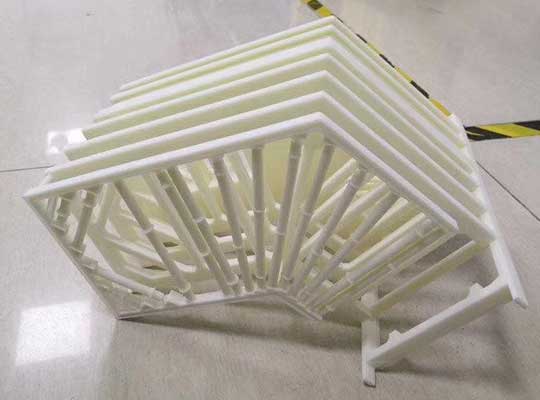
At Yigu Technology, we know that successful plastic chair mould projects begin with accurate prototypes. Our rapid prototyping services help you:
- Validate chair designs before mould production
- Identify potential issues early in development
- Reduce development time
- Minimize costly mould modifications
We’ve seen too many manufacturers commit to expensive moulds without proper validation—only to discover design flaws after cutting steel. Prototyping first transforms that risk into certainty.
Got a chair design ready for production? Let’s talk. Contact Yigu’s engineering team to discuss your prototyping needs. We’ll help you validate your design, optimize for manufacturing, and ensure your final mould delivers the quality, efficiency, and longevity your business demands.