
Introduction
Mould machining is the unsung hero of modern manufacturing. It creates the tools that produce billions of parts—from plastic bottles and smartphone cases to medical implants and automotive components.
Without precision moulds, mass production as we know it wouldn’t exist. The accuracy and efficiency of mould machining directly impact product quality, production costs, and time-to-market.
This comprehensive guide covers everything: core concepts, key technologies like CNC machining, method comparisons, real-world case studies, and practical insights to help professionals optimize their workflows.
What Is Mould Machining and Why Does It Matter?
The Basic Definition
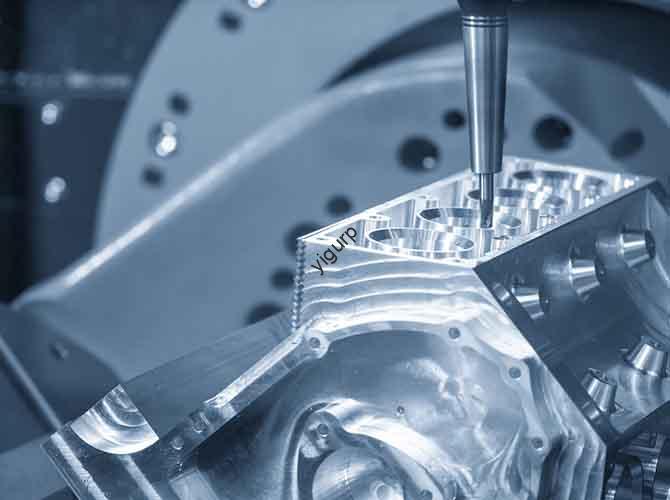
Mould machining refers to the subtractive and formative manufacturing processes used to create moulds (or dies)—tooling that shapes materials like plastic, metal, rubber, or composites into specific geometries.
Unlike direct part manufacturing, mould machining focuses on producing the “tool” that will then be used for high-volume production of end components.
Key Objectives
Precision and Accuracy: Moulds must adhere to strict dimensional tolerances—typically ±0.005 mm for critical features. Even minor deviations lead to defective components or mould failure.
Surface Quality: The mould’s cavity surface directly impacts the finished part’s appearance. Machining must achieve required surface roughness—Ra values as low as 0.02 μm for high-gloss plastic parts—to avoid post-processing.
Durability: Moulds face repeated cycles of pressure, temperature, and wear. Machining must ensure the mould material (H13 steel, P20 steel) withstands 100,000+ cycles.
Efficiency: Balancing machining speed with quality to minimize lead times and costs. Optimized toolpaths and process selection are critical.
What Are the Core Technologies in Mould Machining?
CNC Machining: The Backbone of Precision Mould Manufacturing
Computer Numerical Control (CNC) machining is the most widely used technology, offering unmatched precision, repeatability, and flexibility. CNC systems use pre-programmed software to control machine tools, eliminating human error and enabling complex geometries impossible with manual machining.
Key CNC Processes for Moulds:
| Process | Application |
|---|---|
| CNC Milling | Creating 3D features like mould cavities, cores, and cooling channels. Vertical/horizontal mills used. 5-axis milling enables simultaneous machining of multiple surfaces, reducing setup times and improving accuracy for complex moulds (impeller fan moulds). |
| CNC Turning | Cylindrical components: pins, bushings, nozzles. Swiss-style CNC turning preferred for small, high-precision mould parts. |
| EDM (Electrical Discharge Machining) | Critical for hard-to-reach features (deep cavities, thin walls) and hardened mould materials. Wire EDM cuts complex shapes; sinker EDM creates cavities and impressions. |
Industry Fact: Over 85% of precision injection moulds are manufactured using CNC machining technologies (MoldMaking Technology 2024 Industry Report). 5-axis CNC machining adoption has increased by 30% in the past 5 years, reducing mould lead times by up to 40% .
3D Printing vs. CNC Machining for Mould Prototyping
While CNC machining is the gold standard for production moulds, 3D printing has emerged as a viable option for mould prototyping.
| Factor | 3D Printing | CNC Machining |
|---|---|---|
| Precision | ±0.1 mm (resin: ±0.05 mm) | ±0.001 – ±0.005 mm |
| Material Compatibility | Limited (resins, thermoplastics, metal powders) | All mould materials (steel, aluminum, copper) |
| Lead Time (Prototyping) | Fast (24–48 hours for small moulds) | Slower (3–5 days for small moulds) |
| Durability | Low (10–100 prototype cycles) | High (10,000+ production cycles) |
| Cost (Low-Volume) | Lower (no toolpath programming for complex geometries) | Higher (programming and setup costs) |
How Is Mould Machining Applied in Different Industries?
Injection Mould Machining: Principles and Best Practices
Injection moulding is the most common application, producing billions of plastic parts annually—automotive components, consumer electronics, medical devices.
Key Considerations:
Cavity and Core Design: Machining must accurately replicate part geometry, including draft angles (1–2°) for easy ejection and undercuts requiring complex machining or sliding cores.
Cooling Channels: Properly machined channels (typically 8–12 mm diameter) ensure uniform heat distribution, reducing cycle times by up to 30% and preventing warpage. 5-axis CNC machining is ideal for creating conformal cooling channels that follow the cavity’s contour.
Material Selection: Match mould material to the plastic. P20 steel for low-volume (up to 100,000 cycles). H13 steel for high-volume, high-temperature plastics (ABS, PC) due to heat resistance.
Medical Device Mould Machining: Ultra-Precision Requirements
Medical devices demand the highest precision. Components like syringe barrels, catheter tips, and implantable parts require microns-level accuracy and biocompatibility.
Case Study: Catheter Tip Mould
A medical device manufacturer needed a mould for a 2 mm diameter catheter tip with tolerance of ±0.002 mm.
Challenge: Complex internal geometry and smooth surface finish to prevent bacterial growth.
Solution: 5-axis ultra-precision CNC machining center with 60,000 RPM spindle and diamond-coated tools. Process included roughing, semi-finishing, and finishing passes with in-process laser measuring.
Result: Mould achieved required tolerance and surface finish (Ra = 0.02 μm), enabling production of 500,000+ catheter tips without defects. Automation reduced human error and increased consistency.
Complex Impeller Fan Mould Machining
Impeller fan moulds are among the most complex due to 3D curved blades, tight tolerances, and aerodynamic efficiency requirements.
Case Study: 300 mm Impeller with 12 Curved Blades
An industrial fan manufacturer needed a mould with blade tolerance of ±0.005 mm and smooth surface finish.
Challenge: Traditional 3-axis machining required multiple setups, causing alignment errors and inconsistent blade geometry.
Solution: 5-axis CNC machining with CAD/CAM generating optimized toolpaths for each blade. Used 2 mm ball-end mill and 40,000 RPM spindle.
Result: Mould produced in 5 days (down from 12 days with 3-axis). Impellers had consistent aerodynamic performance, reducing energy consumption by 15% .
How Do Mould Machining Methods Compare?
When producing moulds, manufacturers choose between mould machining (subtractive) and cast molding (formative) .
| Factor | Mould Machining (CNC/EDM) | Cast Molding |
|---|---|---|
| Precision | High (±0.001 – ±0.005 mm) | Moderate (±0.05 – ±0.1 mm) |
| Complexity | Ideal for complex 3D geometries, undercuts | Limited by moldability of casting material |
| Lead Time (Low-Volume) | Shorter (3–7 days for small moulds) | Longer (2–4 weeks for tooling and casting) |
| Cost (High-Volume) | Higher (per-mould cost; fixed setup) | Lower (economies of scale for 10+ moulds) |
| Material Options | Wide (steel, aluminum, copper) | Limited to castable materials (cast iron, bronze) |
| Surface Finish | Excellent (Ra = 0.02 – 0.8 μm) | Poorer (requires post-processing) |
Industry Trend: According to the American Mold Builders Association (2024), mould machining is preferred for high-precision, low-to-medium volume mould production (80% of applications) . Cast molding is used for low-precision, high-volume moulds (construction hardware) where cost is primary driver.
What Practical Tips Optimize Mould Machining Workflows?
Eliminating Chatter
Chatter (vibrations between tool and workpiece) causes poor surface finish, tool wear, and reduced accuracy.
Solutions:
- Use rigid toolholders; reduce tool overhang to 3× tool diameter or less
- Adjust cutting parameters: reduce speed, increase feed, or decrease depth of cut
- Use damping technologies (vibration-damping toolholders) for long-reach applications
- Optimize toolpath design to avoid sudden cutting direction changes
Analyzing and Optimizing Cutting Conditions
Select the Right Tool Material:
- Carbide tools for hard mould materials (H13 steel)
- High-speed steel (HSS) for softer materials (aluminum)
Determine Optimal Cutting Speed: For carbide cutting H13 steel, use 100–150 m/min.
Adjust Feed Rate: Balance with surface finish requirements. Higher feed reduces cycle time but may increase roughness.
Use Coolant Effectively: Reduces tool temperature, improves finish. For hard materials, use high-pressure coolant (300–1000 bar) to flush chips and cool cutting zone.
Implementing Five-Axis Machining
Five-axis mould machining offers significant benefits:
- Reduced setup times
- Improved accuracy
- Ability to machine complex geometries in single operation
To implement successfully:
- Invest in CAD/CAM software with advanced five-axis toolpath generation (Mastercam, SolidWorks CAM)
- Train operators on programming and collision avoidance
- Start with simple parts to build expertise
- Use in-process measuring tools for real-time adjustments
Conclusion: Mould Machining Is the Foundation of Precision Manufacturing
Mould machining transforms design concepts into the tools that shape our world. Whether for injection moulding, medical devices, or complex impeller fans, the principles remain constant:
- Precision measured in microns
- Surface quality that transfers to every part
- Durability for hundreds of thousands of cycles
- Efficiency that balances speed with quality
With technologies like 5-axis CNC, EDM, and advanced CAM software, mould makers can achieve geometries and accuracies impossible just decades ago. And with trends toward automation, in-process measurement, and hybrid manufacturing, the field continues to evolve.
For professionals in automotive, aerospace, medical, and consumer goods, understanding mould machining is essential to making informed decisions that impact product quality, production costs, and time-to-market.
FAQ: Mould Machining
What’s the difference between mould machining and die machining?
Terms are often used interchangeably, but moulds typically shape plastics, rubber, or composites (injection moulds), while dies are used for metal forming (stamping dies, extrusion dies). Machining processes are similar, but dies often require harder materials and higher pressure resistance.
What’s the typical lead time for mould machining?
Varies by complexity, size, and technology:
- Simple injection mould (small part, 2-cavity): 3–7 days with CNC
- Complex 5-axis mould (impeller fan): 1–2 weeks
- Ultra-precision medical moulds: 2–4 weeks (additional quality checks)
How much does mould machining cost?
Depends on material, complexity, precision, volume:
- Small, simple aluminum injection mould: $1,000–$5,000
- Complex steel mould for automotive: $50,000–$200,000
- Ultra-precision medical moulds: $200,000+ (specialized materials and machining)
What are the most common defects and how to avoid them?
Common defects: Dimensional inaccuracies, surface roughness, tool marks.
Avoid by:
- Using high-precision equipment
- Optimizing toolpaths
- Selecting right tool and coolant
- Implementing in-process quality checks
- Reducing chatter through improved rigidity and parameter adjustment
Is 3D printing viable for production moulds?
Currently, no for high-volume production due to material limitations and durability issues. However, it’s ideal for prototyping (10–100 cycles) and low-volume production (1,000+ cycles for some metal 3D-printed moulds). CNC machining remains the standard for high-volume, high-precision production moulds.
What materials are commonly used for moulds?
- P20 steel: Low to medium volume (up to 100,000 cycles)
- H13 steel: High-volume, high-temperature plastics
- Stainless steel: Corrosion resistance, medical applications
- Aluminum: Prototyping, low-volume runs
- Copper alloys: For areas requiring high thermal conductivity
How important are cooling channels in mould design?
Extremely important. Properly designed cooling channels can:
- Reduce cycle times by 30%
- Prevent part warpage
- Improve part quality
- Extend mould life
Conformal cooling (channels following cavity contour) is the most effective but requires 5-axis machining or 3D printing.
Discuss Your Projects with Yigu Rapid Prototyping
At Yigu Technology, we specialize in providing customized mould machining solutions tailored to your industry and project. With over 15 years of experience in precision mould manufacturing, our team leverages advanced technologies—5-axis CNC machining, EDM, and automation—to deliver high-quality moulds meeting strictest tolerances.
Whether you need:
- Injection moulds for automotive components
- Ultra-precision moulds for medical devices
- Complex moulds for impeller fans
We combine technical expertise with practical insights to optimize your workflow. Our ISO 9001 certification and state-of-the-art measuring equipment ensure every mould meets specifications.
Time-to-market and cost efficiency are critical. We focus on reducing lead times through optimized toolpath design and automation, while maintaining competitive pricing without compromising quality.
Got a mould project? Let’s talk. Contact Yigu’s engineering team to discuss your requirements. We’ll help you turn design concepts into high-performance moulds that drive production efficiency and product quality.