
How does milling sheet improve precision and efficiency in manufacturing?

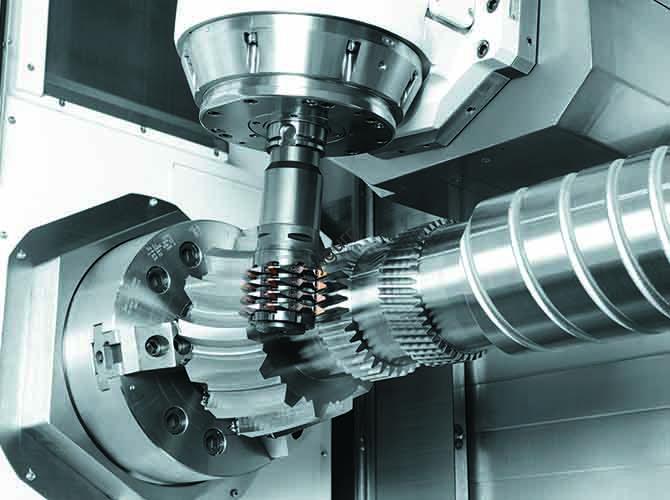
cnc gear machining

In the machining of precision parts in aerospace, mass production in automobile manufacturing, and complex cavity milling in the mold industry, milling sheet have always played the role of “invisible heroes”. It not only directly determines the processing accuracy and production efficiency of products, but also profoundly affects the production cost and market competitiveness of enterprises. However, with the wide variety of milling disc types, complex manufacturing processes, and ever-evolving technological trends on the market, many engineers and buyers are confused: How to choose the right milling disc? What are the differences between milling discs of different materials and structures? What are the innovative breakthroughs of milling discs in the intelligent era?

This article will systematically disassemble the core knowledge of milling discs for you, combined with real industry cases and practical tools, from basic principles to practical applications, from technical analysis to market trends, to help you thoroughly understand the “past and present life” and “future direction” of milling discs, so that every selection is accurate and efficient, and every processing is twice the result with half the effort.

Table of Contents

1. Overview of the basics of milling discs: understand the core logic of “cutting tools”

1.1 Milling Blade Definition: What exactly is a milling disc?

Milling sheets are indexable tool components that are directly involved in cutting in milling operations, usually fixed to the milling cutter body by screws or slots, used to remove workpiece material and form the desired shape. Unlike traditional monoblock milling cutters, the milling blades are replaceable, and when the cutting edge wears out, the insert can be replaced and continued to be used, significantly reducing tool costs and tool change time. In simple terms, the milling disc is like the “teeth” of the milling cutter, while the tool body is the “skeleton”, and the two work together to achieve efficient cutting.

1.2 Milling disc material type: Which one should I choose for different scenarios?

The material of the milling blade directly determines its cutting performance, and the current mainstream materials can be divided into four categories, each suitable for different processing scenarios:

Material typeCore featuresApplicable scenariosTypical case
cemented carbideHigh hardness (HRC 90+), high wear resistance, high temperature resistance (up to 1000°C)Steel, cast iron, stainless steel and other metal materials are processedAn auto parts factory uses carbide milling discs to process the engine block, which increases the service life by 3 times compared with high-speed steel
high-speed steelGood toughness, strong impact resistance, easy to grindSoft material processing such as non-ferrous metals, mild steel, and plasticsSmall machine shops machine aluminum housings and use high-speed steel milling discs to avoid chipping problems
ceramicsUltra-high temperature stability (above 1200°C), strong chemical inertnessHigh-hardness alloys, hardened steel, and other difficult-to-process materialsAerospace company uses ceramic milling discs to machine titanium parts, increasing cutting speed by 50%
PCBN (Polycrystalline Cubic Boron Nitride)It is second only to diamond in hardness and has excellent wear resistanceFinishing of high-hardness steel and cast ironThe mold factory processes hardened die steel (HRC 60+) with PCBN milling discs with a surface roughness of Ra 0.2μm

1.3 Milling Plate Structure Composition: These details affect the cutting effect

A high-quality milling disc with a hidden “mystery” in its structural design, the core components include:

  • Cutting edge: the part that directly touches the workpiece, the cutting edge angle (such as rake angle, trail angle) determines the cutting resistance and chip evacuation effect, common rake angles include positive rake angle (suitable for soft materials), negative rake angle (suitable for hard materials);
  • Blade matrix: the main body that carries the cutting edge, the thickness and size need to be accurately matched with the tool body, usually using precision stamping or grinding processing;
  • Chip discharge groove: used to discharge chips, the groove design (such as straight groove, spiral groove) needs to be adjusted according to the processing material to avoid chip blockage and tool wear;
  • Mounting hole/card slot: The structure connecting the blade and the tool body, the accuracy directly affects the machining stability, and the error should be controlled within 0.01mm.

1.4 Working principle of milling discs: the “underlying logic” of the cutting process

The working nature of the milling disc is “material removal”, and the process can be divided into three stages:

  1. Cutting stage: the milling blade rotates with the tool body, and the cutting edge cuts into the workpiece at a certain speed, and the workpiece material is plastically deformed by extrusion;
  2. Cutting stage: The cutting edge continues to advance, stripping the deformed material from the workpiece, forming chips and discharging them along the chip discharge groove;
  3. Cut-out stage: The cutting edge leaves the workpiece and completes a cutting cycle.

Key parameters explained:

  • Cutting speed (Vc): the linear speed of the cutting edge of the milling disc, usually 100-300m/min when processing steel parts with carbide;
  • Feed Rate (FZ): The feed per tooth, that is, the distance traveled by each cutting edge per revolution, directly affects the machining efficiency and surface quality;
  • Depth of Cutting (AP): The depth at which the tool cuts into the workpiece should be set reasonably according to the hardness of the workpiece and the strength of the tool.

1.5 Application fields of milling discs: covering all scenarios of the manufacturing industry

Milling discs are used in almost all manufacturing industries, with core areas including:

  • Aerospace: processing lightweight and high-strength materials such as titanium alloy and aluminum alloy, such as aircraft wing structural parts and engine blades;
  • Automobile manufacturing: mass production of key components such as engine blocks, gearbox housings, and crankshafts;
  • Mold processing: milling complex cavities and cores, such as injection molds and stamping molds;
  • General machinery: processing gears, shafts, boxes and other general parts;
  • Electronic equipment: Precision machining of metal shells and internal structural parts of electronic products such as mobile phones and computers.

2. Milling Blade Manufacturing Process and Technology: Unveiling the Code Behind “High Precision”

2.1 Precision machining technology: the path to achieve micron-level accuracy

The manufacturing accuracy of milling discs directly determines their cutting performance, and the core precision machining techniques include:

  • Grinding processing: The cutting edge of the blade is finely ground by diamond grinding wheel, with an edge accuracy of ±0.005mm and a surface roughness of Ra≤0.02μm.
  • Laser cutting: used for blank processing of complex shape blades, with high cutting accuracy and small heat-affected zone, suitable for customized blade production;
  • Electrochemical machining (ECM): Uses the principle of electrolysis to process hard-to-cut materials such as cemented carbide, and the machining surface is stress-free and burr-free.

Industry data: The dimensional tolerance of high-end milling discs should be controlled within 0.01mm, and the edge-edge roundness error should not exceed 0.003mm, which is equivalent to 1/20 of the diameter of a hair.

2.2 Coating treatment: “Put on protective clothing” for the milling blade

Coating technology is key to improving the performance of milling discs, and common coating types and effects include:

Coating typeCoating thicknessCore strengthsApplicable scenarios
TiN (Titanium Nitride)2-5μmImprove hardness and reduce friction coefficientHigh-speed steel tools, general cutting scenarios
TiCN (Titanium Carbonnitride)1-3μmThe wear resistance is better than that of TiN, and the thermal stability is goodCarbide processing steel, cast iron
AlTiN (Aluminum Titanium Nitride)3-8μmHigh temperature resistance (up to 1100°C) and strong oxidation resistanceHigh-speed cutting, difficult-to-machine materials
DLC (Diamond-like)0.5-2μmUltra-low friction coefficient (less than 0.05) and good corrosion resistanceprocessing of non-ferrous metals and non-metallic materials

Real-life example: A tool company customized AlTiN-coated carbide milling discs for an aerospace customer saw a 4-fold increase in service life and a cutting speed from 80m/min to 150m/min when machining nickel-based superalloys compared to uncoated inserts.

2.3 Heat Treatment Process: Optimize blade matrix performance

Heat treatment is the core part of milling disc manufacturing, with the aim of improving the hardness, toughness and stability of the insert matrix.

  1. Sintering: A key step in carbide inserts, where powder raw materials are pressurized and sintered at a high temperature of 1300-1500°C to form a dense alloy matrix.
  2. Quenching: Heating the blade to 800-1000°C and then cooling it quickly to improve hardness and wear resistance;
  3. Tempering: Low-temperature heating (200-400°C) eliminates quenching stress, balancing hardness and toughness, and avoiding brittle blade cracking.

Professional interpretation: The heat treatment parameters of different materials vary significantly, such as the sintering temperature of cemented carbide needs to be accurately controlled within ±5°C, otherwise it will lead to uneven grain size and affect the stability of insert performance.

2.4 Quality Control Standards: “Qualified Threshold” for Milling Discs

The quality of the milling discs must meet strict industry standards, and the core control indicators include:

  • Dimensional accuracy: length, width, thickness tolerance ≤±0.01mm, mounting hole position tolerance ≤0.005mm;
  • Surface quality: no chipping or cracking of the cutting edge, surface roughness Ra≤0.05μm;
  • Performance test: Verify wear resistance (continuous cutting time≥ 8 hours without obvious wear), impact resistance (impact load≥ 500N no chipping) through cutting test;
  • Environmental Protection Standards: The coating process does not emit harmful substances, complying with international environmental protection requirements such as RoHS and REACH.

2.5 Customized design: to meet the needs of special scenarios

As the manufacturing industry moves towards “individualization, high precision”, custom milling discs are trending, and the design process is as follows:

  1. Demand communication: clarify the customer’s processing materials, machine tool models, cutting parameters and precision requirements;
  2. Structural design: design the blade shape, cutting angle, and chip removal groove type through CAD software;
  3. Simulation analysis: Use software such as ANSYS to simulate the cutting process to optimize structural parameters and avoid stress concentration.
  4. Sample trial production: small batch production of samples and cutting test;
  5. Mass production: adjust the process according to the test results, mass production.

Case sharing: A new energy vehicle company needs to process special-shaped battery shells (made of 6061 aluminum alloy), and conventional milling discs have poor chip evacuation. Through customized design, the angle of the chip removal groove and the rake angle of the cutting edge were optimized, and finally 1000 pieces were continuously processed without any trouble, and the processing efficiency was increased by 30%.

3. Milling disc performance and advantages: why can it become a “sharp weapon” in the manufacturing industry?

3.1 High-precision cutting: The error is controlled at the micron level

One of the core advantages of milling discs is the high machining accuracy, thanks to:

  • Precision manufacturing process: Blade size tolerance ≤± 0.01mm, cutting edge accuracy up to 0.005mm;
  • Coating technology improvement: reduce cutting edge wear and ensure dimensional stability during processing;
  • Structural optimization design: reasonable cutting edge angle and chip removal groove shape to reduce the impact of cutting vibration on accuracy.

Industry Data: Parts machined with high-quality milling discs can be controlled within ±0.02mm with a surface roughness of Ra≤0.8μm, meeting the precision requirements of high-end manufacturing such as aerospace and electronic equipment.

3.2 Wear resistance: Extend service life and reduce costs

The wear resistance of milling discs directly affects the cost of use, and its key influencing factors include:

  • Material selection: The wear resistance of cemented carbide, ceramics and other materials is much better than that of traditional high-speed steel;
  • Coating treatment: AlTiN, DLC and other coatings can increase the wear resistance of the blade by 2-5 times;
  • Heat Treatment Process: Optimized sintering and quenching processes enhance matrix hardness and wear resistance.

Practical comparison: Taking machining 45 steel as an example, the uncoated HSS milling disc can process 50 workpieces, the TiN-coated carbide milling disc can process 300 pieces, and the AlTiN-coated carbide milling disc can process more than 800 pieces, reducing the cost of machining a single piece by 60%.

3.3 Thermal Stability: Addressing high-temperature cutting challenges

During high-speed cutting, where the cutting zone temperature can reach 800-1200°C, the thermal stability of the milling disc is crucial:

  • ceramics, PCBNs, and other materials have the best thermal stability, and can maintain stable performance above 1200°C;
  • cemented carbide improves strength and wear resistance at high temperatures by adding cobalt, titanium and other elements;
  • The protective film formed by the coating technology blocks the transfer of heat to the blade matrix and reduces thermal damage.

Case description: When processing nickel-based superalloys in an aerospace enterprise, ordinary carbide milling discs need to be replaced every 30 minutes due to insufficient thermal stability. After switching to AlTiN-coated ceramic milling discs, there was no visible wear after 4 hours of continuous machining, resulting in a 7x increase in efficiency.

3.4 Efficiency improvement: from “slow work” to “high-speed mass production”

Milling discs improve machining efficiency by:

  • High-speed cutting: Materials such as carbide and ceramics can withstand higher cutting speeds, which are 2-5 times higher than traditional tools;
  • Multi-edge design: multi-cutting edge milling discs can participate in cutting at the same time, and the feed rate is greatly increased;
  • Indexable design: no need to sharpen the blade after wear, directly rotate or change the blade, reducing tool change time by 80%.

Real data: An auto parts factory uses multi-edge indexable carbide milling blades to process the gearbox housing, reducing the processing time of a single piece from 15 minutes to 5 minutes, and increasing the daily output of the production line from 300 to 900 pieces, increasing the production capacity by 2 times.

3.5 Cost optimization: Reduce costs throughout the life cycle

Although the unit price of milling discs is higher than that of traditional tools, the cost advantage is significant from the perspective of the whole life cycle:

  • Long service life: High-quality milling discs last 3-10 times longer than traditional tools, reducing the number of insert replacements;
  • High processing efficiency: shorten the processing time of a single piece, reduce equipment depreciation and labor costs;
  • Low scrap rate: High-precision cutting reduces scrap generation and reduces material waste.

Cost calculation: Assuming that a certain part is processed, the unit price of the traditional high-speed steel milling disc is 20 yuan, 50 pieces can be processed, and the cost of a single tool is 0.4 yuan; The unit price of carbide milling discs is 100 yuan, which can process 500 pieces, and the cost of a single tool is 0.2 yuan; If you consider the labor and equipment cost savings brought about by efficiency improvement, the total cost can be reduced by 30%-50%.

4. Milling disc selection and application scenarios: accurate matching is the key

4.1 Material Matching: Selection guidelines for processing different materials

The selection of milling discs must first be matched to the machining material to avoid inefficiencies or tool damage caused by “wrong tools”:

  • Ferrous metals (steel, cast iron): Preferential choice of cemented carbide (TiCN, AlTiN coating) or PCBN milling blades, high-hardness materials are suitable for negative rake angle inserts, soft materials are suitable for positive rake angle inserts;
  • Non-ferrous metals (aluminum, copper): Choose high-speed steel or DLC-coated carbide milling discs, which should have a large rake angle and a wide chip discharge groove to avoid sticking knives;
  • Difficult-to-machine materials (titanium alloys, nickel-based alloys): ceramic or AlTiN-coated carbide milling discs are selected for low-speed, high-feed cutting parameters;
  • Non-metallic materials (plastic, wood): Choose high-speed steel or uncoated carbide milling discs, focusing on chip flute design to avoid material melting or chipping.

4.2 Machine tool compatibility: key points for selecting different machine tools

The selection of milling blades should take into account the type and performance of the machine tool to avoid compatibility issues affecting the machining effect:

Machine typeCore features:Key points of selection
Vertical milling machineGood rigidity and high precision, suitable for flat surface and groove processingChoose a rigid and size-matched milling disc, and prioritize multi-flute design to improve efficiency
Horizontal milling machineIt is suitable for complex curved surfaces and box processing, and has strong stabilityHigh-precision, impact-resistant milling discs are selected, focusing on the accuracy of insert mounting
Machining centersHigh speed, high precision, high degree of automationChoose milling discs with high wear resistance and long life to adapt to automatic tool change systems
CNC milling machineProgramming flexibility for mass productionVersatile and easy-to-program milling discs are selected to support high-speed cutting

4.3 Industry Cases: Practical Applications in Different Scenarios

Case 1: Aerospace industry – Titanium alloy parts processing

  • Processing material: Ti6Al4V titanium alloy (hardness HRC 35-40);
  • Machine tools: five-axis linkage machining center;
  • Milling disc selection: AlTiN coated carbide milling disc (negative rake angle, multi-flute design);
  • Cutting parameters: cutting speed 100m/min, feed 0.1mm/tooth, cutting depth 2mm;
  • Results: 40% increase in machining efficiency, part surface roughness of Ra 0.4μm, meeting aerospace standards.

Case 2: Automobile manufacturing industry – engine block processing

  • Processing material: gray cast iron (HT250);
  • Machine tools: horizontal machining center (mass production);
  • Milling disc selection: TiCN coated carbide indexable milling disc (12 flutes);
  • Cutting parameters: cutting speed 250m/min, feed 0.2mm / tooth, cutting depth 5mm;
  • Results: Reduced processing time from 8 minutes to 3 minutes, with a blade life of 1000 pieces per piece and a 50% reduction in production costs.

Case 3: Mold industry – hardening mold steel processing

  • Processing material: Cr12MoV mold steel (hardened HRC 60-62);
  • Machine tools: high-speed CNC milling machines;
  • Milling Blade Selection: PCBN Polycrystalline Cubic Boron Nitride Milling Blade;
  • Cutting parameters: cutting speed 300m/min, feed rate 0.08mm / tooth, cutting depth 0.5mm;
  • Effect: Achieve “milling instead of grinding”, eliminate the grinding process, increase the processing efficiency by 3 times, and the mold surface accuracy reaches Ra 0.2μm.

4.4 Selection Guide: Four steps to complete the selection of milling blades

  1. Clarify requirements: determine processing materials, parts accuracy requirements, production batches and machine tool models;
  2. Matching material and insert type: Select the corresponding material (such as carbide for steel parts, DLC coating for aluminum parts) and cutting edge angle according to the characteristics of the processing material;
  3. Adapt to the performance of the machine tool: combine the speed, power and rigidity of the machine tool, and select the milling disc with the matching size and number of teeth;
  4. Verification Testing: Trial machining in small batches, adjusting parameters or changing insert types based on cutting effects to ensure production needs are met.

4.5 Common selection mistakes: avoid these “pitfalls”

Many users are prone to the following misunderstandings when selecting a model, resulting in low processing efficiency or cost waste:

  • Only look at the price, not the performance: low-priced milling discs often have poor wear resistance and insufficient precision, and long-term use will increase the total cost;
  • Blind pursuit of “high speed”: not combining machine tool and material performance, choosing inserts with too high cutting speed, which is easy to lead to chipping;
  • Neglecting chip removal groove design: When processing viscous materials (such as aluminum alloy), the wide chip flute blade is not selected, resulting in chip blockage;
  • Neglecting installation accuracy: The gap between the blade and the tool body is too large, affecting the machining stability, and the installation error should be ensured ≤ 0.01mm.

5. Milling disc use and maintenance: practical tips for extending life

5.1 Proper Installation: Ensure precision and stability

The installation quality of the milling disc directly affects the machining effect, and the steps are as follows:

  1. Clean the knife body: remove oil stains and iron filings on the mounting surface of the knife body to avoid affecting the fitting accuracy;
  2. Check the blade: Confirm that the blade has no chipping edges or cracks, and the size meets the requirements;
  3. Precise installation: put the blade into the knife body card slot, fasten it by screws, and the torque needs to be set according to the manufacturer’s requirements (usually 2-5N·m);
  4. Accuracy detection: Use a dial indicator to detect the radial runout of the blade and the end runout, and the error should be ≤0.01mm.

5.2 Cutting Parameter Optimization: Balancing efficiency and longevity

Reasonable cutting parameters are the key to extending the life of the milling disc, and the optimization principle:

  • Cutting speed: according to the material and blade material adjustment, it is recommended to process steel parts of carbide 100-300m/min, and the processing of difficult-to-machine materials is reduced to 50-150m/min;
  • Feed rate: soft materials can be increased (0.15-0.3mm/tooth), hard materials or finishing need to be reduced (0.05-0.1mm/tooth);
  • Cutting depth: Roughing can be done with a large depth (3-5mm), and the finishing is controlled at 0.1-0.5mm to avoid overloading the blade.

Practical tools: Use the cutting parameter calculator (available on the tool manufacturer’s website) to enter the material, insert type and machine tool information to quickly obtain the optimal parameters.

5.3 Routine Maintenance: Small details that reduce wear and tear

  • Regular cleaning: Regularly remove chips during processing to avoid high-temperature chips from touching the blade for a long time;
  • Lubrication and cooling: choose the appropriate cutting fluid (emulsion for steel parts, kerosene for aluminum parts) according to the material to reduce friction and heat dissipation;
  • Timely replacement: When the blade wear reaches 0.2mm or chipping edge or cracks appear, replace it immediately to avoid affecting the machining accuracy;
  • Storage and maintenance: Unused blades should be stored in a dry, ventilated environment to avoid coating oxidation or blade rust.

5.4 Troubleshooting: common problems and solutions

frequently asked questionsCausessolution
The blade is sharpThe cutting speed is too high, the feed is too large, and there are many hard points of the materialReduce cutting speed and feed, check material hardness, and choose a blade with strong impact resistance
The blade wears out too quicklyImproper cutting parameters, wrong coating selection, insufficient coolingOptimize cutting parameters, replace blades with adapted coatings, and enhance lubrication and cooling
The machining surface is roughThe cutting edge is worn, the feed is too large, and the chip removal is not smoothReplace the blades, reduce the feed, clean the flute or replace the wide flute blade
Dimensional accuracy is excessiveLarge installation error, blade deformation, and insufficient rigidity of the machine toolReinstall the blade and check the accuracy, replace the qualified blade, check the accuracy of the machine

6. Yigu Technology’s views

As the core basic component of the manufacturing industry, the milling disc is deeply bound to the upgrading of the manufacturing industry. Under the current development trend of “high precision, high efficiency, low cost, and green”, enterprises should not only focus on a single performance indicator when choosing milling discs, but also need to build a full-chain matching logic of “material-process-scene”. In the future, intelligence and customization will become the core track of milling disc competition, and intelligent milling discs with wear monitoring, adaptive cutting and other functions will help enterprises realize digital control of the production process and greatly improve production efficiency and product consistency. At the same time, the application of environmentally friendly materials and processes is not only the embodiment of corporate social responsibility, but also the key to reducing long-term production costs. It is recommended that manufacturing enterprises give priority to cooperating with suppliers with core technology research and development capabilities and can provide customized solutions when selecting models, so as to achieve a win-win situation through technical synergy.

7. FAQ: FAQ

1. What is the difference between a milling disc and a milling cutter?

The milling blade is the core cutting component of the milling cutter (replaceable), while the milling cutter is the complete tool that contains the tool body and the milling blade. In simple terms, the milling blade is a “replaceable tooth” and the milling cutter is a “skeleton with teeth”.

2. How to choose between carbide milling discs and ceramic milling discs?

For conventional materials such as steel and cast iron, priority is given to carbide milling discs (cost-effective and strong impact resistance); For processing hard-to-machine materials such as hardened steel and titanium alloy or high-speed cutting scenarios, choose ceramic milling discs (with better high temperature resistance and wear resistance).

3. What causes the coating to peel off the milling disc?

Common causes include: high cutting temperature (exceeding the coating tolerance temperature), improper cutting parameters (excessive feed rate leading to impact overload), poor binding of the insert matrix to the coating (quality issues), and insufficient cooling. Solution: Optimize cutting parameters, enhance cooling, replace blades with qualified coatings.

4. How can I tell if the milling discs need to be replaced?

It needs to be replaced when the blade wears more than 0.2mm, the cutting edge cracks or cracks, the roughness of the machining surface is excessive, the dimensional accuracy is unstable, and the cutting noise is significantly increased.

5. What is the cycle time and cost of custom milling discs?

The customization cycle is usually 2-4 weeks (including design, trial production, and testing), and the cost is 30%-50% higher than that of standard inserts, but for mass production or special scenarios, the cost can be quickly recovered by improving efficiency and reducing scrap rates, making it suitable for enterprises with special processing needs.

6. How to select the milling blade in dry cutting scenarios?

For dry cutting, it is necessary to choose milling discs with high temperature resistance and strong wear resistance, preferably AlTiN-coated carbide or ceramic materials, with negative rake angle, multi-flute design, while reducing the cutting speed (20%-30% lower than wet cutting) and reducing heat generation.

Table of Contents

Index
Scroll to Top