
Introduction
If you have ever wondered how the precision parts for cars, airplanes, or smartphones are made, chances are a milling machining center was involved. These powerful and versatile tools are the backbone of modern manufacturing. But with so many different types and options available, it is easy to feel overwhelmed. Whether you are shopping for your very first machine or looking to optimize your current setup, this guide will break down everything you need to know. We will cover the basics, the different types, how they work, and how to choose the right one for your needs.
What Exactly Is a Milling Machining Center?
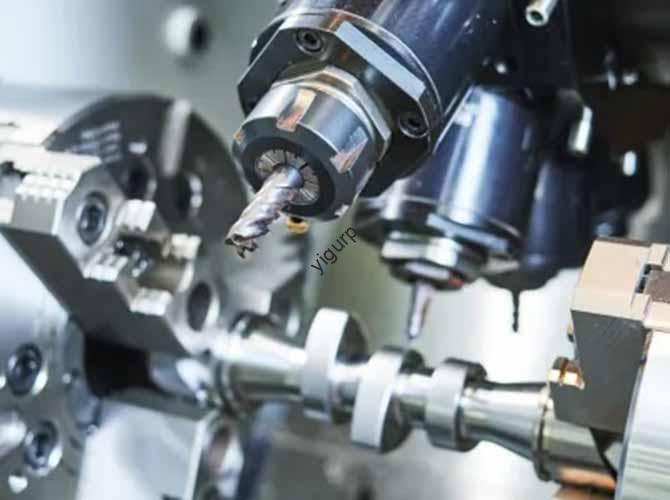
Let’s start with the basics. A milling machining center is a computer-controlled (CNC) machine. It uses rotating cutters to shape raw materials, like metal, plastic, or wood, into precise parts. What sets it apart from a basic milling machine is its automatic tool changer and its ability to perform multiple operations—such as milling, drilling, and tapping—in a single setup, without ever needing to reposition the workpiece by hand.
Here is why it is such a game-changer. In 2025, global sales of these machines rose by 14% year-over-year, primarily because they can cut production time by 30% to 50% compared to using manual tools. For a small shop, this means the ability to handle more orders. For a large factory, it means the ability to consistently hit the tight tolerances demanded by the aerospace or automotive industries.
What Are the Key Types of Milling Machining Centers?
Not all centers are the same. Your choice will depend heavily on your workpiece size, the material you are cutting, and the complexity of the part.
| Type | Core Features | Best Applications | Example Use Case |
|---|---|---|---|
| Vertical Milling Center | The spindle axis is perpendicular to the table. It is compact and affordable. | 3C parts (computer, communication, consumer electronics), small molds, automotive components. | A 3C factory uses a vertical center with a 36,000 RPM spindle to make precise phone casings. |
| Horizontal Milling Center | The spindle is parallel to the table. It is better for heavy cuts and chip evacuation. | Box-shaped parts, engine blocks, components that need machining on multiple sides. | An auto parts maker machines four sides of a gearbox in one setup, dramatically reducing handling time. |
| Gantry Milling Center | Has a large frame and can handle very big workpieces with high stability. | Aerospace wings, wind turbine parts, large molds. | A wind energy company uses a gantry center to cut 3-meter diameter bearing rings with minimal vibration. |
| 5-Axis Milling Center | Rotates on two extra axes. Often includes RTCP (Rotating Tool Center Point) function for complex paths. | Complex curved parts like impellers and turbine blades. | An aerospace firm uses a 5-axis center to machine titanium impellers with incredible ±0.001mm precision. |
Real-World Example: Choosing Between 3-Axis and 5-Axis
A mold shop I worked with once struggled with complex inserts for smartphone molds. They started with a standard 3-axis vertical center but spent about eight hours just repositioning the workpiece to reach all the angles. They switched to a 5-axis model and cut that setup time down to just two hours. Even better, their error rate dropped from 4% to 0.5%. The lesson? If your parts have curved surfaces or require cuts from multiple angles, investing in a 5-axis machine is well worth it.
How Does a Milling Machining Center Work?
You do not need an engineering degree to understand the basic workflow. Here is a simplified step-by-step breakdown.
- Programming: You use CAD/CAM software to design your part and generate a G-code program. This code is a set of instructions that tells the machine exactly where to cut and how fast to go.
- Setup: You secure the raw material to the worktable, often using clamps or a vacuum fixture. Then you load the necessary cutting tools into the machine’s automatic tool changer.
- Execution: The CNC system, which is the machine’s “brain,” reads the G-code and sends signals to the drive system. This system moves the table on the X and Y axes and the spindle on the Z axis. The spindle spins the cutter at very high speeds, often between 10,000 and 36,000 RPM, to remove material.
- Feedback: Throughout the process, sensors constantly check the cutting force and the tool’s position in real time. If there is any deviation, say from thermal expansion, the system makes automatic adjustments to maintain precision.
- Completion: The machine automatically swaps tools as needed for different operations, like drilling a hole after milling a slot. It finishes the entire part in one continuous cycle.
How to Buy the Right Milling Machining Center in 2026?
Buying a machining center is a major investment, often ranging from $50,000 to well over $500,000. The biggest mistake you can make is choosing based on price alone. Follow this 5-step process to avoid costly errors.
- Step 1: Match the Machine to Your Process. List your key requirements first. What is your largest workpiece size? What materials will you be cutting most often? What is your expected production volume? A machine ideal for aluminum at high speeds might not be right for cutting tough steel.
- Step 2: Verify Credentials. Do not just trust marketing claims. Always ask for a third-party precision report, like a CNAS-certified report, with a verifiable number.
- Step 3: Calculate Total Cost of Ownership (TCO). A cheaper machine might end up costing you more in the long run. Factor in energy costs, spare parts, and the machine’s resale value, not just the purchase price.
- Step 4: Test Before You Buy. Never skip a test cut. Bring your own material and run a small batch of parts. Check for size consistency, time the tool changes, and measure the surface finish.
- Step 5: Check Service and Support. Machine downtime is incredibly expensive. Look for a supplier with a local spare parts warehouse, who offers free training for your operators, and provides 24/7 remote diagnostics.
Conclusion
A milling machining center is a powerful and essential tool for any modern machine shop. By understanding the differences between vertical, horizontal, gantry, and 5-axis centers, you can choose the right machine for your specific applications. Following a careful buying process that focuses on your actual needs and verifies machine performance will ensure you make a smart investment that boosts your productivity and precision for years to come.
FAQ
What is the difference between a milling machining center and a CNC mill?
A basic CNC mill often requires you to change tools manually and reposition the workpiece yourself. A milling machining center has an automatic tool changer, can move on multiple axes, and can run unattended for hours. It is like comparing a basic car to a fully-loaded luxury SUV.
How much does a good milling machining center cost?
Costs vary widely based on size and capability. An entry-level 3-axis vertical center might cost between $50,000 and $80,000. A mid-range 5-axis vertical center can range from $150,000 to $300,000. A large, industrial gantry center can cost anywhere from $400,000 to over $1 million.
How long does a milling machining center last?
With proper maintenance, the mechanical frame and structure can last for 10 to 15 years. The spindle is a wear item and typically needs replacement every 3 to 5 years. The CNC control system can often be upgraded every 5 to 7 years to keep up with new software and features.
What is the most common mistake new users make?
The most common and costly mistake is skipping routine maintenance. I once got a call from a shop whose machine had lost all its precision after just six months. The problem? They had never lubricated the linear guides. Fixing the damage cost them $2,000—a problem easily avoided with a $50 bottle of oil and a simple daily schedule.
Discuss Your Projects with Yigu Rapid Prototyping
Are you looking for a reliable partner to help with your precision machining needs? At Yigu Rapid Prototyping, we have extensive experience with a wide range of milling machining centers. Whether you need a single complex prototype or a full production run, our team can help you bring your designs to life with accuracy and efficiency.
Contact Yigu Rapid Prototyping today to discuss your project. Let’s build something great together.