
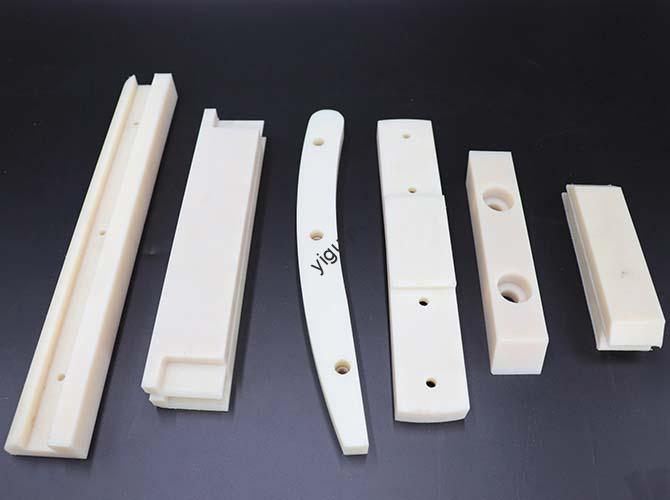
3D printing is no longer just for simple plastic models. It now makes real parts for tough industrial jobs. The key to this change? Better materials. From basic plastics to strong metals and advanced composites, the right material makes or breaks a 3D printed part. This article breaks down the main 3D printing materials—plastics, metals, ceramics, and more. It explains their uses, pros, cons, and real-world applications. By the end, you’ll know how to pick the perfect material for your project, whether you’re an engineer, designer, or manufacturer.
What Are the Basic 3D Printing Materials?
To understand 3D printing materials, start with the basics. These are the most common types that form the industry’s foundation. They’re easy to use, affordable, and great for learning or simple projects. Knowing them helps you move to more advanced options later.
Plastics: Basic vs. High-Performance
Plastics are the most used 3D printing materials. They split into two main groups: basic and high-performance. Each serves different needs, from simple prototypes to tough end-use parts.
Basic Plastics
Basic plastics are cheap and easy to print. They’re perfect for testing designs or making non-working models. The two most common are PLA and ABS.
PLA (Polylactic Acid) is made from corn starch or sugarcane. It’s biodegradable and prints smoothly with low heat. It’s great for visual models, toys, or hobby projects. But it’s brittle and melts in high heat (over 60°C/140°F), so it’s not for tough jobs.
ABS (Acrylonitrile Butadiene Styrene) is stronger and more flexible than PLA. It’s used for simple prototypes that need to handle small impacts. It’s also cheap, but it needs a heated build plate to print well. It can warp if not printed correctly.
High-Performance Plastics
High-performance plastics are made for tough jobs. They handle stress, heat, and chemicals better than basic plastics. They’re used for working prototypes, factory tools, and small-batch parts. Common options include Nylon (PA), PC, and PETG.
Nylon (PA) is a workhorse. It’s tough, flexible, and resists oil and chemicals. It’s used for parts like gears, clips, and factory jigs. It’s easy to print but absorbs water, so it needs to be dried first.
PC (Polycarbonate) is super strong and transparent. It can handle high heat (up to 130°C/266°F) and is used for parts like protective covers or lenses. It’s harder to print than PLA or ABS but worth it for strength.
Common 3D Printing Metals
Metal 3D printing has changed how we make complex, high-value parts. Metals are strong, heat-resistant, and durable. They’re used in aerospace, medicine, and automotive. The most common metals are stainless steel, aluminum, and titanium.
Stainless Steel (316L) resists corrosion and is flexible. It’s used for medical tools, chemical equipment, and automotive parts. It’s strong but heavy, so it’s not for lightweight jobs.
Aluminum (AlSi10Mg) is light and strong. It has a great strength-to-weight ratio, making it perfect for aerospace and automotive parts. It’s used for heat exchangers, brackets, and engine parts. It’s cheaper than titanium but not as strong.
Titanium (Ti64) is the gold standard for high-performance parts. It’s light, strong, and biocompatible (safe for the human body). It’s used for medical implants, aerospace components, and high-end automotive parts. It’s expensive but worth it for critical jobs.
Specialized Ceramics
Ceramics are less common than plastics or metals, but they’re critical for jobs where other materials fail. They’re hard, heat-resistant, and chemically stable. They’re used in medical, electronic, and industrial applications.
Alumina is a common ceramic. It’s hard, resists heat up to 1600°C (2912°F), and is an electrical insulator. It’s used for cutting tools, electronic components, and chemical reactors.
Zirconia is another key ceramic. It’s strong, tough, and biocompatible. It’s used for dental implants, bone replacements, and high-temperature parts. It’s more expensive than alumina but more durable.
Basic Materials Overview Table
| Material Category | General Cost | Mechanical Strength | Temperature Resistance | Post-Processing Complexity | Typical Applications |
|---|---|---|---|---|---|
| Plastics | Low to Medium | Low to Medium | Low to Medium | Low | Prototypes, Jigs, Consumer Goods |
| Metals | High | High | High | High | Aerospace, Medical Implants, Tooling |
| Ceramics | Very High | Medium (Brittle) | Very High | Very High | Medical Implants, Electronics, Cutting Tools |
What Are High-Performance Plastics?
High-performance plastics go beyond basic options. They can replace metals in tough environments. They handle extreme heat, harsh chemicals, and heavy stress. They’re used in aerospace, medicine, and industrial jobs where performance matters most.
The PAEK Family
At the top of high-performance plastics is the PAEK family. These semi-crystalline plastics have amazing thermal, mechanical, and chemical properties. The two most important are PEEK and PEKK. They let you make parts that were once only metal.
Deep Dive: PEEK
PEEK (Polyetheretherketone) is the benchmark for high-performance 3D printing plastics. Its balanced properties make it perfect for tough jobs. Let’s break down its key features:
- High-Temperature Resistance: It works well at up to 250°C (482°F) continuously.
- Strong & Stiff: Its strength rivals some metals, especially in strength-to-weight ratio.
- Chemical Resistance: It resists most organic and inorganic chemicals, hot water, and steam.
- Flame Resistant: It has a UL94 V-0 rating without additives. It produces little smoke or toxic gas.
- Biocompatible: Medical grades are used for implants. They’re transparent to X-rays.
PEEK is hard to print. It needs extrusion temperatures over 400°C and a heated build chamber over 100°C. This prevents warping and ensures strong layer adhesion. It’s used for aerospace parts, surgical guides, and chemical equipment.
Example: A medical company uses PEEK to print custom spinal implants. The material is biocompatible, strong, and matches bone density. Patients heal faster with these implants than with metal ones.
Deep Dive: PEKK
PEKK (Polyetheretherketoneketone) is a close cousin of PEEK. It has similar performance but is easier to print. Its chemical structure lets it crystallize slower, which helps with layer adhesion.
The slower crystallization means better bonding between layers. This makes PEKK stronger in the Z-axis (between layers) than PEEK. It also warps less, especially for complex parts with sharp corners or thick changes.
Choose PEKK for complex parts or jobs needing uniform performance. It’s better than PEEK for parts under multi-directional loads. PEEK has a slight edge in chemical resistance, but PEKK is more practical for most high-performance jobs.
Example: An aerospace firm uses PEKK to print engine brackets. The brackets are complex, lightweight, and handle high heat. PEKK’s printability ensures consistent quality across every part.
What Are Refractory Metals?
For extreme heat and corrosion, even high-performance plastics and standard metals aren’t enough. Refractory metals are the solution. They have very high melting points and extreme hardness. 3D printing lets you shape them into complex parts that traditional methods can’t.
What Defines Refractory Metals?
Refractory metals have melting points above 2000°C (3632°F). They’re hard, heat-resistant, and wear-resistant. The main types are tantalum, tungsten, molybdenum, niobium, and rhenium. They’re hard to machine traditionally, but 3D printing (like SLM or EBM) makes it possible.
Material Spotlight: Tantalum (Ta)
Tantalum is a standout refractory metal. It has unique properties that make it useful in medical and industrial jobs. Let’s look at its key features:
- Corrosion Resistance: It’s immune to most acids below 150°C (302°F).
- High Melting Point: It melts at 3017°C (5463°F).
- Biocompatible: It’s safe for the human body, making it great for implants.
- Dense & Ductile: It’s strong but can be shaped easily.
Applications: In the chemical industry, it’s used for reactor linings and heat exchangers. In medicine, it’s used for porous bone implants that mimic spongy bone. These implants integrate well with natural bone, improving long-term stability.
Material Spotlight: Tungsten (W) & Molybdenum (Mo)
Tungsten and molybdenum are other critical refractory metals. They’re used for extreme high-temperature jobs.
Tungsten (W): It has the highest melting point of any metal (3422°C/6192°F). It’s dense and hard. It’s used for radiation shielding, nuclear parts, and defense applications. Printing pure tungsten is hard, but new methods are making it easier.
Molybdenum (Mo): It melts at 2623°C (4753°F). It’s strong at high temperatures but less dense than tungsten. It’s used for spacecraft thruster nozzles, electronic heat sinks, and glass-melting electrodes. It handles thermal cycling well without breaking.
Example: A space company uses molybdenum to print thruster nozzles. The nozzles handle extreme heat during launch and work reliably in space’s cold vacuum.
What Are 3D Printing Composites?
Composites are the next frontier in 3D printing. They mix a plastic base (matrix) with reinforcing fibers. This creates parts that are strong like metal but light like plastic. Continuous fiber composites are especially game-changing for high-strength jobs.
Chopped vs. Continuous Fiber
Fiber composites split into two types: chopped and continuous. The difference changes how strong the final part is.
Chopped Fiber Composites
Chopped fiber composites have short fibers (less than 1mm long) mixed into the plastic. The fibers are random, so they boost stiffness and strength evenly. But the improvement is limited by the short fiber length.
Common options: Carbon fiber-nylon (PA-CF) or glass fiber-nylon. They’re used for parts like brackets, gears, and tool handles. They’re cheaper than continuous fiber but not as strong.
Continuous Fiber Composites
Continuous fiber composites use long, unbroken fibers (carbon, fiberglass, Kevlar). A second print head places the fibers along load paths (where the part is stressed most). This makes parts as strong as 6061 aluminum but much lighter.
This is a big shift. It lets you make lightweight parts that can replace metal. The fibers are placed precisely, so you use strength only where needed. This saves material and weight.
Applications of Continuous Fiber
Continuous fiber composites are used in many industries. Here are the most common applications:
- Manufacturing Aids: Jigs, fixtures, and CNC soft jaws. They’re light, strong, and don’t scratch delicate parts. We replaced aluminum jigs with carbon fiber-nylon ones, cutting weight by 75% and lead time from weeks to days.
- Robotics: End-of-arm tooling (EOAT). Lighter grippers let robots move faster and carry more weight.
- Automotive: Motorsports and specialty vehicles. Brackets, mounts, and structural parts. Weight savings improve speed and fuel efficiency.
- Drones/UAVs: Frames and motor mounts. Lightweight parts extend flight time and payload capacity.
Example: A drone company uses continuous carbon fiber to print frames. The frames are 50% lighter than aluminum ones but just as strong. Drones can fly 20% longer on a single charge.
What About Sustainable 3D Printing Materials?
Sustainability is no longer an afterthought. 3D printing can be greener with the right materials. Innovations are making materials more eco-friendly, from sourcing to end-of-life.
Greener Material Options
Three main types of sustainable materials are gaining traction: recycled materials, bio-based plastics, and recycled metal powder.
- Recycled Materials: Filaments made from post-consumer waste (like rPET from plastic bottles) or industrial plastic scrap. This gives waste a second life and reduces landfills.
- Bio-Based Plastics: PLA is the most common. It’s made from corn starch or sugarcane. It biodegrades in industrial composting facilities. PHA is a new option that biodegrades even in marine environments.
- Metal Powder Recycling: In metal 3D printing, most powder isn’t used in the part. It’s sieved and reused, reducing waste and cost. This is standard practice for metals like titanium and stainless steel.
Example: A consumer goods company uses recycled PETG to print product prototypes. They cut plastic waste by 40% and save 25% on material costs.
Future Sustainable Horizons
The future of sustainable 3D printing is bright. New innovations include 4D printing (smart materials that change shape with heat/moisture) and multi-material printing. AI is also helping design new eco-friendly materials faster.
How to Choose the Right 3D Printing Material?
With so many materials, choosing the right one can be hard. Follow this three-step guide to make the right decision for your project. It’s practical, application-driven, and easy to follow.
Step 1: Define Your Requirements
Start by listing what your part needs to do. Forget materials for a moment. Ask these questions:
- Mechanical Needs: What loads will it bear? Tension, compression, or impact? Does it need to handle repeated use?
- Thermal Needs: What’s the operating temperature? Will it face spikes or shocks?
- Chemical Environment: Will it touch solvents, acids, oils, or sunlight?
- Regulatory Needs: Does it need to be biocompatible, food-safe, or flame-resistant?
- Cost & Volume: Is it a one-off prototype or low-volume production? What’s your budget?
Step 2: Use Material Databases
Don’t compare datasheets manually. Use tools like Senvol Database or Granta MI. Input your requirements (tensile strength, heat resistance, etc.). The software filters materials to a shortlist that fits your needs. This saves time and reduces mistakes.
Step 3: Prototype, Test, Iterate
Theoretical selection isn’t enough. Print test parts (ASTM specimens) to check properties. Then print a functional prototype and test it in real conditions. Iterate until the material and design work perfectly. This ensures your part is reliable.
Example: An engineer needs a part for a chemical reactor. They define requirements (corrosion resistance, 100°C operating temp). They use a database to shortlist PEEK and HDPE. They print test parts, test them in acid, and choose PEEK for better performance.
Conclusion
3D printing materials are the key to its success. From basic plastics for prototypes to refractory metals for extreme jobs, the right material unlocks new possibilities. High-performance plastics like PEEK and PEKK replace metals. Continuous fiber composites make light, strong parts. Sustainable materials make 3D printing greener.
Material selection is no longer a final step—it’s part of the design process. By understanding your needs, using tools, and testing, you can pick the perfect material. As materials evolve, 3D printing will keep changing industries like aerospace, medicine, and automotive. The future of manufacturing is built on the right materials, one layer at a time.
FAQ
What’s the cheapest 3D printing material? PLA is the cheapest. It’s great for prototypes and hobby projects. It costs $20-$30 per kg, much less than metals or high-performance plastics.
Which material is best for high-heat jobs? Refractory metals (tungsten, molybdenum) handle the highest heat. For plastics, PEEK works up to 250°C. Ceramics like alumina work up to 1600°C.
Can 3D printing composites replace metal? Yes. Continuous carbon fiber composites have strength-to-weight ratios similar to 6061 aluminum. They’re lighter and cheaper for low-volume parts.
Are 3D printing materials recyclable? Many are. Plastic filaments can be recycled into new filament. Metal powder is reused in powder bed printing. Bio-based plastics biodegrade in industrial compost.
What’s the easiest material to 3D print? PLA is the easiest. It doesn’t need a heated bed, prints smoothly, and has minimal warping. It’s perfect for beginners.
Discuss Your Projects with Yigu Rapid Prototyping
Whether you need help choosing the right material, prototyping with high-performance plastics, or printing with continuous fiber composites, Yigu Rapid Prototyping is here to help. Our team has years of experience in 3D printing materials—from basic plastics to refractory metals. We offer fast turnaround, competitive pricing, and certified quality. Contact us today to discuss your project and turn your ideas into reality with the perfect 3D printing material.