
Introduction
If you have a part design ready to go, you are probably asking yourself: Where do I get this made? The answer lies in finding the right machining services. These are companies that take raw materials like metal or plastic and turn them into finished parts using precision equipment. But not all machining services are the same. Some are great for quick prototypes, while others excel at high-volume production. Some specialize in medical devices, others in aerospace. The best service for you depends on your project’s specific needs—material, tolerance, volume, and timeline. In this guide, I will walk you through the core services available, what equipment matters, how to pick a provider, and real examples of how the right choice saves time and money.
What Core Machining Services Should You Know About?
Modern machining services offer much more than just cutting metal. They provide a range of solutions tailored to different stages of product development.
Rapid Prototyping: Test Your Ideas Fast
Rapid prototyping is all about speed. You get small batches of parts—usually 1 to 10 pieces—in days instead of weeks. This lets you test form, fit, and function before committing to full production.
- Why it matters: Finding a design flaw in a prototype costs pennies compared to finding it after you have made a thousand parts.
- Real example: A medical startup needed to test a new sensor housing. They worked with a machining service that delivered 5 prototypes in 3 days. The parts were made from the same biocompatible plastic as the final product. The team tested fit, function, and how well the part handled sterilization. They caught a clearance issue that would have caused assembly problems later. That early fix saved them about 6 weeks of development time.
Small-Volume Production: Flexibility for Niche Needs
Not every project needs thousands of parts. Small-volume production—typically 10 to 500 pieces—is perfect for custom equipment, pre-production runs, or niche products.
- The advantage: You get the precision of CNC machining without the high setup costs of mass production.
- Case study: A robotics company needed 50 custom aluminum brackets for a prototype assembly line. Their machining service used a high-speed CNC mill to produce each bracket to a tolerance of ±0.001 inches. The service also handled all quality control in-house, so the robotics team got parts that were ready to use immediately.
Full-Scale Manufacturing: When You Need Thousands
Once your design is final and demand is high, you move to full-scale manufacturing. This means producing 500 or more parts efficiently, with a focus on reducing cost per piece while maintaining quality.
- Key stat: High-precision CNC machines can hold tolerances as tight as ±0.0005 inches. This is critical in aerospace, where even a tiny error can cause failure.
- Real-world impact: An aerospace supplier needed 10,000 titanium fasteners for a jet engine. Their machining service used 5-axis CNC machines that could cut complex features in a single setup. They also used automated tool pre-setters to reduce changeover time. The result? The fasteners were produced 20 percent faster than with traditional methods, and the cost per part dropped by 15 percent.
What Equipment Defines Top-Tier Machining Services?
The machines a service uses tell you a lot about their capabilities. Here is what to look for.
| Equipment Type | Examples | What It Does |
|---|---|---|
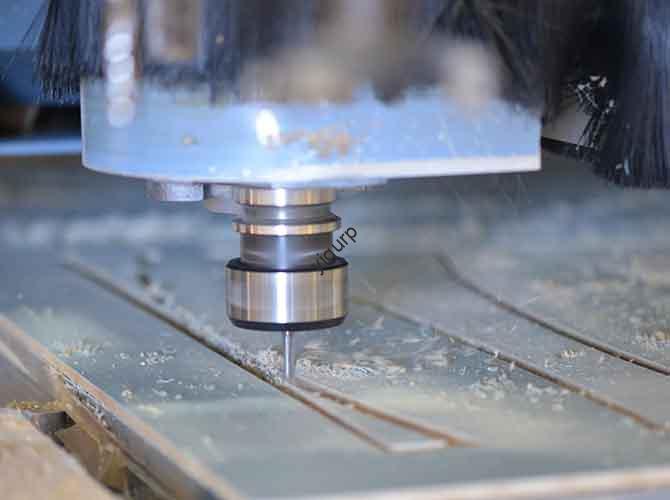
| CNC Milling Machines | High-speed vertical mills | Creates complex 3D shapes, slots, and holes in materials like aluminum and steel. High-speed models cut cycle time by up to 40%. |
| CNC Lathes | Precision turning centers | Makes round parts like shafts and bushings. Ideal for smooth, consistent cylindrical surfaces. |
| 5-Axis CNC Machines | Multi-axis machining centers | Handles complex parts from multiple angles in one setup. Eliminates errors from repositioning. |
| Tool Pre-Setters | Automated tool measurement | Measures and calibrates cutting tools offline. Reduces machine downtime by up to 25%. |
| QC Equipment | CMMs, digital microscopes, laser scanners | Verifies that parts meet specifications. Can measure down to 0.0001 inches. |
Why Equipment Matters
A service with outdated machines will struggle to meet tight tolerances or quick deadlines. I once visited a shop using a 20-year-old CNC mill. It took them twice as long to make a simple bracket as a shop with modern equipment, and the surface finish was noticeably rougher. When you evaluate a service, ask about their equipment age and maintenance schedule. Well-maintained modern machines produce better parts, faster.
How Do You Choose the Right Machining Service?
Picking a machining service is a decision that affects your project’s cost, quality, and timeline. Here is a step-by-step approach.
Step 1: Define Your Project Clearly
Before you call anyone, write down exactly what you need.
- End use: Is this for a medical device, a car, a drone?
- Material: Aluminum, stainless steel, titanium, plastic?
- Tolerance: Do you need standard ±0.001 inches or high precision?
- Volume: 5 prototypes or 5,000 production parts?
- Timeline: When do you need it?
Example: A medical company needed 20 prototype sensor housings made from biocompatible plastic, with a tolerance of ±0.002 inches, delivered in 5 days. By having this clear, they could immediately eliminate any service that did not work with medical materials or could not meet the 5-day deadline.
Step 2: Look for Industry Experience
Different industries have different requirements.
- Aerospace needs high-strength materials like titanium and Inconel, with ultra-tight tolerances.
- Medical requires biocompatible materials and often compliance with standards like ISO 13485.
- Automotive focuses on cost-effective high-volume production with good durability.
Ask potential providers for examples of work in your industry. A service that has made aerospace parts will understand the importance of traceability and documentation. A general shop might not.
Step 3: Check In-House Capabilities
The best services handle everything in-house: design support, machining, and quality control. If they subcontract parts of the job, you risk delays and finger-pointing when something goes wrong.
- Questions to ask:
- Do you offer design for manufacturability (DFM) support?
- Is all machining done at your facility?
- Do you have your own QC lab?
A service with full in-house control can move faster and is accountable for the entire process.
Step 4: Compare Cost, But Don’t Stop There
Price matters, but it is not the only factor. A very cheap quote might mean they are cutting corners—using lower-grade materials, skipping QC steps, or running old machines. That can cost you more in the long run if parts fail.
Look for transparent pricing that explains the tradeoffs. A good service might offer two options: a standard 7-day turnaround at one price, or a faster 3-day option at a premium. You can then decide what fits your budget and schedule.
What Common Challenges Do Machining Projects Face?
Even with a good service, problems can arise. Here is how to handle the most common ones.
Design for Manufacturability Issues
Sometimes a design looks great on screen but is hard or expensive to machine. Deep narrow slots, sharp internal corners, or very thin walls can cause trouble.
- The fix: Work with a service that offers DFM support. They will review your design and suggest changes that make it easier to machine without affecting function. For example, they might recommend widening a slot slightly so a standard tool can be used, or adding a small radius to an internal corner. These tweaks can cut production costs by 10 to 30 percent and speed up delivery.
Material Mistakes
Choosing the wrong material can ruin a project. Using aluminum for a high-temperature application will lead to failure. Using a hard-to-machine material like stainless steel for a simple prototype will waste money.
- The fix: Talk to your machining service about material options. They know the tradeoffs. For a lightweight part with good strength, they might suggest 6061 aluminum. For corrosion resistance, they might recommend 316 stainless steel, even though it machines slower. Let their experience guide you.
Quality Control Failures
Getting parts that do not meet specs is frustrating and costly. This usually happens when a service skips QC steps or uses outdated inspection tools.
- The fix: Ask about their QC process before you order. A good service will have:
- In-process checks during machining.
- Final inspection with advanced tools like CMMs or laser scanners.
- Documentation, like a report showing that each part meets your requirements.
A provider willing to share QC reports is a provider that stands behind their work.
Conclusion
Finding the best machining services for your project comes down to matching your needs with the right provider’s capabilities. Understand the difference between rapid prototyping, small-volume production, and full-scale manufacturing. Look for a service with modern equipment, industry experience, and in-house control over the whole process. Define your requirements clearly before you start, and do not be afraid to ask tough questions about quality and lead times. The right machining partner does not just make parts—they help you bring your designs to life efficiently, accurately, and cost-effectively.
FAQ About Machining Services
1. What is the difference between CNC machining and manual machining?
CNC machining uses computer-controlled tools for high precision and consistency. It is ideal for complex parts and high volumes. Manual machining relies on an operator’s skill and is better for simple parts, repairs, or one-off jobs where CNC setup costs are too high.
2. How long does a typical machining project take?
Timelines vary:
- Rapid prototyping (1-10 parts): 1 to 5 days
- Small-volume production (10-500 parts): 5 to 14 days
- Full-scale manufacturing (500+ parts): 2 to 6 weeks
Complexity, material, and the provider’s workload all affect timing.
3. What tolerances can machining services achieve?
Standard CNC machining holds ±0.001 inches. For high-precision work, advanced machines can reach ±0.0005 inches or tighter. The exact tolerance depends on the equipment, material, and part design.
4. Do machining services help with design?
Many top services offer Design for Manufacturability (DFM) support. They will review your CAD file and suggest changes to make the part easier and cheaper to produce. This service is often included or low-cost and can save you significant time and money.
5. How can I tell if a machining service is reliable?
Look for:
- In-house machining and QC (no subcontracting)
- Experience in your industry (ask for references)
- Transparent pricing and timelines
- A clear QC process with documentation
- Responsive, helpful communication
Discuss Your Projects with Yigu Rapid Prototyping
At Yigu Rapid Prototyping, we provide machining services that cover everything from quick prototypes to full production runs. We work with clients in medical, aerospace, automotive, and consumer goods—matching our capabilities to your specific needs. Our shop is equipped with modern CNC mills, lathes, and 5-axis machines, all backed by a rigorous in-house QC process. We offer DFM support to optimize your design before we cut any material, saving you time and money. Whether you need one part or ten thousand, we deliver consistent quality on your timeline. Contact Yigu today to discuss your project and get a free quote.