
Why are machined components important of modern manufacturing?

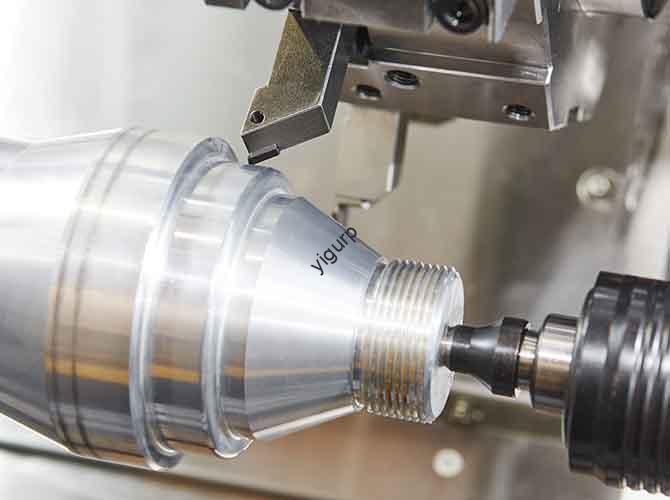
cnc mill turning

When you drive a car, fly an airplane, or use a medical device, you may never realize that the core functionality of these products relies on machined components with micron accuracy. From the crankshaft of automobile engines to precision sensors in aerospace, from the implants of medical devices to the gear sets of industrial robots, machined parts have become the key carrier for connecting design concepts and practical applications with their high precision and reliability.

According to the Global Manufacturing Trends Report, the global machined parts market will exceed $800 billion in 2023 and is expected to reach $1.2 trillion in 2028, with a compound annual growth rate of 8.3%. Behind this data is the continuous upgrading of the manufacturing industry’s demand for precision manufacturing – whether it is the lightweight demand of new energy vehicles or the extreme environmental adaptability requirements of aerospace, it is driving the continuous innovation of machined parts technology.

This article will comprehensively disassemble the core knowledge of machined parts from basic definitions to cutting-edge trends, combined with real cases and practical tools, to help you quickly grasp the key points of the whole process from selection to application.

Table of Contents

1. Basic knowledge of machined parts: understand the core concepts and avoid pitfalls in selection

1.1 Machined Part Definition: What exactly is “machined”?

Machined parts refer to parts that remove excess material through machining processes to obtain the shape, size, and surface quality that meet the design requirements. Unlike additive manufacturing such as 3D printing, machining is “subtractive manufacturing”, and its core advantage is extremely high dimensional accuracy and surface finish, suitable for mass production or high-precision demand scenarios.

To give an intuitive example: the USB interface metal shell of a mobile phone charger is made through stamping, turning and other machining processes – its internal thread accuracy needs to be controlled within ±0.01mm, otherwise it will lead to loose interfaces or poor contact, which is a typical embodiment of “precision is king” of machined parts.

1.2 Types of machined parts: categorized by process and function

Classification dimensionsSpecific typesApplication scenariosAccuracy requirements
Processing technologyTurned partsShafts, sets (e.g. motor shafts)±0.005~±0.02mm
Milling partsCabinets, brackets (e.g. machine beds)±0.01~±0.05mm
Drilling partsPerforated parts (e.g. flanges)±0.02~±0.1mm
Grinding partsHigh-precision surfaces (e.g. bearing balls)±0.001~±0.005mm
Functional useStructural partsLoad-bearing, fixation (e.g. robotic arm joints)Medium accuracy
Transmission partsPower transmission (e.g. gears, lead screws)High accuracy
SealsLeak protection (e.g. sealing ring seat)Surface roughness Ra≤0.8μm
ConnectorsAssembly and fixing (e.g. bolts, nuts)Standard precision

1.3 CNC Machining Basics: The “Core Engine” of Modern Machining

Numerical control machining (CNC) is the mainstream technology of machining, which uses computer programs to control machine tools to complete automated machining. Compared with traditional manual machining, the advantages of CNC machining are reflected in three aspects:

  1. Accuracy consistency: the error of parts in mass production ≤± 0.01mm, which is much better than the ±0.1mm of manual processing;
  2. Efficiency improvement: The processing time of complex parts is reduced by more than 50%, such as automobile gearbox gear processing, the output of CNC milling machines can reach 500 pieces in a single shift, compared to only 100 pieces for traditional machine tools;
  3. Complex shape machining: It can complete curved surfaces and special-shaped structures that cannot be achieved by hand, such as the complex curved surfaces of aero engine blades.

1.4 Principles of machined parts design: reduce costs from the source

Experienced engineers know that good design can reduce machining costs by more than 30%. Core design principles include:

  • Simplified structure: avoid difficult machining features such as deep holes and narrow grooves, such as changing blind holes with a depth-diameter ratio of >5 to through holes;
  • Unified datum: a single datum is used in design to reduce positioning errors, such as the bottom surface of the box parts as the reference;
  • Reserve processing allowance: reserve 0.1~0.5mm allowance according to materials and processes to avoid scrap products caused by insufficient margin;
  • Consider tool accessibility: Ensure that the tool can contact all machining surfaces, such as avoiding machining features inside closed cavities.

2. Manufacturing process and technology of machined parts: from traditional to intelligent

2.1 CNC Machining Process: Process and Key Parameters

The complete CNC machining process includes:

  1. Drawing analysis: interpret part size, tolerance, surface requirements (e.g., Ra=1.6μm);
  2. Programming modeling: using CAD/CAM software (such as SolidWorks, Mastercam) to generate machining programs;
  3. Machine tool debugging: install tools and fixtures, set the rotation speed (S=1000~5000r/min), and feed rate (F=50~200mm/min);
  4. Test cutting verification: process the first part and detect it, adjust the parameters until it meets the requirements;
  5. Mass production: During automated processing, the size is checked every 20 pieces.

2.2 Core processing technology: milling, turning, drilling and tapping

  • Milling technology: suitable for flat, grooved, and curved surface machining, commonly used tools include end mills and end mills. Case: A new energy vehicle battery tray uses 5-axis linkage milling to form complex contours at one time, increasing the processing efficiency by 40%;
  • Turning technology: mainly processing rotary body parts, such as shafts, sleeves, and discs. Key parameters: cutting speed (steel v=100~300m/min, aluminum v=300~800m/min);
  • Drilling and tapping: When drilling, the feed should be controlled to avoid drill bit breakage, and the bottom hole size should be reserved before tapping (e.g., M10 threaded bottom hole diameter is 8.5mm).

2.3 Precision Machining Methods: Pursue micron-level accuracy

When the accuracy of the part requires ≤± 0.005mm, precision machining technology is required:

  • Grinding processing: remove the material by the grinding wheel, the surface roughness can reach Ra=0.01~0.1μm, suitable for bearings, guide rails, etc.;
  • Honing processing: precision machining of inner holes, such as engine cylinder liners, roundness error after honing ≤0.002mm;
  • Polishing: Improve surface finish, such as medical device implants, with a Ra≤0.05μm after polishing to avoid human tissue rejection.

2.4 Automated machining systems: an inevitable trend in the era of Industry 4.0

The automated processing system is centered on “unmanned production”, which mainly includes:

  • Robot loading and unloading: Equipped with industrial robots to automatically grab and clamp parts, reducing manual intervention;
  • CNC machine tool networking: program distribution, data collection, and remote monitoring are realized through the MES system;
  • Intelligent detection: Integrate coordinate measuring instrument and visual inspection equipment to feedback processing errors in real time and automatically compensate.

Case: A German auto parts company uses an automated processing line, with only 2 workers monitoring one production line, with a daily output of 2,000 pieces and a scrap rate of 0.5%.

3. Material selection and application of machined parts: match the needs and balance the cost

3.1 Metal material selection: classified according to performance requirements

Material typeRepresentative materialsadvantageApplicable scenariosProcessing difficulty
carbon steel45# steelLow cost and easy processingStructural parts, connectors★★☆☆☆
Alloy steel40CrHigh strength and wear resistancegears, shafts★★★☆☆
stainless steel304/316LCorrosion and rust resistanceMedical devices, food machinery★★★★☆
Aluminum alloy6061/7075Lightweight and good thermal conductivityaerospace, electronic equipment★★☆☆☆
Copper alloyBrass H62Conductive electricity and heatElectrical components, valves★★★☆☆
Titanium alloyTC4High strength and corrosion resistanceAero engines, orthopedic implants★★★★★

3.2 Non-metallic material applications: Complementary options for specific scenarios

Non-metallic materials are mainly used in machining for lightweight, insulation, and wear-resistant scenarios:

  • Engineering plastics 😛 OM (Saigang) are suitable for gears and shaft bushings, wear-resistant and self-lubricating; PC (polycarbonate) for transparent housings;
  • Composites: carbon fiber reinforced resin matrix composites used in aerospace structural parts, with 5 times the specific strength of steel;
  • Ceramic Materials: Zirconia ceramics are used in knives, bearings, and are resistant to high temperatures (up to 1200°C) and have high hardness.

3.3 Material performance requirements: interpretation of key indicators

There are four core indicators to focus on when selecting materials:

  1. Strength: Tensile strength (σb) ≥ 600MPa for structural parts, ≥1000MPa for transmission parts;
  2. Hardness: HRC≥30 is suitable for wear-resistant scenarios, such as gears, guide rails;
  3. Toughness: Impact work (Ak) ≥ 20J to avoid brittle fractures, such as construction machinery parts;
  4. Corrosion resistance: In humid and acid-alkali environments, stainless steel, titanium alloy and other materials need to be selected.

3.4 Heat Treatment Process: A “Critical Step” to Improving Material Properties

Heat treatment is an important part of post-processing, changing the internal structure of the material through heating and cooling:

  • Quenching and tempering treatment: quenching + high-temperature tempering, such as 45# steel after quenching and tempering hardness HRC28~32, taking into account both strength and toughness, suitable for shaft parts;
  • Quenching treatment: improve hardness and wear resistance, such as bearing steel GCr15 after quenching HRC60~65;
  • Nitriding treatment: surface hardening, such as engine crankshaft nitriding surface hardness HV≥800, wear-resistant and small deformation;
  • Annealing treatment: reduce hardness and improve machinability, such as high carbon steel is easy to cut after annealing.

3.5 Material cost optimization: practical tips for reducing costs without downgrading

  • Alternative materials: Replacing stainless steel with 6061 aluminum alloy reduces weight by 60% and costs by 40% (suitable for non-corrosion-resistant scenarios);
  • Reasonable material selection: ordinary carbon steel for non-critical parts, alloy steel for key parts, such as HT200 cast iron for machine tool bed and 40Cr alloy steel for spindle;
  • Reduced scrap: Optimized part nesting, such as nesting for sheet machining, increased material utilization from 60% to 85%.

4. Quality control and standards of machined parts: keep the bottom line of accuracy

4.1 Dimensional accuracy control: core indicators and inspection methods

Dimensional accuracy is the core quality requirement of machined parts, and common indicators include:

  • Dimensional tolerance: such as φ50±0.01mm, it means that the actual size needs to be between 49.99~50.01mm;
  • Shape and position tolerance: straightness, roundness, parallelism, etc., such as the roundness error of the shaft ≤ 0.003mm;
  • Inspection tools: caliper (accuracy ±0.02mm), micrometer (±0.001mm), coordinate measuring instrument (±0.002mm).

Case: An aerospace part requires a dimensional tolerance of ±0.003mm, and 10 pieces are sampled in each batch using a coordinate measuring instrument to ensure that there are no out-of-error products leaving the factory.

4.2 Surface roughness testing: from feel to instrument

Surface roughness (Ra) directly affects the wear resistance and sealing of parts:

  • Visual feel judgment: Ra≤0.8μm surface smooth without scratches, Ra≥3.2μm surface with obvious lines;
  • Professional testing: Use a roughness meter to measure, such as the surface of the piston ring of an automobile engine Ra=0.2~0.4μm, to ensure the sealing effect with the cylinder wall.

4.3 Quality Management System: ISO Standards and Corporate Practices

Mainstream quality management systems include:

  • ISO 9001: General Quality Management System, covering the whole process of design, production and testing;
  • IATF 16949: Automotive industry-specific standard requiring stricter process control;
  • AS9100: Aerospace industry standard emphasizing traceability.

Enterprise practice: An auto parts company has passed IATF 16949 certification and established a “first article three inspection system” (self-inspection, mutual inspection, and special inspection), and set up quality control points in key processes to ensure that unqualified products do not flow into the next process.

4.4 International Standard Compliance: The “Passport” for Exported Products

Different industries have different international standards:

  • Machining: ISO 286 (dimensional tolerance), ISO 1302 (surface roughness marking);
  • Automotive industry: SAE J400 (steel standard), ISO 6408 (thread standard);
  • Aerospace: AMS 2404 (metal plating standard), ASME Y14.5 (geometric tolerances).

4.5 Testing equipment and technology: from traditional to intelligent

  • Traditional equipment: calipers, dial indicators, projectors, suitable for simple dimensional detection;
  • Precision equipment: coordinate measuring instrument, laser interferometer, suitable for complex parts and high precision requirements;
  • Intelligent inspection: visual inspection system, inspection speed up to 1000 pieces/hour, error ≤± 0.005mm, such as electronic component pin size detection.

5. Industry applications and trends of machined parts: grasp the future direction

5.1 Automotive Industry Applications: Lightweight and high precision coexist

The automotive industry is the largest consumer market for machined parts, accounting for 35%:

  • Traditional automobiles: engine crankshafts, gearbox gears, brake discs, etc., with a precision of ±0.01mm, and a mass production efficiency of ≥ 500 pieces / day;
  • New energy vehicles: battery trays (aluminum alloy processing), motor shafts (high-strength steel), charging pile interfaces, lightweight demand drives the application of aluminum alloy and carbon fiber materials.

Data: Global new energy vehicle sales will reach 14 million units in 2023, driving the demand for machined parts to increase by 25%, of which aluminum alloy parts account for 50% from 30%.

5.2 Aerospace Components: Precision Challenges in Extreme Environments

Aerospace parts demand extreme materials and precision:

  • Engine parts: turbine blades (titanium alloy + precision casting + machining), high temperature resistance 1200°C, dimensional tolerance ±0.005mm;
  • Fuselage structural parts: carbon fiber composite machining, weight reduction of more than 30%, such as Boeing 787 fuselage parts;
  • Satellite components: precision gears, sensor housings, requiring zero defects and 99.99% reliability.

5.3 Medical Device Parts: Biocompatibility and Precision

Medical device parts are in direct contact with the human body and have strict requirements:

  • Implant: artificial joint (titanium alloy / ceramic), surface roughness Ra≤0.05μm to avoid tissue rejection;
  • Surgical instruments: scalpel, hemostat (stainless steel 316L), corrosion resistance up to standard, dimensional accuracy ±0.02mm;
  • Diagnostic equipment: The core components of CT machines and MRI equipment (such as detector housings) require high stability and low deformation.

5.4 Industrial Automation Trends: Intelligent and Flexible Production

Industrial automation drives machined parts to “high-precision, customized, and low-volume”:

  • Robot parts: harmonic reducer, servo motor shaft, accuracy ±0.003mm, life ≥ 10000 hours;
  • Sensor parts: micro gears, probes, size as small as φ1mm, difficult to process;
  • Flexible production: CNC machines can change shapes quickly, supporting high-mix, low-volume production, and reducing changeover time from a few hours to 10 minutes.

5.5 Sustainable Manufacturing Development: The Future of Green Processing

Sustainable manufacturing has become an industry consensus, and the main directions include:

  • Energy-saving processing: using frequency conversion machine tools and high-pressure cooling technology, energy consumption is reduced by 20%;
  • Scrap recycling: The recycling rate of metal scrap is more than 95%, such as aluminum alloy chip recycling and reuse;
  • Environmentally friendly materials: water-based cutting fluid replaces oil-based cutting fluid to reduce pollution;
  • Lightweight design: Reducing the use of materials, such as lightweight auto parts, can reduce fuel consumption by 5%~10%.

6. Yigu Technology’s views

As the core foundation of the manufacturing industry, machined parts are closely linked to industry needs in terms of technology iteration. At present, high precision, lightweight, and intelligence are the three core trends – high-end fields such as new energy vehicles and aerospace are promoting precision breakthroughs to the micron or even nano level, while industrial automation requires both customization and mass production capabilities. Enterprises need to balance the relationship between “precision, cost, and efficiency”: reduce costs through material optimization and process upgrades, improve efficiency with the help of automation and intelligent inspection, and maintain the bottom line of precision with strict quality control. In the future, enterprises with the ability of the whole chain of “material-process-testing” will have an advantage in global competition and provide core support for the high-quality development of the manufacturing industry.

7. FAQ: FAQ

  1. Q: Is the higher the precision of machined parts, the better?

A: Not necessarily. Accuracy needs to match actual needs, and excessive precision will lead to doubling of costs. For example, ordinary bracket parts can be tolerated with a tolerance of ±0.1mm, eliminating the need to pursue ±0.01mm.

  1. Q: How to choose a machined material?

A: Three factors are prioritized: the use environment (such as corrosion, high temperature), mechanical properties (strength, hardness), and processing cost. For example, stainless steel is selected for humid environments, carbon steel is selected for structural parts, and alloy steel is selected for high-precision transmission parts.

Table of Contents

Index
Scroll to Top