
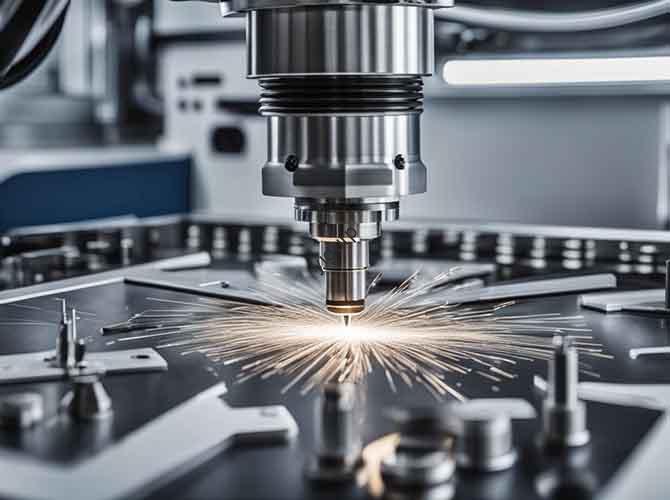
This guide simplifies choosing an internal spline broaching tool. The right tool keeps your parts accurate, your machine running, and your costs low. The wrong one? It can break tools, damage machines, and waste money—even for seasoned engineers. We’ll walk you through every step: tool types, materials, design, machine fit, cost, and how to find a trusted maker. By the end, you’ll pick a tool that works for your project, guaranteed.
What Is a Broaching Tool?
Broaching is a simple machining process. It uses a toothed tool (a broach) to cut material. Each tooth is slightly taller than the one before it. As you push or pull the broach through a part, each tooth removes a small bit of material. The final teeth create the exact shape you need.
Internal vs. External
- Internal Broaching: Cuts shapes inside a part. You need a pre-drilled hole for the tool to pass through. It makes internal splines, keyways, and square holes. This guide focuses on this type.
- External Broaching: Cuts shapes on a part’s outer surface. It’s used for flat surfaces or exterior grooves. The tool and machine setup are very different.
Pull vs. Push Types
| Tool Type | How It Works | Best For |
| Pull-Type | Pulled through the workpiece. Puts the tool in tension (straight, stable). | Long cuts, high-precision internal splines. |
| Push-Type | Pushed through the workpiece. Puts the tool in compression (may bend). | Short cuts, simple keyways. |
Specialized Internal Tools
- Solid Broaches: One piece of tool steel. The most common for most jobs.
- Shell Broaches: Hollow cutting section (shell) on a reusable arbor. Saves money in high-volume production—replace only the shell when teeth wear out.
- Concentricity Broaches: High-precision tools. Broach the spline and size a secondary bore in one pass. Ensures perfect alignment—critical for power transmission parts.
Real Case Example: A client used a push-type broach for long internal splines in 4140 steel. The tool bent mid-cut, ruining 12 parts and damaging the machine. We switched them to a pull-type broach. It stayed straight, cut 500+ parts without issues, and saved them $2,000 in wasted material.
Which Tool Material Works?
The broach must be harder and more wear-resistant than the part you’re cutting. The right material balances hardness, toughness, and cost. Here’s what you need to know.
Top Broach Materials
| Material | Key Traits | Best For | Relative Cost |
| M2 HSS | Good toughness, affordable (62-64 HRC). | Low-carbon steel, aluminum, brass. | $ |
| M42 HSS | High hot hardness (66-68 HRC), 8% cobalt. | Stainless steel, tool steel. | $$ |
| PM HSS | Finer structure, great wear resistance + toughness. | High-volume jobs, nickel alloys, titanium. | $$$ |
| Carbide-Tipped | Extreme hardness, brittle, tungsten carbide inserts. | Cast iron, high-silicon aluminum. | $$$$ |
Workpiece Material Matters
Your part’s material dictates your broach choice. Here are key factors:
- Hardness: A 4140 steel part (32 HRC) needs M42 or PM HSS. Cut at 15-20 feet per minute (FPM). A soft 1018 steel part works with M2 HSS at 25-30 FPM.
- Machinability: Materials like 316 stainless steel are “gummy” and work-harden fast. Use a sharp broach with a specialized coating to avoid material sticking to the tool.
Expert Insight: Never skimp on tool material for hard or abrasive parts. A $200 cheaper M2 HSS broach for 316 stainless steel will fail after 100 parts. A PM HSS broach costs more upfront but lasts 5x longer.
What’s Broach Anatomy?
A broach’s design directly impacts part quality and tool life. Understanding its parts helps you pick the right tool for your spline.
Key Cutting Features
| Feature | What It Does | Typical Specs |
| Rise Per Tooth (RPT) | Amount of material each tooth removes. Too high = tool breakage. Too low = dulling. | 0.001″ – 0.003″ for steel. |
| Face (Hook) Angle | Curves chips and directs them to the gullet (space between teeth). | 12-18° for soft materials; 0-6° for hard materials. |
| Back-Off (Clearance) Angle | Prevents the tooth’s back from rubbing the new part surface. | 1-3° for most applications. |
Spline Profile Basics
- Involute Splines: Most common for power transmission. Self-centering and strong. Provide diametral pitch, pressure angle (30°, 37.5°, 45°), and number of teeth to the tool maker.
- Straight-Sided Splines: Simple design. Used for parts that slide axially under load.
- Fillet vs. Flat Root: Fillet root has rounded corners—better for high torque (reduces stress). Flat root has sharp corners—cheaper but less durable.
Fix Common Broach Problems
| Problem | Likely Cause | Tool Design Fix |
| Poor Surface Finish | Wrong angles, dull teeth, chip packing. | Optimize angles; add chip breakers to split long chips. |
| Galling/BUE | Material sticks to the tool (common in stainless steel). | Add TiN/TiAlN PVD coating for a lubricious barrier. |
| Off-Center Splines | Uneven cutting forces, poor tool guidance. | Use a front/rear pilot; choose a concentricity broach. |
Case Study: An automotive client made transmission gears from 4140 steel (30 HRC). Their M2 HSS broach failed after 800 parts. We switched them to a PM HSS broach with TiAlN coating and a 2.5° back-off angle. The new tool lasted 3,500 parts—337% longer tool life. Downtime dropped by 70%.
Does It Fit Your Machine?
A great broach is useless if it doesn’t work with your machine. Check these key points before you buy to avoid costly mistakes.
Machine Types
- Vertical vs. Horizontal: Vertical machines save space but can struggle with chip removal. Horizontal machines use gravity for chips but need more floor space.
- Pull-Down/Pull-Up/Push: The broach’s pull head must match your machine’s mechanism. Pull-down machines pull the broach down through the part.
Critical Compatibility Checks
- Tonnage: Your machine’s pulling force must be higher than the required cutting force. The tool maker can calculate this for you.
- Stroke Length: The machine’s stroke must be longer than the broach’s total length (plus clearance for loading/unloading).
- Pull Head/Shank: The broach’s pull head and shank must fit your machine’s fixtures exactly. Provide the machine’s specs to the tool maker.
Pre-Order Checklist
- ☐ Machine tonnage > calculated cutting force
- ☐ Machine stroke > broach length + clearance
- ☐ Pull head type matches machine
- ☐ Shank diameter fits machine holder
How to Calculate Cost?
Don’t just look at the sticker price. Total Cost of Ownership (TCO) tells you the real cost per part. A cheaper broach often costs more in the long run.
What Drives Initial Cost?
- Material: M2 HSS is cheapest; carbide-tipped is most expensive.
- Complexity: Custom splines with chip breakers cost more than simple designs.
- Coatings: PVD coatings add cost but boost tool life.
- Size: Longer, larger broaches need more material and labor.
Calculate Cost Per Part
Use this formula: Cost Per Part = (Initial Tool Cost + Total Re-sharpening Costs) / Total Parts Produced
Key data to gather:
- Initial tool price
- Parts per sharpening + total re-sharpenings
- Re-sharpening cost per service
- Downtime cost (machine idle time for tool changes)
- Scrap rate (out-of-spec parts from poor tools)
Example: For 100,000 parts: – Tool A (M2 HSS): $8,000 initial, 2,000 parts per sharpening (9x), $500 per sharpening. Total cost: $62,500. Cost per part: $0.625. – Tool B (PM HSS + TiAlN): $12,000 initial, 5,000 parts per sharpening (9x), $600 per sharpening. Total cost: $34,800. Cost per part: $0.348. Tool B costs 50% more upfront but saves 44% per part.
Which Maker to Choose?
A trusted tool maker ensures your broach performs as promised. Look for expertise, quality control, and good service. Here are top options:
| Manufacturer | Known For |
| V W Broaching Service, Inc. | US-based, standard/custom broaches, high-volume services, great quality. |
| The Broach Masters, Inc. | Precision gear/spline broaches, automotive/aerospace expertise. |
| T.C.G. Broach & Tool Inc. | Canadian, design/manufacturing/sharpening, customer-focused. |
| Karl Klink GmbH | German, high-end machines/tooling, automotive precision. |
| Nachi-Fujikoshi Corp. | Japanese, high-performance tools, top tool steel technology. |
Yigu Technology’s Perspective
At Yigu Technology, we’ve helped 500+ clients pick the right internal spline broaching tools. Our data shows 65% of tool failures come from poor material matching or machine incompatibility—not bad design. We work with top manufacturers to source tools that fit your project, budget, and machine.
For high-volume automotive jobs, we’ve reduced cost per part by 30% by switching clients to PM HSS tools with TiAlN coatings. For aerospace clients, we specify concentricity broaches to meet tight alignment requirements (±0.001mm). Our goal is to make your broaching process smooth, accurate, and cost-effective.
Conclusion
Picking the right internal spline broaching tool is a step-by-step process. Start with your workpiece material to choose the tool material. Next, define the spline profile and tool features (like angles or coatings). Then, confirm it fits your machine. Finally, calculate TCO to avoid hidden costs. The right tool isn’t just a purchase—it’s an investment that saves time, money, and headaches. With this guide, you can choose with confidence and get the precision parts you need.
FAQ
When should I use a pull-type vs. push-type broach? Use pull-type for long cuts or high-precision splines. Use push-type for short cuts or simple keyways—they’re cheaper but less stable.
Which tool material is best for stainless steel? M42 HSS (cobalt) works for most stainless steel. For high-volume jobs, use PM HSS with a TiAlN coating to prevent galling.
How do I avoid broach breakage? Ensure your machine has enough tonnage, use the right RPT for your material, and keep the tool sharp. Avoid pushing the tool beyond its capacity.
Is a more expensive broach worth it? Often yes. A premium tool (like PM HSS) lasts longer, reduces downtime, and lowers cost per part—even if it costs more upfront.
What if my spline is custom? Work with a manufacturer that specializes in custom broaches. Provide your spline specs (diametral pitch, number of teeth) and workpiece material for a tailored design.
Discuss Your Projects with Yigu Rapid Prototyping
At Yigu Rapid Prototyping, we help you pick and source the perfect internal spline broaching tool for your precision machining needs. With 10+ years of experience in automotive, aerospace, and industrial manufacturing, we know how to match tools to your workpiece, machine, and budget. Contact us today to discuss your project—we’ll guide you from selection to delivery, ensuring accuracy and cost savings.