
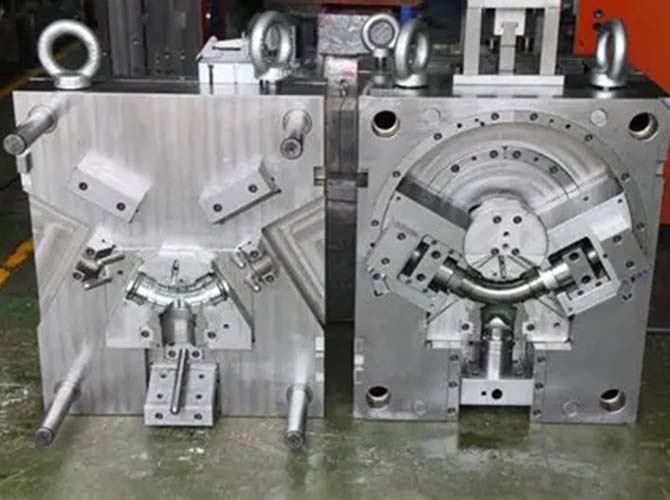
Introduction
The injection mold tooling cost is often the biggest expense in any new plastic product budget. It’s a one-time investment that affects not just your starting costs, but also the quality, growth potential, and long-term profits of your entire production.
For product developers, engineers, and business owners, this cost can seem unclear and scary. Quotes vary wildly. Suppliers explain things differently. And it’s hard to know if you’re paying a fair price or wasting money.
This guide makes these expenses easy to understand. You’ll learn:
- The key factors that determine tooling price
- Practical strategies for cost savings through smart design
- How to evaluate long-term value beyond the initial bill
By the end, you’ll be ready to make better decisions and manage your tooling budget with confidence.
What Makes Up the Anatomy of Tooling Costs?
Understanding the final price of an injection mold requires seeing it not as a single number, but as the sum of several different, high-value parts. This clarity moves you from accepting an unclear quote to having an informed conversation with your supplier.
Core Cost Components
Tool Design and Engineering (CAD/CAM)
This is the foundation. Before any steel is cut, engineers create a detailed 3D model of the tool itself. This phase includes:
- Designing the core and cavity
- Planning the best layout of cooling channels for even cooling and shortest cycle time
- Engineering the ejector system to safely remove parts
- Running a Mold Flow Analysis—computer simulation that predicts how plastic will flow, finding potential problems like weld lines or air traps before they become expensive physical problems
Base Material and Machining
The physical tool begins as a large block of steel or aluminum. The cost of this raw material is a main factor.
- P20 steel: Good for medium-volume tools
- H13 steel: Harder, for high-volume or abrasive materials
Following material selection, extensive CNC machining carves the exact geometry of the core and cavity from the solid block—a process that can take hundreds of hours of machine time.
Complexity Drivers
Features that add mechanical action to the mold are major cost drivers:
- Side-actions, slides, or lifters: Moving parts required to form undercuts or features not in the line of draw
- Ejector system: Pins, blades, or sleeves engineered to push the finished part out without damage
- Runner system: Channels melted plastic to the part cavity. A cold runner is simpler and cheaper upfront but creates material waste. A hot runner is more complex and expensive initially but reduces waste and can shorten cycle times.
Final Fitting and Polishing
Once main parts are machined, the process shifts to highly skilled manual labor:
- Technicians hand-fit all moving parts, ensuring perfect seal and smooth action
- The cavity surface is finished to required specification—from standard machine finish to multi-stage, labor-intensive hand-polishing for mirror-like SPI-A1 grade
- Texturing through bead blasting or chemical etching adds to final price
Testing and T1 Samples
The final stage is the initial trial run (T1) . The completed tool is installed in an injection molding press, and first sample parts are produced. Cost covers:
- Machine time
- Material
- Labor to analyze T1 samples
This phase is critical for debugging the tool, checking dimensions, and making adjustments before mass production.
What Do Typical Tooling Costs Look Like?
The following table provides example cost ranges based on production volume and tool complexity. These are estimates—actual costs vary based on part geometry, location, and supplier rates.
| Tool Type/Class | Typical Production Volume | Estimated Cost Range | Key Characteristics |
|---|---|---|---|
| Prototype Tool | 100–10,000 shots | $2,000–$10,000 | Aluminum or soft steel; simple design; fast turnaround |
| Low-Volume (SPI 104) | 10,000–100,000 shots | $10,000–$25,000 | Pre-hardened P20 steel; simpler mechanics; good for market testing |
| Medium-Volume (SPI 103) | 100,000–500,000 shots | $25,000–$75,000 | P20 or similar steel; may include side-actions; balanced cost/lifespan |
| High-Volume (SPI 101) | 1,000,000+ shots | $75,000–$250,000+ | Hardened tool steel (H13, S7); complex cooling; hot runners; built for endurance |
How Does Part Design and Material Choice Affect Cost?
Every decision at the part design stage has a direct and significant financial impact on the final mold invoice. The connection between a line in a CAD model and a cost on a tooling quote is absolute.
Part Geometry Influence
Part Size
The most straightforward factor. A larger part requires:
- A larger mold—bigger, more expensive block of steel
- More CNC machining hours to shape core and cavity
- A larger molding press for production
All contribute to higher cost.
Undercuts and Features
An undercut is any feature that prevents the part from being ejected directly from the mold in a single, straight pull—side holes, clips, threaded features.
To create these, the mold must include mechanical parts like side-actions or lifters—essentially smaller molds-within-a-mold that move into place, then retract before ejection. These mechanisms dramatically increase complexity and are among the most significant single drivers of increased tooling cost.
Wall Thickness
- Non-uniform walls: Thick sections cool slower than thin sections, causing defects like sink marks, warp, and internal stresses. The tool may need more complex cooling systems, increasing design and machining time.
- Excessively thin walls: Difficult to fill, requiring higher injection pressures, specialized gate locations, or expensive hot runner systems.
Tolerances
Tight dimensional tolerances demand:
- More precise CNC machining (slower feed rates, expensive cutters)
- Advanced measurement equipment like Coordinate Measuring Machines (CMMs)
- More testing and tuning time for tiny adjustments
Each precision-driven step adds cost.
Surface Finish
The aesthetic requirement directly relates to manual labor needed to finish the mold:
| Finish Level | Description | Cost Impact |
|---|---|---|
| Basic (PM-F0) | Standard as-machined finish, visible tool marks | Lowest cost—minimal post-machining labor |
| Textured (VDI/MT) | Secondary process (bead blasting, chemical etching) for uniform matte or patterned surface | Moderate cost—extra step, specialized process |
| High-Gloss/Mirror (SPI-A1) | Multi-stage hand-polishing with stones and diamond pastes | Highest cost—days or weeks of skilled labor |
Plastic Material Role
The type of plastic you choose directly influences the type of steel required.
Abrasive or Corrosive Materials
Many high-performance plastics are filled with abrasive materials like glass or carbon fiber. These act like sandpaper on the mold surface every cycle, causing early wear. Similarly, materials like PVC can release corrosive gases.
To withstand this abuse, the mold must be constructed from harder, more durable, more expensive tool steels like H13 or S7, then heat-treated for maximum hardness.
High-Temperature Materials
Engineering plastics like PEEK, Ultem, or PSU require processing temperatures exceeding 300–400°C (572–752°F) . The mold must:
- Withstand these temperatures without degrading
- Use specialized, high-temperature tool steels
- Have more robust cooling systems with precisely engineered channels
- Use hot runner components rated for high temperatures
All of this adds cost.
How Can You Reduce Tooling Costs Through Smart Design?
This section provides a practical, actionable Design for Manufacturability (DFM) for Cost checklist. For each strategy, we explain the action and the cost-saving mechanism.
DFM-for-Cost Checklist
1. Simplify, Simplify, Simplify
Eliminate any feature not absolutely necessary for function or core appearance. For every curve, hole, and rib, ask: “Is this essential?” Every feature adds complexity and cost.
Look for opportunities to combine multiple parts into a single, more complex component. This may increase complexity of one tool but can eliminate one or more additional tools, assembly fixtures, and labor—resulting in significant net savings.
2. Design to Avoid Undercuts
This is often the single greatest opportunity for tooling cost reduction. Undercuts require expensive side-action mechanisms.
Explore creative alternatives:
- Can a clip be redesigned with a pass-through core—a hole allowing mold steel to pass through, forming the feature without a side action?
- Can a side hole be angled slightly so it’s in the line of draw?
From our experience: We often see designs where a minor change—moving a clip from the side of a boss to its top, or reorienting a snap feature—completely eliminates the need for a $5,000 side-action mechanism with no loss of function.
3. Follow DFM Best Practices
Uniform Wall Thickness: This is the golden rule of injection molding design. Maintaining consistent wall thickness prevents defects like sink, warp, and voids. It simplifies cooling channel design, shortens cooling cycles, and results in more stable, higher-quality parts.
Include Draft Angles: Apply a small taper (1–3 degrees) to all vertical faces in the direction of mold pull. This prevents parts from scraping against mold walls during ejection, reducing stress on both part and ejector system, allowing faster cycle times.
Use Ribs for Strength: When a part needs more strength, don’t make walls thicker. Instead, maintain thin nominal walls and add a network of properly designed ribs. Ribs add significant structural integrity with minimal material increase, keeping material costs down and cycle times short.
4. Be Realistic with Specifications
Specify tight tolerances and high-polish finishes only where functionally necessary.
- A surface that mates with another part may need ±0.05mm
- An external, non-functional surface may be perfectly acceptable at ±0.2mm
An A-1 mirror polish is only necessary for optical-quality lenses or premium cosmetic surfaces. Applying these expensive specifications across the entire part when not needed is a common and costly mistake.
5. Consider Advanced Mold Setups
Family Molds: If you need to produce a set of related parts (left and right housings) from the same material, a family mold can be cost-effective. This single mold contains cavities for multiple different parts, allowing production in one shot. Saves cost of multiple mold bases and reduces total tools needed.
MUD Inserts: The Master Unit Die (MUD) system is a game-changer for smaller parts and lower volumes. The molding house owns a standardized mold frame (the “master unit”). You only pay for the custom-machined core and cavity inserts that fit into this frame. This can reduce upfront tooling cost by 50–70% by eliminating expense of the large mold base, ejector system, and cooling infrastructure.
6. Engage Your Manufacturer Early
The most important step: engage your chosen toolmaker for a DFM review before your design is finalized. Their engineers and toolmakers have seen thousands of parts and can quickly identify cost-saving opportunities a product designer might overlook. An hour spent in DFM review can save tens of thousands of dollars and weeks of delays.
How Do You Calculate ROI and True Value?
Focusing solely on the upfront invoice is shortsighted. The cheapest tool is rarely the best value. You need to shift perspective from upfront cost to Total Cost of Ownership (TCO) and long-term Return on Investment (ROI) .
Why “Cheapest” Is Expensive
A low-cost tool often carries hidden expenses that emerge during production.
Maintenance and Downtime: Cheaper tools use lower-grade materials (aluminum, unhardened P20) that wear out faster, leading to flashing, dimensional instability, and frequent downtime for repairs. Every hour the production line stops is lost revenue.
Part Quality and Rejection Rate: A poorly constructed tool with inefficient cooling or imprecise tolerances produces inconsistent parts—higher scrap rate, wasting material, machine time, and labor. A 5% scrap rate on 500,000 parts means 25,000 units thrown away.
Slower Cycle Times: Tool quality directly impacts cycle time—the primary driver of final cost-per-part. An inefficiently cooled tool requires longer cooling, extending overall cycle. A difference of just 10 seconds per cycle can add thousands in additional production costs over a large volume run.
Limited Lifespan: A cheap prototype aluminum tool might be guaranteed for 5,000 shots. A high-quality SPI Class 101 production tool is built for over 1 million shots. If your product succeeds and volume exceeds the cheap tool’s lifespan, you’ll purchase a second, third, or fourth tool—erasing initial savings and causing significant delays.
Long-Term Value Framework
Let’s compare two tooling options for a project requiring 500,000 units of a moderately complex part.
| Metric | Tool A (Low-Cost) | Tool B (High-Quality) |
|---|---|---|
| Upfront Tooling Cost | $20,000 | $40,000 |
| Guaranteed Lifespan | 100,000 shots | 1,000,000+ shots |
| Cycle Time | 45 seconds | 30 seconds |
| Estimated Scrap Rate | 5% | 1% |
| Estimated Maintenance Downtime | 40 hours/year | 5 hours/year |
Calculating Total Cost
Tool A (Low-Cost) : To produce 500,000 units, this tool must be replaced or rebuilt four times after its 100,000-shot lifespan.
- Total Tooling Cost: $20,000 × 5 = $100,000
This doesn’t even include lost production time during changeovers, higher cost-per-part from the 50% longer cycle time, or 5× higher scrap rate.
Tool B (High-Quality) : Built to last the entire project and beyond.
- Total Tooling Cost: $40,000 (one-time)
The lower cycle time and minimal scrap rate result in significantly lower cost-per-part, generating continuous savings throughout production.
Conclusion: Despite a 100% higher initial injection mold tooling cost, Tool B provides dramatically better ROI. The $60,000 in direct tooling savings, combined with lower per-part costs and reduced downtime, makes it the far more strategic and profitable investment.
Domestic vs. Overseas Tooling: How Do You Choose?
From our experience managing global manufacturing projects, the decision of where to source your injection mold tool is one of the most important. It’s a complex trade-off between cost, communication, speed, and risk.
Key Factors to Consider
| Factor | Domestic Tooling (USA/EU) | Overseas Tooling (e.g., China) |
|---|---|---|
| Upfront Cost | Generally Higher | Generally Lower |
| Lead Time | Shorter (no overseas shipping) | Longer (ocean freight adds 4–6 weeks) |
| Communication | Same time zone, no language barrier, easier collaboration | Time zone differences, potential language barriers |
| IP Protection | Strong legal frameworks | Can be a concern; requires careful supplier vetting |
| Quality Control | Easy to visit shop, oversee trials, make adjustments | Requires robust remote QC or third-party inspections |
| Tool Modifications | Fast and straightforward | Slow and costly to ship tool back and forth |
Making the Right Choice
Consider Overseas Tooling when:
- Cost is the primary driver
- Parts are less complex, with stable, finalized designs
- High-volume production where per-part savings can be maximized
- You have a well-vetted supplier with proven track record
Consider Domestic Tooling when:
- Parts are complex, with tight tolerances or sensitive IP
- Speed-to-market is the top priority (eliminates shipping delays)
- Design is still evolving and may require quick modifications
- You want to be hands-on during trial and approval
Conclusion: Making an Informed Investment
Navigating the complexities of injection mold tooling cost is an important skill for anyone bringing a physical product to market. The initial price is not just an expense—it’s a strategic investment in the quality and efficiency of your entire production run.
Key Takeaways
Analyze the Breakdown: Don’t accept a tooling quote as a single number. Request a breakdown to understand where cost is concentrated—steel, side-actions, surface finish—to identify areas for discussion and optimization.
Design for Manufacturability (DFM) : The most powerful way to reduce tooling costs happens at your desk, during design. Simplifying your part, eliminating undercuts, and following DFM principles is your greatest lever for budget control.
Think Long-Term ROI: Evaluate tooling options based on total cost of ownership. A more expensive, higher-quality tool with longer life, faster cycle time, and lower scrap rate will almost always deliver better ROI for any significant production volume.
Choose Your Supplier Strategically: The right sourcing decision depends on your project’s unique balance of cost, speed, complexity, and risk. Weigh the pros and cons to select a partner that aligns with your most critical priorities.
FAQ: Injection Mold Tooling Cost
What’s the most important factor in tooling cost?
Part complexity is typically the biggest driver. Features like undercuts, tight tolerances, and complex geometries require more machining time, more complex mechanisms (side-actions, lifters), and more skilled labor—all of which add cost. Part size matters, but complexity usually matters more.
Can I get an accurate quote without a final design?
You can get a rough estimate, but not an accurate quote. Toolmakers need a finalized 3D model to calculate machining time, material requirements, and complexity. Quotes based on preliminary designs often change significantly when the final design is reviewed.
How much does a typical injection mold cost?
For a production-grade tool, expect $10,000–$100,000+ . Simple tools for small parts might start around $5,000–$10,000. Complex, high-volume tools can exceed $250,000. Prototype tools in aluminum can be $2,000–$8,000.
What’s the cheapest way to get an injection mold?
MUD (Master Unit Die) inserts are often the most cost-effective approach for smaller parts. You pay only for the custom core and cavity inserts, not the entire mold base. This can reduce upfront costs by 50–70%.
How long does an injection mold last?
It depends on the steel and maintenance:
- Aluminum prototype tools: 500–5,000 shots
- P20 steel tools: 100,000–500,000 shots
- Hardened steel tools (H13, S7) : 1,000,000+ shots
Should I use a domestic or overseas toolmaker?
There’s no universal answer. Choose domestic for complex parts, tight timelines, evolving designs, or sensitive IP. Choose overseas when cost is the primary driver and you have a stable, well-defined design and a vetted supplier.
Can I modify a mold after it’s made?
Yes, but modifications cost money. Simple changes (adding a logo, minor surface texture) might cost a few hundred to a few thousand dollars. Major changes (adding features, changing geometry) can cost $5,000–$20,000+ and require weeks of rework.
Discuss Your Projects with Yigu Rapid Prototyping
At Yigu Technology, we’ve helped hundreds of clients navigate injection mold tooling cost decisions. We know where money gets wasted and where smart investments pay off.
For a medical device startup, we recommended a MUD insert approach that cut their initial tooling cost by 60%—allowing them to validate their product before committing to full production tooling. For an automotive supplier, we identified design simplifications that eliminated three side-actions, saving $18,000 on their tool without affecting part function.
Got a project and need clarity on tooling costs? Let’s talk. Contact Yigu’s engineering team to discuss your design and production goals. We’ll help you understand your options, optimize your design, and make informed decisions that balance upfront investment with long-term value.