
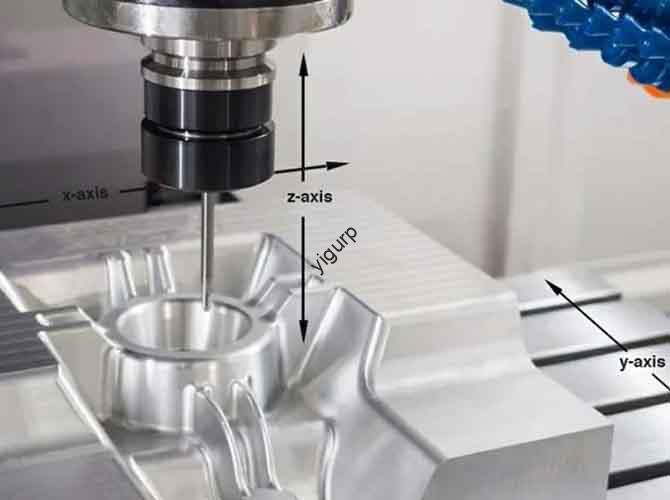
This guide helps you master CNC machining for intelligent light bulb prototypes. Smart bulbs (with WiFi control and dimming) are everywhere in smart homes. Their prototype quality directly shapes mass production success. We break down each step in simple, everyday English—no pro engineering skills needed. By the end, you’ll know how to make a functional, precise smart bulb prototype that works as intended.
What Prep Do You Need First?
Good design and material choices lay the groundwork for a great prototype. This stage balances looks, function, and easy machining to avoid rework later.
3D Modeling & Structure
Split the smart bulb into core parts. Each needs precise design to work well and machine easily. Here’s a detailed breakdown:
| Component | Design Requirements | CNC Tips |
| Lampshade | Translucent, smooth inner wall, modern shape | Mirror polish after machining; avoid complex undercuts |
| Aluminum Heat Shell | Integrated fins (1.5-2mm spacing), fits PCB | Precise fin milling; avoid deformation during clamping |
| Lamp Holder | E27 thread (2.8mm pitch), reserved wire holes | Thread accuracy ±0.05mm; hole alignment with PCB |
| PCB Bracket | Snap-fit, heat-resistant (handles LED heat) | Precise snap dimensions; no sharp edges |
Real Case Example: A client once designed a lampshade with deep undercuts. We couldn’t machine it without damaging the part. We adjusted the design to remove undercuts—delaying the project by 3 days. Always keep CNC feasibility in mind during design!
Choose the Right Materials
Material choice impacts performance, cost, and machining ease. Compare options to pick the best fit for each part:
| Component | Options | Pros | Cons |
| Lampshade | Acrylic / PC Plastic | Acrylic: 90%+ transmittance; PC: heat-resistant | Acrylic: scratch-prone; PC: higher cost |
| Heat Shell | Aluminum 6061 / Copper | Aluminum: light; Copper: better heat dissipation | Aluminum: needs anodization; Copper: heavy |
| Insulating Parts | Nylon | Good insulation, wear-resistant | Low rigidity; may deform |
Expert Insight: We always recommend aluminum 6061 for heat shells. It balances heat dissipation, weight, and cost. Copper works too but adds machining time and expense—only use it for high-end prototypes.
How to Prep for CNC Machining?
Proper prep prevents errors and ensures consistent results. Focus on tools, parameters, and fixtures.
Pick the Right Tools
Different machining steps need specific tools. Use this guide to choose wisely:
| Machining Stage | Tool Type | Size (mm) | Purpose |
| Roughing | Flat Bottom Cutter | Φ8-10 | Remove excess material fast |
| Lampshade Finishing | Ball Head Cutter | Φ3-5 | Smooth curved surfaces |
| Drilling Wire Holes | Twist Drill | Φ2-3 | Create precise wire holes |
| Tapping Threads | E27 Tap | Standard | Machine E27 lamp threads |
Set Machining Parameters
Material type dictates speed and feed settings. Wrong parameters cause damage. Use this table:
| Material | RPM | Feed Speed (mm/min) | Tips |
| Acrylic | 15,000-20,000 | 200-300 | Layered cutting (0.3mm) |
| PC Plastic | 12,000-18,000 | 150-250 | Blow away chips |
| Aluminum 6061 | 8,000-12,000 | 100-200 | Use coolant |
Design Fixtures & Clamp
Secure clamping prevents vibration and surface damage. Follow these tips for each part:
- Lampshade: Use vacuum suction cups (flat surfaces). Don’t over-clamp—avoids deformation.
- Aluminum Shell: Vises with rubber-lined soft jaws. Align fins with machining direction.
- Small Parts (Brackets): Custom fixtures with locating pins. Ensures consistent positioning.
Real Case Example: A team once used hard jaws for an aluminum shell. It left scratches on the surface. We switched to soft jaws and re-machined the part—wasting 4 hours. Always use the right clamp for the material!
How to Do CNC Machining?
Follow this linear process: roughing → finishing → special treatments. Each step builds on the last to create quality parts.
Step-by-Step Workflow
- Roughing: Use a flat bottom cutter to shape the basic form. For aluminum shells, mill the outer contour and fin grooves. Remove 80% of excess material in 1-2 passes.
- Finishing: For lampshades, use a ball head cutter to smooth the inner wall (Ra ≤ 0.8μm) for even light. For lamp holders, tap E27 threads to fit standard sockets.
- Special Processes:
- Metal parts: Anodize aluminum shells (black/silver) for corrosion resistance.
- Plastic parts: Laser engrave WiFi icons or logos on lampshades.
Fix Common Issues
Problems happen—here’s how to solve them quickly:
| Issue | Cause | Solution |
| Lampshade Scratches | Dull tool, high feed speed | Replace tool; reduce feed speed by 20% |
| Thread Misalignment | Fixture shift, wrong tap alignment | Re-calibrate fixture; use center drill |
| Aluminum Shell Burrs | Low coolant, high RPM | Increase coolant; lower RPM by 1,000 |
What to Do After Machining?
Post-processing improves durability and looks. Assembly and testing ensure the prototype works as a smart bulb.
Post-Processing Steps
Treat each part to boost performance and appearance:
| Component | Process | Purpose |
| Lampshade | Sanding (400-1000 mesh) + Polishing | Remove tool marks; boost transmittance |
| Aluminum Shell | Ultrasonic Cleaning + Anodization | Remove oil/chips; prevent rust |
| Insulating Brackets | Deburring (file/sandpaper) | Eliminate sharp edges; avoid wire damage |
Assemble & Test
Assemble in order to avoid rework. Test thoroughly to ensure smart functions work.
Assembly Steps
- Attach the PCB to the bracket with snaps (no wire pinching).
- Secure the aluminum shell to the bracket (M2 screws, 0.5N·m torque).
- Install the lampshade (snap-fit or glue). Check gap ≤0.1mm (no light leakage).
- Connect the lamp holder to the PCB (solder wires; insulate with heat-shrink tubing).
Functional Testing Checklist
- Electrical Safety: Test insulation (no leakage at 220V).
- Smart Functions: Connect to WiFi (within 10 seconds); test dimming (10%-100%).
- Durability: Simulate 1,000 on/off cycles (no loose parts, no overheating).
Expert Insight: Always test WiFi connectivity in a real home environment. We once tested a prototype in an office—signal was strong. But in a client’s home with thick walls, it failed. We adjusted the PCB antenna and re-tested.
What Precautions to Follow?
These tips keep your prototype safe, precise, and cost-effective.
Precision Control
- Plastic parts: ±0.1mm tolerance (e.g., lampshade diameter).
- Metal parts: ±0.05mm tolerance (e.g., E27 threads).
- Surface roughness: Lampshade inner wall Ra ≤ 0.8μm; aluminum shell Ra ≤ 1.6μm.
Safety & Cost Tips
- Safety: Wear safety goggles (chip protection). Use 12V power for initial PCB tests (avoids shock).
- Cost Control: Reuse fixtures for multiple prototypes. Avoid complex curves (increase machining time).
Yigu Technology’s Viewpoint
At Yigu Technology, we believe CNC machining for smart bulb prototypes is all about balance—precision and functionality. Design must prioritize CNC compatibility: no undercuts, simple geometries. Aluminum 6061 is our go-to for heat shells—it’s affordable and dissipates heat well. Anodization isn’t just for looks; it protects aluminum from humidity in bathrooms and kitchens. As smart bulbs add features (like motion sensors), CNC machining will need tighter tolerances (±0.03mm) and smaller tools. We’re using AI to optimize parameters, cutting machining time by 15% while keeping precision high.
Conclusion
CNC machining for smart bulb prototypes is a step-by-step process: design → material selection → prep → machining → post-processing → assembly → testing. The key is to focus on precision, use the right tools and materials, and test thoroughly. You don’t need to be an expert, but attention to small details (like thread accuracy or lampshade smoothness) makes a big difference. By following this guide, you’ll create a functional prototype that works as a smart bulb and sets the stage for successful mass production.
FAQ
What CNC machine is best for smart bulb prototypes? Desktop CNC centers (e.g., Haas TM-1) or small engraving machines (3018 Pro) work best. They handle small parts with precision and are cost-effective for prototype batches.
Why anodize the aluminum heat shell? Anodization creates a 5-10μm oxide layer. It prevents rust (critical for humid homes) and adds a sleek finish (black/silver matches modern decor).
How to ensure lampshade light transmittance? Use acrylic (≥90% transmittance) and finish with a ball head cutter (Ra ≤ 0.8μm). Sand with 1000-mesh paper and polish to remove scratches.
Can I use PC plastic for the lampshade? Yes. PC is heat-resistant (up to 120°C) and durable. But it’s more expensive than acrylic and needs slower feed speeds during machining.
Discuss Your Projects with Yigu Rapid Prototyping
At Yigu Rapid Prototyping, we specialize in CNC machining for smart bulb prototypes. With 10+ years of experience, we handle design optimization, machining, and testing. Whether you need a simple acrylic lampshade or a custom aluminum heat shell, we tailor our process to your needs. Contact us today to discuss your project—we’ll help you shorten development cycles by 20-25% while keeping quality top priority.