
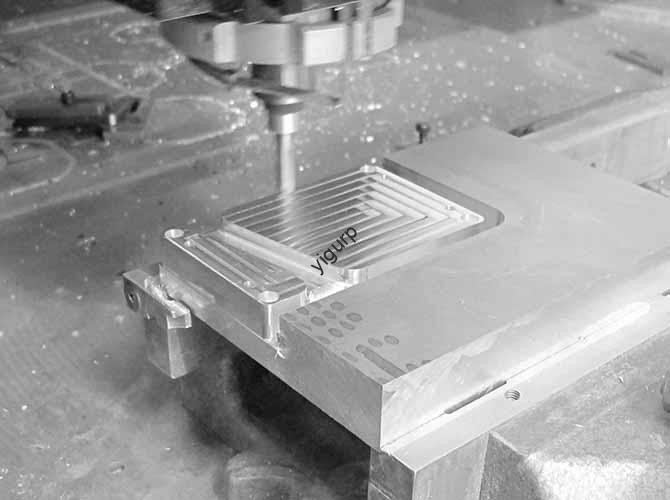
Introduction
In today’s fast-paced world of product development, companies are always trying to balance three things: speed, cost, and quality. Engineers and designers need a way to make high-quality parts quickly, without losing precision or material strength. This is where high-speed CNC milling comes in. It is not just a faster version of regular machining. It is a smarter approach that changes what is possible for both quick prototypes and full-scale production parts. The main advantage is much shorter lead times, but it also improves part quality at the same time. This guide will explain the basic ideas behind high-speed milling, the real benefits for your business, how it works with different materials, and how you can use it to scale smoothly from one part to thousands. We will give you the expert knowledge you need to make smart decisions for your next project.
What Is High-Speed Milling?
High-speed milling, often called HSM, is sometimes misunderstood as simply using a machine with a faster spinning tool. While a high RPM (revolutions per minute) is part of it, true HSM is a complete manufacturing strategy. It focuses on making many light, fast cutting passes instead of the slower, heavy cuts of regular milling. This change in approach changes how the cutting tool interacts with the material. This leads to big improvements in how efficient the process is, how accurate the parts are, and how smooth the surface finish is. Understanding this strategic difference is key to seeing why HSM is a better process for many different jobs, from complex 3D shapes to making delicate, thin-walled parts.
Core Principles
The main ideas of HSM can be summed up as: cut light, cut fast, and cut smart. Instead of removing a lot of material in one slow, heavy pass, HSM uses a smaller radial depth of cut (RDOC) and axial depth of cut (ADOC) . This means the tool is engaged with the material less at any one time. To make up for this, the process uses a much higher spindle speed (RPM) and a much faster feed rate (the speed the tool moves through the material). A key idea here is chip thinning. When you use a fast feed rate with a light cut, the actual chip taken off by each cutting edge becomes very thin. This allows you to use much higher feed rates without putting more stress on the tool. The result is that the heat from cutting is carried away in the chips, instead of building up in the part or the tool. This keeps the part’s quality high and makes the tool last longer.
High-Speed vs. Conventional
To really understand the benefits of HSM, it helps to compare it directly with conventional milling. The differences are not just about speed, but about the whole approach to removing material.
| Feature | Conventional CNC Milling | High-Speed CNC Milling (HSM) |
|---|---|---|
| Spindle Speed | Lower (e.g., < 10,000 RPM) | Very High (e.g., 15,000 – 40,000+ RPM) |
| Feed Rate | Slower | Extremely Fast |
| Depth of Cut | Heavy radial and axial cuts | Light radial, often full axial cuts |
| Toolpath Strategy | Simple, linear paths (like zig-zag) | Advanced, smooth paths (like trochoidal or peel milling) |
| Heat Management | Heat transfers into the workpiece and tool | Heat is removed with the chip |
| Cutting Forces | High, leading to tool bending and vibration | Low and consistent, minimizing bending |
| Cycle Time | Longer, especially for complex parts | Drastically shorter |
| Surface Finish | Good, but often needs extra finishing | Excellent, often eliminates extra finishing steps |
What Are the Real Business Benefits of High-Speed Milling?
The technical advantages of high-speed CNC milling lead directly to real benefits for your business and your projects. For engineers, designers, and purchasing managers, choosing HSM is a smart decision that affects lead times, part quality, and design freedom. It gives you a competitive edge by helping you get better products to market faster.
Reduced Lead Times
The most obvious benefit of HSM is speed. By using optimized toolpaths and extremely fast feed rates, the time it takes to machine a part is greatly reduced. For parts with complex 3D shapes or deep pockets, high-speed milling can cut machining time by 50% to 70% compared to older methods. This speed helps for both single prototypes and larger production runs. Shorter cycle times mean your parts are finished and shipped faster, which speeds up your whole product development schedule and helps you get to market quicker.
Superior Surface Finish
High-speed milling creates an exceptionally smooth surface finish right off the machine. The strategy of using light, fast cuts with a steady load on the tool reduces tool chatter and vibration, which are the main causes of a rough finish. The resulting surface is often so good that it reduces or even eliminates the need for extra, time-consuming steps like hand sanding, polishing, or bead blasting. This not only saves money but also makes sure the final part’s shape stays true to the original CAD model.
Exceptional Precision
Being precise is a must for parts that actually do something. HSM is great at this because the cutting forces are very low. Regular milling uses heavy cuts that can bend the tool or make the workpiece vibrate, leading to parts that are not exactly the right size. The light-touch approach of HSM keeps these forces to a minimum. This means less tool bending, better stability, and the ability to hold much tighter tolerances. The result is a more accurate part, which is critical for complex assemblies and high-performance products.
Machining Complex Geometries
Because the cutting forces are so low, high-speed milling opens up new design possibilities. It is the perfect method for making features that are difficult or impossible with regular machining. This includes parts with very thin walls, delicate details, and deep pockets. Since the tool puts very little pressure on the part, thin walls can be machined without bending or breaking. Also, complex 3D curves and organic shapes can be made with amazing accuracy and a smooth finish, giving designers more freedom to create parts that are optimized for how they work, not just for how easy they are to make.
How Does High-Speed Milling Scale from Prototypes to Production?
One of the most powerful things about a high-speed CNC milling service is that it scales easily. The same process that makes a great prototype in days can also be used to make hundreds or thousands of identical parts efficiently. This smooth shift from prototyping to production lowers the risk in your manufacturing plan and makes sure the part you tested is the same part you get in large quantities.
The Prototyping Phase
In the early stages of product development, speed and the ability to make changes are most important. High-speed CNC milling is the perfect tool for this phase. It lets you quickly create functional prototypes from the same materials you will use in the final product, like aluminum, steel, and strong plastics. Unlike 3D printing, these prototypes have the real mechanical properties of the final part, which allows for meaningful real-world testing of how it looks, fits, and works. Because a new version can be machined in hours or days instead of weeks, your team can test, learn, and improve designs much faster, leading to a better final product.
The Production Phase
Once a design is finalized, the process for making it is already figured out. Moving to low-volume or medium-volume production is a simple next step. The same HSM strategies, CAM programming, and quality standards used for the prototype are now applied on a larger scale. By optimizing the process and using automation, like robotic arms to load parts and probes inside the machine to check dimensions, we make sure every part is exactly the same. This approach gives you the cost-effectiveness and reliability you need for production, while keeping the high quality and precision of the prototype.
What Materials Are Best for High-Speed Milling?
High-speed milling is a flexible process that works with many different materials. However, some materials are especially well-suited for this method. Choosing the right material is a key step in making your project the best it can be in terms of performance, cost, and how easy it is to make.
Aluminum Alloys
Aluminum alloys are perfect for high-speed milling. Materials like Aluminum 6061-T6 and Aluminum 7075-T6 conduct heat very well and are easy to machine, which allows for very fast material removal. The heat spreads out quickly, which stops the part from warping and lets the machine run at its full potential.
Best for: Lightweight structural parts, electronic cases, heat sinks, and quick prototypes where speed is important.
Steels and Stainless Steels
Even though they are harder to cut than aluminum, strong materials are machined every day using HSM methods. For materials like Stainless Steel 304/316 and tool steels (like A2, D2), the key is to control the load on the tool and the heat. Advanced toolpaths like trochoidal milling are used to keep the cut light and steady, which stops the tool from breaking and makes sure the heat is carried away in the chip. This allows for efficient machining of very strong, durable parts.
Best for: High-strength mechanical parts, medical devices and tools, and durable jigs and fixtures.
Engineering Plastics
High-speed milling is also an excellent choice for machining engineering plastics such as Delrin (POM) , PEEK, Nylon, and Polycarbonate. The low cutting forces, high spindle speeds, and sharp tools make clean, precise cuts without melting the material or causing heat stress. This prevents the gummy texture and poor finish that can happen when machining plastics with conventional methods.
Best for: Electrical insulators, low-friction bearings and gears, medical parts, and clear manifolds.
How to Choose the Right High-Speed Milling Partner?
Picking the right manufacturing partner is just as important as the technology itself. A true expert in high-speed milling does more than just own fast machines. They have the software, the programming skills, and the process-focused mindset to get the most out of the technology. To make sure you are working with a capable supplier, you need to ask the right questions.
Evaluating Your Service Provider
Use this checklist to evaluate any potential partner. Their answers will show you their true level of expertise.
- Technology & Equipment: “What specific high-speed CNC machines do you have? What are their top spindle speed and feed rate?” Look for modern, well-maintained machines from good brands, ideally with 5-axis abilities.
- Software & Programming: “What CAM software do you use? Can you tell me about your programmers’ experience with advanced high-speed toolpaths like trochoidal milling?” Good partners will talk easily about these methods and use high-quality CAM software.
- Experience with My Materials: “Can you show me examples of parts you have machined in my specific material using high-speed methods?” A confident partner will have a portfolio of work and be able to discuss the challenges and solutions for your material.
- Design for Manufacturability (DFM) Process: “How does your DFM feedback process work? How will you help us improve our design for high-speed milling?” A great partner gives helpful feedback. They should suggest changes, like making inside corners a standard radius to allow for smooth toolpaths, to lower cost and cycle time.
- Quality Control & Inspection: “What are your inspection procedures? Do you use CMMs? Can you provide a First Article Inspection (FAI) report?” Strong quality control is essential. Look for certifications like ISO 9001 and a clear inspection process.
- Prototyping to Production Scalability: “How do you make sure the process for the prototype can be copied exactly for a production run of 1,000 parts?” They should be able to explain how they control the process, document it, and use automation to keep every part the same.
A Project Example: A Complex Electronics Enclosure
To show how this works in practice, let’s look at a common but challenging project: a complex electronics enclosure.
- Step 1: The Design: The customer gave us a CAD model for a sleek, curved enclosure to be machined from a solid block of Aluminum 6061. The design had thin walls (1.5mm), deep pockets for components, and needed a perfect, cosmetic surface finish on the outside.
- Step 2: The HSM Strategy: Our engineers looked at the model and created a plan. For the curved outside, they programmed advanced 5-axis toolpaths that kept the tool in constant contact with the surface, avoiding any marks and creating a smooth finish. For the deep inside pockets, they used high-efficiency peel milling to remove the bulk material quickly and safely. Then, finishing passes created the thin walls without bending them.
- Step 3: Machining & Quality Control: The part was made on a 5-axis high-speed mill. During the process, a probe inside the machine checked critical dimensions automatically. This in-process verification ensures accuracy and lowers the risk of mistakes.
- Step 4: The Result: The final part was perfectly sized and met all tight tolerances. The outside surface was flawless and ready for anodizing without any extra polishing. The total machining time was 40% less than what a conventional method would have taken. This let the customer get their parts faster and move forward with their product assembly ahead of schedule.
Conclusion
High-speed CNC milling offers a clear advantage for making high-quality custom parts, whether you need one functional prototype or thousands of production units. By using its superior speed, exceptional precision, and ability to scale smoothly, you can speed up your development timeline, improve your product’s quality, and bring more innovative designs to life. It is a modern solution for manufacturing without compromise. From understanding the core principles of light, fast cuts and chip thinning, to seeing the real business benefits of reduced lead times and superior surface finishes, it is clear that HSM is a smart choice. Whether you are working with aluminum alloys, tough stainless steels, or high-performance engineering plastics, this technology delivers.
FAQ
What is the main difference between high-speed milling and conventional milling?
The main difference is the strategy. Conventional milling uses heavy, slow cuts to remove material. High-speed milling uses many light, extremely fast cuts. This reduces heat and cutting forces, leading to faster cycle times, better surface finish, and less tool wear.
What materials can be used with high-speed CNC milling?
A wide range of materials work well. Aluminum alloys like 6061 are ideal because they machine quickly. Stainless steels and other hard metals can be machined efficiently with advanced toolpaths. Many engineering plastics like Delrin and PEEK also benefit from the clean, melt-free cuts of HSM.
Can high-speed milling be used for both prototypes and production runs?
Yes, this is one of its greatest strengths. The same high-speed CNC milling service can create a single prototype quickly for testing, and then scale up seamlessly to produce hundreds or thousands of identical production parts with the same high quality and precision.
How much faster is high-speed milling compared to conventional methods?
For complex parts, especially those with deep pockets or 3D surfaces, high-speed milling can reduce machining time by 50% to 70% . This dramatic reduction in cycle time leads to faster delivery of prototypes and more efficient production runs.
Discuss Your Projects with Yigu Rapid Prototyping
Are you ready to see how high-speed CNC milling can accelerate your next project? At Yigu Rapid Prototyping, we specialize in this advanced technology. We have the modern equipment, expert programmers, and process-focused mindset to turn your designs into reality with unmatched speed and precision. Whether you need a single functional prototype or a full production run, we can help you achieve the best results.
Contact Yigu Rapid Prototyping today. Upload your design files for a free, expert quote and design review. Let’s build something great together.