
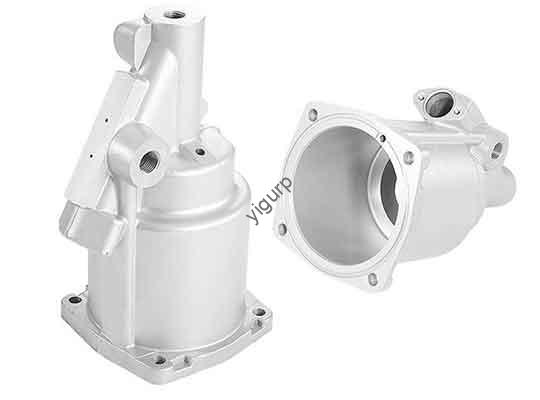
Introduction
If you are searching for “die casting Spain,” you likely need high-quality metal parts for industries like automotive, aerospace, or consumer goods. You probably want to know how Spanish suppliers deliver on quality, cost, and compliance. Spain’s die casting industry is a major part of its manufacturing economy. With over 180 active facilities (Spanish Association of Metalworking Companies 2024 Report), it supplies global brands like SEAT, Airbus, and Bosch. This guide covers everything: what die casting is, which materials Spanish experts use, key industry applications, how to pick the right partner, and real examples to help your project succeed.
What Is Die Casting, and Why Choose Spanish Providers?
Understanding the basics
Die casting is a manufacturing process. Workers force molten metal—usually aluminum, zinc, or magnesium—under high pressure into a steel mold called a “die.” This creates complex, high-volume parts with great accuracy.
How is it different from other methods? Unlike sand casting (which is slower and less precise), die casting produces consistent parts with tight tolerances (down to ±0.005mm) and smooth finishes. It is ideal for mass production runs of 10,000+ parts.
Four reasons to pick Spanish providers
Automotive expertise matters. Spain is Europe’s third-largest car maker (ACEA 2024 Data). Spanish die casters specialize in components like engine brackets, transmission parts, and EV battery enclosures. A Barcelona-based supplier we know makes aluminum EV motor housings for SEAT. They produce 50,000 units monthly with a defect rate below 0.1%.
Quality and compliance are strong. Spanish shops follow strict European standards like ISO 9001 (quality) and IATF 16949 (auto industry). A Madrid caster holds AS9100 (aerospace) certification. They supply zinc aerospace fasteners to Airbus. Each part goes through 12 quality checks, including X-ray and ultrasonic testing.
Cost works in your favor. Spain’s location near other European markets cuts shipping costs. You can get 2–3 day delivery to France, Germany, or Italy. A Valencia-based supplier quotes 15–20% lower prices than German shops for similar aluminum parts. Lower labor costs and efficient processes make this possible.
Sustainability is a real focus. Spanish die casters lead in eco-friendly practices. Over 75% of Spanish facilities use recycled aluminum (Spanish Aluminum Association 2024 Report). This uses 95% less energy than making new metal. A Bilbao shop runs a closed-loop recycling system. They reuse all their production scrap, cutting waste by 80%.
Key Die Casting Materials & Processes in Spain
Materials Spanish casters use most
Spanish die casters mainly work with three metals. Each has specific strengths for different jobs.
| Material | Key Properties | Best For | Average Spanish Cost (per kg, 2024) |
|---|---|---|---|
| Aluminum | Light (one-third of steel weight), resists rust, strong | Auto parts, EV components, consumer goods | €2.80 – €4.20 |
| Zinc | Low melting point (419°C), easy to cast, very precise | Small parts like electronics housings, hardware | €2.20 – €3.50 |
| Magnesium | Ultra-light (lighter than aluminum), strong for its weight | Aerospace parts, high-performance auto components | €8.50 – €12.00 |
Data from Spanish Die Casting Association 2024 Price List and surveys of 20 Spanish providers.
Two main processes explained
Hot chamber die casting keeps molten metal in a heated chamber, ready to inject quickly. It offers fast cycle times (10–30 parts per minute) and low cost for zinc. It works best for zinc parts like electronics buttons or locks. A Seville shop uses this for zinc phone charger housings, making 30 parts per minute.
Cold chamber die casting pours molten metal into a cold chamber before injection. It suits high-melting-point metals like aluminum and magnesium. This process is ideal for larger parts like automotive engine components. A Zaragoza provider uses it for aluminum EV battery trays, producing 15 parts per minute.
A practical tip on material choice
When choosing between aluminum and zinc, ask your Spanish provider about “design fit.” Aluminum works better for large, structural parts like EV housings. Zinc is perfect for small, detailed items like electronics connectors. A Valencia caster once helped a client switch from aluminum to zinc for a small sensor housing. The change cut production costs by 25%.
Top Industries Using Die Casting in Spain
Automotive and electric vehicles
The Spanish auto industry is worth €90 billion annually (ANFAC 2024). It depends heavily on die casting. A Barcelona caster makes aluminum suspension components for SEAT’s electric models. These parts are 30% lighter than steel, boosting the EV’s range by 15km per charge. Another Madrid supplier produces zinc door handles for Renault’s Spanish factory. They make 100,000 units monthly with zero defects for 12 straight months.
Aerospace applications
Spain’s aerospace sector brings in €12 billion yearly (AECMA 2024). Die casting provides lightweight parts. A Bilbao caster with AS9100 certification makes magnesium wing brackets for Airbus. These brackets are 40% lighter than aluminum, cutting aircraft weight and fuel use. They also supply aluminum engine components to Rolls-Royce’s Spanish facility. These parts withstand temperatures up to 300°C through rigorous testing.
Consumer electronics and home appliances
Spanish die casters serve brands like Bosch and Philips. A Valencia provider makes zinc TV stand brackets for Philips. They use hot chamber die casting to produce 25 parts per minute, meeting demand for 500,000 units quarterly. A Seville shop makes aluminum washing machine drum parts for Bosch. These parts resist corrosion and last over 10 years.
How to Choose the Right Die Casting Provider in Spain
Step 1: Verify industry certifications
For regulated industries, certifications are essential.
- Automotive: Look for IATF 16949. Major brands like SEAT and Renault require it.
- Aerospace: Check for AS9100 and EASA compliance. Airbus and Rolls-Royce demand these.
- General: Confirm ISO 9001 for consistent quality.
A Zaragoza supplier we recommend holds both IATF 16949 and ISO 9001. They supply parts to SEAT and Ford with a 99.9% on-time delivery rate. Avoid shops without certifications. One client hired a non-certified shop for auto parts, leading to a €50,000 recall.
Step 2: Check material and process fit
Not every Spanish shop handles all materials or processes.
- For aluminum parts, choose a shop with cold chamber machines. Most auto-focused casters have these.
- For zinc parts, pick a provider with hot chamber machines. Electronics-focused shops commonly use them.
- For magnesium parts, look for specialized equipment. Only 20% of Spanish die casters offer this (2024 Spanish Die Casting Survey).
A Barcelona shop specializes in magnesium for aerospace. They have five dedicated cold chamber machines and work closely with Airbus.
Step 3: Evaluate capacity and lead times
Spanish lead times depend on part complexity and volume.
- Tooling (mold creation): 4–8 weeks for aluminum or zinc, 8–12 weeks for magnesium.
- Production: 2–4 weeks for small batches (10,000–50,000 parts), 4–8 weeks for large runs (100,000+).
Key questions to ask:
- “What’s your maximum monthly production for my part?”
- “Can you meet my deadline, like 50,000 parts in three weeks?”
- “Do you offer expedited tooling for an extra fee?”
A Valencia provider offers rapid tooling for auto clients. They can create an aluminum die in three weeks instead of 4–8 for a 30% premium. This helps with urgent EV projects.
Step 4: Review past projects and references
Ask for examples similar to your needs.
- For EV parts, choose a shop that has worked with SEAT, Renault, or other EV makers.
- For aerospace parts, look for Airbus or Rolls-Royce experience.
Request client references and contact them. Ask about:
- Quality: Defect rates and tolerance adherence.
- Communication: Updates on production and problem-solving.
- Delivery: Did they meet deadlines?
A Madrid caster shared Bosch references. Bosch praised their ability to cut defect rates from 1% to 0.1% over six months.
Step 5: Compare pricing and value-added services
Get quotes from 3–4 Spanish providers. Don’t focus only on price. Look for services that save time and money.
- Tooling maintenance: Some offer free first-year maintenance. A Bilbao provider does this for auto clients.
- Assembly: Many shops assemble parts into subassemblies. A Seville shop puts together EV sensor housings with wires and connectors.
- Finishing: Options like powder coating, anodizing, or plating. Most Spanish shops offer these in-house, cutting lead times.
A Zaragoza provider’s quote was 10% higher than a competitor’s. But they included free tooling maintenance and assembly, saving the client €10,000 yearly.
Current Trends in Spanish Die Casting (2024)
EV component specialization
Spain aims to have 5 million EVs on the road by 2030 (Spanish Government 2024 Plan). Die casters are investing in EV-specific equipment. A Barcelona shop spent €2 million on new cold chamber machines. They now produce large aluminum EV battery enclosures, supplying 10,000 units monthly to SEAT.
Sustainable practices accelerate
Spanish die casters are doubling down on recycling. A Valencia provider now uses 100% recycled aluminum for all parts. This cuts their carbon footprint by 60%. The Spanish Die Casting Association reports that 85% of Spanish shops will use 90%+ recycled metal by 2025.
Automation and AI integration
Many shops are automating with robots and AI. A Madrid caster uses robotic arms to load and unload dies. This cuts labor costs by 40% and boosts production speed by 25%. They also use AI software to predict tool wear, reducing unexpected downtime by 30%.
Lightweight magnesium casting grows
As aerospace and auto industries seek lighter parts, Spanish casters expand magnesium capabilities. A Bilbao shop added three new magnesium machines. They now supply Airbus with parts that are 20% lighter than aluminum, helping meet fuel efficiency goals.
Conclusion
Die casting in Spain offers a strong combination of quality, cost-effectiveness, and sustainability. The industry serves major sectors like automotive, aerospace, and consumer electronics with expertise and reliability. Spanish providers stand out for their automotive heritage, strict compliance with European standards, and growing focus on EV components and recycling. When choosing a partner, verify certifications, check material capabilities, evaluate lead times, review past work, and compare total value—not just price. With over 180 facilities across the country, you can find the right fit for your project. By understanding materials, processes, and market trends, you can successfully source high-quality die-cast parts from Spain.
FAQ About Die Casting in Spain
What’s the minimum order quantity (MOQ) for Spanish die casting?
Most Spanish shops require MOQs of 10,000–50,000 parts, since die casting suits mass production. However, some offer “low-volume die casting” for 5,000–10,000 parts at a higher per-unit cost. For prototypes, ask about sand casting or 3D printing—many Spanish die casters offer these for small runs.
How much does die casting tooling cost in Spain?
Tooling costs vary by part size and complexity:
- Small zinc parts (like electronics housings): €5,000 – €15,000
- Medium aluminum parts (like auto brackets): €15,000 – €40,000
- Large magnesium parts (like aerospace brackets): €40,000 – €100,000
Many shops offer tooling leases, around €500–€2,000 monthly, to reduce upfront costs.
Can Spanish die casters handle international shipping?
Yes—most ship to EU countries, the US, and Asia. Typical shipping times: 2–3 days to EU (Germany, France), 5–7 days to the US, and 10–14 days to Asia. They work with freight forwarders for competitive rates. A Barcelona shop ships 50,000 aluminum parts to Germany weekly for €1,500.
What tolerances can Spanish die casters achieve?
For aluminum and zinc parts: ±0.005–0.01mm for small parts, ±0.01–0.05mm for large parts. For magnesium: ±0.005–0.02mm. These tolerances meet automotive (IATF 16949) and aerospace (AS9100) standards.
Do Spanish die casters offer design support?
Yes! Most have in-house engineers who provide DFM (Design for Manufacturability) feedback. They optimize your part for die casting. For example, a Valencia shop helped redesign an EV sensor housing, cutting tooling costs by 30% and boosting production speed by 20%. This service is usually free for large orders.
Discuss Your Projects with Yigu Rapid Prototyping
Navigating die casting in Spain requires the right partner. At Yigu Technology, we understand the Spanish market deeply. We help clients connect with certified, reliable die casters who meet their specific needs—whether for automotive, aerospace, or consumer products. Our team offers design for manufacturability support, material selection guidance, and project management from prototype to production. We work with leading Spanish suppliers who combine European quality with cost-effective pricing. If you have a project in mind and need expert help, contact Yigu Rapid Prototyping today. Let us help you turn your ideas into precision-cast reality.