
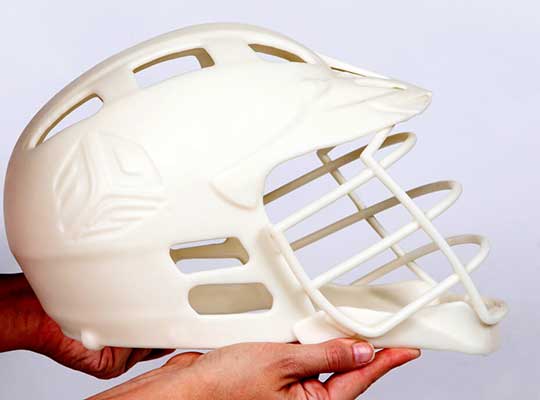
For decades, the financial and insurance sectors have operated on a foundation of paper, legacy software, and lengthy in-person processes. Today, a quiet revolution is underway, driven by an unlikely tool: three-dimensional technology. This isn’t about printing money or plastic credit cards. It’s about leveraging 3D scanning, digital twins, and additive manufacturing to solve some of the industry’s most persistent pain points—slow claims processing, inaccurate valuations, and impersonal customer experiences.
This shift moves the industry from reactive, document-heavy procedures to proactive, data-rich, and customer-centric models. By capturing assets and risks in precise digital formats, financial institutions are unlocking unprecedented levels of efficiency, transparency, and innovation. This guide explores how these tangible technologies are creating intangible value, transforming everything from a jeweler’s heirloom appraisal to a global insurer’s claims workflow.
How is 3D Scanning Creating a Single Source of Truth for Assets?
The foundation of any financial or insurance transaction is accurate information. Traditionally, valuing an asset for a loan or insuring it against loss relied on photographs, handwritten descriptions, and outdated appraisals. This analog approach is fraught with ambiguity, often leading to disputes, underinsurance, or fraud.
3D scanning technology eliminates this ambiguity by creating a precise, immutable digital twin of a physical object or space. Using specialized cameras or even standard smartphones, every contour, dimension, and flaw can be captured in minutes. This digital record becomes a permanent, shareable fact base for all parties involved.
What are the Practical Applications in Insurance and Lending?
- High-Value Item Insurance: For unique assets like bespoke jewelry, art, or collectibles, a 3D scan provides a definitive record that far surpasses a photograph. Insurers like SBS in the UK have used this to validate claims for “irreplaceable” items, allowing them to be accurately recreated rather than forcing a cash settlement that leaves the customer dissatisfied.
- Property and Casualty Claims: After a loss like fire or water damage, adjusters can use 3D scanning to document the scene remotely and thoroughly. This creates a comprehensive record for assessment, speeds up claims processing by eliminating repeat site visits, and provides transparency that builds customer trust.
- Collateral Valuation: Banks lending against physical assets (e.g., machinery, commercial real estate) can use 3D scans to document the asset’s exact condition at the time of the loan, reducing risk and streamlining audits.
Can 3D Printing Actually Rebuild What Was Lost?
Once an asset is perfectly captured digitally, the next revolutionary step is the ability to recreate it physically. This is where 3D printing (additive manufacturing) transitions from a prototyping tool to a core operational service in insurance and asset management.
From Digital File to Physical Replacement
The process transforms the claims paradigm from compensation to restoration:
- Digital Blueprint: The 3D scan of a lost or damaged item serves as the perfect digital blueprint.
- Additive Manufacturing: A 3D printer builds the replacement layer by layer from materials like resins, plastics, or even precious metals.
- Quality Restoration: The result is a faithful physical replica of the original item, not just a financial substitute.
This approach has proven particularly transformative for jewelry insurance. One UK insurer implemented a 3D printing claims service and realized savings of 30-50% compared to high-street retail replacement costs, while dramatically improving customer satisfaction by restoring sentimental heirlooms.
Traditional vs. 3D-Powered Claims Processing
| Aspect | Traditional Insurance Workflow | 3D Technology-Enhanced Workflow |
|---|---|---|
| Documentation | Photographs, written descriptions, old receipts. | Precise, measurable 3D digital twin. |
| Valuation/Validation | Subjective, often leads to disputes or fraud. | Objective data supports accurate valuation and fraud detection. |
| Settlement Outcome | Often a cash or voucher settlement; item may be “irreplaceable”. | Physical restoration of the lost or damaged item is possible. |
| Customer Experience | Slow, impersonal, and potentially disappointing. | Faster, more transparent, and focused on restoring value. |
| Cost Efficiency | Higher due to retail markups and protracted processes. | Lower material and labor costs; process efficiencies. |
What New Risks and Opportunities Does This Technology Create?
Adopting 3D technology is not without its challenges and new considerations. As with any digital innovation, it introduces a new risk landscape that the financial sector must navigate.
Emerging Risks to Consider
- Cyber Vulnerability: 3D printers connected to networks can be hacking targets. A malicious actor could alter a digital design file to introduce subtle defects into a printed component, leading to product failure and significant liability.
- Intellectual Property (IP) Complexity: Who owns the digital design file of a scanned asset? The reproduction of items via 3D printing raises complex questions about IP rights and infringement, which insurers and lenders must account for in their policies and agreements.
- Quality Control & Standardization: Ensuring that a 3D-printed replacement meets the original’s material and structural integrity requires new standards and verification processes.
Future-Facing Opportunities
Despite these risks, the trajectory points toward massive opportunity. The integration of 3D data with Artificial Intelligence (AI) and blockchain is the next frontier:
- AI-Powered Assessment: AI algorithms can analyze 3D scans to automatically detect damage, estimate repair costs, or flag potential fraud indicators.
- Smart Contracts on Blockchain: An asset’s 3D scan and policy details can be stored on a blockchain. In the event of a claim, a smart contract could automatically verify the loss against the digital twin and initiate the payout or reproduction process with minimal human intervention.
- Preventive Risk Management: For commercial underwriting, regular 3D scans of a facility (e.g., a factory or warehouse) could monitor changes over time, identifying wear-and-tear or safety hazards before they lead to a claim.
Conclusion
The application of 3D technology in finance and insurance marks a fundamental shift from abstract, document-based relationships to concrete, asset-based understanding. 3D scanning provides unparalleled clarity and truth in documentation, while 3D printing offers a tangible path to restoration and value recovery. While new risks around cybersecurity and IP must be managed, the benefits—radical efficiency, enhanced customer trust, and the ability to truly “make whole”—are too significant to ignore. For forward-thinking institutions, the question is no longer if but how to integrate these dimensional tools into their digital transformation strategies, moving from insuring and financing objects to preserving and replicating their intrinsic value.
FAQ: 3D Technology in Finance & Insurance
Q: Is 3D scanning accurate enough for high-value insurance appraisals?
A: Yes. Modern 3D scanning technology can capture objects and spaces with millimeter precision, creating a record far more detailed and measurable than traditional photographs. This level of detail is crucial for accurately appraising unique items and providing definitive documentation in the event of a claim.
Q: Doesn’t 3D printing only work with plastic? How can it replace something like a gold ring?
A: While many desktop printers use plastic, industrial additive manufacturing works with a vast array of materials. This includes direct metal printing (DMP) with gold, silver, platinum, and other alloys, which is precisely how insurers are recreating fine jewelry.
Q: What’s the biggest barrier for companies wanting to adopt this technology?
A: The primary barriers are cultural and operational, not technical. The industry has been historically slow to adopt technological change. Success requires integrating new digital workflows, training staff, and potentially partnering with experts in 3D design and manufacturing, as seen in successful academic-industry partnerships.
Q: Could this technology make insurance cheaper for consumers?
A: Potentially, yes. By reducing fraud, streamlining the claims process, and lowering the cost of replacement through in-house printing (savings of 30-50% have been documented), insurers can significantly reduce operational costs. These savings can be passed on to consumers in the form of lower premiums or invested into better service.
Discuss Your Innovation Project with Yigu Rapid Prototyping
The transition to a 3D-powered workflow requires more than just buying a scanner or printer. It demands expertise in digital design, materials science, and integrating new technology into regulated business processes.
At Yigu Rapid Prototyping, we help financial and insurance innovators bridge this gap. We provide end-to-end support—from consulting on viable use cases and designing the digital workflow to producing high-fidelity prototypes and final production-grade components. Our expertise ensures that your foray into additive manufacturing is secure, scalable, and delivers tangible ROI.
Ready to build a more tangible future for your services? Contact Yigu today to discuss how 3D technology can transform your asset management, claims processing, or customer experience.