
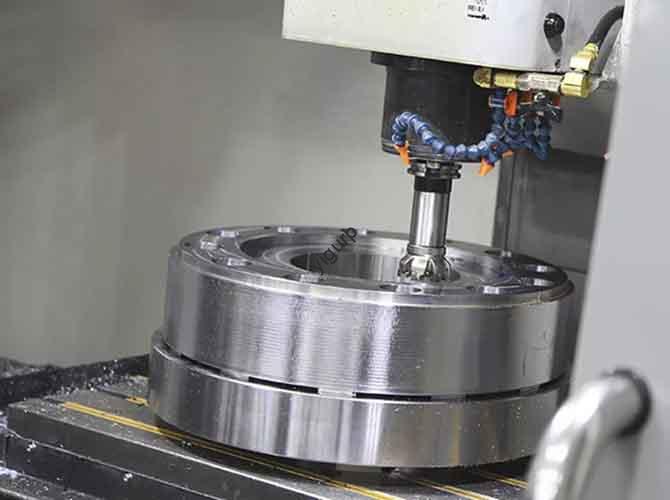
Introduction
In milling, the feed rate for milling is one of the core parameters that determine machining efficiency, workpiece quality, and tool life. Whether you are a senior CNC operator or a technician new to milling, accurately grasping the calculation logic, influencing factors, and optimization methods of the milling feed rate is the key to enhancing your machining competitiveness. This article will start from basic concepts, gradually break down the calculation system, explain coping strategies for special scenarios with real machining cases, and provide practical tools and operational suggestions to help you comprehensively solve the core problems related to milling feed rate.
1. What Is the Calculation Basis for Milling Feed Rate?
The milling feed rate is the speed at which a tool or workpiece moves in the direction of feed. It is commonly measured in inches per minute (IPM) or millimeters per minute (mm/min). If this parameter is missing or calculated incorrectly, it can directly lead to problems like rapid tool wear, excessive surface roughness, or even complete machining failure.
1.1 Core Basic Parameters Needed for Calculation
Before you can calculate the milling feed rate, you need to prepare the following four types of key data. These can be obtained from the tool manual, the workpiece material description, and the machining process requirements.
- Spindle Speed (RPM) : This is the number of rotations of the spindle per minute. It is derived from the cutting speed and tool diameter and is the core prerequisite for feed rate calculation.
- Number of Tool Teeth (N) : This is the effective number of cutting teeth on the milling cutter. The number of teeth varies greatly for different types of milling cutters and directly affects how many cuts are made per unit of time.
- Feed per Tooth (Fz) : This is the distance the tool travels in the feed direction for each rotation. It is measured in mm/tooth and is determined by the hardness of the workpiece material, the tool material, and the type of operation (roughing or finishing).
- Processing Type and Material Characteristics: This includes whether it’s roughing or finishing, the workpiece material hardness, and its toughness. You need to adjust parameters like feed per tooth accordingly.
1.2 Basic Calculation Logic and Core Formulas
The core calculation logic is simple: feed per unit time equals spindle speed multiplied by the number of tool teeth multiplied by the feed per tooth. This logic leads to formulas for different scenarios.
| Calculation Scenario | Core Formula | Parameter Description | Scope of Application |
|---|---|---|---|
| General Milling Feed Rate | Vf = RPM × N × Fz | Vf: Milling feed rate; RPM: Spindle speed; N: Number of tool teeth; Fz: Feed per tooth. | The vast majority of conventional milling scenarios like end milling and face milling. |
| Radial Chip Thinning Consideration | Vf (corrected) = RPM × N × Fz × RCTF | RCTF: Radial chip thinning factor, calculated from the cutting width and tool diameter. | Semi-finish and precision milling where the cutting width is less than the tool diameter. |
| Chamfer/Forming Cutters | Vf = RPM × N × Fz × ACFT | ACFT: Chip thinning factor for chamfer cutters, related to the chamfer angle and depth of cut. | Special forming processes like chamfering and bevel milling. |
2. What Are the Key Terms Related to Milling Feed Rate?
In the calculation and application of milling feed rate, terms like SFM, IPM, and RPM are frequently used. These terms are the bridge between theoretical calculations and actual machining. Understanding their definitions and interrelationships is fundamental to avoiding parameter confusion.
- SFM (Surface Feet per Minute) : This refers to the linear speed of the cutting edge at the point of contact with the workpiece. It is the core parameter for determining spindle speed and is directly related to the tool material and workpiece material. For example, the SFM for steel parts machined with carbide tools is typically 300-500 ft/min.
- IPM (Inches per Minute) : This is a common unit for milling feed rate. It directly reflects the machining progress of the workpiece per unit time and is a direct parameter for adjusting machining efficiency.
- RPM (Spindle Speed) : This is the key intermediate parameter connecting SFM and feed rate. Its core function is to convert linear speed into the rotation frequency of the tool, which is then used to calculate the feed rate.
The association logic can be summarized as: SFM determines RPM, and RPM affects the feed rate.
3. What Is the Chip Thinning Factor and How Is It Calculated?
In actual milling operations, when the cutting width (WOC) is less than the tool diameter (D), a phenomenon called “radial chip thinning” occurs. The actual chip thickness becomes less than the theoretical feed per tooth. This can lead to reduced tool cutting load, insufficient machining efficiency, and even tool vibration. Therefore, the feed rate needs to be corrected by calculating the chip thinning factor.
3.1 Radial Chip Thinning Factor (RCTF)
The radial chip thinning factor is the core parameter for correcting the feed rate. Its calculation is based on the ratio of the cutting width to the tool diameter.
Formula: RCTF = √(1 – (WOC/D)²)
Case Study: Using a φ20mm end mill to process steel parts with a cutting width WOC = 5mm. The calculation is RCTF = √(1 – (5/20)²) = √(1 – 0.0625) = √0.9375 ≈ 0.968. If the original calculated feed rate Vf = 500mm/min, the corrected feed rate Vf (corrected) = 500 × 0.968 ≈ 484mm/min. This adjustment helps avoid tool vibration caused by chip thinning.
3.2 Chip Thinning Factor for Chamfer/Form Cutters (ACFT)
The cutting edges of special tools like chamfer mills are angled, making chip thinning more complex. This requires a special chamfer chip thinning factor. The calculation combines the chamfer angle (α), depth of cut (DOC), and tool diameter.
4. What Are Some Practical Examples of Milling Feed Rate Calculation?
Different workpiece materials, processing equipment, and processing types have different requirements for milling feed rate. Here are two typical scenarios with detailed calculation steps.
4.1 Scenario 1: Milling Steel on an Ordinary Milling Machine
Steel has high hardness and cutting resistance. The feed rate selection must balance efficiency and tool life.
- Step 1: Determine Tool Parameters: Use a φ12mm carbide end mill with N=3 teeth. The manufacturer recommends SFM = 400 ft/min.
- Step 2: Calculate Spindle Speed: RPM = (1000 × V) / (π × D) = (1000 × 121.92) / (3.14 × 12) ≈ 3200 r/min.
- Step 3: Select Feed per Tooth: For roughing, choose Fz = 0.12 mm/tooth.
- Step 4: Calculate Feed Rate: Vf = RPM × N × Fz = 3200 × 3 × 0.12 = 1152 mm/min.
- Step 5: Correct for Chip Thinning: If WOC = 3mm, RCTF ≈ 0.968. Corrected Vf = 1152 × 0.968 ≈ 1115 mm/min.
4.2 Scenario 2: CNC Milling of Aluminum Alloy
CNC milling machines have high accuracy requirements. The feed rate calculation needs to be combined with the machine’s control system.
- Step 1: Determine Core Parameters: Use a φ16mm carbide end mill (N=4). Recommended SFM for aluminum alloy 6061-T6 is 1200 ft/min. For finishing, choose Fz = 0.08 mm/tooth.
- Step 2: Calculate RPM: RPM = (1000 × 365.76) / (3.14 × 16) ≈ 7200 r/min.
- Step 3: Calculate Feed Rate: Vf = 7200 × 4 × 0.08 = 2304 mm/min.
- Step 4: CNC System Adaptation: In the program, write the feed rate command (e.g., G94 F2304) and set the spindle speed S7200.
5. What Are Some Practical Tips for Optimizing the Feed Rate?
After mastering the calculation method, you can use optimization strategies to further improve efficiency and reduce costs.
- Adjust the Feed Rate in Stages: For roughing, use a high feed rate and large depth of cut to quickly remove material. For finishing, use a low feed rate and small depth of cut to ensure quality.
- Utilize Specialized Calculation Tools: Use online calculators from tool brands like Sandvik or Kennametal, or offline software like G-Wizard Calculator, to get accurate, optimized parameters.
- Dynamically Adjust Parameters Based on Material Properties: The cutting characteristics of different materials vary greatly. For example, aluminum alloys can be machined with a high feed rate, while stainless steel requires a low feed rate to avoid tool breakage.
Conclusion
The feed rate for milling is a critical parameter that directly impacts machining efficiency, part quality, and tool life. By understanding the core calculation formula, the key terms involved, and the special considerations like chip thinning, you can set optimal parameters for any milling job. Furthermore, by applying practical optimization strategies, you can significantly improve your overall machining performance. Mastering the feed rate is not just about doing the math; it’s about understanding the dynamic relationship between the tool, the material, and the machine.
FAQ
What is the impact of not knowing the number of tool teeth (N) when calculating the feed rate?
Not knowing the number of teeth will completely distort the feed rate calculation. Machining with the wrong value can lead to tool vibration, poor surface quality, or even tool damage. You can find the number of teeth on the tool’s packaging or in its manual. If it’s a non-standard tool, you can measure the number of cutting edges yourself.
How should the feed rate be adjusted when milling the same material but with different hardness?
The higher the material hardness, the greater the cutting resistance, and the feed rate needs to be reduced to protect the tool. For example, if the hardness of 45 steel increases from HB200 to HB300, the feed per tooth should be reduced by 20-30%, and the overall feed rate should be reduced accordingly.
Is the radial chip thinning factor only relevant for finish milling?
No, it is relevant for any operation where the cutting width is less than the tool diameter. If ignored during roughing, the actual cutting load will be too low, machining efficiency will suffer, and you may experience vibration. Correcting for chip thinning can improve roughing efficiency by 10-15%.
What is the principle for adjusting the feed rate when the spindle speed changes on a CNC mill?
The core principle is to keep the chip thickness within a reasonable range. When you increase the spindle speed, you should increase the feed rate synchronously. The goal is to keep the ratio between the two stable, which maintains a consistent feed per tooth.
Discuss Your Projects with Yigu Rapid Prototyping
Are you ready to optimize your milling processes for maximum efficiency and quality? At Yigu Rapid Prototyping, our team of experienced engineers understands the critical importance of getting the feed rate right. We combine deep machining knowledge with advanced CNC technology to deliver high-precision parts for every project.
Contact Yigu Rapid Prototyping today to discuss your project. Let’s build something great together.