
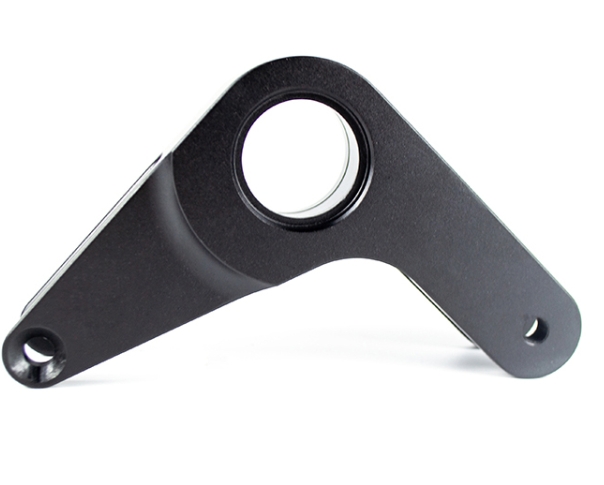
Selective Laser Sintering (SLS) 3D printing is a powerful tool for creating functional, end-use parts without support structures. Using a laser to fuse nylon powder (like PA12 or PA11), it builds complex geometries with excellent strength and durability. However, the very nature of sintering powder in a high-temperature chamber introduces unique design challenges. Without proper Design for Additive Manufacturing (DfAM) principles, parts can warp, trap powder, or fail due to residual stress. This guide delivers actionable design tips for SLS 3D printing focused on boosting part strength, dimensional accuracy, and production efficiency, ensuring your designs fully leverage this transformative technology.
Why Does SLS Require Special Design Rules?
SLS is not just “3D printing without supports.” It’s a high-temperature thermal process with specific physics that directly impact your design:
- Powder as Support: The unsintered powder bed supports overhangs, enabling amazing freedom. However, this powder must be removed from internal cavities.
- Significant Thermal Shrinkage: Parts cool from sintering temperatures (∼170°C for PA12) to room temperature, causing 2-3% isotropic shrinkage. This must be designed for.
- Thermal Stress and Warpage: Uneven cooling or large, solid masses can create internal stresses, leading to part distortion or curling.
- Surface Finish and Detail: The process creates a slightly porous, grainy matte finish. Fine details below a certain threshold will not be crisp.
Understanding these factors is the first step to designing successful SLS parts.
How to Design for Structural Integrity?
The core goal is to create parts that are strong, stable, and reliable in use.
What Are the Rules for Wall Thickness?
Wall thickness is the most critical factor for preventing warpage and breakage.
- Minimum Thickness: For unsupported walls (not connected to other features), a minimum of 0.8-1.0 mm is essential for PA12. For supported walls or internal ribs, you can go down to 0.5-0.7 mm. Going thinner risks creating fragile, warp-prone sections.
- Uniformity is Key: Avoid drastic changes in wall thickness. A thick section (4 mm) connected to a thin section (1 mm) will cool at vastly different rates. This differential shrinkage is a primary cause of warping, cracking, and residual stress. Use generous fillets and tapered transitions to blend sections smoothly.
- Ideal Range: For most load-bearing parts, a wall thickness of 1.5-3.0 mm offers an optimal balance of strength, weight, and thermal stability. Thicker walls increase print time and material use without proportional strength gains and heighten warping risk.
Case Study: Automotive Bracket Failure
An engineer designed a mounting bracket with a critical load-bearing wall of 0.6mm to save weight. The parts warped consistently and snapped under load testing. By increasing the wall to 1.8mm and adding a reinforcing rib, the part met all strength requirements without increasing overall size. The minimal weight penalty was irrelevant compared to the gain in reliability.
How Do You Reinforce Features and Avoid Stress?
SLS parts are strong but can be brittle under point loads or impact.
- Fillets and Radii: Never use sharp internal corners. They act as stress concentrators. Apply a minimum fillet radius of 0.5-1.0 mm to all internal corners to distribute stress and prevent crack initiation. External edges also benefit from a small radius.
- Ribs and Gussets: Use ribs to stiffen large, flat surfaces instead of making the entire surface thick. Add gussets to reinforce joints at right angles (e.g., where a vertical post meets a horizontal base). This adds strength with minimal extra material.
How to Ensure Dimensional Accuracy?
Accounting for shrinkage and designing for the powder bed are crucial for parts that fit.
How Do You Manage Shrinkage and Clearances?
SLS parts shrink uniformly, but this affects fits and assemblies.
- Scaling Your Model: You must scale your CAD model to compensate for shrinkage. For PA12, a scale factor of 1.02 to 1.03 (enlarging by 2-3%) is typical. Your manufacturing partner can provide the exact factor for their material and process.
- Designing Clearances for Assemblies: One of SLS’s superpowers is printing interlocking or assembled mechanisms in one build. For moving parts (hinges, gears), a per-side clearance of 0.3-0.5 mm is a good starting point. For snap-fits or press-fits, 0.1-0.2 mm clearance may be suitable, but testing is essential due to material flexibility.
- Hole and Pin Design: Round holes tend to shrink slightly oval. For critical fastener holes, consider designing undersized holes and drilling or reaming them post-print for perfect size and roundness. For printed pins, a minimum diameter of 1.5-2.0 mm is recommended for durability.
What About Powder Removal and Trapped Volumes?
Any enclosed hollow will trap powder, adding weight and preventing cleaning.
- The Golden Rule: Add Drain Holes. For any hollow section, you must include drainage holes. These should be at least 4-5 mm in diameter to allow powder to flow out easily. Place at least two holes on opposite sides to enable air flow during cleaning.
- Design Internal Channels to be Cleanable: Avoid designing long, thin, tortuous internal channels that cannot be accessed. If necessary, make them as large as possible and design the part to be split into two halves that are later assembled.
How to Optimize for the SLS Process?
Efficient design reduces cost, improves success rates, and speeds up production.
How Does Orientation Affect the Part?
While SLS doesn’t need supports, orientation still matters.
- Minimizing Cross-Sectional Area: Orient the part to present the smallest possible cross-section per layer. This reduces the “curl” force as each new sintered layer cools and contracts, lowering the risk of part warpage or recoater blade collisions.
- Optimizing Surface Finish: The top surface (Z-axis) and down-facing surfaces have different textures. The top surface is rougher where it contacts loose powder. Consider orientation if one surface is cosmetically critical.
- Nesting for Batch Production: SLS excels at batch production. Design parts to be nestable within the build volume. Flat, regular shapes pack less efficiently than more compact, organic shapes. Your service provider’s nesting software will do this, but design awareness helps.
What Are the Feature Size Limits?
Pushing details too small leads to failed features.
| Feature Type | Recommended Minimum Size | Reasoning |
|---|---|---|
| Escaping or Embossed Text | 1.0 mm line width, 0.5 mm height/depth | Smaller text will be illegible or fill with powder. |
| Gaps & Slots | 0.8-1.0 mm width | Ensures the gap sinters properly and doesn’t close. |
| Pin Diameters | 1.0 mm | For structural pins; larger is better for durability. |
| Escape Holes | 4.0 mm diameter | For effective powder removal; smaller holes clog. |
| Wall Thickness | 0.5-0.8 mm (absolute min with caution) | See wall thickness section above. |
Should You Hollow Your Parts?
Almost always, yes. Hollowing is a primary method for reducing cost, weight, and build time.
- Shell Thickness: Maintain a uniform shell of 2-3 mm. This is strong enough for most applications and prevents sink marks.
- Infill vs. Voids: For non-structural hollows, a complete void is fine. For structural hollows where the shell might buckle, consider a low-density internal lattice structure to provide support without adding significant mass.
- Remember the Drain Holes: This cannot be overstated. Hollowing + Drain Holes = Success.
What Are Advanced Design Strategies?
For experienced users, these strategies unlock further potential.
- Topology Optimization: Use generative design software to create organic, lightweight structures that meet exact load requirements. SLS is the perfect process to manufacture these complex, optimized forms.
- Part Consolidation: Redesign assemblies with many components into a single, complex SLS part. This eliminates assembly time, reduces potential failure points, and can create more efficient designs.
- Living Hinges: SLS nylon (PA12) is excellent for thin, flexible living hinges. Design the hinge area with a uniform thickness of 0.5-0.7 mm and a generous radius to avoid stress concentration. Test iteratively.
What is a Pre-Flight Design Checklist?
Before sending your model for SLS printing, ask:
- Are all walls thick enough (≥0.8mm unsupported, ≥1.5mm ideal)?
- Have I added fillets (R≥0.5mm) to all internal corners?
- Is wall thickness relatively uniform, with smooth transitions?
- If the part is hollow, are there adequate drain holes (≥2, Ø≥4mm)?
- Have I scaled the model for shrinkage (~1.02x)?
- For assemblies, are clearances appropriate (0.3-0.5mm for moving parts)?
- Are small features (text, pins, gaps) above the minimum size limits?
- Is the part oriented to minimize its cross-sectional area in the build?
Conclusion
Mastering design for SLS 3D printing transforms it from a prototyping curiosity into a legitimate production tool for high-performance, complex parts. The rules are distinct: they prioritize thermal management through uniform walls, mandatory drainage for hollows, and proactive shrinkage compensation. By internalizing these principles—focusing on structural integrity, dimensional accuracy, and process efficiency—you move from simply making a part that can be printed to engineering a part that is optimized for the SLS process. This results in components that are stronger, more reliable, more cost-effective, and truly ready for functional, end-use applications. Embrace these guidelines to fully leverage the unique advantages of SLS technology.
FAQ
Why did my SLS part warp even with thick walls?
Warping in SLS is often less about absolute thickness and more about thermal gradient. A large, flat, solid plate has a huge cross-section that contracts uniformly, creating high internal stress that pulls the edges up (curling). The solution is to hollow the part with uniform walls and add stiffening ribs instead of relying on solid mass. This reduces the thermal mass and associated stress.
Can SLS parts be truly watertight or airtight?
Directly from the machine, SLS parts are porous due to the sintered powder structure. They are not inherently watertight or airtight for holding pressure or fluids. To achieve a seal, parts require post-process infiltration with a sealing resin (like epoxy or cyanoacrylate) that wicks into the surface pores and creates a barrier.
How do I get a smooth surface finish on SLS parts?
The as-printed surface is a consistent matte, slightly sandy finish. For a smoother feel, the standard post-process is media tumbling (vibratory or rotary) with ceramic or plastic media. For a higher-gloss finish, parts can be sanded, primed, and painted, or coated with a smooth resin. Note that tumbling will slightly round sharp edges.
Is it cheaper to design and print one large part or several small ones in SLS?
Due to the batch nature of SLS, it is almost always more cost-effective to fill the build volume. A single large part that occupies 30% of the chamber may cost nearly as much as packing the chamber with many small parts. For production, design parts to nest efficiently within the rectangular build volume to maximize the number of parts per build and minimize the cost per part.
Discuss Your Projects with Yigu Rapid Prototyping
Navigating the nuances of SLS design for optimal results requires deep expertise. At Yigu Rapid Prototyping, we specialize in SLS manufacturing and Design for Additive Manufacturing (DfAM). Our engineering team can review your designs, suggest optimizations for strength and cost, manage the scaling and nesting process, and execute post-processing to deliver high-quality, functional SLS parts.
Contact us today for a professional design review and quote. Let us help you translate your designs into robust, accurate SLS components, ensuring you get the full benefit of this powerful manufacturing technology.