
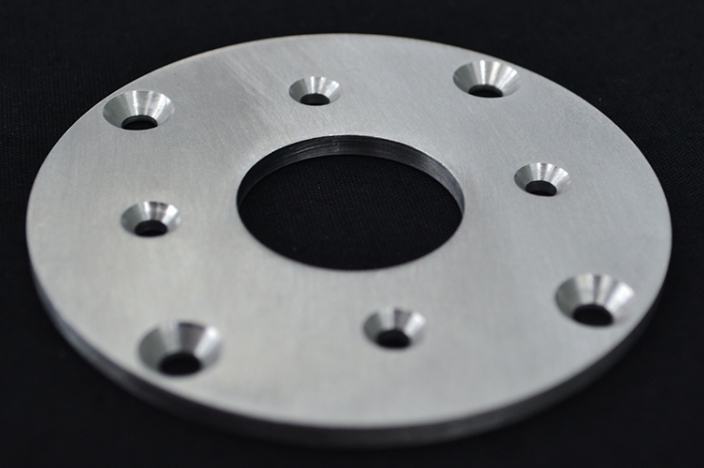
The CNC sheet processing process is the modern heartbeat of precision manufacturing. It transforms raw, flat material into complex, high-performance parts for the automotive, electronics, and aerospace industries. Unlike old-school manual metalwork, this computer-driven workflow eliminates human error and guarantees that every part is a perfect clone of the digital original.
Whether you are developing a sleek medical enclosure or a rugged structural bracket, mastering this process is essential. It helps you avoid costly delays, reduce material waste, and ensure your products stand up to real-world use. This guide offers a deep dive into the professional workflow, providing the data and insights you need to optimize your production.
How Does Pre-Processing Secure Project Success?
Success in the CNC sheet processing process starts long before a machine ever touches the material. The pre-processing stage is where you lay the digital and physical foundation for your part.
Digital Blueprints: CAD and CAM
Every project begins with a 3D model.
- CAD (Computer-Aided Design): Engineers use tools like SolidWorks or Fusion 360 to define every hole, bend, and radius. For a high-end laptop chassis, for example, port cutouts must be marked with ±0.05mm accuracy to ensure cables fit perfectly.
- CAM (Computer-Aided Manufacturing): This software converts the 3D model into G-code. It maps out the “path” the machine will take. A smart CAM program can reduce total machining time by 20% to 30%.
Choosing the Right Sheet Material
The material you pick affects weight, strength, and price. Here is a breakdown of the common standards:
| Material Type | Thickness Range | Key Properties | Best Applications | Cost (USD/sq.ft) |
| Aluminum 6061 | 0.5mm – 6mm | Light, rust-proof | Tech cases, car panels | $2.0 – $5.5 |
| Stainless Steel 304 | 0.3mm – 10mm | Sterile, very strong | Medical carts, food bins | $3.5 – $8.0 |
| Cold-Rolled Steel | 0.2mm – 8mm | High strength, cheap | Brackets, appliances | $1.5 – $4.0 |
| ABS Plastic | 1.0mm – 12mm | Insulating, light | Product housings | $1.0 – $3.0 |
Real-World Case: A medical client needed a surgical cart component. They chose Stainless Steel 304 at 1.5mm thickness. This thickness provided enough strength to hold heavy equipment, while the material choice allowed for harsh chemical sterilization without rusting.
Which Machines Drive the Processing Workflow?
Setting up the right equipment is the next vital step. Not all CNC machines are created equal; choosing the wrong one can lead to “burrs” (rough edges) or slow production.
Matching Machine to Task
- CNC Laser Cutters: These are best for complex, intricate shapes in thin sheets. A fiber laser is the gold standard for metals, providing a clean edge that rarely needs sanding.
- CNC Punch Presses: If your design has 50 identical holes, a punch press is your best friend. It can “stamp” holes at a rate of 50+ per minute, which is much faster than a laser for high-volume jobs.
- CNC Press Brakes: Once the part is cut, the press brake bends it. Modern brakes offer an accuracy of ±0.1°, ensuring that a “90-degree bend” is exactly 90 degrees every time.
Setting Professional Parameters
To avoid damaging the material, you must calibrate the machine:
- Laser Power: Usually 1kW to 5kW depending on thickness.
- Cutting Speed: For aluminum, 100–500 mm/min is a safe range.
- Tool Sharpness: Using a dull punch on stainless steel is a common mistake. It leaves “flashing” (excess metal) on the hole edges, adding 15 minutes of hand-finishing to every part.
What Happens During Core Machining?
The “meat” of the CNC sheet processing process involves two phases: roughing and finishing. Each requires a specific strategy to prevent the sheet from warping or vibrating.
Roughing vs. Finishing
Roughing is all about speed. You cut away the bulk of the excess material quickly. For a 3mm aluminum sheet, a high-power laser can rough out a part in under 3 minutes.
Finishing is where precision happens. We refine the part to its final dimensions. While this takes about 25% of the total time, it improves part quality by nearly 50%. It is the difference between a part that “mostly fits” and one that “clicks” into place.
Strategies to Prevent Deformation
Thin sheets (under 1mm) are like paper; they want to move and vibrate.
- Secure Clamping: Use multiple “hold-down” clamps to keep the sheet flat. Vibration is the enemy of a smooth cut.
- Center-Out Cutting: Start your cuts in the middle of the sheet and work your way to the edges. This spreads out the internal “stress” of the metal and prevents it from curling like a potato chip.
- Coolant Application: For metals, water-soluble coolants keep the heat down. Excessive heat is the primary cause of warping in thin steel.
Success Story: An electronics firm was losing 30% of their 0.8mm aluminum enclosures to warping. By switching to a center-out cutting path and increasing coolant flow, they reduced deformation by 70%. Their scrap rate dropped almost to zero.
How Do You Ensure Final Part Quality?
The CNC sheet processing process doesn’t end when the machine stops. Post-processing and Quality Control (QC) turn a “raw part” into a “finished product.”
Essential Post-Processing
- Deburring: This is the act of smoothing out sharp edges. It is vital for any part that humans will touch, like a metal toolbox handle.
- Cleaning: We use solvents like isopropyl alcohol to remove machine oil and coolant.
- Surface Treatment: * Anodizing: Adds a hard, scratch-resistant layer to aluminum.
- Powder Coating: Adds a thick layer of color and rust protection to steel.
Strict Quality Control
We verify every part against the original CAD file.
- Dimensional Accuracy: We use CMM (Coordinate Measuring Machines) to check hole positions with ±0.001mm precision.
- Flatness Test: We use a precision straightedge. Any gap wider than 0.1mm is a fail.
- The 10% Rule: In a large batch, we test 10% of the parts. If a single part fails, we immediately move to testing 50% of the batch to find the root cause.
Yigu Technology’s View on Precision
At Yigu Technology, we believe the CNC sheet processing process is a blend of high-tech engineering and strategic planning. Over 12 years, we have mastered the art of “First Time Right” manufacturing. By optimizing tool paths in CAM, we have cut our average production time by 25% for our clients.
We don’t just produce parts; we provide peace of mind. Every part we ship passes through a rigorous inspection phase, resulting in a 99.5% first-pass acceptance rate. We also recycle 80% of our metal waste, ensuring your project is as sustainable as it is precise. For us, success is helping you build a product that lasts a lifetime.
FAQ: Your Top Questions Answered
How long does the CNC sheet processing process take?
For a small, simple enclosure, you can go from design to finished part in 15 to 20 minutes. Large, complex panels with many bends and holes can take 1 to 2 hours per unit.
Can I order just one prototype?
Yes. The beauty of CNC is its flexibility. Because there are no expensive “molds” to build, making one part is almost as easy as making a hundred. This makes it perfect for Rapid Prototyping.
What is the most common mistake in sheet metal design?
Designing bends too close to a hole is a major issue. If a hole is too close to a bend line, the hole will “stretch” into an oval shape during the bending process. Our team can help you check your CAD files for these “traps” before production starts.
What is the maximum sheet thickness for CNC processing?
For laser cutting, we typically work with metals up to 20mm thick. For standard enclosures and panels, most projects stay between 0.5mm and 6mm.
Discuss Your Projects with Yigu Rapid Prototyping
Are you ready to turn your CAD models into high-precision reality? At Yigu Technology, our product engineers specialize in the end-to-end CNC sheet processing process. We offer professional design feedback, a wide range of material options, and world-class quality control.
Would you like a free design-for-manufacturability (DFM) report for your project? Contact us today, and let’s build something exceptional together.