
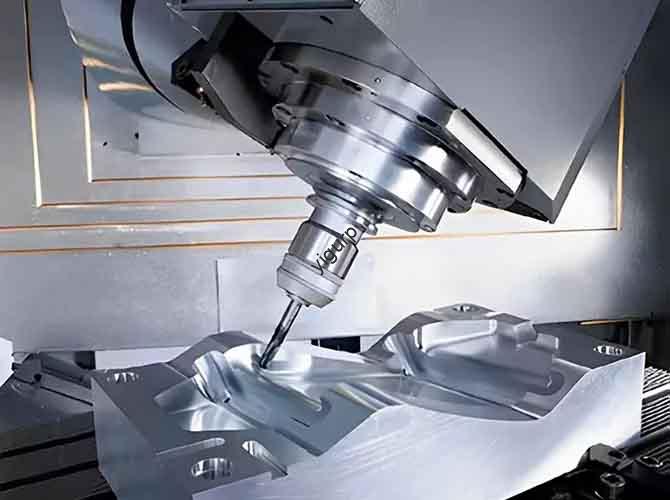
In the world of precision manufacturing, accuracy is everything. Even a deviation as small as 0.1mm can turn a high-value workpiece into a piece of scrap metal. If you have ever faced the frustration of a CNC processing size being too large, you know the ripple effects: delayed assembly lines, wasted material, and skyrocketing production costs.
This guide explores why oversized parts happen and how to fix them. As a product engineer who has spent a decade on the shop floor, I have seen these issues across aerospace, medical, and automotive sectors. Whether you are an operator or a manager, this breakdown will help you master your machine’s accuracy.
Why Is Your CNC Processing Size Too Large?
Oversized parts rarely have just one cause. Usually, it is a combination of tool wear, machine health, or human error. Let’s break down the top 9 causes by category so you can troubleshoot effectively.
Are Your Tools Failing You?
The cutting tool is where the “magic” happens, but it is also the first place things go wrong.
- Tool Wear: As a carbide end mill cuts, its edges lose their sharpness. A dull tool doesn’t “bite” into the metal; instead, it pushes against it. This leaves uncut material on the workpiece. For example, after 500 cuts in 6061 aluminum, a tool might leave a hole 0.3mm smaller (and thus the remaining part too large).
- Improper Tool Compensation: CNC systems use “Offsets” to account for tool radius. If you tell the machine you are using a 10mm tool but it has worn down to 9.8mm, the machine will not move close enough to the part, leaving it 0.2mm oversized.
Is the Machine Itself the Problem?
Sometimes the “brain” is willing, but the “body” of the machine is weak.
- Thermal Deformation: CNC machines generate heat. Spindles and rails expand as they get hot. I once saw a lathe run for six hours without a chiller; the spindle expanded by 0.15mm, causing every part in the afternoon batch to be oversized.
- Zero Deviation: This happens when the machine loses its “home” position. A small power flicker or a worn-out limit switch can shift the coordinate system by a fraction of a millimeter.
- Interpolation Errors: In cheaper CNC routers, the software might struggle to calculate smooth curves, leading to “path bloat” on complex geometries.
Are Your Parameters and Setup Correct?
The settings you choose dictate how the tool interacts with the material.
- Incorrect Parameters: If your feed rate is too low, the tool may “rub” instead of cut. If the spindle speed is too high, you get tool chatter, which creates an uneven, oversized surface.
- Clamping Force: If you clamp a thin metal plate too tightly, it bows. After the tool cuts a “straight” line and you release the clamps, the part springs back into a curved shape, making the edges out of spec.
Table: Summary of Root Causes
| Category | Specific Issue | Result on Part |
| Tools | Tool Wear | Extra material left behind |
| Machine | Thermal Expansion | Spindle/Rails shift tool path |
| System | Zero Deviation | Entire coordinate system shifts |
| Human | G-code Errors | Wrong dimensions programmed |
Step-by-Step Solutions to Fix Oversized Parts
Once you realize the size is off, don’t panic. Follow this structured “Diagnose → Test → Fix” workflow to get back on track.
1. Diagnose the Root Cause
Before changing anything, perform three quick checks:
- Inspect the Tool: Look at the cutting flutes under a magnifying glass. If you see chipping, replace it.
- Verify Offsets: Check the tool compensation table in your CNC controller. Does it match the actual measured diameter of the tool?
- Run a Home Test: Tell the machine to return to X0 Y0 Z0. If it looks “off” against your fixtures, you have found your culprit.
2. Test with a Scrap Workpiece
Never try to “fix” the problem on a $500 piece of titanium. Use a scrap piece of the same material.
- Example Case: One of our clients found their steel shafts were 0.1mm too large. We swapped the tool for a fresh one and ran a scrap piece. The size returned to perfect. This proved it was tool deflection caused by wear, not a machine error.
3. Implement Permanent Fixes
- For Thermal Issues: Install a spindle chiller or implement a warm-up routine. Running the machine for 20 minutes before starting production allows the metal to expand to its “working state” before you start cutting.
- For Operator Error: Use Checklists. Require a second person to “double-verify” the first part of every batch (First Article Inspection).
Proactive Measures to Prevent Size Errors
Fixing a mistake is good; preventing it is better. Here are five strategies to keep your production lean and accurate.
1. Regular Equipment Maintenance
Don’t wait for a breakdown.
- Daily: Clean the rails and check coolant levels. Coolant isn’t just for the tool; it regulates the temperature of the entire work zone.
- Weekly: Use a Coordinate Measuring Machine (CMM) or a simple calibration bar to verify the machine’s axes.
2. Optimize Your Machining Parameters
Stop using “default” settings. Every material needs a unique recipe.
| Material | Tool Type | Spindle Speed (RPM) | Feed Rate (mm/min) |
| Aluminum 6061 | Carbide End Mill | 8,000 – 10,000 | 1,200 – 1,800 |
| Steel 1018 | HSS End Mill | 2,000 – 3,000 | 500 – 800 |
3. Use In-Process Probing
Modern CNC machines can be equipped with Renishaw probes. These tools measure the part while it is still in the machine. If the probe detects the part is 0.05mm too large, it automatically updates the tool offset and runs a finishing pass. This eliminates human error entirely.
4. Document Every Error
Keep a “Size Log.” If you notice that 80% of oversized parts happen on Monday mornings, it’s likely because the shop is cold and the machines haven’t reached thermal stability. Data doesn’t lie.
Yigu Technology’s Perspective on Accuracy
At Yigu Technology, we have analyzed data from over 300 manufacturing partners struggling with CNC processing size being too large. We found that 70% of errors are preventable through better tool management.
Our Yigu CNC Calibration Kits use laser interferometers to find “invisible” errors in machine rails. For smaller shops, our optimization software provides pre-vetted parameters for over 500 material-tool combinations. We believe that precision isn’t just about the machine; it’s about the synergy between software, hardware, and the person operating them. By focusing on real-time monitoring, we’ve helped clients reduce their scrap rates by up to 65%.
Conclusion
Facing a CNC processing size that is too large is a rite of passage for every machinist. However, it shouldn’t be a daily struggle. By understanding the relationship between tool wear, thermal expansion, and programming accuracy, you can transform your shop from a “guess-and-check” operation into a precision powerhouse. Maintenance and training are your best tools—use them wisely.
FAQ: Solving Your CNC Size Queries
Can I rework an oversized CNC part to save it?
Yes, if the part is metal and has “extra” material. You can run a “finish pass” with updated offsets. However, be careful with plastics, as re-clamping them often causes scratches or further warping.
How often should I replace my carbide tools?
For steel, aim for 300-500 cuts. For aluminum, you can go up to 600 cuts. Always use a microscope to check for “flank wear” before a critical job.
Why are my size errors happening randomly?
Check for electrical interference. If a heavy welder is running on the same power circuit as your CNC, it can cause “pulse loss” in the motors, leading to random jumps in tool position.
Does coolant concentration affect part size?
Yes. If the coolant is too thin, it won’t lubricate the cut, leading to heat buildup and thermal expansion of the workpiece, making it appear the right size while hot but “too large” or “too small” once it cools.
Discuss Your Projects with Yigu Rapid Prototyping
Struggling with tight tolerances or complex geometries? Yigu Rapid Prototyping specializes in high-precision CNC solutions that eliminate size errors before they happen. Our expert engineers provide full-service support, from G-code optimization to final quality inspection with CMM technology. Let’s make your next project perfect from the first cut. Reach out to us today to discuss your precision requirements!