
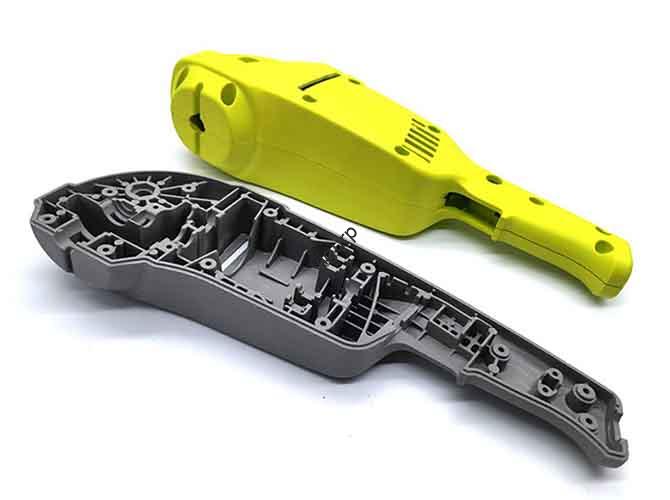
Have you ever faced issues like inconsistent part dimensions, low production efficiency, or failed complex plastic component machining? These problems often stem from a lack of understanding of the CNC plastic machining process. Unlike metal, plastic behaves differently under heat and pressure. If you treat a block of PEEK like a block of aluminum, you will likely end up with a melted mess rather than a precision part.
This guide breaks down the workflow, material selection, and expert tips to help you avoid common pitfalls. Whether you are making medical components or aerospace brackets, mastering this process is the key to achieving high-quality results.
What Are the Core Advantages of This Process?
What makes the CNC plastic machining process stand out from traditional manual methods? It solves the most frustrating challenges in manufacturing by offering a level of control that human hands simply cannot match.
High Precision and Stability
CNC systems use computer programs to drive cutting tools. This results in a dimensional accuracy ranging from ±0.025mm to ±0.125mm. Because the machine follows the same code every time, the repeatability is nearly perfect. This is critical for parts like medical device components where a fraction of a millimeter can be a matter of safety.
High Automation and Efficiency
Except for the initial clamping, the entire process is automated. This reduces manual labor and can cut your total production time by 30% to 50%. Automation also removes the risk of “human fatigue” mistakes that often happen during long production runs.
Excellent Complex Shaping Ability
Standard drills or saws cannot easily create 3D curves or internal cavities. The CNC plastic machining process excels here. It allows engineers to design intricate parts, such as aerospace plastic brackets or specialized electronic housings, that were once thought impossible to manufacture.
| Advantage | Description | Problem It Solves |
| Precision | Accuracy up to ±0.025mm | Eliminates inconsistent part sizes. |
| Automation | Computer-controlled movement | Reduces labor and avoids manual errors. |
| Adaptability | Change tools for different materials | Meets small-batch, multi-variety needs. |
| Shaping | Handles 3D curves and cavities | Enables intricate, modern designs. |
Step-by-Step Workflow: How to Ensure Success?
Following a standardized workflow is the only way to avoid costly errors. The CNC plastic machining process consists of six sequential steps. If you rush any of these, you risk defective parts.
1. Programming and Design
The foundation of any part is the 3D model. You use CAD/CAM software like SolidWorks or AutoCAD to design the part. Once the model is ready, you generate “G-code”—the language the machine speaks.
Expert Note: A flawed program leads to wrong tool movements. In one real-world case, a missing curve in the code caused a batch of PC plastic lenses to have uneven edges. This error wasted over 50 parts and 8 hours of machine time.
2. Material Selection
You must match the material performance to your project budget. Plastic prices vary wildly, so choosing the right one is a financial decision as much as a technical one.
- ABS: Low cost and tough. Great for automotive interior parts.
- PC (Polycarbonate): High transparency and heat resistance. Perfect for electronic casings.
- PMMA (Acrylic): Excellent light transmission (92%). It is the best glass substitute.
- PEEK: High temperature and chemical resistance. Used for medical implants.
3. Tool Selection
The right tool ensures a smooth finish. For most plastics, we recommend Carbide tools because they stay sharp longer and resist heat.
- Milling Cutters: Use these for shaping surfaces on ABS or PC.
- Drills: Use High-speed steel (HSS) for small holes and carbide for larger diameters.
- Turning Tools: Best for cylindrical parts like PEEK rods.
4. Equipment Debugging
Before you hit “start,” you must calibrate the machine. This includes setting the spindle speed (usually 1000–5000 RPM) and the feed speed (50–200 mm/min).
- Tip: If your speed is too high, the plastic will melt. If it is too low, the tool will rub and create a rough surface. For PMMA, a speed of 3000 RPM usually prevents melting.
5. Machining Process Monitoring
Stay close to the machine. You need to watch for tool wear. Dull tools cause “burrs”—those annoying little plastic flaps on the edges. If you see burrs forming, replace the tool immediately. You should also check the dimensions with calipers every 10 to 15 parts to ensure the machine hasn’t drifted.
6. Post-Processing
The part isn’t finished when the machine stops.
- Deburring: Use a hand tool to smooth out sharp edges.
- Cleaning: Wipe away any cutting fluid with alcohol.
- Polishing: For PMMA or PC, use 400–800 grit sandpaper to bring back the transparency and shine.
Where Is This Process Used Most?
The CNC plastic machining process is the “go-to” solution for industries that cannot afford failure.
Aerospace and Automotive
In aviation, weight is everything. Engineers use this process to create lightweight sensor housings. In the automotive world, it produces everything from ABS dashboard components to clear PC light covers. The high level of automation allows these industries to scale up production quickly.
Medical and Electronics
Medical Equipment requires biocompatible materials. PEEK surgical handles are a prime example. The precision ensures these parts fit perfectly with other surgical tools. In Electronics, the process creates custom PMMA display frames and complex connector shells that house delicate wiring.
Yigu Technology’s Perspective
At Yigu Technology, we have helped hundreds of clients optimize their production. We have found that the biggest mistake is neglecting the pre-machining debugging phase. Skipping a test run leads to about 40% of all early-stage failures.
We always advise our clients to prioritize program simulation before cutting real material. For complex 3D parts, combining the right tool selection with real-time monitoring is the only way to guarantee success. The CNC plastic machining process isn’t just a list of steps; it is a professional approach to turning raw plastic into high-value, reliable parts.
FAQ
What’s the difference between CNC plastic machining and 3D printing?
CNC machining is much better for high-precision and high-strength parts. It uses real engineering-grade plastics. 3D printing is great for quick visual prototypes but usually lacks the strength and tight tolerances required for final functional parts.
How long does it take to machine one part?
It depends on the design. A simple ABS bracket might take only 5 to 10 minutes. A complex PEEK part with 3D curves can take 30 to 60 minutes. Don’t forget to account for the 1 to 2 hours of setup time for a new project.
Can this process handle all types of plastics?
It works for most hard plastics (ABS, PC, Nylon, PEEK). However, it is not suitable for very soft materials like TPU with a hardness below 60A. These soft plastics tend to “squish” or deform when the machine tries to clamp or cut them.
Why is my plastic part discolored after machining?
This usually means your spindle speed was too high or your tool was dull. The friction creates excessive heat, which “scills” or burns the plastic. Lower your RPM and check your tool edge.
Is CNC plastic machining expensive for small batches?
Actually, it is very cost-effective for small to medium batches. Because you don’t need to create expensive molds (like you do for injection molding), the “cost per part” remains reasonable even if you only need 10 or 20 units.
Discuss Your Projects with Yigu Rapid Prototyping
Are you ready to move from a design to a finished part? At Yigu Rapid Prototyping, we specialize in the CNC plastic machining process. Our engineers can help you choose the right material and optimize your design for the best results. Whether you need a single prototype or a production run, we have the tools and experience to deliver.
Would you like me to help you analyze your CAD file to see which plastic material would be most cost-effective for your specific design?