
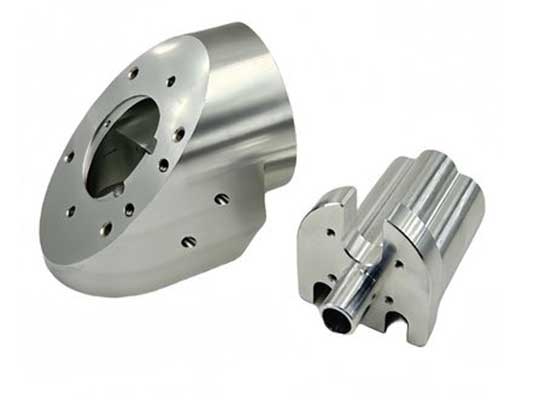
When it comes to modern manufacturing, choosing the right process can make or break your project—whether you’re prototyping a new product, producing a small batch, or scaling up to mass production. CNC machining and silicone molding are two popular methods, but they differ drastically in precision, cost, speed, and ideal uses. This guide breaks down their key differences, uses real-world examples, and gives practical insights to help you pick the best option for your goals, budget, and timeline.
How Precise Are They?
CNC Machining Precision
CNC machining is known for top-tier precision, with tolerances as tight as ±0.0001 inches (0.0025 mm) for high-end setups. This accuracy comes from computer-controlled automation, which cuts out human error and keeps parts consistent across batches. For example, a local medical device shop uses CNC milling to make stainless steel surgical tool components. These parts need to fit perfectly to keep patients safe, so the shop maintains a tolerance of ±0.0005 inches—meeting FDA standards and keeping scrap rates below 1%.
CNC’s precision works best with hard metals and complex shapes. Its automated toolpaths adjust in real time, making it the first choice for aerospace, automotive, and medical parts where even tiny mistakes matter.
Silicone Molding Limits
Silicone molding has looser tolerances—usually ±0.005 to ±0.010 inches (0.127 to 0.254 mm) for standard parts. The main issue is material shrinkage: silicone shrinks 1-3% when it cures. A nearby consumer electronics brand learned this the hard way when prototyping silicone phone cases. Their first molds had 0.008-inch shrinkage, forcing small design tweaks to get the cases to fit.
You can get finer tolerances with premium molds and liquid silicone rubber (LSR), but it still won’t match CNC machining. It’s best for parts where small size differences don’t hurt function—like gaskets, seals, or soft-touch grips.
Which Handles More Materials?
CNC Machining Range
CNC machining is versatile—it works with almost any material you can think of. This includes metals (aluminum, steel, titanium, brass), plastics (ABS, PVC, PEEK), wood, and even composites. A custom auto shop in town uses CNC turning to make aluminum alloy wheels and CNC milling for carbon fiber interior panels—all on the same machines.
A key stat: CNC machining handles materials up to 65 HRC (Rockwell Hardness Scale). That means it can cut hardened steels and exotic alloys—materials silicone molding can’t touch.
Silicone Molding Focus
Silicone molding is limited to silicone rubbers and related elastomers. But it does cover variations like liquid silicone rubber (LSR), high-consistency rubber (HCR), and foam silicone. A local food packaging company uses LSR molding to make heat-resistant gaskets for pressure cookers—LSR is flexible and FDA-approved, so it’s safe for food contact.
Another example: a toy maker nearby uses foam silicone molding for soft, squeezable toy parts. Silicone’s focus is a strength for elastomer-only projects, but a downside if you need rigid materials like metal or hard plastic.
Which Is Faster for Prototyping?
CNC Machining Speed
CNC machining is fast for prototyping, especially for simple to moderately complex parts. A local mechanical engineering firm prototyped aluminum brackets for a robotics project using CNC milling. Their first prototype was ready in 4 hours, and design changes took just 2 hours each.
The best part? If you have a CAD file, CNC machines can start cutting in minutes—no mold needed. If a prototype needs a small tweak (like a bigger hole), you update the CAD file and cut a new part right away. No mold changes required.
Silicone Molding Timeline
Silicone molding takes longer to start because you need to make a mold first. A startup downtown developing silicone wristbands spent 2-3 days making a master model (usually CNC-machined) and pouring the silicone mold before they could make their first prototype.
Once the mold is ready, parts are fast—10-15 minutes each. Silicone molding is better if you need 50+ prototypes, but slower for single or small batches. A local consumer goods brand used it for 100 prototype gaskets because the mold let them make copies quickly after setup.
Which Is More Cost-Effective?
CNC for Low Volumes
CNC machining saves money for low-volume production (1-100 parts) because there’s no upfront mold cost. A small machine shop nearby made 50 custom steel brackets for a local manufacturer at $25 per part—total cost $1,250. With silicone molding, the mold alone would cost $500-$1,000, plus $5 per part. The total is similar, but CNC avoids rework costs if you need to change the design.
Here’s a quick breakdown for 50 parts: CNC ($25/part = $1,250); Silicone ($800 mold + $5/part = $1,050). Silicone is slightly cheaper, but CNC is safer for small batches with possible tweaks.
Silicone for High Volumes
Silicone molding becomes cheaper for high volumes (1,000+ parts) because mold costs are spread out. A local medical supply company made 10,000 silicone seals for respirators: $1,500 for the mold and $0.75 per part—total $9,000. CNC machining the same parts would cost $15 each, totaling $150,000—that’s an 88% savings!
Key data: Silicone molding’s per-part cost drops 50-70% when production exceeds 500 parts. It’s the best choice for mass-produced elastomer components.
Which Has Better Surface Finish?
CNC Machining Finish
CNC machining makes smooth surfaces, with roughness values (Ra) as low as 0.02 μm for polished metals. A luxury watch shop in town uses CNC turning to make stainless steel watch cases, getting a mirror finish (Ra 0.05 μm) without extra polishing. If you need texture—like knurling for grip—CNC can make precise patterns with consistent depth.
CNC’s surface finish depends on the tool and cutting speed. Finer tools and slower speeds make smoother surfaces, so most high-precision parts don’t need post-processing like sanding.
Silicone Molding Finish
Silicone molding copies the master mold’s surface, so finish quality depends on the mold. A local cosmetic brand uses it to make soft silicone applicators with a matte finish—they used a textured master mold to get that look. For smooth finishes, you need to polish the mold, which adds time and cost.
One limitation: Silicone can trap air bubbles when poured, causing surface blemishes. A local auto gasket maker fixes this with vacuum casting (a type of silicone molding) to remove air, getting surface quality to Ra 0.1 μm—good for seals, but not as smooth as CNC metals.
Which Is Better for Testing?
CNC Machining Testing
CNC machining makes prototypes with the same material and durability as final parts—perfect for functional testing. An aerospace company nearby tested CNC-machined titanium brackets under 10,000 psi of stress to simulate flight conditions. The results were accurate because the prototype material matched the final part.
Case study: A local robotics firm used CNC-machined aluminum gears to test load capacity. They found a weakness, adjusted the gear’s tooth shape in the CAD file, and made a new prototype in 3 hours—cutting the testing cycle by 50%.
Silicone Molding Testing
Silicone molding makes prototypes with the same elastomer properties as final parts, so it’s great for testing flexibility, compression, and sealing. A local plumbing company tested silicone-molded gaskets for leaks under 50 psi of water pressure—results directly applied to production parts.
But silicone prototypes can’t replicate rigid material durability (like metal). For structural testing, you’ll need CNC. Also, silicone’s durability depends on the type—LSR is better for heat and chemicals, making it good for testing engine gaskets.
Which Offers More Design Freedom?
CNC Machining Flexibility
CNC machining handles complex shapes—undercuts, internal cavities, and intricate patterns—with precision. A local architecture firm uses 5-axis CNC milling to make curved aluminum facade panels with internal wiring channels. The 5-axis design lets the machine reach multiple angles, so no assembly is needed.
The only limit: CNC can’t make enclosed cavities without a tool access point. But this is rare for most projects.
Silicone Molding Constraints
Silicone molding is limited by the mold. Undercuts and complex internal cavities need split molds or retractable cores, which cost more and take longer. A local toy company redesigned a silicone action figure to remove undercuts—cutting mold costs by 30%.
One exception: Overmolding (a silicone molding technique) lets you combine silicone with rigid materials—like plastic handles with silicone grips. But this needs extra setup and tooling.
How Easy Is It to Scale Production?
CNC Machining Scalability
CNC machining scales linearly—more parts mean more machine time. It’s efficient for low to medium volumes (1-500 parts), but costs rise fast for high volumes. A small electronics brand nearby scaled from 10 CNC prototypes to 200 production parts by adding a second CNC machine—doubling output without major retooling.
For 10,000+ parts, most companies switch to molding or stamping to save money. A local auto supplier uses CNC for 500 prototype brackets, then switches to die casting for 100,000+ production parts.
Silicone Molding Scalability
Silicone molding scales easily—once the mold is ready, you can make thousands of parts quickly and cheaply. A local personal care brand scaled from 50 silicone prototype sponges to 50,000 production parts by adding more molding stations. Each mold makes 10 parts per 15-minute cycle—400 parts per day per station.
Silicone molds last a long time—1,000-10,000 cycles for standard molds. A local gasket maker used the same mold for 3 years, making 500,000 parts before replacing it.
Which Meets Tighter Deadlines?
CNC Machining Delivery
CNC machining is faster for short lead times—prototypes and low-volume runs are ready in hours to days. A startup nearby needed 20 CNC-machined plastic handles in 2 days for a trade show. The CNC shop finished in 1.5 days, letting them showcase their product on time.
Key data: CNC lead times average 1-3 days for simple parts and 3-7 days for complex (5-axis) parts—much faster than silicone molding’s 5-10 days for prototypes.
Silicone Molding Lead Times
Silicone molding has longer lead times for first orders but faster production for high volumes. A local food manufacturer needed 10,000 silicone jar seals in 2 weeks. The molding shop took 5 days to make the mold, then made 2,000 parts per day—meeting the deadline with 3 days to spare. For repeat orders, lead time drops to 3-5 days (no mold needed).
The catch: Silicone molding isn’t good for urgent orders—mold creation is a bottleneck. A local medical supply company switched to CNC for a rush order of 100 silicone-like plastic gaskets, delivering in 2 days instead of 7.
CNC vs. Silicone Molding: Quick Comparison
| Factor | CNC Machining | Silicone Molding |
|---|---|---|
| Tolerance Range | ±0.0001 – ±0.001 inches | ±0.005 – ±0.010 inches (standard); ±0.002 inches (premium) |
| Material Compatibility | Metals, plastics, wood, composites (up to 65 HRC) | Silicone rubbers (LSR, HCR, foam silicone) |
| Prototyping Lead Time | Hours to 3 days | 3-7 days (includes mold creation) |
| Cost Efficiency | Low-volume (1-500 parts); no mold costs | High-volume (1,000+ parts); mold costs spread out |
| Surface Finish (Ra) | 0.02 – 0.1 μm (smooth to mirror) | 0.1 – 0.5 μm (depends on mold quality) |
| Design Flexibility | Complex geometries; 5-axis capability | Limited by mold; undercuts need split molds |
| Scalability | Linear; costly for high volumes | Efficient high-volume; long mold lifespan |
| Functional Testing | Accurate (same material as final parts) | Good for elastomers; limited structural testing |
Conclusion
Choosing between CNC machining and silicone molding comes down to your project’s unique needs: precision, material, volume, timeline, and budget. CNC machining is the best pick for low-volume, high-precision parts made from rigid materials (metals, hard plastics), urgent prototypes, or projects that need frequent design tweaks. It excels in industries like aerospace, medical, and automotive where accuracy and durability are non-negotiable.
Silicone molding shines for high-volume elastomer parts (1,000+ units), soft or tactile components (gaskets, seals, toys), or parts with complex surface textures. It’s cost-effective for mass production and delivers consistent silicone properties for functional testing.
Many projects even combine both processes—using CNC to make master molds or rigid components, then silicone molding for elastomer parts. By understanding their strengths and limitations, you can choose the process that keeps your project on track, on budget, and up to quality standards.
FAQ About CNC Machining VS Silicone Molding
When should I choose CNC machining over silicone molding? Choose CNC for low-volume production (1-500 parts), high-precision parts (tolerances ±0.001 inches or tighter), rigid materials (metals, hard plastics), or urgent prototypes. It’s ideal for aerospace, medical, and automotive components where precision matters most.
When is silicone molding better? Silicone molding is best for high-volume elastomer parts (1,000+ units), soft/tactile components (gaskets, seals, toys), or parts with complex textures. It’s cost-efficient for mass production and great for testing silicone’s flexibility or sealing ability.
Can I use both processes together? Yes! Many projects combine them. For example, a tool maker might use CNC to make a rigid plastic handle, then overmold it with silicone for a grip. CNC also makes the master molds used in silicone molding for prototypes.
Which is cheaper for 100 prototypes? CNC machining is usually better for 100 prototypes. Silicone molding needs upfront mold costs ($500-$1,000), while CNC has no mold fees. Total costs are similar, but CNC avoids rework costs if you need design changes.
Do silicone parts have the same durability as CNC parts? No—durability depends on material. Silicone parts are flexible and heat/chemical resistant (for LSR), while CNC parts (metals/plastics) are strong and rigid. Choose based on your part’s function (silicone for seals, CNC for load-bearing parts).
Discuss Your Projects with Yigu Rapid Prototyping
Whether you’re choosing between CNC machining and silicone molding for a prototype, low-volume run, or mass production, Yigu’s team of product engineers and manufacturing experts is here to help. We’ll look at your project’s needs—precision, materials, volume, timeline, and budget—to recommend the best process.
Our expertise covers aerospace, automotive, medical, and consumer goods manufacturing. We have a proven track record of delivering cost-effective solutions that meet strict quality standards. We’ll also help you scale from prototype to production, ensuring a smooth transition and on-time delivery.
Reach out to Yigu today to discuss your project. Let’s use our industry experience to pick between CNC machining and silicone molding, optimize your design for manufacturing, and bring your vision to life with confidence.
At Yigu Rapid Prototyping, we don’t just recommend processes—we partner with you to solve problems. Our team works directly with your design and engineering teams to identify potential bottlenecks early, whether that’s adjusting a part’s geometry to improve CNC machining efficiency or selecting the right silicone grade for your molding project.
We understand that every project has unique constraints: a startup might prioritize fast, low-cost prototyping to test market fit, while a medical device company needs uncompromising precision and FDA compliance. No matter your goals, we tailor our approach to match—offering flexible lead times, transparent pricing, and hands-on support from concept to delivery.
What sets us apart? Our in-house capabilities include both CNC machining (3-axis, 5-axis) and silicone molding (vacuum casting, LSR molding), so we can seamlessly switch between processes or combine them to meet your needs. We also maintain a library of materials—from high-strength titanium to food-grade LSR—so you can test different options without delays.
Don’t let the choice between CNC machining and silicone molding slow you down. Contact Yigu today for a free project consultation. Our experts will walk you through the pros and cons for your specific application, share relevant case studies from your industry, and provide a detailed quote—so you can make an informed decision and move forward with confidence.
Your next great product starts with the right manufacturing process. Let Yigu help you get it right the first time.