
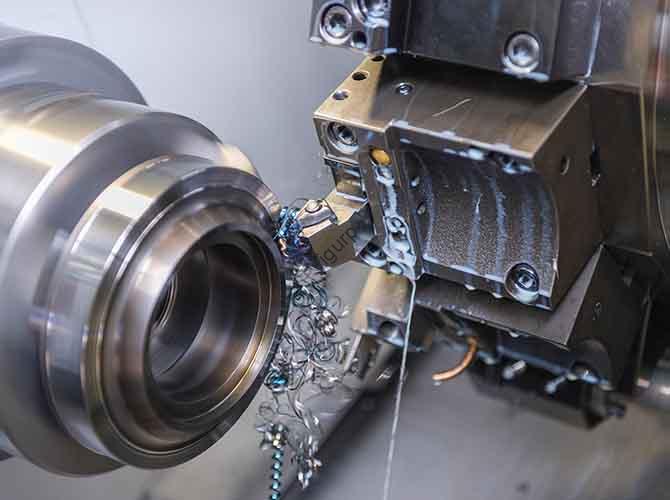
Introduction
If you are a manufacturer or buyer searching for reliable CNC machining services within Europe, Slovakia deserves a close look. This Central European nation has quietly built a reputation as a precision engineering powerhouse. It serves demanding industries like automotive, aerospace, and medical devices with a mix of technical skill and cost efficiency that is hard to find elsewhere. In this guide, we will walk you through why Slovakia stands out, how to find the right partner, what it really costs, and the trends shaping its future.
Why Choose CNC Machining in Slovakia?
Slovakia’s appeal goes beyond just being “another European country.” Its unique position and industrial culture solve common headaches like long shipping times, high labor costs, and inconsistent quality.
How Does Location Give You an Edge?
Slovakia sits right in the heart of Europe. It borders Germany, Austria, Hungary, Poland, and the Czech Republic. This is a massive logistical advantage. A part finished in Bratislava can be in a factory in Munich in about four hours by truck.
For industries running just-in-time (JIT) production, this proximity is a game-changer. It cuts delivery times by 30% to 50% compared to sourcing from Asia or even Eastern Europe. You reduce inventory needs and respond faster to market changes. Your supply chain becomes more agile and less vulnerable to ocean freight delays.
Is the Workforce Skilled Enough for Complex Work?
Yes, and this is a cornerstone of Slovakia’s success. The country has a deep-rooted engineering culture, dating back to the industrial era of the Austro-Hungarian Empire. This isn’t just history; it’s a living tradition.
Today, technical universities like the Slovak University of Technology in Bratislava feed a steady stream of trained professionals into the workforce. According to the Slovak Automotive Industry Association (ZAP) , over 60% of CNC machinists have at least five years of experience. Furthermore, 40% hold advanced certifications in CAD/CAM software (like Mastercam or SolidWorks) and operate high-end machines from DMG MORI or Haas.
A real-world example: A German aerospace firm moved production of complex titanium turbine components to a Slovak shop. The local team’s deep expertise in 5-axis machining and difficult materials actually reduced production errors by 25% compared to their previous supplier.
Can You Get Western Quality at Lower Costs?
This is the sweet spot. While countries like Germany and Switzerland set the gold standard for precision, their costs are high—often 20% to 35% higher than Slovakia’s. Slovakia offers a compelling middle path.
You get the benefits of European engineering standards, adherence to strict quality norms like ISO 9001 and IATF 16949, but with lower labor and operational expenses. For example, a precision aluminum part with tolerances of ±0.005 mm might cost between €15 and €20 in Slovakia, compared to €22 to €28 in Germany. The quality is comparable, but the budget impact is noticeably smaller.
What Does a Strong Local Ecosystem Mean for You?
Slovakia’s manufacturing sector is tightly integrated. You aren’t just dealing with an isolated machine shop. There is a network of local raw material suppliers (like steel and polymer producers) and quality testing labs.
This ecosystem simplifies your logistics. Need a machined plastic part? Your Slovak partner can likely source the engineering plastic from a local supplier like Slovnaft, machine it, and then use an in-house Coordinate Measuring Machine (CMM) to verify every dimension. This consolidation reduces the complexity of managing multiple suppliers across different countries.
How to Select the Right CNC Partner in Slovakia
Finding the right partner is a process. A systematic approach helps you match your project needs with a supplier’s true capabilities.
Step 1: Define Your Project Requirements
Before you talk to any shop, get your own specs in order. Be crystal clear on:
- Material: Aluminum 6061, Stainless Steel 316L, Titanium Grade 5, PEEK plastic?
- Process: Standard 3-axis milling, or complex 5-axis work? Turning with live tooling?
- Tolerances: Are we talking standard machining (±0.1 mm) or high-precision work (±0.005 mm)?
- Volume: Is it a one-off prototype, a batch of 100, or a production run of 10,000 units?
- Certification Needs: Do you need ISO 13485 for medical parts, or AS9100 for aerospace?
Having this defined upfront helps you filter out shops that aren’t a good fit from the very first conversation.
Step 2: Verify Certifications and Quality Control
Certifications are your first filter for trust. They show a supplier is serious about process control. Look for these specific ones:
- ISO 9001: The baseline for quality management in any industry.
- IATF 16949: The absolute must for any automotive part supplier.
- AS9100: Non-negotiable for aerospace components.
- ISO 13485: Essential for medical device manufacturing.
Don’t just check the box. Ask how they implement these standards. Do they use CMMs for dimensional inspection? Do they inspect every single critical part, or use statistical sampling? A reputable shop, like Slovak CNC Solutions in Košice, will gladly explain their process and provide detailed QC reports with every shipment.
Step 3: Evaluate Industry Experience
A shop that excels at high-volume automotive brackets might struggle with a one-off aerospace prototype. Ask about their specific experience.
- Have they worked with biocompatible materials before?
- Do they understand the surface finish requirements for aerospace components?
- Can they handle the miniaturization needed for electronics parts?
Ask for case studies or client references from your specific industry. If a shop has previously worked for a company like Siemens or Volkswagen (both have major operations in Slovakia), it’s a strong indicator they can handle demanding requirements.
Step 4: Assess Technology and Equipment
The machine tool directly determines the part’s potential quality. You want a partner who invests in modern equipment.
Key technologies to look for include:
- 5-axis CNC mills: For complex, sculpted surfaces like turbine blades or medical implants.
- CNC lathes with live tooling: These can turn and mill in a single setup, which improves accuracy and speed.
- Advanced CAM software: Like Mastercam or Fusion 360, which generates the efficient toolpaths.
- Automation: Robotic loaders that allow lights-out manufacturing, which improves consistency and lowers cost for high-volume runs.
A shop with older, manual machines simply cannot compete on tight tolerances or fast lead times. A modern DMG MORI 5-axis machine is a different beast from a 10-year-old 3-axis mill.
Step 5: Compare Detailed Quotes and Lead Times
Get quotes from two or three shortlisted suppliers. Make sure each quote breaks down:
- Material costs
- Machine setup fees
- Hourly machining rates
- Quality inspection costs
- Packaging and shipping terms (Incoterms)
Typical lead times in Slovakia are 1-2 weeks for prototypes and 4-6 weeks for larger production runs. A simple turned part might be ready in five days, while a complex 5-axis housing could take three weeks just to program and machine.
Key Industries Served by Slovak CNC Machining
Slovakia’s CNC sector is not a generic service; it has grown deep roots in specific, high-tech industries.
Automotive: The Engine of the Industry
The automotive sector is the lifeblood of Slovak manufacturing. Global giants like Volkswagen, Peugeot, and Kia operate massive factories here. Consequently, the local supply chain is exceptionally strong.
CNC shops produce a huge range of parts, from simple brackets to complex engine components (cylinder heads, crankshafts) and transmission parts (gears, shafts) . According to ZAP, over 70% of CNC machining revenue in Slovakia comes from this sector. For example, Continental Slovakia relies on local CNC partners to produce precision sensor housings with tolerances of ±0.003 mm—critical for modern automotive electronics.
Aerospace: Rising to New Heights
The aerospace industry demands absolute precision and reliability. Slovakia’s CNC shops have stepped up to meet this challenge, often holding AS9100 certification.
They specialize in machining difficult, high-strength materials like titanium and Inconel to create lightweight, durable parts. Common products include turbine blades, aircraft structural brackets (from aluminum 7075) , and avionics enclosures. One shop in Žilina recently completed an order for 500 complex turbine blades for a major European aircraft manufacturer, using advanced 5-axis machining and rigorous CMM inspection to meet every specification.
Medical Devices: Precision for Life
The medical field requires not just precision, but also traceability and material safety. Slovak shops with ISO 13485 certification are well-equipped for this.
They machine a variety of components, including surgical instruments (scalpel handles, forceps) , implant components (dental abutments, hip stems) , and parts for diagnostic equipment. A great example is a Bratislava-based shop that partnered with a German medical company to produce custom titanium dental abutments. They delivered 1,000 units, each holding a critical tolerance of ±0.002 mm, meeting the stringent EU medical device regulations.
Electronics: Powering the Digital World
With the growth of 5G and IoT, the demand for tiny, precise electronic enclosures and components has soared. Slovak CNC shops cater to this need with expertise in micro-machining.
They produce parts like circuit board housings (from aluminum or ABS plastic), precision connector components (from brass), and heat sinks with complex fin arrays for thermal management. A shop in Banská Bystrica, for instance, regularly supplies machined aluminum heat sinks to a European 5G infrastructure company, with every part undergoing 100% inspection to ensure consistent cooling performance.
Latest Trends in Slovakia’s CNC Industry
The industry is not standing still. Several key trends are making Slovak suppliers even more competitive.
Automation and Industry 4.0
Slovak shops are embracing Industry 4.0 concepts to boost efficiency. This means:
- Robotic part loading: Machines can run unattended overnight, increasing capacity.
- IoT-connected machines: Sensors track spindle load and tool wear, predicting maintenance needs and preventing unexpected downtime.
- Digital twins: Some advanced shops create virtual models of their machines to simulate and optimize machining programs before cutting any real material, saving time and reducing waste.
A survey by the Slovak Chamber of Commerce found that 60% of mid-sized CNC shops now use some form of IoT-connected machinery.
The Rise of 5-Axis Machining
While 3-axis machines are still common, 5-axis machining is rapidly becoming the standard for complex parts. Being able to machine a part from five sides in a single setup dramatically improves accuracy and reduces lead times. Industry data shows the number of 5-axis CNC machines in Slovakia has increased by 35% over the last five years, driven by demand from aerospace and medical device companies.
Focus on Sustainability
Environmental concerns are driving real change on the shop floor.
- Waste reduction: Advanced CAM software optimizes toolpaths to minimize scrap material.
- Energy efficiency: Newer CNC machines are designed to use significantly less electricity than older models.
- Recycled materials: There is a growing trend of offering machining services using recycled aluminum and steel, appealing to companies with strong sustainability goals.
Cost Breakdown for CNC Machining in Slovakia
Knowing what influences cost helps you budget effectively. Here’s a typical breakdown based on project type.
| Project Type | Material | Process | Volume | Avg. Cost Per Unit | Lead Time | Key Cost Drivers |
|---|---|---|---|---|---|---|
| Simple Prototype | Aluminum 6061 | 3-axis Milling | 1-5 pcs | €8 – €15 | 1-2 weeks | High setup fee for small quantity |
| Small Batch (Auto) | Steel 1018 | CNC Turning | 50-100 pcs | €5 – €8 | 2-3 weeks | Material cost, labor hours |
| Large Batch (Elec.) | ABS Plastic | 3-axis Milling | 1000+ pcs | €1.50 – €3.00 | 4-6 weeks | Automation, volume discounts |
| Complex Part (Aero) | Titanium Ti-6Al-4V | 5-axis Milling | 20-50 pcs | €50 – €80 | 3-4 weeks | Material cost, complex programming, inspection time |
What Factors Drive the Final Price?
- Material Choice: Titanium or Inconel costs much more than aluminum or standard steel.
- Part Complexity: A simple turned pin is cheap. A complex 5-axis impeller is expensive.
- Tolerance Requirements: Tight tolerances (e.g., ±0.001 mm) require slower machining speeds and more careful inspection, adding cost.
- Order Volume: Setup costs are spread over more parts, so per-unit price drops significantly as volume increases.
Conclusion
Slovakia offers a compelling value proposition for anyone needing high-quality CNC machined parts. It combines the technical expertise and quality standards of Western Europe with more competitive costs, all anchored by a strategic location at the heart of the continent. The key is to approach it systematically: define your needs clearly, vet potential partners for the right certifications and experience, and build a relationship based on clear communication. For businesses looking for a reliable, skilled, and well-located European manufacturing partner, Slovakia’s CNC machining industry is a choice worth making.
Frequently Asked Questions
1. What are typical lead times for CNC parts from Slovakia?
For simple prototypes (1-5 parts), expect 1-2 weeks. Small production runs (50-100 parts) usually take 2-3 weeks. Larger volumes (1000+ parts) or complex 5-axis parts may require 4-6 weeks. Many shops offer a rush service for an extra fee.
2. Do Slovak shops help with design for manufacturing (DFM)?
Yes, many offer design support. If you have a concept or a 2D sketch, they can often create a 3D CAD model and suggest design changes that will make the part easier and cheaper to machine, a process known as DFM.
3. Can Slovak suppliers handle high-volume production?
Absolutely. While some specialize in prototypes, many mid-sized and large facilities are set up for high-volume work. They use automation like robotic loaders to efficiently handle orders of 10,000+ units for automotive and industrial clients.
4. What quality documents will I receive with my parts?
Reputable suppliers typically provide a comprehensive quality package. This often includes a First Article Inspection (FAI) Report for new parts, CMM inspection reports verifying critical dimensions, and material certificates (Mill Test Reports) confirming the raw material’s grade and origin.
5. Is it easy to import parts from Slovakia to another EU country?
Yes, it is very straightforward. Since Slovakia is an EU member state, parts shipped to another EU country are covered by the EU Customs Union. This means there are no customs duties and minimal paperwork, making cross-border trade within Europe simple and cost-effective.
Discuss Your Projects with Yigu Rapid Prototyping
At Yigu Rapid Prototyping, we have extensive experience connecting businesses with the right manufacturing solutions across Europe, including Slovakia’s advanced CNC machining sector. We understand that finding a partner who can deliver precision parts on time and on budget is critical to your success. Our team of product engineers and sourcing experts can help you navigate the options, from vetting supplier capabilities to managing quality and logistics. Whether you need a single prototype or a full production run, we are here to help you turn your design into a finished part with confidence. Contact us today to discuss your project requirements.