
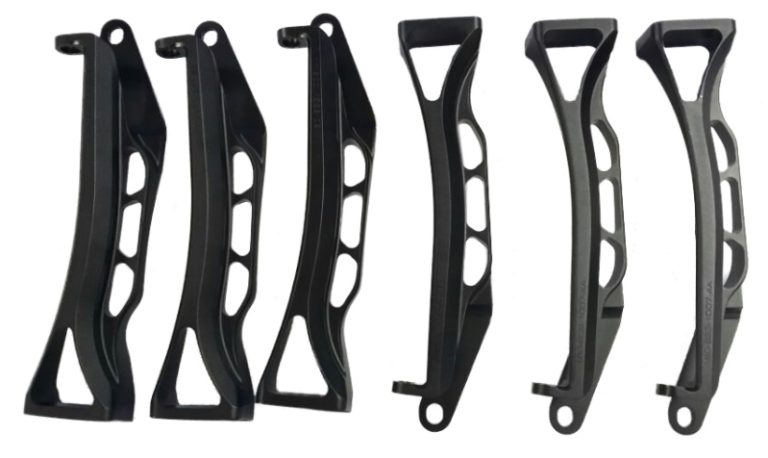
When you need to create high-performance parts that must survive extreme heat and maintain tight dimensions, CNC machining PPS prototype models are a top-tier choice. Engineers and product developers often face a dilemma: how to test a design under real-world stress without spending thousands on a permanent mold.
Polyphenylene Sulfide (PPS) is a high-performance engineering plastic that fills this gap. When combined with precision CNC technology, it allows you to create functional samples that meet the exacting standards of the automotive, electronics, and aerospace sectors. This guide explores everything from material basics to professional workflows, helping you decide if PPS is right for your next prototype.
What Is a CNC Machining PPS Prototype Model?
A CNC machining PPS prototype model is a physical sample of a part crafted from PPS plastic using subtractive manufacturing. Unlike 3D printing, which adds material layer by layer, CNC machining starts with a solid block and removes material to reveal the final shape. This method results in parts with superior structural integrity and a smoother surface finish.
Why Is PPS Material Ideal for Prototypes?
Engineers choose PPS because it solves several common manufacturing “pain points.” Its unique properties allow for testing in environments where other plastics would simply melt or snap.
- Exceptional Heat Resistance: PPS can withstand temperatures up to 260°C (500°F). This is a game-changer for engine components or high-power electronics.
- Flame Retardancy: It naturally meets UL94 V-0 standards. It is safe for aircraft interiors and consumer gadgets.
- Dimensional Stability: PPS has very low moisture absorption. Your prototype won’t shrink or warp, even in humid testing labs.
- Chemical Resistance: It stands up to oils, acids, and harsh solvents. This makes it perfect for automotive fuel systems or medical tools.
How Are CNC Machining PPS Prototype Models Made?
Creating a high-quality PPS prototype is a structured process. Each step builds on the last to ensure the final part is accurate and functional.
The 5-Step Precision Workflow
The following table outlines the professional path from a digital file to a physical part.
| Step | Action Details | Tools Used | Key Tip for Success |
| 1. Design | Create a 3D model and generate G-code instructions. | SolidWorks, Mastercam | Use parametric design for easy size tweaks later. |
| 2. Setup | Secure the PPS block to the machine worktable. | 3-axis or 5-axis CNC | Use vacuum clamps for thin parts to avoid cracking. |
| 3. Roughing | Remove bulk material quickly to reach the basic shape. | Large endmills (10-16mm) | Keep speeds moderate to prevent the PPS from melting. |
| 4. Finishing | Use small tools for precise cuts and smooth surfaces. | Small endmills (2-6mm) | Use coolant mist to reach a finish of Ra 0.8-1.6 μm. |
| 5. Inspection | Clean, polish, and check dimensions. | CMM, Ultrasonic cleaner | Use a CMM to verify tolerances of ±0.01mm. |
Is Machine Choice Important?
Yes. For simple blocks, a 3-axis machine works fine. However, for complex aerospace parts with undercuts, a 5-axis CNC is far superior. It reduces the need for multiple setups, which minimizes the chance of alignment errors.
Real-World Applications and Success Stories
Seeing how PPS performs in the field helps engineers understand its value. Here are two detailed cases from the front lines of manufacturing.
Case 1: Automotive Sensor Housing
A leading car parts supplier needed a prototype for a sensor housing. This part sits near the engine and faces constant heat of 180°C. They chose CNC machining PPS prototype models for two reasons. First, the material could handle the engine bay heat without deforming. Second, the CNC process ensured that tiny Ø3mm mounting holes were perfect.
- The Result: The prototype passed all thermal and vibration tests. The design went to mass production four weeks faster because the team didn’t have to fix warped plastic parts.
Case 2: Aerospace Electrical Connector
An aerospace firm required a connector that could resist both jet fuel and extreme cold down to -50°C. Standard plastics would become brittle and crack.
- The Solution: Using PPS prevented chemical damage from fuel. The high precision of CNC machining ensured that the connector pins aligned perfectly with the aircraft wiring.
- The Result: The part met strict NASA standards, leading to a production order of 500 units using the same CNC method.
How Does CNC PPS Compare to Other Methods?
Before you start, you should know how CNC stacks up against 3D printing or molding.
Prototyping Comparison Table
| Feature | CNC Machining PPS | 3D Printing (FDM) | Injection Molding |
| Lead Time | 1-3 Days | 8-24 Hours | 2-4 Weeks |
| Precision | ±0.01mm (Excellent) | ±0.1mm (Average) | ±0.02mm (Good) |
| Surface Finish | Smooth (Ra 0.8) | Rough (Layer lines) | Very Smooth |
| Strength | High (Solid block) | Moderate (Layered) | High |
| Best For | Functional testing | Fast visual checks | Mass production |
For most senior engineers, the ±0.01mm tolerance of CNC machining is the deciding factor. While 3D printing is faster, it often lacks the mechanical strength needed for a real stress test.
Advanced Tips for Machining PPS
PPS is a “stiff” plastic, which makes it easier to machine than “gummy” plastics like PP or LDPE. However, its hardness means it can be abrasive on tools.
- Tooling: Use carbide-tipped tools to maintain a sharp edge for longer periods.
- Heat Control: Even though PPS resists heat, the localized heat at the cutting tip can cause “smearing.” Always use a constant air blast or mist.
- Annealing: For extremely thick parts, some engineers recommend a pre-machining annealing cycle. This relieves internal stresses in the PPS block, ensuring the part doesn’t “move” after it is cut.
Yigu Technology’s Perspective
At Yigu Technology, we have supported over 500 clients in the automotive and aerospace sectors. In our experience, CNC machining PPS prototype models are the best way to reduce project risk. They allow you to find design flaws early when they are still cheap to fix.
We recommend using 5-axis CNC machines for any PPS part with curved or multi-sided features. This setup improves accuracy and cuts labor time. Every part we make goes through ultrasonic cleaning and a final CMM inspection to ensure it meets ISO 9001 standards. If you are in a rush, we can often deliver a simple PPS prototype in under 24 hours.
Conclusion
The CNC machining PPS prototype model is a vital tool for any engineer working in high-stakes industries. Its ability to combine metal-like heat resistance with the lightweight benefits of plastic makes it unique. By following a precise machining workflow and choosing the right grade of PPS, you can validate your designs with total confidence. Whether it is a fuel sensor or an electronic housing, PPS ensures your prototype performs exactly like the final product.
FAQ
1. How long does it take to get a PPS prototype?
For a simple sensor cover, we usually finish in 1 to 2 days. For complex aerospace parts with many angles, expect a lead time of 3 to 5 days.
2. Can I use these prototypes for actual field testing?
Yes. Because PPS retains its mechanical properties under heat and chemical exposure, these prototypes are often used for thermal cycling and pressure tests.
3. What is the biggest part you can machine?
Most standard CNC machines can handle PPS blocks up to 1000mm x 600mm. For larger parts like battery enclosures, we use custom setups for blocks up to 2000mm in length.
4. Is PPS expensive compared to other plastics?
The raw material is more expensive than standard ABS or Nylon. However, the cost is often offset by the fact that you avoid expensive failures during the testing phase.
5. Does PPS require special post-processing?
While not required, we recommend ultrasonic cleaning to remove fine dust and CMM inspection to verify that the part meets your exact specs.
Discuss Your Projects with Yigu Rapid Prototyping
Are you ready to bring your high-performance design to life? At Yigu Rapid Prototyping, we specialize in turning complex CAD files into precision PPS models. Our team of senior engineers is here to help you optimize your design for manufacturing, ensuring you get the best results at the lowest cost.
Would you like me to provide a custom quote or a DFM (Design for Manufacturability) analysis for your PPS project?