
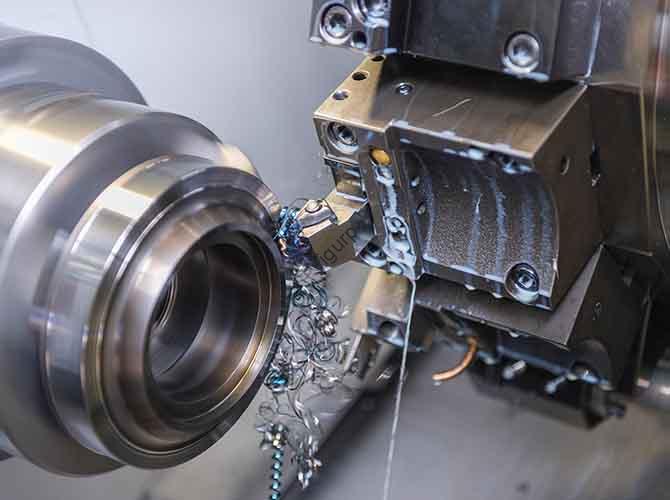
Introduction
Look around you. The car you drive, the phone in your pocket, the medical devices that save lives—all of them rely on parts made by CNC machining. This technology uses computer-controlled machines to cut and shape metal, plastic, and other materials with precision that human hands could never achieve. It is the reason we can mass-produce complex parts that are identical, reliable, and affordable. Whether you are an engineer just starting out or a manufacturing professional looking to optimize your processes, understanding CNC machining is essential. This guide will take you from the basic principles to advanced applications, covering machines, materials, programming, tools, quality control, automation, and real-world examples. By the end, you will see why CNC machining is the backbone of modern industry.
How Does CNC Machining Work?
At its simplest, CNC machining turns digital designs into physical parts. The process follows a clear path from idea to finished product.
Core Principles
The heart of CNC is “digital instructions drive mechanical movement.” You start with a design in CAD software. That design gets converted into G-code—a language of numbers and letters that tells the machine what to do. The computer numerical control system reads the code and sends signals to servo motors that move the machine’s axes. The cutting tool follows the programmed path, removing material to create the part.
A key concept is interpolation. The machine does not move in straight lines between points. It calculates smooth paths using algorithms like linear and circular interpolation. This ensures the cut is smooth, with no glitches or errors on the surface.
The Standard Machining Process
A complete CNC job follows six steps:
- Design and analysis: Create the part in CAD and decide how to machine it.
- Programming: Write the G-code, either manually or with CAM software.
- Setup: Set the machine coordinate system, install tools, and mount the workpiece.
- Trial cut: Run a test piece to verify the program and setup.
- Production: Run the full batch.
- Inspection: Check that parts meet specifications.
Precision Control Matters
Three factors determine accuracy:
- Machine coordinate system repeatability: Typically needs to be within 0.005mm.
- Servo system response speed: Affects how accurately the tool follows the path at high speeds.
- Program quality: Poor code causes overcutting or undercutting.
Real-world example: A precision parts shop was machining aluminum housings and found batch parts were off by 0.02mm. The cause? They had not calibrated the machine coordinate system. After resetting the workpiece origin, optimizing servo parameters, and adding tool radius compensation, accuracy improved to ±0.003mm—meeting aerospace standards.
What Types of CNC Machines Are Available, and How Do You Choose?
Different machines are built for different jobs. Choosing the right one is half the battle.
| Machine Type | Core Features | Typical Applications | Accuracy Range |
|---|---|---|---|
| Vertical Machining Center | Three-axis, vertical spindle | Flat and box-shaped parts | ±0.005–0.01mm |
| 5-Axis CNC Machine | Five-axis linkage, multi-angle machining | Complex surfaces like impellers and molds | ±0.002–0.005mm |
| Turn-Mill Machine | Combines turning and milling | Shaft and disc parts like motor shafts and gears | ±0.003–0.008mm |
| CNC Engraving Machine | High-speed, light cutting | Non-metals, thin-walled parts | ±0.01–0.02mm |
| Gantry Machining Center | Large stroke, heavy cutting | Machine tool beds, construction machinery | ±0.01–0.03mm |
Selection Tips
- For complex surfaces like engine blades, choose a 5-axis machine. It avoids errors from multiple setups.
- For mass production of shaft parts, use a turn-mill machine. It combines operations and can cut cycle time by over 30 percent.
- For small precision parts like electronic connectors, pick a high-speed machining center with a spindle speed of 20,000 RPM or more.
- For large structural parts, a gantry machine provides the rigidity needed for long strokes and heavy cuts.
What Materials Can CNC Machine, and What Are the Key Applications?
Material properties dictate how you machine them. Here is what you need to know.
Metal Machining
- Aluminum alloy: Easy to cut. Use high speeds—10,000 to 20,000 RPM. Coated tools and emulsion coolant work well.
- Stainless steel: Hard and gummy. Use carbide tools, lower speeds (30 to 50 m/min), and ensure good chip evacuation.
- Titanium alloy: High strength, retains hardness at temperature. Use specialized tools and oil-based coolant to manage heat and wear.
Non-Metal Machining
- Plastics (POM, PC): Easy to deform from heat. Keep speeds moderate (5,000 to 8,000 RPM) and use vacuum fixtures to hold thin parts.
- Composites (carbon fiber): Hard and prone to chipping. Use diamond-coated tools and trim-milling techniques.
Industry Applications
- Aerospace: A manufacturer used a 5-axis machine to cut titanium landing gear parts. By optimizing cutting speed to 40 m/min and feed to 0.1 mm/rev, they cut cycle time from 8 hours to 5 hours and kept scrap under 0.5 percent.
- Medical: A company machining 316L stainless steel implants used high-speed turning and CMM inspection to achieve surface roughness Ra ≤0.8μm, meeting biocompatibility requirements.
- Automotive: A car plant used turn-mill machines to mass-produce engine crankshafts. Integrating turning, milling, and grinding in one setup achieved a cycle time of under 3 minutes and annual output of 500,000 pieces.
What Programming Software and Techniques Should You Use?
CAM software turns your design into toolpaths. Different software suits different needs.
| Software | Core Strengths | Best For | Difficulty |
|---|---|---|---|
| MasterCAM | Strong toolpath optimization, 2–5 axis | Mold and parts processing | Medium |
| UG/NX | Integrated 3D modeling and programming | Complex surfaces, aerospace | High |
| SolidWorks CAM | Seamless design integration | Small shops, simple parts | Low |
Programming Tips
- Use automatic programming for complex parts. It saves 80 percent of programming time and reduces errors.
- Configure post-processors for your specific machine. Incompatible code causes alarms and crashes.
- Run simulations in software to check for overcutting or collisions. This reduces trial cut losses.
- For large programs that exceed machine memory, use DNC transmission to send code in real time.
Practical skill: For complex molds, use UG/NX for 3D modeling and toolpath planning, then optimize milling paths in MasterCAM, and finally verify with simulation. This can cut programming errors by over 90 percent.
What Tools and Cutting Technologies Matter Most?
Tools are the “teeth” of the machine. Choose wrong, and nothing else matters.
Tool Selection and Life
- Match tool material to workpiece: High-speed steel for steel, carbide for most metals, diamond for composites, CBN for superalloys.
- Use coatings: TiN for steel, AlTiN for superalloys. Coatings can extend tool life by 3 to 5 times.
- Manage tool life: Set wear thresholds—for example, replace when flank wear reaches 0.2mm. Use tool wear sensors to catch problems early.
- Coolant strategy: Emulsion for steel, cutting oil for aluminum. Flow rate should be at least 20 L/min to control temperature.
Key Cutting Techniques
- High-speed cutting: For aluminum and plastics. Speeds 3 to 5 times higher than conventional. Boosts efficiency by over 40 percent, but requires rigid machines and quality tools.
- Deep hole drilling: For holes with depth-to-diameter ratio ≥10. Use gun drills or BTA drills with high-pressure coolant to evacuate chips and avoid deflection.
- Thread machining: For internal threads, use taps. For external, use dies or thread mills. Thread mills are more efficient and accurate for large diameters.
How Do You Control Precision and Quality?
Precision is what CNC machining is all about. Here is how to ensure your parts meet spec.
Accuracy Indicators and Measurement
- Precision levels: According to ISO, common CNC work falls in IT5 to IT7, with tolerance ranges of 0.005 to 0.03mm.
- Surface roughness: Precision parts typically require Ra ≤1.6μm. Ultra-precision parts need Ra ≤0.4μm.
- CMM inspection: For complex parts, coordinate measuring machines check 3D dimensions with repeatability of ±0.002mm.
- Online monitoring: Sensors on the machine track force and temperature, catching abnormalities in real time.
Error Compensation and Quality Improvement
- Error compensation software corrects geometric errors like verticality and thermal deformation. Can improve accuracy by 20 to 30 percent.
- SPC (statistical process control) monitors fluctuations to detect systemic issues like tool wear or loose fixtures.
- Inspection process: For production runs, follow “first article inspection → in-process checks every 50 pieces → last part inspection.” This ensures consistency.
What Does the Future Hold with Automation and Smart Manufacturing?
CNC machining is evolving fast. Automation and data are the next frontiers.
Automated Systems
- Automatic loading/unloading: Truss or gantry robots handle workpieces. For mass production, this cuts labor costs by over 50 percent.
- Robot integration: Industrial robots work with multiple CNC machines, moving parts between them and increasing flexibility.
- Flexible Manufacturing Cells (FMC): Combine CNC machines, robots, and inspection equipment to automate mixed-model, small-batch production. Changeover time can be under 30 minutes.
Smart Manufacturing
- IoT monitoring: Sensors collect data on spindle speed, cutting force, and temperature. This enables predictive maintenance and real-time adjustment.
- Intelligent tool management: RFID tracks tool location and wear, automatically scheduling replacements to avoid downtime.
- Adaptive machining: The machine adjusts cutting parameters on the fly based on sensor feedback, maintaining accuracy and efficiency.
- Industry 4.0 integration: Connecting design, programming, machining, and inspection data creates a digital factory. Efficiency gains can reach 30 to 50 percent.
How Can You Optimize Processes and Improve Efficiency?
Continuous improvement is the path to lower costs and higher quality.
Key Optimization Directions
- Shorten cycle time: Use high-speed cutting, multi-station machining, and optimized toolpaths. Can cut cycle time by 20 to 40 percent.
- Improve fixturing: Modular fixtures and quick-change systems can reduce changeover time from 1 hour to 10 minutes.
- Increase material removal rate: Increase depth of cut and feed rate, but watch for machine overload.
- Manage energy consumption: Optimize parameters to avoid idling and reduce energy use by 15 to 25 percent.
Lean Manufacturing Practices
- Build a process parameter library: Collect optimal cutting parameters for different materials and parts for easy recall during programming.
- Optimize production scheduling: Arrange jobs based on priority and machine load to minimize waiting time.
- Continuous improvement: Analyze production data—cycle times, scrap rates—to identify bottlenecks and refine processes.
Conclusion
CNC machining is at the heart of modern manufacturing because it delivers what industry demands: precision, repeatability, efficiency, and flexibility. It turns digital designs into physical reality, working with metals, plastics, and composites to create parts for aerospace, medical, automotive, and countless other fields. The technology continues to evolve, with automation, data integration, and smart systems pushing the boundaries of what is possible. But the fundamentals remain: understand your machines, choose the right tools, program effectively, control quality, and never stop optimizing. Master these, and you will be at the forefront of manufacturing.
FAQ About CNC Machining
1. How accurate is CNC machining?
Standard CNC machines hold ±0.01mm. Precision 5-axis machines reach ±0.002mm. Ultra-precision machining can achieve ±0.001mm (micron level). Accuracy depends on the machine, tooling, and programming.
2. What programming software should a beginner learn?
Start with SolidWorks CAM. It is easy to learn and integrates closely with design. After building a foundation, move to MasterCAM for mold work or UG/NX for complex parts.
3. How can I extend tool life?
Match the tool and coating to your material. Optimize cutting parameters to avoid overload. Ensure adequate coolant flow. Regularly inspect tools and replace them before they wear too far.
4. Are automated loading systems worth it for small shops?
They are best for mass production—daily output of 100+ parts with relatively simple geometry. Payback is typically 1 to 2 years from labor savings and reduced errors.
5. What is the difference between CNC machining and 3D printing?
CNC is subtractive—cutting material away from a solid block. It is best for high-precision, high-volume production in metals and plastics. 3D printing is additive—building parts layer by layer. It excels at complex geometries and low-volume custom parts but is generally less accurate and slower.
Discuss Your Projects with Yigu Rapid Prototyping
At Yigu Rapid Prototyping, we live and breathe CNC machining. Our shop is equipped with modern vertical machining centers, 5-axis machines, turn-mill centers, and gantry equipment. We work with aluminum, stainless, titanium, plastics, and composites. Our team handles programming, tool selection, and quality control in-house. We serve aerospace, medical, automotive, and industrial clients with prototypes and production runs. We believe in partnership, not just parts—we review your designs, suggest improvements, and deliver precision on time. Contact Yigu today to discuss your project and get a free quote.