
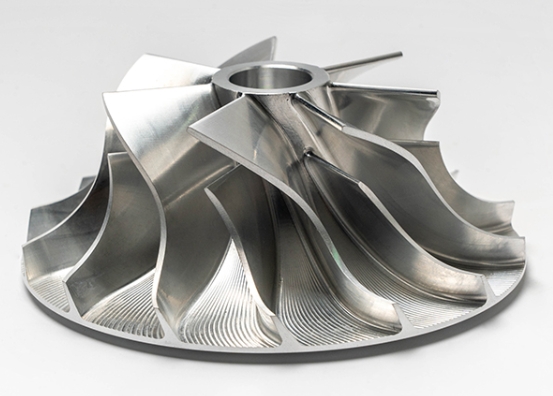
CNC machining mechanical parts is the undisputed backbone of modern manufacturing. This technology powers industries from automotive to aerospace by creating precise, durable components that keep our world moving. However, to unlock its full potential and avoid costly mistakes, you must follow strict safety protocols and prioritize quality at every turn.
Whether you are a procurement specialist or a product engineer, understanding the nuances of the machining cycle is vital. This guide breaks down the critical steps for successful CNC machining mechanical parts, from pre-machining checks to post-production quality control. We will explore real-world examples and data to help you solve common manufacturing challenges.
1. How to Prepare for a Flawless Machining Run?
Rushing into CNC machining mechanical parts without proper preparation is a recipe for disaster. Two key steps—equipment inspection and program simulation—ensure your process starts smoothly and stays on track.
1.1 Equipment Inspection and Preheating
Before turning on the spindle, a thorough inspection prevents unexpected breakdowns. Loose bolts on a worktable can cause vibration, leading to uneven cuts on a precision gear.
Check these items every morning:
- Fasteners: Ensure all bolts on the spindle and fixtures are tight.
- Coolant Systems: Verify fluid levels to prevent overheating.
- Foreign Objects: Clear metal chips or dust from the work area to avoid surface scratches.
For machines handling high-precision alloy steel parts, preheating is a must. Preheating reduces thermal expansion in the machine, improving dimensional accuracy by up to 15%. This is critical for parts like engine valves with tight tolerances.
Real-World Example: A shop once skipped preheating a CNC lathe before machining 45# steel shafts. The cold spindle caused inconsistent speeds. Consequently, 10 out of 50 shafts failed dimensional checks, costing $800 in wasted material.
1.2 Program Testing and Simulation
A single programming error can destroy a workpiece or damage the machine. Always test your CNC program before cutting expensive material.
- Simulation Software: Use tools like Mastercam to run a virtual test. The software flags collision risks, such as a tool hitting a fixture.
- Dry Run: After simulation, perform a run with no material in the machine. This lets you verify the tool path, speed, and direction in real time.
| Program Testing Step | Purpose | Error Rate Reduction |
| Simulation Software | Catch collision risks and path errors | 70% |
| Dry Run | Verify real-world tool movement | 40% |
| Post-Dry Run Check | Confirm final parameter settings | 30% |
2. Which Factors Drive Precision During Machining?
Once the preparation is complete, the focus shifts to the actual cutting. For CNC machining mechanical parts, precision relies on three pillars: clamping, tool selection, and parameter optimization.
2.1 Correct Clamping and Positioning
Poor clamping leads to workpiece movement, which ruins accuracy. You must choose a fixture that matches the part shape. For example, use a vice for flat plates and a 3-jaw chuck for cylindrical shafts.
Securing the workpiece is a delicate balance. You must tighten clamps enough to prevent movement, but not so much that the part deforms. Clamping an aluminum bracket with 50 N of force is often sufficient; 100 N might bend it permanently.
2.2 Strategic Tool Selection
The right tool ensures clean cuts and a long tool life. Match your tools to the material and the specific stage of machining.
| Tool Material | Best For | Machining Stage | Tool Life (Hours) |
| Carbide | Steel, Aluminum, Brass | Roughing | 50 – 150 |
| Diamond | Aluminum, Copper | Ultra-Precision | 200 – 300 |
| HSS | Plastics, Mild Steel | Low-Volume | 20 – 50 |
For roughing, use carbide tools for fast material removal. For finishing a hydraulic valve to a smooth Ra 0.8 μm, switch to diamond-coated tools. Regularly check for tool wear; replace tools when wear exceeds 0.1mm to avoid tool marks.
2.3 Machining Parameters Optimization
Parameters like cutting speed and feed rate directly impact your bottom line. Adjust these based on the material properties of your mechanical parts.
- Aluminum 6061: Speed 300-500 m/min | Feed 0.1-0.3 mm/rev
- Stainless Steel 304: Speed 100-200 m/min | Feed 0.05-0.15 mm/rev
- Titanium: Speed 50-100 m/min | Feed 0.02-0.1 mm/rev
Monitoring vibration is also key. If you notice wavy surfaces, your feed rate is likely too high. Reducing the feed rate by 10% can often stabilize the cut and improve the finish.
3. How to Maintain Safety and Quality?
Success in CNC machining mechanical parts is not just about the machine; it is about the environment and the inspection standards you uphold.
3.1 Safety and Workspace Management
A clean workspace reduces accidents. Organize your tools so a misplaced wrench does not accidentally hit the spindle.
- Ventilation: Use exhaust fans when machining cast iron or stainless steel to remove dust and fumes.
- PPE: Mandate safety glasses and earplugs. According to OSHA data, shops that strictly enforce Personal Protective Equipment (PPE) see 60% fewer injuries.
3.2 Rigorous Quality Control
Regular maintenance keeps machines accurate over time. Lubricate axes every two weeks to reduce friction. Furthermore, calibrate the machine monthly using a laser interferometer to check for axis movement errors.
When inspecting the finished workpiece:
- Dimensions: Use CMMs (Coordinate Measuring Machines) to verify the part matches the CAD model.
- Surface Finish: Use a profilometer to ensure the roughness meets design specs, such as Ra 1.6 μm for a bearing housing.
Case Study: A manufacturer of hydraulic cylinders performs monthly CMM checks. This ensures each inner diameter stays within ±0.01mm, preventing leaks in heavy construction machinery.
Yigu Technology’s Perspective
At Yigu Technology, we believe CNC machining mechanical parts is a perfect blend of precision and safety. Over the last 15 years, we have refined our process to deliver excellence. We use pre-machining simulations to cut errors by 70% and perform weekly machine calibrations.
Our team prioritizes safety above all else. Because we enforce a strict PPE policy, we have maintained a record of zero major accidents for five years. For our clients, this dedication translates to consistent quality and on-time delivery. To us, great machining is not just about producing parts; it is about building a foundation of trust.
FAQ
How long does it take to CNC machine a mechanical part?
It depends on the complexity. A small aluminum bracket might take 10–20 minutes. A large stainless steel engine block could take 2–4 hours. Batch size also plays a role, as machining 100 parts is faster per unit than making one prototype.
What is the most common mistake in CNC machining?
The most frequent error is skipping the dry run or simulation. This often leads to tool collisions or parameter errors that can damage the machine and waste expensive raw materials.
Can CNC machining handle custom mechanical parts?
Yes. CNC machines are highly flexible. As long as you have a CAD model, we can machine anything from a one-of-a-kind prototype gear to a small batch of specialized brackets.
Why is my surface finish rough even with a new tool?
This is usually caused by excessive vibration or improper coolant flow. Try reducing your feed rate or increasing the coolant pressure to flush out chips more effectively.
Which material is easiest to CNC machine?
Aluminum 6061 is generally considered the easiest to machine. it allows for high cutting speeds and produces a clean finish with minimal tool wear.
Discuss Your Projects with Yigu Rapid Prototyping
Are you looking for a partner who values precision as much as you do? At Yigu Rapid Prototyping, we specialize in high-quality CNC machining mechanical parts. Whether you need a single prototype or a production run of thousands, our engineers are ready to help you optimize your designs.
Would you like me to provide a free quote or a DFM (Design for Manufacturing) analysis for your next mechanical part project?