
Introduction
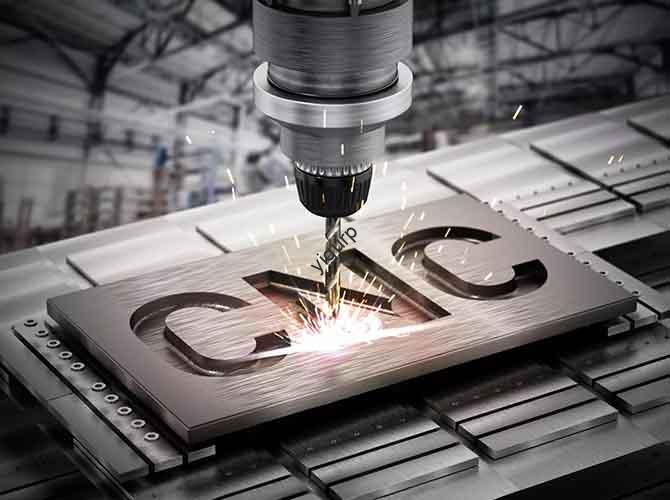
In the fast-paced world of automotive manufacturing, CNC machining for car parts has become the backbone of quality production. Every day, millions of vehicle components roll off production lines, from simple brackets to complex engine blocks. But what makes CNC machined automotive components so special? Simply put, it’s the perfect blend of computer precision and human ingenuity. This guide walks you through how car parts machining works, why it matters for your projects, and what the future holds for this essential technology. Whether you’re designing a prototype or scaling up production, you’ll find practical insights here.
What Makes CNC Machining Different for Car Parts?
The Basic Idea Behind CNC
Think of CNC machining as a robot that follows perfect instructions. Unlike manual machining where a person turns the handles, CNC automotive manufacturing uses computer code to guide cutting tools with incredible accuracy. The machine reads G-code—a special programming language—and turns it into precise cuts, drills, and shapes.
For automotive CNC applications, this means parts come out exactly the same, every single time. A brake caliper made on Monday matches one made on Friday. That consistency matters when human lives depend on these parts working correctly.
Why Automotive Engineers Love It
Car makers face tough challenges. Parts must fit perfectly, withstand extreme conditions, and keep getting better. CNC precision engineering solves these problems by offering:
- Tight tolerances: Most car parts need accuracy within ±0.001 inches. That’s thinner than a human hair.
- Repeatability: Run 10,000 parts, and the last one matches the first.
- Material flexibility: Cut aluminum, steel, titanium, or plastics on the same machine.
According to the Association for Manufacturing Technology, more than 75% of precision car parts worldwide come from CNC machining operations. That number keeps growing as technology improves.
How CNC Changed Car Making Forever
The Old Way vs. Today’s Approach
Before computers took over, car parts production was slow and unpredictable. A skilled machinist might spend 8 to 10 hours making one engine crankshaft by hand. Even then, about 5 to 7 percent of parts had defects. Good machinists were hard to find, and training them took years.
Then came the CNC revolution in the 1980s. Companies like Ford Motor Company saw the future early. In the 1990s, Ford invested $2 billion in CNC machining centers across their engine plants. The results changed everything:
- Crankshaft production dropped from hours to 45 minutes
- Defect rates fell to just 0.2 percent
- Production capacity jumped by 300 percent
This investment helped Ford launch the Taurus with a more reliable V6 engine. Within two years, their market share grew by 15 percent. Today, nearly every top automotive supplier uses CNC machining as their main production method.
What This Means for Supply Chains
The shift to CNC automotive parts touched every part of the business. Material suppliers now create alloys optimized for CNC cutting. Logistics teams keep less inventory because production happens faster. Aftermarket parts last longer, so replacement demand drops. Everyone in the chain had to adapt.
Where CNC Machining Shines in Cars
Engine Parts: Where Precision Matters Most
The engine is the heart of any vehicle, and engine component CNC machining demands the highest accuracy. Parts inside your motor face extreme heat, high pressure, and constant motion. Here’s how CNC machine tools handle these challenges:
| Component | CNC Process | Tolerance Needed | Common Material |
|---|---|---|---|
| Cylinder Heads | Milling & Drilling | ±0.0005 inches (valve seats) | Aluminum 6061-T6 |
| Crankshafts | Turning & Grinding | ±0.001 inches | Steel 4140 |
| Pistons | Lathe & Broaching | ±0.002 inches | Cast Aluminum A380 |
| Camshafts | Profile Grinding | ±0.0008 inches | Chilled Iron |
Toyota’s hybrid engines show what’s possible with modern equipment. They use 5-axis CNC mills to machine cylinder heads for the Prius. The extra axes let them cut complex shapes for the variable valve timing system. This precision improves fuel efficiency by 8 percent compared to older methods. Less friction between parts also means the engine lasts 20 percent longer.
Body Parts: Looks and Safety Combined
When you see a car with perfect panel gaps or stylish trim, CNC body panel manufacturing probably made it possible. Tesla’s Model 3 uses CNC plasma-cut frames with thickness held to ±0.003 inches. This uniformity helps the car perform better in crash tests.
Smaller parts matter too. CNC machined door handles and trim pieces fit flush against body panels. No gaps, no rattles, just clean assembly that customers notice.
Chassis Components: Keeping You Safe
The chassis connects your car to the road. Suspension CNC parts, brake components, and axles all need CNC precision to work right. Take brake calipers from Brembo, a leader in high-performance brakes. They machine caliper bores to ±0.0008 inches. This tight control ensures proper brake fluid flow and reduces stopping distances by 5 percent compared to conventionally made parts.
Custom Parts for Enthusiasts
Car culture loves unique parts. Custom CNC car parts let owners personalize their rides without sacrificing quality. A shop in California makes racing exhaust manifolds for Corvettes using 4-axis CNC mills. By programming designs based on each customer’s engine specs, they cut backpressure by 12 percent and add 15 percent more horsepower. They produce 50 custom units weekly with just 3 days lead time. Try doing that with manual tools.
Good and Bad: A Balanced Look
What CNC Does Best
Let’s stack CNC machining against old-school manual work:
| Feature | CNC Machining | Manual Machining |
|---|---|---|
| Precision | ±0.0001 to ±0.001 inches | ±0.005 to ±0.01 inches |
| Consistency | 99.8% defect-free at volume | 5-7% typical defect rate |
| Speed | 2-10x faster for complex parts | Slow, skill-dependent |
| Labor Needs | One person runs 3-5 machines | One person per machine |
| Changeover | Quick programming updates | Hours of tool changes |
CNC also handles many materials well—aluminum, steel, titanium, plastics—and makes shapes impossible to create manually, like internal cooling passages in turbochargers.
Where It Falls Short
Nothing’s perfect. CNC machining limitations include:
High startup costs. A basic 3-axis mill runs $50,000. Advanced 5-axis machines needed for complex parts can top $500,000. Small shops sometimes can’t afford their own equipment and must hire contract manufacturers.
Talent shortage. Programming these machines takes real skill. The U.S. Bureau of Labor Statistics predicts a shortage of 600,000 skilled CNC operators by 2030. This could slow adoption of new technology.
Material waste. Since CNC is subtractive—cutting away material—you lose 15 to 30 percent of your raw stock. For expensive materials like titanium in racing parts, that waste hurts profits.
Small batches cost more. Making just 1 to 5 parts? Setup and programming might take 2 to 4 hours. For tiny runs, 3D printing can be cheaper, though less precise.
Prototypes vs. Production: Different Goals
Making the First Part Right
Engineers love CNC prototyping because it uses the same materials and processes as final production. A prototype piston machined from actual aluminum alloy behaves just like the production version in testing. No surprises when you scale up.
Testing suspension brackets? Machine a few sets quickly, bolt them on, and see how the car handles. CNC prototypes cut time-to-market by 30 percent compared to older methods that needed custom tooling for every test part.
Running at Full Speed
For volume production—think 10,000-plus units—CNC machining dominates. Engine valves, transmission gears, brake rotors—these pour off CNC production lines by the millions. Modern shops add automation like robotic part loaders. Some achieve 95 percent machine utilization, meaning equipment runs almost constantly.
CNC vs. 3D Printing: Which Wins?
People often ask how CNC subtractive manufacturing compares to additive 3D printing. Both have their place in automotive part production:
| Factor | CNC Machining | 3D Printing |
|---|---|---|
| Process | Cuts material away | Builds layer by layer |
| Accuracy | Higher: ±0.0001 inches | Lower: ±0.005 inches typical |
| Materials | Wide choice: metals, plastics, composites | Limited; metal printing costly |
| Volume Speed | Fast for high volume | Slow; not for mass production |
| Waste | 15-30% material loss | 5-10% waste |
| Small Batch Cost | Higher due to setup | Lower, no setup |
| Best Use | Precision parts at scale | Complex prototypes, one-offs |
Smart manufacturers use both. BMW prototypes i8 engine parts with 3D printing, then switches to CNC for production. Best of both worlds.
What’s Coming Next in CNC Car Parts
Smarter Machines with AI
Artificial intelligence is making CNC systems smarter. AI-powered CNC can predict when tools will wear out and schedule maintenance beforehand. McKinsey reports this cuts downtime by 25 percent. The machines also optimize cutting speeds on the fly.
Fanuc’s AI-enabled mills use machine learning to adjust feed rates and spindle speeds. They’ve improved machining efficiency by 18 percent in real-world tests.
Connected Factories
Industrial IoT connects CNC equipment to the cloud. Managers anywhere can check production metrics—cycle times, defect rates, machine status. A 2024 Deloitte study found that IIoT-integrated CNC cuts production costs by 12 percent for automotive suppliers.
EV Parts Need New Approaches
Electric vehicles demand different components. EV battery housing machining requires big 5-axis machines to create complex shapes. Electric motor parts need extreme precision—stators with tolerances down to ±0.0005 inches. Lightweight materials like carbon fiber composites are becoming common, and CNC technology is adapting to cut them cleanly.
Going Greener
Sustainability matters more every year. Eco-friendly CNC machining practices include:
- Using recycled materials where possible
- Optimizing cuts to use 20 percent less energy
- Closed-loop coolant systems that reuse fluids
Volkswagen’s CNC facilities now use 30 percent less water thanks to closed-loop coolant recycling.
Conclusion
CNC machining for car parts has come a long way from the manual lathes of the past. Today’s automotive CNC manufacturing delivers unmatched precision, consistency, and flexibility. From engine blocks to custom racing parts, this technology makes modern vehicles safer, more efficient, and more reliable.
The future looks even brighter. AI integration, IoT connectivity, and sustainable practices will make CNC automotive components better than ever. As the industry shifts toward electric vehicles, CNC precision engineering will adapt to handle new materials and complex geometries.
Whether you’re developing a prototype or planning mass production, understanding car parts machining options helps you make smarter decisions. The right process saves time, money, and headaches down the road.
Frequently Asked Questions
Q: How long does CNC car parts machining usually take?
A: Lead time depends on your batch size. Small prototype runs of 1 to 10 parts typically take 3 to 7 days. Large production orders of 10,000-plus units need 2 to 4 weeks including setup. Need something fast? Rush orders for small batches can ship in 1 to 2 days with expedited programming.
Q: What materials work best for CNC automotive parts?
A: Most common are aluminum alloys (6061-T6, A380) for engine and body parts, high-strength steel (4140, 1045) for chassis and brakes, and plastics (ABS, nylon) for interior trim. High-performance and EV applications increasingly use titanium and carbon fiber composites.
Q: How does CNC machining maintain quality?
A: Quality comes from multiple layers: pre-programmed precision with tight tolerances, real-time monitoring through AI systems, regular tool calibration, and post-machining inspection with equipment like CMM (Coordinate Measuring Machines). Most shops follow ISO 9001 and IATF 16949 standards.
Q: Is CNC cost-effective for small production runs?
A: For batches under 50 units, 3D printing often costs less due to lower setup expenses. However, if your parts need high precision or specific material properties, CNC machining remains the better choice despite higher initial cost. Once you exceed 50 units, CNC becomes increasingly cost-effective as setup costs spread across more parts.
Q: How will electric vehicles affect CNC machining needs?
A: EVs create demand for new capabilities: machining battery housings, creating electric motor components, and working with lightweight chassis materials. CNC will need to handle carbon fiber and complex geometries while improving sustainability. AI and IoT integration will help meet the tighter precision demands of EV manufacturing.
Discuss Your Projects with Yigu Rapid Prototyping
Need help with CNC machined car parts? At Yigu Technology, we’ve spent over a decade solving automotive manufacturing challenges for Tier 1 suppliers and EV startups. Our team combines deep CNC expertise with practical experience across materials and processes.
We understand that every project is different. Maybe you need rapid prototypes to test a new design. Perhaps you’re ready for high-volume production of a proven part. Or you might be exploring custom components for a specialty vehicle. Whatever your goal, we’ll help you find the right path.
Our engineers specialize in custom CNC solutions that balance precision, cost, and speed. We stay current with emerging trends—AI integration, sustainable practices, EV-specific requirements—so your parts benefit from the latest advances.
Let’s talk about your project. Share your drawings, your goals, your timeline. We’ll show you how Yigu’s CNC capabilities can bring your ideas to life with quality you can count on.