
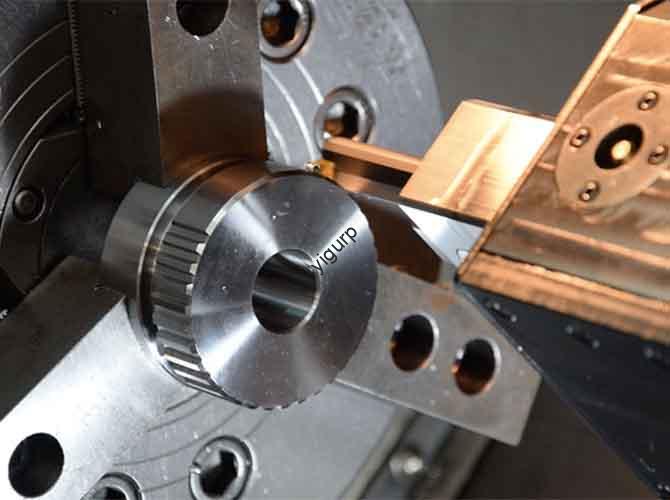
Introduction
If you’re searching for reliable, high-precision CNC machining services in Europe, Austria stands out as a top choice. But you’re probably wondering: Can Austrian machine shops deliver the quality, precision, and compliance that demanding industries like aerospace, medical, and automotive require—while keeping lead times competitive?
Here’s the straightforward answer: Austria’s CNC machining sector combines centuries of engineering heritage, strict quality certifications, and advanced technological infrastructure to serve global industries at the highest level. With over 90% of firms holding ISO 9001 certification, and many meeting specialized standards like AS9100 (aerospace) and ISO 13485 (medical), Austrian manufacturers don’t just meet expectations—they set them .
The country’s central European location offers logistical advantages, with most shops shipping prototypes within 3-5 business days and mass-produced orders within 2-3 weeks to clients across the continent . Whether you’re a business looking to outsource parts production or a manufacturer seeking local partners, this guide breaks down everything you need to know.
Why Austria Excels in CNC Machining
Engineering Heritage and Industrial Ecosystem
Austria’s manufacturing ecosystem has deep roots. For decades, companies like Bosch Rexroth, Voestalpine, and Andritz have driven demand for high-precision components, pushing local CNC shops to adopt the latest technologies. This creates a virtuous cycle: large OEMs set high standards, and smaller specialized shops rise to meet them .
Quality Certifications Are Non-Negotiable
| Certification | Industry | Prevalence in Austria |
|---|---|---|
| ISO 9001 | General manufacturing | Over 90% of firms |
| AS9100 | Aerospace | Widespread in specialized shops |
| ISO 13485 | Medical devices | Common in Vienna/Lower Austria |
| IATF 16949 | Automotive | Standard in Upper Austria |
Real example: HTI Technik (Linz) specializes in medical device components using 5-axis CNC mills for complex surgical instruments. Their ISO 13485 certification and regular audits by the Austrian Standards Institute (ASI) have made them a trusted partner for global medical brands like Johnson & Johnson .
Strategic Location
Centrally located in Europe, Austria offers easy access to major markets:
- Germany: Direct border to the north
- Italy: Just south via the Brenner Pass
- Switzerland: Western neighbor
- Eastern Europe: Short shipping distances
This means faster lead times and lower shipping costs for clients across the continent.
What CNC Machining Capabilities Do Austrian Shops Offer?
Multi-Axis Machining
The most in-demand capability is 5-axis CNC machining, which allows simultaneous cutting from five different angles—essential for parts with intricate geometries like aerospace components or medical implants.
Adoption rate: Over 65% of medium to large Austrian firms have at least one 5-axis mill or lathe (Austrian Federal Economic Chamber/WKO 2024) .
Case study: Precision Parts GmbH (Vienna) used a 5-axis mill to produce a custom aluminum bracket for an aerospace client requiring ±0.005 mm tolerances and complex contours. Compared to traditional 3-axis methods, 5-axis machining reduced production time from 8 hours to 2 hours while maintaining 100% quality compliance .
Material Expertise
Austrian CNC machinists work with a comprehensive range of materials:
| Material Category | Examples | Key Applications |
|---|---|---|
| Metals | Aluminum, steel (including stainless), titanium, brass | Automotive, aerospace, medical |
| Plastics | PEEK, nylon, polycarbonate | Medical, automotive, electronics |
| Specialty | Inconel, ceramic composites | High-temperature aerospace, industrial machinery |
Advantage: Proximity to metal suppliers like Voestalpine (one of Europe’s largest steel producers) ensures access to high-quality raw materials at competitive prices .
Example: MTM Machining (Salzburg) specializes in titanium components for the medical industry. Using specialized cutting tools and coolants to prevent material warping (titanium is strong but heat-sensitive), they produce spinal implants requiring biocompatible materials and precise surface finishes .
Additive Manufacturing Integration
Many Austrian CNC shops now combine CNC machining with 3D printing to create hybrid parts—particularly useful for prototyping.
Adoption rate: 40% of Austrian CNC firms offered hybrid manufacturing services in 2024, up from 25% in 2020 (WKO) .
Process: 3D printing creates a rough part, which is then refined via CNC machining for a precise finish.
Example: Hybrid Tech Solutions (Graz) used this approach for an automotive client: 3D-printed a plastic prototype of a sensor housing, then used CNC milling to add threaded holes and smooth the exterior. The process cut prototyping time by 50% compared to traditional CNC-only methods .
Where Are Austria’s CNC Machining Hotspots?
| Region | Key Industries | Notable Cities | Strengths |
|---|---|---|---|
| Upper Austria | Automotive, Industrial Machinery | Linz, Wels | Proximity to automotive suppliers (Bosch Rexroth in Linz); large-scale production capabilities |
| Vienna & Lower Austria | Medical Devices, Aerospace | Vienna, St. Pölten | High concentration of ISO 13485/AS9100 certified shops; access to research institutions |
| Salzburg & Tyrol | Precision Engineering, Electronics | Salzburg, Innsbruck | Specialization in small-batch, high-precision parts; focus on electronics components |
Regional spotlight: Upper Austria’s Linz is often called the “Automotive CNC Hub.” With over 30 CNC shops dedicated to automotive parts, it’s a go-to for companies like Volkswagen and BMW. One shop, AutoPart CNC, produces engine components for VW’s electric vehicles using automated CNC lathes—10,000+ parts per day with a defect rate of less than 0.1% .
How to Choose a CNC Machining Partner in Austria
Step 1: Verify Certifications
Don’t just ask—verify current certifications relevant to your industry:
- Automotive: IATF 16949
- Aerospace: AS9100
- Medical: ISO 13485
- General: ISO 9001
Ask for copies or links to public registries (like the ASI’s database for ISO certifications).
Step 2: Evaluate Technological Capabilities
Ask about:
- Machine types: Do they have 5-axis machines for complex parts?
- Software compatibility: CAD/CAM (SolidWorks, Mastercam) compatible with your files?
- Material experience: Have they worked with your required material (titanium, PEEK, Inconel)?
A shop without experience with high-temperature alloys may struggle to meet tolerances for Inconel parts.
Step 3: Check References and Case Studies
Reputable shops will share:
- Client references in your industry
- Case studies of similar projects
- Reviews on Google or industry forums
Example: Linz CNC Works has 4.9/5 stars on Google, with clients praising “attention to detail” and “fast turnaround.”
Step 4: Discuss Lead Times and Pricing
| Order Type | Typical Lead Time |
|---|---|
| Simple prototype | 3-7 business days |
| Complex 5-axis prototype | 1-2 weeks |
| Mass production (<10,000 parts) | 2-4 weeks |
Pricing examples:
- Simple aluminum bracket (100 pieces): €5–€10 per part
- Complex titanium medical implant (10 pieces): €50–€100 per part
Get a detailed quote including materials, labor, and shipping.
Step 5: Visit the Shop (If Possible)
For high-stakes projects (aerospace, medical), consider visiting in person. See facilities, meet the team, assess quality control processes. Many Austrian shops welcome client visits.
What Trends Are Shaping Austrian CNC Machining?
Automation and Industry 4.0
Austrian CNC shops are investing heavily in Industry 4.0 technologies:
- Automated guided vehicles (AGVs) : Move raw materials and finished parts between machines
- IoT sensors: Monitor performance and predict maintenance needs—reducing downtime by 20-30%
- Robotic arms: Load/unload parts for 24/7 production
Example: Vienna Precision Machining uses IoT sensors on 5-axis mills to track cutting tool wear. The system alerts operators when tools need replacement, preventing defects and reducing tool costs by 15% .
Sustainability Focus
Sustainability is a top priority for Austrian manufacturers:
- Metal chip recycling: Shops work with local firms to repurpose aluminum/steel chips
- Energy-efficient machines: New CNC mills use 30% less energy than 10-year-old models
- Water-based coolants: Replacing oil-based versions, reducing environmental impact
Government support: The Climate and Energy Fund provides grants covering up to 30% of costs for sustainable technology investments .
Customization for Niche Markets
As global demand shifts, Austrian shops focus on specialized applications:
- E-mobility: EV battery and motor components (copper busbars, aluminum heat sinks)
- Renewable energy: Wind turbine gearbox parts, solar panel frames
- Medical: Patient-specific implants and surgical instruments
Case study: Salzburg Renewable Tech specializes in wind turbine components, using 5-axis machining to produce gearbox housings that withstand extreme weather. Clients include Siemens Gamesa .
Conclusion
CNC machining in Austria offers a compelling combination of engineering excellence, strict quality standards, and strategic location that’s hard to beat for demanding European industries.
Key takeaways:
- Over 90% of firms hold ISO 9001; many meet AS9100, ISO 13485, IATF 16949
- 5-axis machining is standard—65%+ of medium/large firms have invested
- Material expertise spans metals, plastics, and specialty alloys
- Regional specialization helps match suppliers to your industry
- Lead times: 3-7 days for prototypes; 2-4 weeks for production
- Hybrid manufacturing: 40% of shops combine CNC with 3D printing
- Sustainability focus: Energy-efficient machines, recycling, eco-friendly coolants
- Industry 4.0 adoption: IoT, automation, predictive maintenance
For manufacturers who prioritize quality, precision, and regulatory compliance over lowest-cost sourcing, Austrian CNC machining represents a world-class option.
FAQ About CNC Machining Austria
What industries do Austrian CNC shops serve most?
Primarily automotive, aerospace, medical devices, industrial machinery, and renewable energy. The country’s specialization in high-precision parts makes it ideal for regulated industries.
Can Austrian CNC shops handle international orders?
Yes. Most ship globally with experience in customs documentation. They partner with logistics providers like DHL or FedEx for reliable delivery.
What tolerances can Austrian CNC shops achieve?
Standard parts: ±0.01 mm common. Complex 5-axis parts (medical implants): ±0.005 mm achievable with advanced machines and skilled operators.
Are Austrian CNC services more expensive than other European countries?
Pricing is competitive with Western Europe (Germany, Switzerland). Higher than Eastern Europe, but quality, certifications, and shorter lead times justify the cost for high-stakes projects.
How do I ensure my CNC parts meet quality standards?
Choose shops with relevant certifications, request pre-production samples, and ask for quality reports (dimensional inspections via CMM machines). Many offer real-time updates via IoT tools.
What materials do Austrian shops work with?
- Metals: Aluminum, steel (including stainless), titanium, brass
- Plastics: PEEK, nylon, polycarbonate
- Specialty: Inconel, ceramic composites
How long does CNC machining take in Austria?
Prototypes: 3-7 days (simple) to 1-2 weeks (complex 5-axis). Production: 2-4 weeks for orders under 10,000 parts.
Discuss Your Projects with Yigu Rapid Prototyping
Navigating Austrian CNC machining requires understanding regional specializations, certification requirements, and supplier capabilities. At Yigu Rapid Prototyping, we’ve helped clients across aerospace, medical, and industrial sectors identify and vet Austrian partners that match their specific needs.
Whether you need AS9100-certified aerospace components, ISO 13485 medical parts, or high-volume automotive production, we can connect you with vetted Austrian CNC shops that deliver precision, quality, and European engineering excellence.
Let’s talk about your project. We’ll provide a free assessment and help you determine whether Austrian CNC machining makes sense for your timeline, budget, and quality requirements.