
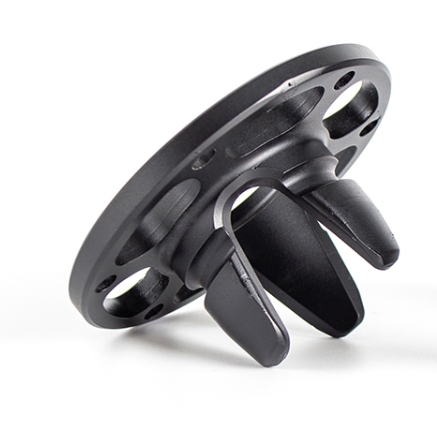
In the fast-moving world of product development, speed and precision are everything. Whether you are building the next hit consumer gadget or a rugged automotive component, you need a prototype that looks, feels, and performs like the real thing. CNC machining ABS prototype modeling has become the go-to solution for engineers who refuse to compromise on quality.
ABS (Acrylonitrile Butadiene Styrene) is a “workhorse” plastic. It is tough, affordable, and incredibly easy to machine. When combined with the high accuracy of CNC technology, it allows you to move from a digital sketch to a physical part in just a few days. This guide will walk you through the entire process, helping you avoid common mistakes while maximizing your development budget.
Why Choose CNC Machining for ABS?
Before we dive into the “how,” let’s look at the “why.” Engineers choose ABS because it balances cost and performance better than almost any other plastic.
The Strength of ABS Plastic
ABS is famous for its impact resistance. If you drop an ABS prototype from a height of one meter, it likely won’t crack. This makes it perfect for testing parts like phone cases, remote controls, or power tool housings. It is also 30–50% cheaper than high-end plastics like Polycarbonate (PC).
CNC vs. 3D Printing for ABS
While 3D printing is popular, it often falls short for professional prototypes. CNC machining provides a far superior surface finish and much tighter tolerances.
| Feature | CNC Machining ABS | 3D Printing (FDM) |
| Precision | ±0.005–0.01mm (Tight fits) | ±0.1–0.3mm (Loose fits) |
| Surface Quality | Ra 0.4–1.6μm (Smooth) | Ra 3.0–5.0μm (Rough) |
| Strength | Solid, molded-like strength | Layered, prone to splitting |
| Lead Time | 3–5 days for 10 parts | 5–7 days (Slow printing) |
Real-World Case: A startup recently needed a housing for a wireless speaker. Their 3D-printed version was too rough, which distorted the sound. They switched to CNC machining ABS, achieving a smooth Ra 0.8μm finish. This improved the sound quality and ensured the internal circuit board fit perfectly. They finished three design cycles in just 10 days.
How Does the Modeling Process Work?
Success in CNC machining ABS prototype modeling follows a strict, seven-stage workflow. Each step builds on the last.
1. Design and Smart Programming
Every great prototype starts in a digital environment. Using software like SolidWorks or Fusion 360, you create your 3D model.
- Wall Thickness: Keep walls between 1.5mm and 3mm. ABS can warp if walls are too thick or crack if they are too thin.
- Draft Angles: Add a 1–2° angle to vertical walls. This makes it much easier to remove the part from the machine and prevents stress marks.
Once the design is ready, you generate the G-code. This is the language the machine speaks. For ABS, we set the spindle speed between 3,000 and 5,000 RPM. If you go faster, the plastic might melt (ABS melts around 105–115°C).
2. Machine and Material Selection
Not all CNC machines are the same. Your choice depends on how complex your part is:
- 3-Axis: Best for flat parts like a battery cover.
- 4-Axis: Ideal for parts with round features or side holes.
- 5-Axis: Used for complex, curved parts like drone frames. It finishes the part in one setup, which keeps accuracy very high.
For the material, we typically use ABS 757 for general use. If you are building parts for a car engine or an electric tool, you should choose ABS 94V0, which is flame-retardant.
3. Rough Machining for Speed
This stage is all about “bulk removal.” We use a large 12mm end mill to carve out the general shape of the prototype. We set a fast feed rate of 150–200 mm/min. This gets the job done quickly without letting heat build up in the plastic.
4. Finishing for High Precision
Now we switch to smaller tools, sometimes as thin as 2mm. We slow the feed rate down to 80–120 mm/min. This is where we reach those tight ±0.005mm tolerances. This step ensures that buttons click correctly and lids snap shut with a satisfying “pop.”
5. Post-Treatment and Polishing
Even the best CNC machine leaves tiny tool marks. Post-processing turns a “test part” into a “presentation part.”
- Sanding: We start with 400-grit and move up to 800-grit for a matte finish.
- Cleaning: We use 70% isopropyl alcohol. Never use acetone, as it will melt the ABS surface.
- Painting: If you need a specific color, we apply thin coats of ABS-specific spray paint.
6. Rigorous Quality Inspection
We verify every dimension using digital calipers or a Coordinate Measuring Machine (CMM). We also perform a Fit Test. If the prototype is meant to hold a battery or a screen, we snap those parts in to ensure the alignment is 100% correct.
7. Final Delivery and Protection
ABS is tough, but it can scratch. We wrap every part in anti-static bubble wrap and ship them in rigid boxes with foam inserts. For urgent projects, we use DHL or FedEx to ensure 2-day delivery.
Expert Insights from Yigu Technology
At Yigu Technology, we have delivered over 6,000 ABS prototypes for clients in the automotive and electronics sectors. We see ABS as the “hero” material for early-stage testing. Its machinability allows us to deliver parts in as little as 3 days.
Our pro tip for engineers: Think about the assembly. We often use 5-axis CNC machines for complex ABS parts, which reduces the need for multiple setups. This cuts down on human error and reduces rework by 35%. For procurement teams, we offer full material certificates and RoHS compliance, so you know exactly what you are getting.
FAQ
How much does a CNC ABS prototype cost?
A simple part like a phone case usually costs between $30 and $60. A large, complex automotive bracket can cost $150 to $300. If you order more than 10 parts, we usually offer a 15% discount.
Can I use these for low-volume production?
Yes! CNC is much cheaper than making an injection mold (which can cost $5,000+). Many of our clients order 50 to 100 parts for beta testing using this method.
How long does the whole process take?
Typically, you will have your part in 3 to 7 days. Simple parts take about 3 days, while complex 5-axis parts take closer to a week. We do offer rush orders if you have a tight deadline.
Does ABS come in different colors?
Most raw ABS is black, white, or beige. However, we can paint or silk-screen the parts to match any Pantone color you require.
Will the prototype be as strong as an injection-molded part?
It is very close! Because we machine from a solid block of ABS, the part is much stronger than a 3D-printed one and nearly identical in strength to a molded part.
Discuss Your Projects with Yigu Rapid Prototyping
Are you ready to turn your design into a high-precision prototype? At Yigu Rapid Prototyping, we specialize in CNC machining ABS prototype modeling that helps you move faster. Our team of experts is ready to review your CAD files and provide a transparent quote within 24 hours. We pride ourselves on precision, speed, and helping you avoid the common pitfalls of product development.
Would you like me to provide a free DFM (Design for Manufacturing) review of your current ABS part design?