
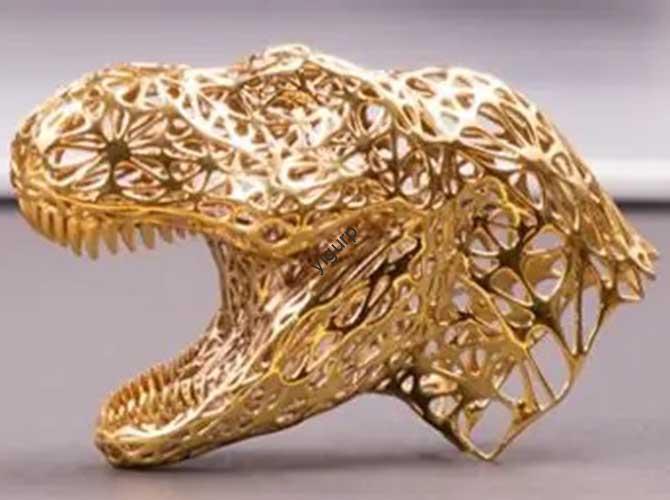
3D printing, also called additive manufacturing, is more than a new way to make things. It’s a technology that’s changing how U.S. businesses—from small startups in garages to big aerospace firms—create products. Unlike traditional methods like CNC machining or injection molding, 3D printing has unique traits that solve problems old methods can’t. This article breaks down 7 core characteristics of 3D printing. It explains how each works, uses real U.S.-based examples, and shows why they matter for innovators, business owners, and hobbyists alike. By the end, you’ll understand exactly what sets 3D printing apart and how it can benefit your work.
No Tooling Needed? Here’s Why It Matters
Traditional manufacturing in the U.S. relies on custom tools, molds, or dies. These tools cost money and take time to make. 3D printing cuts out this step entirely—and that’s a big win for businesses of all sizes.
How Does It Work?
3D printers build parts layer by layer from digital CAD models. You don’t need molds, drills, or cutting tools. Just upload a design file, and the printer does the rest.
This saves two critical resources: time and money. U.S. small businesses often struggle with tight budgets and fast deadlines. Cutting tooling out removes a major barrier to entry.
Traditional vs. 3D Printing: Tooling Breakdown
| Factor | Traditional Manufacturing | 3D Printing |
|---|---|---|
| Tooling Requirement | Mandatory (molds, drills, dies) | None |
| Setup Time | 1–4 weeks (to make tools) | 1–2 hours (to upload files) |
| Upfront Cost | $1,000–$10,000+ (for tooling) | $0 (no tooling fees) |
U.S. Business Example
A small electronics startup in Austin, Texas, wanted to test 5 phone case designs. With injection molding, they faced 5 separate molds costing $5,000 total. They also waited 3 weeks for setup.
Using 3D printing, they uploaded 5 CAD files and started printing prototypes the same day. They saved $5,000 and 20 days. This let them test designs faster and launch their product ahead of competitors. For U.S. startups, this tooling-free advantage can mean the difference between success and failure.
Does Complexity Raise 3D Printing Costs?
In traditional U.S. manufacturing, complex parts cost more. They need more tools, labor, and time. 3D printing flips this rule: complexity is free. This changes what’s possible for industries like aerospace and medical devices.
Why No Extra Cost for Complexity?
3D printers build parts layer by layer. Intricate details—like hollow cavities or tiny channels—are part of the process. No extra work means no extra cost.
A part with 10 internal channels costs the same as a simple block. This is a game-changer for U.S. engineers who need complex, precise parts.
Aerospace Case Study (U.S.-Based)
An aerospace engineer in Seattle, Washington, needed a fuel injector. It had 20 tiny nozzles, each 0.5mm wide, to optimize fuel flow. With CNC machining, this took 40 hours of labor and cost $5,000.
The CNC process needed 5 different drill bits for the tiny nozzles. Using 3D printing, the same part printed in 8 hours for $800. It also had perfect precision.
For U.S. aerospace companies like Boeing, this complexity advantage cuts costs and improves performance. It also lets engineers design parts that were impossible before.
Can 3D Printers Switch Designs Easily?
Traditional U.S. factories are built for mass production of one item. Switching designs means retooling, retraining workers, and spending thousands. 3D printers switch designs in minutes—no extra cost.
How to Switch Designs Fast
A single 3D printer can print a phone case in the morning. It can print a toy car in the afternoon. It can print a replacement hinge in the evening. Just upload a new CAD file—no tool changes needed.
This flexibility is perfect for U.S. businesses that need to adapt quickly to customer demands.
Key Benefits for U.S. Businesses
- Test more ideas: No need to commit to one design upfront. Print multiple versions and see what sells.
- Customize easily: Make unique products for each customer without extra cost.
- Reduce inventory: Print parts on demand instead of stockpiling hundreds of items.
Furniture Brand Example
A small furniture brand in Asheville, North Carolina, offers custom chair legs: round, square, or curved. With traditional woodworking, they needed 3 different cutting tools costing $1,500 total.
With 3D printing, they just upload 3 CAD files. No extra tools, no extra cost. Customers get custom chairs, and the brand saves money. This design flexibility helps U.S. small businesses stand out in a crowded market.
Do 3D-Printed Parts Need Assembly?
Traditional manufacturing makes parts separately, then assembles them. This adds time, labor, and risk. 3D printing uses integrated molding—creating entire objects as one piece. No assembly needed.
What Integrated Molding Means
Fewer parts mean fewer problems. A 3D-printed bicycle frame has no welds or bolts. It’s one solid piece.
Integrated parts are 30–50% stronger. Welds and bolts are weak points. 3D printing removes these weak spots entirely.
Medical Example (U.S. Hospital)
A hospital in Boston, Massachusetts, needed custom hip implants for patients. Traditional implants have 3 separate parts: stem, head, and cup. These need assembly.
3D-printed implants are one piece. They fit better and last longer. This reduces follow-up surgeries for patients.
For the hospital, this cuts costs. For patients, it means faster recovery. This no-assembly trait is saving lives and money in U.S. healthcare.
Is Personalized 3D Printing Easy?
Traditional manufacturing is great for one-size-fits-all items. But it’s terrible for personalized products. 3D printing excels at personalization—thanks to easy digital design edits.
How to Personalize 3D Prints
Edit designs in minutes. Want a phone case with a customer’s name? Change the CAD file in 5 minutes and print it.
Match unique needs. A 3D-printed prosthetic hand can fit a child’s small wrist. It can have finger lengths that match their remaining hand.
U.S. School Example
A elementary school in Denver, Colorado, wanted custom math manipulatives. These are shapes with students’ names to help kids learn geometry.
Traditional manufacturers quoted $500 for 30 manipulatives. With 3D printing, teachers edited a basic shape file. They added each student’s name and printed 30 unique pieces in a day. Total cost: $50.
This personalization ease makes 3D printing perfect for U.S. schools, small businesses, and anyone who needs unique products.
What Materials Work for 3D Printing?
Many people think 3D printers only use plastic. But they can use metals, ceramics, wood, resin, and even biological materials. This material diversity lets 3D printing work in almost every U.S. industry.
Common 3D Printing Materials (U.S. Uses)
| Material | Key Traits | Ideal U.S. Uses |
|---|---|---|
| PLA (Plastic) | Cheap, easy to print | Hobby projects, prototypes (U.S. makerspaces) |
| Titanium | Strong, lightweight, biocompatible | Medical implants, aerospace parts (NASA, U.S. hospitals) |
| Resin | Smooth, high-detail | Jewelry (U.S. artisans), dental models |
| Ceramic | Heat-resistant, durable | Engine parts (U.S. auto makers), kitchenware |
| Wood Fiber | Natural look, eco-friendly | Furniture, decor (U.S. home goods brands) |
NASA 3D Printing Example
NASA, based in Houston, Texas, uses 3D printing for rocket parts. They use titanium because it’s strong and lightweight. This cuts rocket fuel use.
Traditional titanium machining is expensive. 3D printing lets NASA make complex titanium parts for 40% less cost. This helps them send more missions to space—on a tighter budget.
This material diversity is why 3D printing is used in every corner of the U.S. economy, from space to home kitchens.
Is 3D Printing Simple and Accurate?
Traditional manufacturing has dozens of steps. 3D printing simplifies this to 4 easy steps. It still delivers high accuracy—critical for U.S. industries like medical and automotive.
3D Printing Steps (Simplified)
- Create or edit a digital CAD model.
- Slice the model (software breaks it into layers).
- Upload to the 3D printer and print.
- Add small finishes (if needed).
3D Printing Accuracy Stats
Mainstream 3D printers have precision of 0.1–0.3mm. That’s smaller than a grain of sand.
Industrial 3D printers (for medical/aerospace) have precision of 0.01mm. That’s smaller than a human hair.
This accuracy means 3D-printed parts work right the first time—saving U.S. businesses time and money.
U.S. Auto Manufacturer Example
A car manufacturer in Detroit, Michigan, wanted to test a new brake pad design. Traditional prototyping took 2 weeks and cost $2,000.
3D printing took 2 days and cost $200. The team tested 5 iterations in a month instead of 1. They found a design that stops 20% faster—improving safety for drivers.
This simplicity and accuracy make 3D printing a go-to for U.S. manufacturers looking to iterate fast and make better products.
Conclusion
3D printing’s 7 core characteristics are changing U.S. manufacturing for the better. No tooling cuts costs and setup time. Free complexity unlocks new designs. Easy design switches boost flexibility. No assembly makes stronger parts. Simple personalization serves unique needs. Diverse materials fit every industry. Simplicity and accuracy save time and improve quality.
These traits aren’t just “nice to have.” They solve real problems U.S. businesses face—from startups struggling with budgets to big firms needing to innovate. 3D printing isn’t just a technology. It’s a tool that lets U.S. creators, engineers, and business owners do more with less.
As 3D printing tech gets better and more affordable, its impact will grow. It will keep reshaping how we make things—making U.S. manufacturing more efficient, innovative, and competitive in the global market.
FAQ
Is 3D printing only good for small parts?
No. Industrial 3D printers in the U.S. make large parts. Examples include 3D-printed houses and 6-meter wind turbine blades. Desktop printers are for prototypes; big printers handle large-scale production.
Does personalized 3D printing cost more?
No. Personalization only needs editing a CAD file, which takes minutes. A personalized phone case costs the same as a generic one. Traditional personalized products cost 2–3x more.
Are 3D-printed parts as strong as traditional parts?
Yes—often stronger. Integrated 3D-printed parts have no weak welds or bolts. Metal 3D-printed parts are as strong as forged metal. For example, 3D-printed titanium implants last 10–15 years, same as traditional ones.
Can U.S. small businesses afford 3D printing?
Yes. Desktop 3D printers start at $200–$500. No tooling fees save small businesses thousands. Many U.S. makerspaces also offer affordable 3D printing access for startups.
What U.S. industries use 3D printing the most?
The top industries are aerospace (NASA, Boeing), medical (hospitals, implant makers), automotive (Detroit manufacturers), jewelry (U.S. artisans), and education (schools, universities).
Discuss Your Projects with Yigu Rapid Prototyping
At Yigu Rapid Prototyping, we help U.S. businesses leverage 3D printing’s unique traits. Whether you’re a startup testing prototypes or a medical firm making custom implants, we have the expertise to guide you.
We help you pick the right 3D printing tech and materials for your project. From resin printers for high-detail jewelry to metal printers for aerospace parts, we’ve got you covered. Let’s turn your design ideas into real, high-quality parts—fast and affordably. Contact us today to discuss your project needs.