
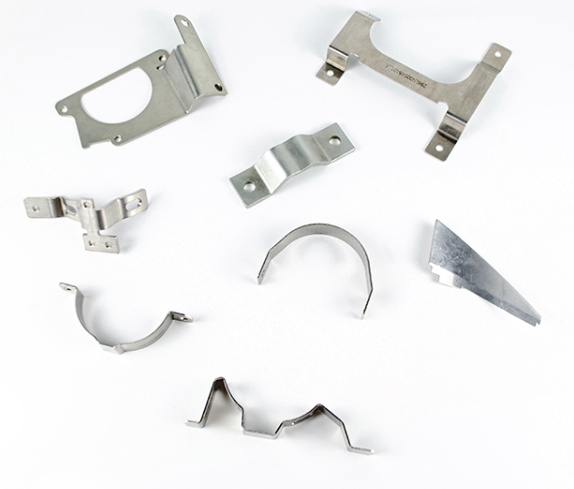
In the competitive world of modern manufacturing, staying ahead means finding ways to build faster, better, and cheaper. CNC precision parts processing has emerged as the clear answer to these challenges. By using Computer Numerical Control (CNC), factories can now produce complex components with a level of accuracy that was once thought impossible.
Whether you are an engineer at a startup or a procurement head at a global firm, you likely face the same headaches: inconsistent part quality, slow turnaround times, and rising labor costs. This guide will walk you through how CNC precision parts processing solves these problems, using real data and industry experience to show why it is the backbone of high-tech production today.
Why Is Precision and Repeatability So Critical?
When we talk about “precision” in the context of CNC, we aren’t just saying a part looks good. We are talking about ultra-tight tolerances—often as slim as ±0.001mm. To put that in perspective, a human hair is about 0.07mm thick. CNC machines are working at a scale 70 times smaller than a hair’s width.
The Power of Identical Results
The real magic, however, is repeatability. This is the machine’s ability to make the 1,000th part exactly like the 1st. In manual machining, a worker gets tired, or their hand slips by a fraction. In CNC, the computer follows the code without fatigue.
Consider this case: A medical device firm needed 500 identical surgical handles. Even a tiny deviation in the screw hole would mean the handle couldn’t be sterilized properly. By using CNC precision parts processing, every single handle matched the master design perfectly. Manual work would have resulted in at least 50 rejected parts, wasting thousands of dollars in high-grade stainless steel.
Data Comparison: CNC vs. Manual
| Feature | CNC Precision Processing | Traditional Manual Machining |
| Typical Tolerance | ±0.001mm to ±0.01mm | ±0.1mm to ±0.5mm |
| Average Error Rate | 0.5% – 1% | 8% – 12% |
| Setup Time | Fast (Digital) | Slow (Physical Retooling) |
As the data shows, the 1% error rate of CNC is a lifesaver for the aerospace industry, where an 8% error rate in engine parts could lead to a disaster.
How Does Multi-Axis Linkage Solve Complex Shapes?
Traditional machines usually move in three directions (X, Y, and Z). While this works for simple blocks, it fails when you need to create “organic” or highly complex 3D shapes. This is where multi-axis linkage—specifically 4-axis and 5-axis CNC machines—comes into play.
Tackling Intricate Designs
Imagine an aerospace turbine blade. It has deep curves, twisting angles, and internal cooling channels. A 5-axis machine can tilt and rotate the cutting tool while the part moves, allowing it to reach every surface in one single setup.
- Aerospace: Complex curved fuselage ribs and engine impellers.
- Automotive: Performance transmission gears with intricate internal splines.
- Medical: Bone screws and hip implants that must match the natural curves of human anatomy.
The “One-and-Done” Advantage: An aerospace client recently needed a prototype for a jet engine component. With a standard 3-axis machine, they would have had to move and reclamp the part four different times. Each move introduces a chance for a “alignment error.” By using a 5-axis CNC precision parts processing setup, we finished the part in 8 hours with zero repositioning. This saved them two days of work and removed the risk of manual mistakes.
Can You Really Cut Lead Times with CNC?
In manufacturing, the saying “time is money” is an understatement. A delay of one week can mean missing a market launch or losing a contract. CNC technology is designed to bridge the gap between “design” and “delivery” as fast as possible.
Why CNC Is Built for Speed
- Digital Workflow: To change a hole diameter or a slot depth, you don’t rebuild a machine. You simply change a line of code in the program. This takes minutes, not days.
- Lights-Out Manufacturing: CNC machines don’t need sleep. With proper setup, they can run 24/7, producing parts while your team is at home.
- Rapid Prototyping: You can go from a CAD drawing to a physical metal part in less than 24 hours.
Case Study: The 2-Week Engine Block Challenge
A car parts supplier was told they had 14 days to provide 200 prototype engine blocks for a trade show.
- Day 1: Engineering and programming.
- Day 2-12: Machines ran 24/7, finishing 25 blocks per day.
- Day 13-14: Inspection and shipping.They beat the deadline with two days to spare. Using old manual methods, that same project would have taken a month, and the supplier would have lost the deal.
Does High Automation Mean Lower Costs?
One of the most common myths is that CNC is too expensive. While the machines themselves cost more than manual ones, the total cost per part is almost always lower. This is thanks to high automation.
Reducing the Human Factor
Manual machining requires one expert per machine. In a CNC shop, one operator can often look after three or four machines at once.
- Automatic Tool Changes: Modern CNC centers have “magazines” that hold 20 to 60 different tools. The machine swaps them out in seconds without a human touching anything.
- Robotic Loading: Many high-volume lines use robots to feed raw material into the machine. This cuts labor costs by up to 50%.
Financial Impact: An electronics firm making aluminum housings for circuit boards moved from manual work to CNC precision parts processing. They were able to cut their labor team from 8 people down to 2. More importantly, their waste rate (parts thrown in the trash) dropped from 9% to less than 1%. They saved $120,000 per year in wages alone.
Is CNC Versatile Enough for Your Industry?
Some people think CNC is only for steel or aluminum. In reality, modern CNC precision parts processing can handle almost any material you can think of. This versatility makes it the go-to choice for almost every high-stakes industry.
Materials and Their Uses
- Hard Metals: Titanium and Inconel (perfect for military and aerospace).
- Lightweight Metals: Aluminum 6061 and 7075 (the standard for drones and car parts).
- Engineering Plastics: PEEK, ABS, and Polycarbonate (used for medical tools and electronics).
Industry Success Story
A military contractor needed a specialized radar housing that could survive extreme temperatures from -40°C to 120°C. They chose a titanium alloy for the build. Because titanium is very hard to cut, manual tools would have broken constantly. We used a high-torque CNC setup to machine the housing to a ±0.005mm tolerance. Every part passed the environmental stress test, and the radar system was deployed on schedule.
Yigu Technology’s View on Precision Manufacturing
At Yigu Technology, we have spent over a decade proving that CNC precision parts processing is the heart of a successful product launch. We have helped more than 400 clients—ranging from medical startups to aerospace giants—get their parts right the first time.
We don’t just “cut metal.” We provide a full-process service that includes design review, material selection, and rigorous ISO 9001 testing. Our data shows that clients who switch to our CNC services see a 30% drop in production costs and get their products to market 40% faster. For us, every micrometer matters because we know your project’s success depends on it.
FAQ: Common Questions About CNC Processing
What is the minimum order for CNC precision parts?
The great thing about CNC is its flexibility. There is no minimum order quantity (MOQ). You can order one single prototype to test your design, or you can order 10,000 units for mass production.
Is CNC machining more expensive for simple parts?
For very simple parts in small batches, manual machining might seem cheaper at first. However, once you add up the cost of human error and slower speeds, CNC usually wins on the total cost of quality.
How do I know if my design is ready for CNC?
Most CNC shops require a CAD (Computer-Aided Design) file, such as a .STEP or .IGES file. A good partner like Yigu will review your design to make sure it can be machined efficiently without wasting material.
Can CNC handle 3D surfaces?
Absolutely. With 4-axis and 5-axis machines, CNC can handle the most complex 3D geometries, including curves and “undercut” features that are impossible for other machines.
Discuss Your Projects with Yigu Rapid Prototyping
Are you ready to see how CNC precision parts processing can speed up your production and lower your costs? At Yigu Technology, we combine expert engineering with the latest CNC hardware to bring your designs to life. Whether you need a titanium aerospace part or a plastic medical prototype, we have the experience to deliver.
Would you like a free quote and a design-for-manufacturability (DFM) analysis? Contact us today and let’s turn your ideas into high-precision reality.