
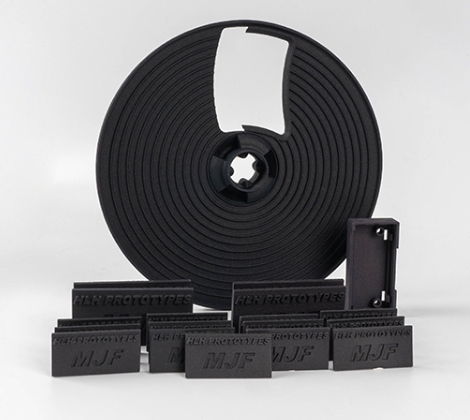
3D printed sheets are flat or shaped panels made with additive methods. They are not cut from stock but built layer by layer. This unlocks new advantages. This guide explains the key benefits over old ways. You’ll learn about material freedom, design innovation, and cost savings. We cover uses in aerospace, construction, and consumer goods. You’ll see how they solve problems like waste, weight, and custom needs. Get the facts to see if 3D printed sheets are right for your project.
Introduction
Why make a flat sheet with a 3D printer? It seems too simple. But that’s the point. Traditional sheet goods—metal, plastic, wood—force you to work with what’s available. You face set sizes, standard materials, and high waste from cutting. 3D printing flips this script.
Additively manufactured sheets are engineered from the ground up. You control the internal structure, material mix, and integrated features. This turns a simple panel into a high-performance component. This guide explores the concrete advantages that make 3D printed sheets a smart choice for engineers and designers looking beyond off-the-shelf solutions.
What Are 3D Printed Sheets?
First, let’s define them. A 3D printed sheet is not always a simple, flat plate. It is a broad, thin-walled structure produced additively. Its thickness can vary across its area. It can have integrated textures, channels, or lattice structures inside. Think of it as a custom-built panel rather than a cut piece of stock.
They are made using large-format FDM, SLA, SLS, or metal powder bed printers. The key is that their geometry and composition are digitally defined and directly fabricated.
What Are the Key Advantages?
The benefits stem from the core principles of additive manufacturing, applied to sheet-like forms.
How Does Material Freedom Help?
You are not limited to commodity materials. You can choose exact properties for your need.
- Performance Gradients: A single sheet can have different materials or densities in different zones. Imagine a helmet liner that is soft where it touches the head and rigid where it needs impact protection, printed as one part.
- Exotic & Composites: Use carbon fiber-reinforced polymers for stiffness, thermoplastic elastomers (TPE) for flexibility, or metal-polymer hybrids. A drone manufacturer might print a chassis sheet from continuous carbon fiber nylon for the best strength-to-weight ratio.
- Specialized Resins: For optical or thermal needs, use light-diffusing or heat-resistant resins that are not available as rolled sheet stock.
Case Study – Automotive Trim: A car maker wanted a door panel that combined a soft-touch surface, rigid mounting points, and integrated wiring channels. Using a multi-material 3D printing process, they produced this as a single, complex sheet, eliminating assembly and glue.
What Design Innovations Are Possible?
This is where 3D printed sheets truly shine. The design is not limited by cutting or molding tools.
- Integrated Functionality: Print channels for fluid cooling or wiring directly into the sheet. Print snap-fits, living hinges, or mounting bosses as part of the panel.
- Complex Topologies: Create non-planar, curved, or doubly-curved sheets with ease. An architect can print a unique, flowing facade panel that would be astronomically expensive to form with traditional metalwork.
- Controlled Internal Structure: Instead of solid material, use an internal lattice or honeycomb. This saves significant weight while maintaining stiffness. An aircraft interior panel with a gyroid lattice inside can be 50% lighter than a solid composite sheet.
How Do They Improve Efficiency?
Additive manufacturing brings its classic benefits to sheet production.
- Mass Customization: Each sheet can be different at no extra tooling cost. Perfect for custom medical splints, personalized footwear insoles, or made-to-order architectural tiles.
- Digital Inventory & On-Demand: Store a digital file, not physical stock. Print sheets as needed, reducing warehousing and obsolescence. A factory can print a replacement machine guard overnight instead of waiting weeks for a shipped part.
- Reduced Waste: Traditional sheet processing is subtractive. You cut a shape from a larger panel, often wasting 20-50% of the material. 3D printing is additive, using material only where needed. For expensive composites or metals, this is a major cost saver.
Are They Cost-Effective?
The cost story has two sides. For simple, high-volume sheets, traditional rolling or extrusion wins. But for complex, low-to-medium volume, or high-value applications, 3D printing is competitive.
- Eliminated Tooling: No need for expensive molds, dies, or stamping tools. This makes short runs viable.
- Assembly Consolidation: As shown in the automotive case, one printed sheet can replace an assembly of multiple parts, saving labor, fasteners, and quality control steps.
- Lifecycle Value: The benefits of lightweighting (saving fuel in vehicles) or improved performance (longer-lasting parts) often outweigh a higher upfront part cost.
Where Are 3D Printed Sheets Used?
How Are They Used in Aerospace?
Weight is critical. 3D printed sheets enable ultra-light, stiff panels.
- Application: Cabin interior panels (sidewalls, ceiling), ductwork, and fairings.
- Benefit: Using titanium or advanced polymer lattices, these sheets meet strict fire safety standards (FST) while being significantly lighter than traditional aluminum or composite panels. This directly reduces aircraft fuel burn.
What Role Do They Play in Construction?
Concrete 3D printing often produces walls in a sheet-like, layered manner. But polymer and composite sheets are also used.
- Application: Decorative facade panels, custom formwork, and lightweight structural insulated panels (SIPs).
- Benefit: Design freedom for unique building aesthetics. On-site printing of formwork reduces transport. Integrated insulation and structure in one printed panel simplifies building.
How Do Consumer Goods Benefit?
This is a growth area for customization and smart design.
- Application: Custom-fit sports gear (like helmet liners or ski boot soles), wearable device housings, and furniture panels.
- Benefit: Personalized ergonomics improve comfort and performance. Rapid design cycles allow brands to launch new styles quickly without retooling.
What About Performance and Durability?
Are They Strong Enough?
Yes, when designed and printed correctly. The mechanical properties depend on the base material and the printing process. A well-printed carbon fiber-PEEK sheet can outperform many traditional materials in specific strength. However, engineers must account for anisotropy—strength might differ between the layer direction and in-plane direction.
How Do They Handle the Environment?
Material choice dictates this. You can select:
- UV-stable polymers for outdoor use.
- Chemical-resistant resins for labs.
- High-temperature thermoplastics (like ULTEM) for near-engine applications.
The key is you select the property first, then print with a material that has it, rather than trying to modify a standard sheet.
What Are the Current Limits?
Technology always has boundaries.
- Build Size: While printers are getting bigger, the maximum size of a single printed sheet is still limited by the printer’s build volume. Very large panels may need to be printed in segments and joined.
- Surface Finish: As-printed surfaces may have a textured or layered appearance that requires post-processing (sanding, coating) for a smooth, Class A finish.
- Production Speed: For making thousands of identical simple sheets, continuous processes like roll-to-roll extrusion are much faster. 3D printing excels at complexity and customization, not raw speed for simple shapes.
- Material Cost per Kg: Specialty printing filaments and resins are often more expensive per kilogram than bulk raw plastic pellets or sheet metal.
What is the Future Outlook?
The future is multi-functional and smart. We will see sheets with:
- Embedded Electronics: Conductive traces and sensors printed right into the structure.
- Active Materials: Sheets that change shape or stiffness with temperature or electricity.
- Greater Sustainability: Wider use of recycled and bio-based printing materials.
As printer speed increases and material costs fall, the use cases will expand from niche to mainstream for medium-complexity parts.
Conclusion
3D printed sheets are more than a novel way to make a flat thing. They represent a fundamentally different approach to designing and manufacturing panels and surfaces. The core value is integration—integrating material properties, internal structures, and functional features into a single, coherent, custom-built component.
The decision to use them hinges on your priorities. If your project values lightweight design, part consolidation, mass customization, or complex geometry over the lowest per-part cost for a simple, high-volume item, then 3D printed sheets offer a compelling solution. They are a powerful tool for engineers and designers who need to move beyond the limits of standard sheet goods to create higher-performing, more intelligent products.
FAQ
Q: Can 3D printed sheets be as large as traditional 4×8 foot building sheets?
A: Not typically from a single print yet, but the field is advancing. Large-format pellet extrusion printers can approach this size. More commonly, large panels are printed in modular sections designed to interlock, which are then assembled. This is common in construction and large art installations.
Q: How does the cost of a 3D printed plastic sheet compare to a cut piece of acrylic or polycarbonate?
A: For a simple, flat, solid sheet of standard plastic, buying off-the-shelf sheet stock and cutting it is almost always cheaper. The value of 3D printing appears when you need the sheet to be hollow with internal ribs, have variable thickness, include integrated mounts, or be made from a special composite that isn’t available as a flat sheet.
Q: Are 3D printed sheets suitable for structural load-bearing applications?
A: They can be, with careful engineering. Using high-strength materials (like nylon-carbon fiber or metal) and optimized internal lattice designs, printed sheets can achieve excellent strength-to-weight ratios. They are used in aerospace and automotive for semi-structural components. However, for primary, safety-critical structures (like a building’s main beam), extensive testing and certification would be required, and traditional materials may still be preferred.
Discuss Your Project with Yigu Rapid Prototyping
Are you exploring a panel or enclosure design that could benefit from integrated features, lightweighting, or custom geometry? Our team at Yigu Rapid Prototyping has expertise in large-format and multi-material 3D printing. We can help you evaluate if a printed sheet solution is optimal for your application, select the right process, and produce high-quality prototypes or production parts.
For more information on our capabilities, please visit our Sheet Fabrication & Large Format Printing page.