
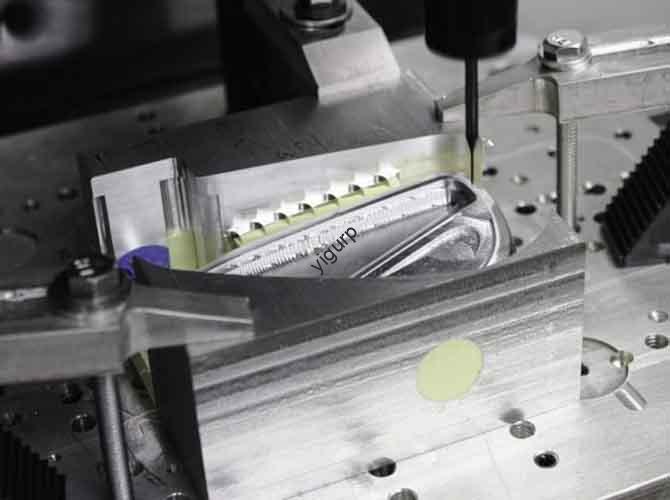
In the world of manufacturing, CNC machining accuracy is the bridge between a great design and a high-performance product. Whether you are building life-saving medical devices or critical aerospace parts, hitting tight tolerances is non-negotiable. Even a tiny error can lead to assembly failures or safety risks. This guide breaks down the hidden factors that affect precision and offers practical steps to help you master the process.
What Factors Impact Your Machining Results?
Not every error comes from the same place. To fix accuracy issues, you first need to know where they start. Most problems stem from the machine, the tools, or the environment.
A Comparative Look at Accuracy Drivers
| Factor | Impact Level | Quick Optimization Tip |
| Machine Quality | High (30-40%) | Use rigid cast iron frames to stop vibration. |
| Tool Quality | High (25-30%) | Swap carbide tools after 50 hours of use. |
| Fixture Stability | Medium (15-20%) | Use hydraulic clamps for steady force. |
| Temp Control | Medium (15-20%) | Keep the shop at a steady 20-22°C. |
| Programming | Medium (10-15%) | Run path simulations before cutting. |
| Cutting Speed | Low (5-10%) | Slow down by 10% for ultra-tight fits. |
Why Do These Specific Factors Matter?
Understanding the “why” behind these factors allows you to make smarter choices on the shop floor. Let’s dive into the core technical drivers of CNC machining accuracy.
Machine Quality: The Core Foundation
A machine is only as good as its bones. High-end CNC mills use rigid structures like cast iron to absorb vibrations. They also use high-quality ball screws to stop “backlash.” While a standard mill might hit a 0.01mm tolerance, a machine built for semiconductor parts can reach 0.001mm. That is ten times more precise.
Tool Quality: The Cutting Edge
Think of your tool like a pencil. A dull tip makes a messy line. Geometric accuracy in your cutters ensures the final shape is true. A high-speed steel tool can lose 0.005mm of its edge after 8 hours of work. If your part needs 0.003mm precision, that tool is now useless. We suggest using coated carbide tools (like TiAlN) and checking them with a micrometer every two hours.
Temperature: The Silent Accuracy Killer
Metal expands when it gets warm. A rise of just 5°C can make a 1-meter aluminum part grow by 0.06mm. This is six times larger than a common 0.01mm tolerance! Even the spindle heat matters. As it runs, it can shift slightly mid-job. To solve this, use active coolant systems and keep your HVAC steady.
What Are Common Industry Benchmarks?
How do these factors look in the real world? Different industries have different “gold standards” for accuracy.
- Automotive: Usually targets 0.05mm to 0.1mm. Mid-range lathes and standard tools often do the trick here.
- Medical Devices: Requires 0.005mm to 0.01mm. This needs high-precision mills, carbide tools, and climate control.
- Aerospace: Needs 0.001mm to 0.005mm. This level requires ultra-precision machines and advanced vibration dampening.
Yigu Technology’s Perspective on Precision
At Yigu Technology, we view accuracy as a total process, not just a number on a screen. Our team often sees clients try to buy their way out of problems with new machines. However, we usually find that a “precision audit” is better. Small changes, like better fixture clamping or smarter tool paths, often give a faster return on investment. We focus on combining rigid designs with smart monitoring to reduce errors by up to 30%.
FAQ About CNC Accuracy
Can I hit 0.001mm with a standard CNC machine?
No. Most standard machines top out at 0.01mm. To reach 0.001mm, you need specialized ultra-precision equipment with air bearings or high-end linear scales.
How often should I calibrate my CNC machine?
For high-volume work, calibrate every three months. If you do low-volume, high-precision tasks, a monthly check is much safer to maintain trust.
Does faster machining always lower my accuracy?
Not always. Modern “high-speed precision” tech uses adaptive feed rates to stay accurate while moving fast. However, you should always test your specific material first.
Discuss Your Projects with Yigu Rapid Prototyping
Do you have a project that requires flawless CNC machining accuracy? At Yigu Rapid Prototyping, we help you navigate complex tolerances and material challenges. We don’t just cut metal; we engineer solutions that fit your exact needs. Would you like us to perform a free review of your project’s tolerance requirements?