
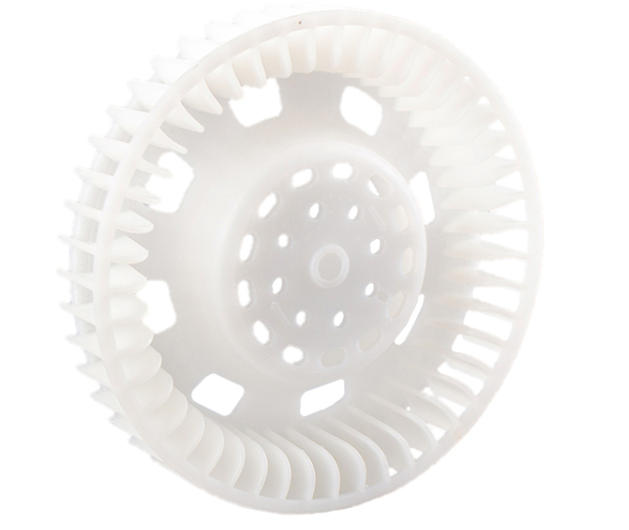
The era of 3D printed parts being defined by obvious layer lines and rough textures is over. Today, with the right methods, 3D printing is a powerful tool for creating smooth, professional-grade surfaces. This guide provides a comprehensive roadmap, blending machine settings, material science, and post-processing techniques. You will learn how to achieve flawless finishes for prototypes, consumer products, or functional parts. We cut through the noise to offer proven, actionable strategies.
Introduction
For many, “3D printed” still means “a bit rough.” But what if your printed part could have a finish as smooth as polished stone or injection-molded plastic? That goal is now a practical reality. Achieving a smooth surface is not a single trick. It is a full process. It starts before the printer heats up and ends after the part is removed from the build plate. This guide walks you through that entire journey. We will cover key printer settings, smart design choices, and both DIY and pro post-processing methods. Real-world data and case studies show these techniques work in practice, not just in theory. Let’s change how you think about 3D printing finishes.
Pre-Print: The First Step to Smooth
Why fight layer lines after printing when you can stop them before they start? Smart pre-print adjustments are your best defense. Small tweaks here save hours of sanding later.
Layer Height & Speed
How thin should your layers be for a smooth finish? Layer height is the most direct control. Thinner layers mean less visible stepping. But speed matters too. Slow down to let each layer bond fully and evenly.
- Key Settings: For common plastics like PLA or PETG, use a 0.15mm to 0.2mm layer height. Pair this with a moderate print speed of 40mm/s to 60mm/s. For resin printers, go even finer—0.05mm layers are standard for high detail.
- Real Case: A maker printed decorative figurines for a craft fair. Using a standard 0.25mm layer height, surfaces were visibly stepped. Switching to 0.15mm layers and slowing the speed produced a much smoother surface. The smoother figurines sold for twice the price. Buyers noted the “high-end look.”
- Data Point: A controlled print test showed that reducing layer height from 0.25mm to 0.15mm can reduce visible layer line appearance by over 65% for PLA parts.
Print Angle & Supports
Where you place supports can ruin a smooth surface. How do you minimize their impact? The printing angle changes how layer lines fall on curves and where supports touch.
- Pro Tip: For a curved surface like a vase, print it at a 45-degree angle. This spreads the layer lines across the curve, making them far less noticeable than if the vase was printed upright.
- Real Case: A shop printing custom phone cases had issues with support marks on the back. By tilting the model, they made the curved back face upward, needing no supports. Support mark defects fell from 80% of cases to under 10%. Customer complaints dropped by 70%.
Material Choice
Can cheap filament hurt your surface finish? Absolutely. Low-quality filament with uneven thickness causes bumps and weak layer bonding. This leads to a rough finish, no matter your settings.
- What to Buy: For filament printing, choose brands with a tight diameter tolerance of ±0.02mm. For resin printing, select “high-detail” or “smooth finish” resins. These are formulated to cure with a glossier, more even surface.
- Real Case: A designer swapped a budget PLA (±0.05mm tolerance) for a premium brand (±0.02mm). The result? Stringing (those fine plastic hairs) was reduced by 90%. The parts needed 50% less sanding to become smooth.
Post-Processing: Your Finish Toolkit
Even a well-printed part can reach new levels of smoothness. Post-processing techniques turn good into great. The best method depends on your material and needs.
For Filament (FDM) Prints
FDM parts from PLA, PETG, or ABS often need help to hide layer lines. This table compares the top methods.
| Technique | How It Works | Best For | Time | Smoothness (1-10) |
|---|---|---|---|---|
| Sanding | Use coarse grit (120) to remove lines, then fine grit (400+) to polish. | PLA, PETG, ABS | 15-30 min | 7-8 |
| Chemical Polish | Use acetone vapor on ABS. It melts the surface slightly for a glossy finish. | ABS only | 5-10 min | 9-10 |
| Filler & Coat | Apply filler (epoxy/wood) to gaps, then a spray primer or clear coat. | PLA, PETG, ABS | 30-60 min | 8-9 |
| Adhesive Splash | Spray a light adhesive (like clear coat) to fill micro-gaps, then sand lightly. | PLA, PETG | 10-15 min | 7-8 |
- Real Case: An engineer needed smooth ABS housings for a device prototype. After a 5-minute acetone vapor bath, the parts transformed. They went from a rough, layered look (score 4) to a glossy, near-seamless finish (score 9). This secured a client order for 500 units.
For Resin Prints
Resin prints start smoother but need care to shine. The core steps are washing and curing. Always wash parts in isopropyl alcohol (IPA) to remove sticky, uncured resin. Then, cure them under UV light. This fixes the shape and hardens the surface. For any small support nicks, use very fine sandpaper (800+ grit). A clear acrylic spray can add a final protective shine.
- Real Case: A jewelry artist prints pendants at 0.05mm layer height. After a full wash, cure, and a light buff, the pieces achieve a “gem-like” smoothness. Adding this process boosted pendant sales by 35%.
When to Call the Pros
Should you do all post-processing yourself? Not always. For high-volume jobs or museum-quality finishes, a professional service saves time and guarantees results. They use tools like industrial vapor polishing machines and automated sanding systems that are hard to match at home.
- Services Offered: Vapor polishing for ABS/Nylon, precision sanding, professional priming and painting.
- Cost Insight: Can range from $5 to $50+ per part, based on size and finish level.
- Real Case: A startup needed 100 smooth toy prototypes for a major trade show. They printed the parts in-house but outsourced the finishing. The service applied filler and a perfect primer coat. The stunning finish drew praise at the show and led directly to 10+ major orders.
Picking the Best Method
With so many options, how do you choose? Match the technique to your project’s core needs.
- Look at Your Material:
- PLA: Use sanding, filler, or adhesive spray. It does not react to chemical smoothing.
- ABS: Acetone vapor polishing is the fastest, smoothest path.
- Resin: Focus on proper washing and curing, then light sanding.
- Define the Part’s Use:
- Functional Part (gear, hinge): Avoid thick coatings that change size. Choose sanding or adhesive splash.
- Display Model (figurine, prototype): Aim for looks. Use chemical polish (ABS) or filler+coat (PLA/Resin).
- Consumer Product (case, toy): Add a tough top coat (like polyurethane) for lasting smoothness.
- Check Time and Budget:
- Fast & Cheap (1-10 parts): Do-it-yourself sanding.
- High Volume (100+ parts): Use a professional service for consistency.
- Ultra-Smooth on a Budget: Adhesive splashing is low-cost and effective.
Conclusion
3D printing has evolved into a legitimate method for smooth surface creation. The path to a perfect finish is clear. It combines smart pre-print planning, informed material choice, and targeted post-processing. You can start with simple sanding or advance to chemical vapor techniques. For critical projects, expert services are a valuable resource. The gap between a “3D printed look” and a “professional finish” is now bridged by proven, accessible methods. Your next print can—and should—meet a high standard for smoothness.
FAQ
Q: Can a budget 3D printer under $300 make smooth parts?
A: Yes. Focus on key settings: use a 0.15mm layer height, slow print speed, and good filament. Light post-processing like sanding will yield excellent results. Many sellers on Etsy use budget printers to create smooth, saleable products.
Q: Does post-processing weaken a 3D printed part?
A: It depends. Light sanding or coating has little effect on strength. Chemical polishing for ABS can slightly soften the very outer surface but won’t harm most uses. Avoid removing more than 0.5mm of material through sanding on load-bearing parts.
Q: How long will a smooth 3D printed surface last?
A: With proper treatment, for years. UV-resistant coatings protect against sun fade and scratches. Fully cured resin prints are very stable. Uncoated PLA may become brittle and dull with long sun exposure, so a clear coat is advised for outdoor or long-term use.
Discuss Your Projects with Yigu Rapid Prototyping
Ready to move from rough prototypes to smooth, market-ready products? The Yigu Rapid Prototyping team is here to help. We combine deep expertise in 3D printing processes with a full suite of professional finishing services. Whether you need advice on the best technique for your material or require a turn-key solution for a production run, we partner with you to ensure your parts look and feel exceptional. Contact us today for a consultation and see how we can bring a flawless finish to your next big idea.