
If you are curious about the state of 3D printing in Italy—whether you are an entrepreneur looking to adopt the technology, a student exploring career paths, or an enthusiast tracking industry growth—you will find clear answers here. Italy has emerged as a European leader in additive manufacturing, blending its rich heritage in design and engineering with cutting-edge 3D printing innovations. Today, the country boasts a thriving ecosystem of manufacturers, research centers, and adopters across key sectors like aerospace, healthcare, and fashion. This guide covers Italy’s unique position in the global 3D printing landscape, how businesses use the technology, and where the industry is headed next.
What Is the Size and Growth of Italy’s 3D Printing Market?
According to a 2024 report by Additive Manufacturing Italy (AMI), the country’s 3D printing market was valued at €385 million in 2023—a 12% increase from the previous year. This growth outpaces the European average of 9%, driven by strong demand from small and medium-sized enterprises (SMEs) and government-backed innovation projects.
A key trend here is the diversification of adopters. While large corporations like Leonardo in aerospace and Fiat Chrysler Automobiles have long used 3D printing, SMEs now make up 62% of new users, per AMI. This shift is partly due to falling costs of entry-level 3D printers and easier access to training programs. A family-run jewelry workshop in Florence recently invested in a resin 3D printer to create intricate prototypes, cutting their design time from 2 weeks to 2 days—without needing a team of engineers.
Italy’s 3D Printing Market by Sector (2023) :
| Sector | Market Share | Key Applications |
|---|---|---|
| Aerospace & Defense | 28% | Lightweight parts, tooling, prototypes |
| Healthcare | 22% | Custom implants, prosthetics, surgical guides |
| Automotive | 18% | Prototyping, spare parts, custom components |
| Fashion & Design | 15% | Jewelry, footwear, furniture prototypes |
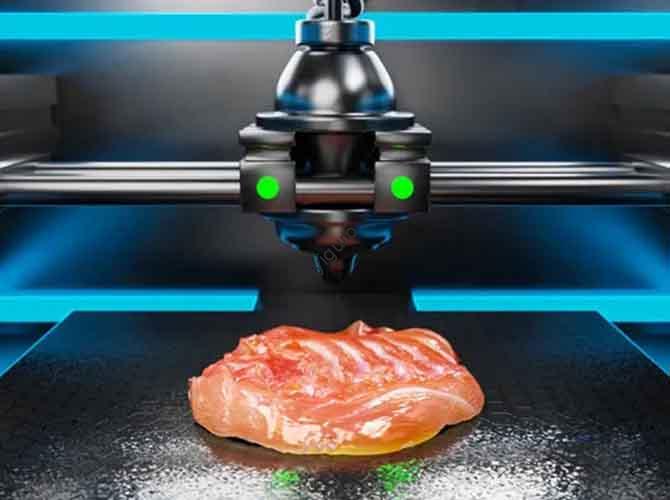
| Other (Education, Food) | 17% | Educational kits, 3D-printed food for special diets |
Who Are the Key Players in Italy’s 3D Printing Ecosystem?
Leading 3D Printer Manufacturers
Italy is home to global leaders in additive manufacturing hardware. WASP (World’s Advanced Saving Project), based in Massa Lombarda, is famous for its large-format 3D printers using sustainable materials like clay and recycled plastic. Their WASP 40100 model can print full-scale building components—critical for Italy’s growing “3D-printed architecture” sector. In 2023, WASP partnered with a construction firm to build 10 affordable homes in Emilia-Romagna, using 60% less concrete than traditional methods.
Sisma, a Vicenza-based company, specializes in metal 3D printing. Their MySint100 printer is widely used in healthcare for producing titanium implants, thanks to precision down to 0.05mm and compliance with European medical standards. In 2022, Sisma supplied 3D printers to 15 Italian hospitals, reducing wait times for custom hip implants from 4 weeks to 3 days.
Research and Innovation Hubs
Italian universities and research centers drive breakthroughs. The Polytechnic University of Milan has a dedicated Additive Manufacturing Lab, where researchers developed a new method to 3D print carbon-fiber parts for aerospace—making them 30% lighter than existing components. Leonardo now uses the lab’s technology to produce parts for its AW139 helicopters.
In Turin, the Italian Institute of Technology (IIT) focuses on bioprinting—3D printing living tissues. In 2023, IIT researchers successfully printed a functional liver tissue sample, a step toward solving Italy’s organ transplant shortage. The team worked with local hospitals to test the tissue, and early results suggest it could be used for drug testing by 2025, reducing the need for animal trials.
Industry Clusters
Italy has established regional 3D printing clusters to support collaboration. The Lombardy Additive Manufacturing Cluster (LAMC) in Milan connects 200+ companies, universities, and startups. In 2023, LAMC launched a “3D Printing for SMEs” program, offering grants of up to €10,000 for small businesses to adopt the technology. A Turin-based auto parts maker used the grant to buy a 3D printer for prototyping—saving €50,000 in annual tooling costs.
How Is 3D Printing Applied Across Italy’s Key Sectors?
Aerospace and Defense
Italy’s aerospace sector, led by Leonardo, is an early adopter of 3D printing. The company uses metal 3D printing to produce parts for its C-27J Spartan military transport aircraft. A 3D-printed fuel nozzle for the C-27J is 40% lighter than the traditional metal version, reducing fuel consumption by 5% per flight. Leonardo reports that 3D printing has cut production time for these parts from 3 months to 2 weeks, critical for meeting defense contracts.
In 2023, Leonardo partnered with the University of Naples Federico II to develop 3D-printed rocket components. Early tests show the 3D-printed parts perform 20% better than conventional ones, putting Italy in the running for European space projects.
Healthcare
Healthcare is one of Italy’s fastest-growing 3D printing sectors, thanks to its focus on personalized care. In Rome, the Gemelli Hospital uses 3D printing to create custom surgical guides for brain surgeries. Surgeons first scan a patient’s brain, then 3D print a guide that fits perfectly on the skull—ensuring more precise incisions and reducing surgery time by 30%. Since 2021, the hospital has used this method for 200+ surgeries with a 95% success rate compared to 88% for traditional methods.
Ossis, a Milan-based startup, 3D prints custom prosthetic hands using recycled plastic. Their prosthetics cost €500—far less than the €5,000 average for traditional models—and can be customized with colors or patterns. In 2023, Ossis donated 50 prosthetics to children in southern Italy, where access to medical devices is limited.
Fashion and Design
Italy’s fashion industry is famous for creativity, and 3D printing takes that to new heights. Dolce & Gabbana showcased 3D-printed dresses at Milan Fashion Week in 2022. The dresses, made from flexible plastic, were designed using 3D scanning to fit models perfectly—no alterations needed. The brand later released a limited-edition 3D-printed jewelry line, which sold out in 3 days.
Jewelry designers also embrace the technology. Buccellati, a historic Milanese jewelry brand, uses 3D printing to create intricate prototypes for necklaces and rings. Before 3D printing, a single prototype took 2 weeks to carve by hand; now, it takes 24 hours. This speed has allowed Buccellati to release 50% more new designs each year while maintaining craftsmanship.
What Government Policies Support 3D Printing in Italy?
Funding Programs
The National Recovery and Resilience Plan (PNRR) , Italy’s €222 billion post-pandemic recovery plan, allocates €300 million to additive manufacturing. This funding supports:
- Research Grants: Universities and startups can apply for grants of up to €5 million to develop new 3D printing technologies like bioprinting and sustainable materials
- SME Support: Small businesses get tax breaks of up to 40% when investing in 3D printing equipment. In 2023, over 1,000 SMEs used this incentive
- Infrastructure: The government is building 10 regional “3D Printing Hubs” —shared facilities where businesses access high-end 3D printers without buying them. The first hub in Bologna opened in 2023 and has been used by 50+ companies
Regulatory Framework
Italy updated regulations to make 3D printing safer and more accessible. For medical 3D printing, the government aligned standards with the EU’s Medical Device Regulation (MDR) , ensuring 3D-printed implants meet strict safety requirements. This alignment has made it easier for Italian companies like Sisma to sell products across Europe.
For 3D-printed buildings, the government introduced new building codes in 2022 recognizing 3D-printed structures as safe. This was a game-changer for companies like WASP, which can now bid on public construction projects such as affordable housing using 3D printing.
What Challenges and Future Trends Shape Italy’s 3D Printing Industry?
Key Challenges
- Skill Gaps: Many businesses struggle to find employees with 3D printing skills. A 2023 AMI survey found that 65% of Italian manufacturers cite “lack of trained staff” as a barrier to adopting 3D printing. The government is working with universities to add 3D printing courses to engineering and design curricula
- Material Costs: High-quality 3D printing materials like medical-grade titanium and carbon fiber can be expensive. Italian companies respond by developing cheaper, sustainable alternatives—like WASP’s clay-based materials and Ossis’s recycled plastic
- Intellectual Property Risks: 3D printing makes it easy to copy designs, raising IP concerns. The Italian Patent and Trademark Office has launched a campaign to educate businesses on protecting 3D-printed designs, but enforcement remains a challenge
Future Trends to Watch
- Sustainable 3D Printing: Italy leads in eco-friendly additive manufacturing. By 2025, AMI predicts that 40% of 3D printing materials used in Italy will be recycled or biodegradable. Companies like WASP use solar power to run 3D printers, reducing carbon footprint
- Bioprinting for Organ Transplants: IIT’s work on 3D-printed liver tissue could pave the way for full organ printing. If successful, this would address Italy’s organ shortage where 8,000 people are on waiting lists each year
- 3D Printing in Space: Italy’s space agency (ASI) is partnering with Leonardo to develop 3D printers for the International Space Station. The goal is to print spare parts in space, reducing the need to send supplies from Earth. A prototype printer is set to launch in 2025
Conclusion
Italy’s 3D printing market, valued at €385 million with 12% annual growth, serves aerospace (28%), healthcare (22%), automotive (18%), and fashion (15%) sectors. SMEs now make up 62% of new users, supported by government tax breaks of 40% and €300 million in PNRR funding. Key players like WASP and Sisma lead in sustainable construction and medical printing, while institutions like IIT pioneer bioprinting. Applications range from 40% lighter aircraft parts to €500 custom prosthetics and 24-hour jewelry prototypes. With challenges in skills, costs, and IP, and trends toward sustainability, bioprinting, and space manufacturing, Italy remains a European leader in additive manufacturing.
FAQ About 3D Printing in Italy
What are the best cities in Italy for 3D printing businesses?
Milan, Turin, and Bologna are the top hubs. Milan has a strong fashion and design sector, Turin is a leader in aerospace and automotive, and Bologna is home to the first regional 3D Printing Hub.
Can small businesses in Italy afford 3D printing?
Yes. Thanks to government tax breaks of up to 40% on equipment and shared 3D Printing Hubs, even small businesses can access the technology. Many entry-level 3D printers cost less than €2,000.
Is 3D printing legal for medical use in Italy?
Yes. Italy follows the EU’s Medical Device Regulation (MDR) , which sets strict standards for 3D-printed medical devices like implants and surgical guides. Companies must get certification before selling these products.
What sustainable materials are used in Italian 3D printing?
Common sustainable materials include recycled plastic used by Ossis for prosthetics, clay used by WASP for building components, and plant-based resins used in fashion.
How can I learn 3D printing in Italy?
Many universities like Politecnico di Milano offer 3D printing courses. You can also take short courses at regional 3D Printing Hubs or online platforms like Coursera partnering with Italian institutions.
Discuss Your Projects with Yigu Rapid Prototyping
Ready to start your 3D printing project in Italy? Yigu Technology combines global manufacturing expertise with practical support for businesses seeking European innovation partners. We help aerospace suppliers, medical device companies, automotive manufacturers, and fashion designers select the right 3D printing technologies and Italian partners. Our AI-powered design tools optimize your parts for additive manufacturing—reducing defects and speeding up production. We connect you with vetted Italian providers holding ISO 9001 or ISO 13485 certifications matching your industry requirements. From material selection to post-processing and finishing, our team reviews your designs for manufacturability and ensures compliance with EU regulations. Contact Yigu Rapid Prototyping today to discuss your 3D printing needs and discover how we can help you innovate efficiently, sustainably, and cost-effectively in Italy.