
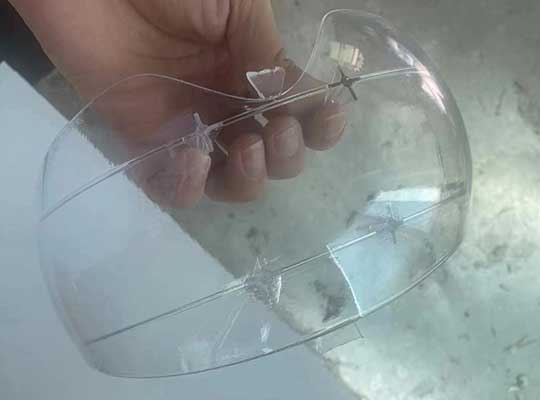
Glass is one of humanity’s oldest and most transformative materials. Now, 3D printing promises to reinvent it. This new technology merges the timeless beauty of glass with the flexibility of digital manufacturing. It can build complex shapes once deemed impossible. The journey from a digital file to a physical glass object is filled with innovation. This guide explains the key methods, advantages, real-world uses, and future trends.
Introduction
For centuries, making glass items needed high heat and expert skill. Molds, blowing, and cutting limited design. 3D printing glass changes this. It builds objects layer by layer from a digital model. This allows for intricate, custom shapes. The global market for some 3D printed glass items, like eyewear, is growing fast. It was valued at $134 million in 2024 and is expected to reach $241 million by 2031. The broader US market for 3D glass products is also rising. It is driven by demand in consumer electronics and architecture.
However, not all “glass printing” is the same. The field spans from high-tech industrial research to practical alternatives you can use today. This article explores the true cutting edge and the accessible tools available now. We will look at how these technologies work and their impact on design, architecture, and sustainability.
How Does True 3D Glass Printing Work?
Is It Pure Glass or a Composite?
It’s important to know the difference. True 3D printing of pure, transparent glass exists but is mainly found in labs and high-end industrial projects. A more common and practical path for most users is glass-filled filament. This is a plastic (like PETG or Nylon) infused with tiny glass fibers. It offers better strength and heat resistance than plain plastic but is not transparent.
Comparison of Glass Printing & Alternatives
| Method | Material Output | Cost | Best For |
|---|---|---|---|
| Traditional Glass Blowing | Pure glass | High | Artisanal, one-off pieces |
| FDM with Glass-Filled Filament | Composite plastic/glass | Low–Mid | Structural parts, tooling, prototypes |
| Industrial Pure Glass Printing | 100% fused silica | Very High | Research, high-end optics, architecture |
| SLA/DLP with Clear Resin | Cured polymer resin | Mid | Optical clarity, detailed models, lenses |
What Are the Advanced Methods?
For printing real glass, researchers use advanced techniques. These often involve very high temperatures. A team at MIT’s Lincoln Lab made a breakthrough. They created a low-temperature process (around 250°C). This method prints a special glass ink and then hardens it in warm oil. It allows printing on sensitive materials like microelectronics.
Another major project focuses on construction. Engineers at MIT and a company named Evenline are printing bricks from recycled glass bottles. They use a custom printer called G3DP3 that melts glass and deposits it layer by layer. The bricks are shaped like a figure-eight and have pegs that interlock like LEGO® bricks. In tests, these glass bricks showed strength similar to concrete blocks.
Where Is 3D-Printed Glass Making an Impact?
Why Is Architecture a Key Frontier?
Architecture is one of the fastest-growing areas for 3D glass applications. The vision is circular construction. The MIT glass brick project is a perfect example. These bricks can be taken apart and rebuilt into new structures. This reusability reduces waste. It turns buildings into material banks for the future. This aligns with a global push for sustainable building materials.
Building codes are also starting to adapt. The 2024 International Residential Code (IRC) now includes an appendix for 3D-printed homes. This shows official recognition of these new methods.
Are There Other Practical Uses Today?
While pure glass printing evolves, the current, practical value comes from glass-composite materials and clear resins. These are used across many industries:
- Medical & Biotech: Custom lab equipment, clear flow channels for testing. High-clarity resins are often used here.
- Aerospace & Automotive: Lightweight ducts and mounts. Glass-filled Nylon is ideal for its strength and heat resistance.
- Consumer Products: Custom eyewear frames are a major commercial success. Companies like Monoqool and MYKITA lead this market.
- Art and Design: Artists use 3D printing to create complex glass sculptures. Designers make unique lighting fixtures with intricate patterns.
What Are the Main Challenges and Solutions?
Why Is Cost and Access a Hurdle?
Printing with pure glass is expensive. It requires special printers that can handle extreme heat. The post-processing often needs a kiln. Startups like Vitriform3D are tackling this issue. Founded in 2021, this company uses 3D printing to turn recycled glass into tiles and wall panels. By using waste glass, they aim to lower both cost and environmental impact.
How Do You Handle Fragility and Precision?
Glass is brittle. Controlling its flow and cooling during printing is hard. This can lead to imperfections. The MIT team solved this for bricks by using a removable layer between blocks. This prevents scratches and cracks during assembly. For smaller items, using glass-filled filaments is a robust alternative. They are strong and print reliably on modified desktop 3D printers.
What Does the Future Hold?
What New Technologies Are Emerging?
The future is bright with new ideas. Researchers at Hebrew University developed a binder-free method. It uses light to form silica glass structures. This process needs only 250°C of heat. It works with standard DLP 3D printers. This could make precise glass printing much more accessible.
Sustainability will be a major driver. The focus on recycled materials and reducing embodied carbon (the emissions from making a material) will grow. As one expert noted, “We’re taking glass and turning it into masonry that can be disassembled… This builds into our idea of a sustainable, circular building material”.
Conclusion
3D printing is opening a new chapter for glass. Today, the most practical path is through glass-filled composites and high-clarity resins. They offer great strength and design freedom for many uses. At the same time, true pure glass printing is advancing quickly. It promises a future of sustainable, circular architecture and custom high-tech components.
The journey from digital design to tangible glass object is no longer just a dream. It is a rapidly maturing field. It blends ancient material science with digital innovation. This creates new possibilities for designers, architects, and engineers.
FAQ
Q: Are 3D-printed glass items strong enough for daily use?
A: Yes, depending on the material. Glass-filled filaments create very strong, durable parts for tools and components. True printed glass, like the MIT bricks, can have strength comparable to concrete when designed and processed correctly.
Q: How expensive is it to start 3D printing with glass?
A: Using glass-filled filament on a standard FDM printer is affordable. You mainly need a hardened steel nozzle (around $20-$50). True pure glass printing is very costly. It is mostly for industrial or research settings.
Q: Can I recycle 3D-printed glass?
A: Absolutely. A key benefit of pure glass is its infinite recyclability. Projects like the MIT bricks are designed to be remelted and reprinted many times. Glass-filled plastic composites are harder to recycle but the glass content can be recovered.
Q: Is the surface of 3D-printed glass smooth and clear?
A: Pure glass prints often need polishing after printing to become fully clear. Glass-filled filaments are opaque and have a matte, textured finish. For clear, smooth items, SLA printing with clear resin is the best current option.
Q: What industries are adopting this technology first?
A: Architecture (for sustainable building materials), consumer electronics (for displays and devices), and high-end manufacturing (for aerospace and medical optics) are leading the adoption.
Discuss Your Projects with Yigu Rapid Prototyping
Do you have a design that pushes the limits of form or function? At Yigu Rapid Prototyping, we specialize in turning complex ideas into reality. Our expertise covers a wide range of additive manufacturing technologies. We can help you navigate the choice between high-strength glass-filled composites, optically clear resins, and connections to pioneering pure glass printing partners.
Let’s discuss how advanced materials can bring innovation, sustainability, and precision to your next project. Contact our engineering team today for a consultation.