
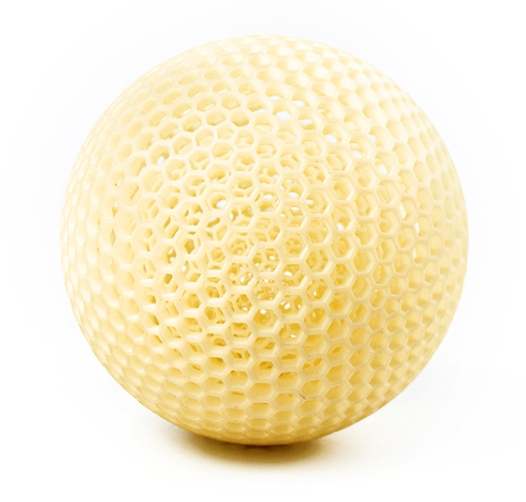
Imagine a material that is mostly air but can hold up a car. This is not magic. It is a 3D printed dot matrix structure. Also called a lattice structure, it is a mesh of tiny, repeating cells. Engineers use it to make parts that are very light but also strong. This guide explains how these structures work. We will look at their key traits and where they are used. You will learn how to design them and why they are changing industries.
Introduction
Weight is a big problem in design. Heavy parts use more fuel. They cost more to move. For years, the only way to make something strong was to make it solid and heavy. 3D printing dot matrix structures change this rule. They let you put material only where it is needed. The result is a part that is lightweight, strong, and uses less material. These structures are now in planes, cars, and medical implants. A study found they can cut weight by up to 70% while keeping most of the strength. This article will show you the science behind them. We cover their benefits, design tools, and real-world uses.
What Are Dot Matrix Structures?
Why Use a Structure Full of Holes?
A dot matrix is a network of small, connected cells. Think of it as a high-tech sponge. The pattern can be cubic, hexagonal, or gyroid. The key idea is topology optimization. This is a smart way to arrange material. It follows the load paths in a part. Material stays where stress is high. It is removed where stress is low.
This is different from old methods. Milling a solid block creates waste. Casting cannot make such complex inside shapes. Additive manufacturing (3D printing) builds the structure layer by layer. This allows for the complex internal geometry.
What Are Their Key Properties?
These structures have three main benefits.
First, they have a great strength-to-weight ratio. A titanium lattice can be 60% lighter than solid titanium. Yet, it can keep over 80% of the strength. This is vital for aerospace.
Second, they have a high surface area. A small lattice cube has much more surface than a solid cube. This helps with heat dissipation and fluid flow. It is useful for heat sinks and filters.
Third, they can be biocompatible. The pores in a metal lattice are like bone. Human bone cells can grow into them. This binds an implant to the body.
How Do You Design Them?
What Software Do You Need?
You cannot design a lattice by hand. You need special software. Tools like nTopology, Autodesk Fusion 360, and Altair Inspire are key. They let you generate and modify lattice patterns.
The process starts with a solid 3D model. The software analyzes forces on the part. Then, it creates a lattice inside the part’s shape. You can control the cell size, beam thickness, and pattern type.
What Are the Main Patterns?
Different patterns give different results.
- Cubic/Grid: Simple and stiff. Good for basic weight reduction.
- Hexagonal/TPMS: Very strong and lightweight. Good for complex loads.
- Gyroid: Excellent for fluid flow and heat transfer. Often used in heat exchangers.
- Conformal: The lattice changes to match the part’s outer shape. This gives the best performance.
Comparison of Common Lattice Patterns
| Pattern Type | Best For | Strength | Weight Saving | Print Difficulty |
|---|---|---|---|---|
| Cubic | Basic structures, prototypes | Medium | High | Low |
| Hexagonal | General engineering, aerospace | High | High | Medium |
| Gyroid | Fluid flow, heat transfer | Medium | Medium | High |
| Conformal | Maximizing performance | Very High | Very High | Very High |
How Do You Simulate Performance?
Before printing, you must test the design. Finite Element Analysis (FEA) software is used. It simulates stress, heat, and fluid flow on the lattice. This finds weak spots. You can then change the cell size or thickness in those areas. This step is critical. It ensures the part will work in real life.
Where Are They Used Today?
How Does Aerospace Benefit?
Aerospace was an early user. Every gram saved means less fuel. General Electric uses lattice structures inside jet engine fuel nozzles. The part is 25% lighter and five times more durable. It is printed as one piece, which was impossible before.
Airbus uses scalmalloy (a strong aluminum alloy) to print cabin brackets. The lattice design makes them 30% lighter than machined parts. This saves thousands of liters of fuel per plane each year.
What About Medical Implants?
In medicine, lattices are life-changing. Companies like Stryker and Zimmer Biomet make spinal fusion cages with them. The cage is placed between vertebrae. The bone grows into the lattice’s pores. This fuses the spine solidly. Patients heal faster.
Dental implants also use this tech. A lattice root fits into the jawbone. Bone integration is better than with a smooth implant. This reduces failure rates.
Can Cars Use Lattice Structures?
Yes, for performance and safety. Bugatti printed a titanium brake caliper with an internal lattice. It is incredibly strong but light. In electric cars, weight is critical for range.
Lattices are also great for energy absorption. A bumper with a lattice inside can crush in a set way. It absorbs crash energy better than solid plastic. This improves safety.
What Are the Manufacturing Steps?
Which 3D Printing Methods Work?
Not all 3D printers can make fine lattices. The main methods are:
- Powder Bed Fusion (PBF): This includes SLS (for plastics like nylon) and SLM/DMLS (for metals like titanium). A laser melts powder layer by layer. It is the best method for strong, detailed metal lattices.
- Stereolithography (SLA): Uses a laser to cure liquid resin. It can make very smooth, detailed plastic lattices for prototypes.
- Material Jetting: Drops tiny dots of material. It can mix different materials in one print. This is good for complex multi-material lattices.
What Are the Post-Processing Needs?
Lattice parts often need extra work after printing. For metal parts made with PBF, support structures must be removed. This can be hard with complex lattices. Sometimes, hot isostatic pressing (HIP) is used. This process uses heat and pressure to remove tiny internal pores. It makes the part stronger.
For plastic lattices, washing and curing might be needed. The goal is to clean out any leftover powder or resin from the tiny cells.
What Challenges Remain?
Is Design Complexity a Barrier?
Yes. Designing an effective lattice needs skill. The engineer must know load paths, material science, and simulation software. This limits who can use the tech. More automated software is helping to lower this barrier.
Are There Cost and Speed Issues?
Printing a lattice part can be slow. A dense, small-cell lattice might take many hours. The cost of metal powder is also high. However, the total cost can be lower. You use less material. You also avoid the cost of tools and assembly for complex parts.
How Strong Are They Really?
The strength depends on the print quality. A flaw in one tiny beam can weaken the whole structure. Quality control is vital. Techniques like CT scanning are used to check for internal defects in critical parts like implants.
What Is the Future?
Will AI Help Design Lattices?
Generative design and AI are the next step. You tell the software your goals: “Make it as light as possible, hold 1000N of force.” The AI creates thousands of lattice designs. It picks the best one. This makes design faster and finds shapes humans might miss.
Can We Print with New Materials?
Research is active. Shape-memory alloys can make lattices that change shape with heat. Self-healing polymers could fix small cracks in a lattice. Functionally graded lattices change density or pattern inside one part. This is the ultimate in optimization.
Will They Become Common in Consumer Goods?
Cost is falling. We may see lattices in sports equipment (lighter helmets), footwear (custom cushioning midsoles), and consumer electronics (better heat sinks for phones). As printers get cheaper, more industries will adopt this tech.
Conclusion
3D printing dot matrix structures are a powerful design tool. They break the old link between weight and strength. By smartly arranging material, they create parts that are light, strong, and efficient. From flying planes to healing bones, their impact is growing.
The path to using them involves learning new software and understanding their limits. But the payoff is big: better products, less waste, and new solutions to old problems. This technology is not just a trend. It is a fundamental shift in how we think about making things.
FAQ
Q: What is the difference between a lattice and a honeycomb structure?
A: A honeycomb is a 2D pattern, like in cardboard. A 3D lattice has a complex structure in all three dimensions. Lattices are usually stronger and more versatile for 3D printed parts.
Q: Can I 3D print lattice structures at home?
A: Yes, but with limits. A standard FDM printer can print simple, large-cell lattices in PLA or ABS. However, fine, strong lattices need industrial SLS or SLM printers with higher precision and special materials.
Q: Are 3D printed lattice parts durable over time?
A: For metals like titanium, yes. They have excellent fatigue resistance. For plastics, it depends on the material. Nylon (PA12) lattices are very durable for many uses. Always check the material specs for long-term performance.
Q: How do I choose the right cell size for my lattice?
A: It is a trade-off. Smaller cells give more strength and a smoother surface but are harder to print. Larger cells save more weight and print faster. Use simulation software to test different sizes for your specific load case.
Q: Is it more expensive to design a lattice part?
A: The design and simulation phase can cost more upfront. However, you often save on material costs and manufacturing time. For complex, lightweight parts, the total cost is often lower than with traditional methods.
Discuss Your Projects with Yigu Rapid Prototyping
Do you have a product that needs to be lighter, stronger, or more efficient? Lattice structures might be the answer. At Yigu Rapid Prototyping, we specialize in advanced additive manufacturing. We help you design, simulate, and produce optimized lattice parts. We use industrial metal and polymer 3D printers to turn your ideas into reality.
Contact us to discuss your project. Let us help you explore the potential of dot matrix structures for your next innovation.