
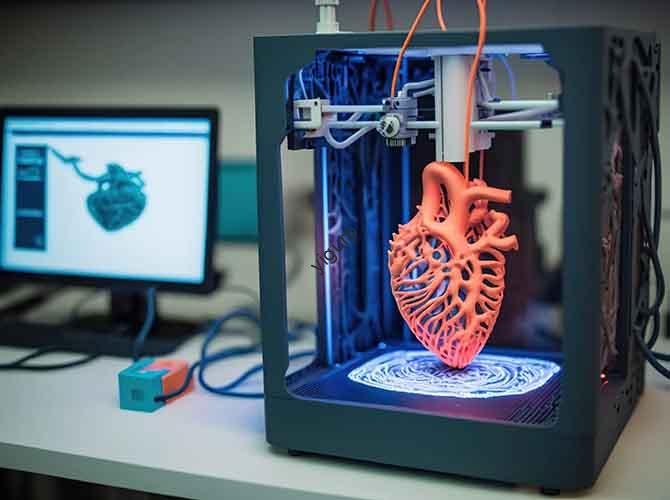
3D printing acts as a digital bridge between artistic vision and physical form, enabling creators to produce intricate, customizable, and reproducible crafts that are often impossible or impractical to make by hand. This technology democratizes complex fabrication, allowing artists, hobbyists, and cultural custodians to overcome traditional limitations of skill, time, and material waste. From hyper-detailed sculptures to personalized home decor, 3D printing crafts merge computational design with tangible artistry, opening a new chapter for both traditional and modern creative expression.
Introduction: The New Tool in the Artist’s Studio
For centuries, the creation of crafts was bound by the hand’s skill and the tool’s limitation. Today, a quiet revolution is unfolding in studios, museums, and homes worldwide. 3D printing crafts are not about replacing the artisan’s touch but augmenting it with unprecedented digital precision and creative freedom. This technology allows you to iterate designs at the speed of thought, produce geometrically complex works, and even engage in digital preservation. Whether you’re a ceramicist exploring new forms, a jewelry designer creating intricate pieces, or an institution safeguarding cultural heritage, 3D printing offers a versatile new medium. This guide explores how to harness this tool to solve real creative problems and expand your artistic horizons.
How Does 3D Printing Integrate with Traditional Craft Philosophies?
The fusion of additive manufacturing and craft is not a contradiction but an evolution. It follows the same core creative intent—transforming material into meaningful object—through a different process.
- From Hand-Tool to Digital Toolchain: The craftsperson’s chisel, brush, or loom becomes software like Blender, ZBrush, or Rhino. Mastery shifts from purely physical dexterity to include digital sculpting and parametric design, where forms can be algorithmically generated and adjusted with sliders.
- Materiality Reimagined: While traditional crafts use clay, wood, or metal, 3D printing introduces a new material palette. This includes photopolymer resins that cure to ceramic-like finishes, wood-infused filaments that can be sanded and stained, and wax-like resins designed for direct casting into precious metals. The craft lies in understanding and manipulating these materials’ behaviors.
- The “Handmade” in the Post-Process: The true fusion often happens after the print. A 3D-printed form becomes the armature or blank canvas for traditional techniques: hand-sanding, painting, patinating, glazing, or assembly. The artist’s touch is applied to the precision-made object, blending the best of both worlds.
What Are the Transformative Advantages for Creators?
3D printing solves specific, persistent challenges in the craft world, offering tangible benefits that go beyond novelty.
- Unlocking Geometrically Impossible Forms: Create organic lattices, interlocking puzzles, and gravity-defying overhangs that are simply unachievable through carving, casting, or assembling by hand. An artist can design a sculpture where internal volumes are more intricate than the exterior, playing with light and shadow in new ways.
- Perfect Replication and Scalable Customization: Produce an edition of 50 identical sculptures with zero variance. More powerfully, implement mass customization: use a digital template to automatically generate 50 unique pieces, each personalized with a different name, pattern, or size, with no extra setup cost. This makes limited editions and personalized craft goods economically viable.
- Digital Preservation and Restoration: For cultural heritage, 3D scanning and printing are transformative. Fragile artifacts can be non-invasively scanned, and perfect tactile replicas can be printed for handling and display, while originals are preserved. Missing pieces of broken relics can be digitally reconstructed and fabricated, aiding in sensitive restoration projects.
- Radical Reduction in Material Waste: Unlike subtractive methods (carving wood, milling stone), 3D printing is additive, using material only where needed. Support structures can often be recycled, and with filaments like PLA (derived from cornstarch), the process can be more sustainable. This aligns with a modern, conscious craft ethos.
Which 3D Printing Technologies Are Best Suited for Crafts?
Choosing the right technology is crucial, as each offers different aesthetics and material properties.
| Technology | Best For Craft Types | Key Material Options | Finish & Post-Processing |
|---|---|---|---|
| FDM/FFF (Filament) | Large sculptures, functional ware, prototypes, architectural models. | PLA (easy, colorful), PETG (tough), Wood/Ceramic/Metal-filled (composite aesthetic). | Visible layer lines require sanding, priming, and painting. Excellent for pieces where a handmade, textured feel is desired. |
| SLA/DLP (Resin) | High-detail jewelry, miniatures, intricate sculptures, mold-making masters. | Standard Resin (smooth), Tough/Durable Resin (functional parts), Castable Resin (for jewelry casting). | Glass-smooth surface off the printer. Can be polished, painted, electroplated, or cast directly into metal. |
| SLS (Powder) | Complex, durable functional art, interlocking assemblies, textile-like forms. | Nylon (PA11/PA12) – durable, slightly flexible, with a granular matte finish. | No support structures needed, allowing for incredible geometric freedom. Can be dyed or painted. |
What Does a Practical Workflow for 3D Printed Crafts Look Like?
Moving from idea to object involves a clear digital-to-physical pipeline.
- Conceptualization & Digital Design: This is the new “sketching” phase. Ideas are realized in 3D software. For traditional artists, starting with a physical sculpture, 3D scanning it, and then digitally remixing it can be a powerful entry point.
- Design for Manufacturability (DfAM) for Art: Consider print orientation to hide layer lines, add drainage holes for hollow pieces, and design clever breakaway support structures. Ensure wall thicknesses are appropriate for your material.
- Material Selection and Printing: Match your material to the final desired look. Will you be cold-casting with bronze powder? Then a smooth resin print is ideal. Do you want a warm, organic feel? A wood-filled filament, later stained and varnished, is perfect.
- Post-Processing & Artistic Finishing: This is where the craft truly comes alive.
- Support Removal & Cleaning: Carefully remove all supports and wash resin prints.
- Surface Perfection: Sand FDM prints, polish resin prints, or apply a filler primer for a paintable surface.
- Traditional Application: This is the stage for hand-painting, airbrushing, applying gold leaf, chemical patination, epoxy coating, or kiln-firing (for specialized ceramic resins).
How Are Artists and Institutions Applying This Today?
The proof is in the groundbreaking work already being done.
- Contemporary Sculpture: Artists like Joshua Harker create impossibly intricate cranial sculptures and flowing organic forms that are feats of computational design and 3D printing, pushing the boundaries of sculptural art.
- Modern Jewelry Design: The entire landscape of custom and designer jewelry has been transformed. Designers create parametric, algorithmically-generated rings and pendants, print them in castable resin, and then produce them in gold or silver, offering customization at an unprecedented level.
- Cultural Heritage Restoration: The Museum of Fine Arts, Boston and the British Museum have used 3D printing to reconstruct damaged artifacts, create interactive replicas for visitors, and produce exhibition mounts custom-fitted to fragile objects.
- Functional Art and Home Decor: Designers produce customizable lampshades with complex light-diffusing patterns, artistically designed vases, and bespoke architectural tiles, blurring the line between mass production and unique artistry.
What Are the Common Challenges and How to Overcome Them?
Adopting a new medium comes with a learning curve.
- The “Digital Divide” Skill Gap: Learning 3D software can be daunting. Solution: Start with intuitive sculpting apps like SculptGL or take advantage of vast online repositories (Thingiverse, MyMiniFactory) to modify existing designs before creating from scratch.
- Perception of “Cold” or “Soulless” Output: Critics may argue machine-made objects lack soul. Solution: Intentionally integrate clear hand-finishing—visible brush strokes, imperfect glazes, mixed media assembly—to imbue the piece with human gesture. The print is the canvas, not the final artwork.
- Technical Failures and Cost of Iteration: Failed prints waste time and material. Solution: Start simple. Master calibration with small test prints. View early failures as part of the learning process, no different from a ceramicist learning to control a kiln.
Conclusion: Crafting a Hybrid Future
3D printing does not spell the end of traditional craft; it heralds the beginning of a rich, hybrid practice. It is a powerful enabler, removing technical barriers and allowing creative vision to take center stage. The most compelling works will not be those that are purely 3D printed, but those that skillfully blend digital precision with analog warmth, algorithmic form with handmade finish. By embracing this tool, creators can preserve ancient techniques in new ways, explore geometries previously confined to the imagination, and make personalized, meaningful art more accessible than ever before. The future of craft is not a choice between the hand and the machine, but a synergy of both.
FAQ:
Q: Is 3D printing truly accessible for hobbyist crafters with a limited budget?
A: Absolutely. Entry-level FDM printers are now very affordable (often under $300), and a kilogram of PLA filament costs $20-$30. Free, powerful design software like Blender and Fusion 360 (for personal use) eliminates software costs. The main investment is time to learn the digital side of the craft.
Q: Can I create functional, food-safe items like cups or plates with 3D printing?
A: This is a significant challenge. The layer lines in FDM prints can harbor bacteria, and most 3D printing materials are not certified food-safe. For functional ware, the best practice is to use 3D printing to create a master model, then make a food-safe silicone mold, and finally cast the item using a certified resin, ceramic slip, or food-safe epoxy. Never directly use a typical 3D print for repeated food contact.
Q: How do I protect the intellectual property of my digital craft designs?
A: When sharing or selling digital files, use clear license agreements on platforms like Etsy or Cults3D. You can specify “for personal use only” or “commercial license available.” For physical sales, remember that the digital file is one product, and the finished, hand-finished physical object is another. The unique value often lies in the post-processing and final presentation that cannot be digitally copied.
Q: What’s the best way to add color? Through colored filament or painting?
A: It depends on the effect. Multi-material printing can create integrated color patterns but is more complex. Hand-painting offers total artistic control, uniqueness, and blending that printers cannot achieve. For a consistent, vibrant color on a detailed piece, spray priming and airbrushing after printing often yield the most professional fine art results.
Discuss Your Projects with Yigu Rapid Prototyping
Are you an artist, designer, or cultural institution looking to explore the boundaries of 3D printed craft? Whether you need to produce a complex limited edition series, create a master model for bronze casting, or digitally preserve and replicate a delicate artifact, our team at Yigu Rapid Prototyping can help you navigate from concept to finished piece.
We provide:
- Expert Material Guidance: Selecting the right technology (high-detail SLA, durable SLS, or composite FDM) for your artistic vision.
- Design for Manufacturability Consulting: Ensuring your digital designs are optimized for printing and post-processing.
- Professional Finishing Services: From smooth priming and painting to specialty coatings and assembly, we help you achieve the final gallery-ready finish.
Contact us to discuss your most ambitious creative projects. Let’s collaborate to turn your visionary craft ideas into stunning physical reality.