
3D printing is no longer just a hobby or a prototype tool. It has become a real, working part of the car industry. Today, it makes custom trim, safety-certified plastics, and even strong metal engine parts for cars people drive daily. This article breaks down how 3D printing is used now, who uses it (car makers vs. aftermarket shops), what materials work best, and why it matters for classic cars and electric vehicles (EVs). By the end, you’ll know if 3D printing car parts is a passing trend or a permanent change.
What’s Changed for 3D Printing in Cars?
Not long ago, 3D printing was only for small, useless trinkets or fake prototypes. It couldn’t make parts strong enough for real cars. But better materials and faster printers changed that. Now, major car brands and local repair shops use it every day. This isn’t a test—it’s a full shift in how car parts are made and supplied.
Two key things drove this change: advanced polymers (plastics) that pass safety tests and metal 3D printing that makes strong parts. These tools let car teams make parts that are lighter, stronger, and cheaper than traditional ones. They also fix old problems, like finding rare parts for classic cars or making unique parts for EVs.
Who Uses 3D Printing: OEMs or Aftermarket?
3D printing serves two big groups in the car world: Original Equipment Manufacturers (OEMs) and aftermarket shops. Each uses it for different goals, but both rely on it to solve big problems. Understanding their differences shows how far 3D printing has come.
What Do OEMs Use It For?
OEMs are the big car makers like BMW, Volkswagen, and Ford. They use 3D printing mainly to make their factories run better. The biggest use? Tools like jigs (guides for building parts) and fixtures (holders for parts during assembly).
Printing these tools cuts costs by up to 50% and slashes lead times from weeks to days. For example, BMW prints over 100,000 jigs and fixtures every year for its factories. This lets them change production lines faster when making new car models.
OEMs also use 3D printing to combine parts and make them lighter. With special software, engineers design parts with complex shapes that can’t be made with casting or machining. These shapes use material only where needed, so parts are lighter but just as strong. This helps improve fuel efficiency and EV range.
Right now, OEMs don’t use 3D printing for mass-produced parts (like door handles for every car). But they do use it for small-run performance models. For example, Ford used 3D printing to make intake manifolds for its GT supercar. The part is one piece instead of 16, so it’s lighter and more efficient.
What Do Aftermarket Shops Use It For?
Aftermarket shops are local repair shops, custom car builders, and classic car restorers. They use 3D printing for customization and restoration—two things traditional manufacturing can’t do cheaply.
For customization, enthusiasts use it to make unique parts. Think custom shift knobs, air vents, or exterior trim. A local shop near me printed a custom grille for a 2010 Honda Civic last month. The customer wanted a unique look, and 3D printing made it possible for under $100. Before, that would cost $500 or more with traditional tools.
The biggest win for aftermarket shops is restoration. Classic cars often have broken plastic clips or brittle trim that’s impossible to find. The original tooling is long gone, so no new parts exist. 3D printing fixes this with reverse engineering.
Here’s how it works: A restorer scans the broken part (or a matching part from another car) with a 3D scanner. They use CAD software to fix the digital model, even strengthening weak points. Then they print it with a strong plastic like carbon fiber-reinforced nylon. The new part is often stronger than the original. I worked with a shop that used this process to save a 1967 Chevrolet Camaro—they printed a broken dashboard clip that hadn’t been made in 50 years.
OEM vs. Aftermarket: A Quick Compare
| Feature | OEM Application | Aftermarket Application |
|---|---|---|
| Goal | Factory efficiency, lighter parts, innovation | Customization, restoration, small batches |
| Scale | High-volume tools, small-run final parts | Single parts or small batches (1-100) |
| Common Materials | Nylon, TPU (for tools), metal (for parts) | ASA, carbon fiber nylon, consumer plastics |
| Key Benefit | Faster production, lower tooling costs | Rare parts available, unique designs |
| Example Part | Assembly jig, intake manifold, bracket | Classic car clip, custom shift knob, grille |
Can 3D Printed Plastics Pass Crash Tests?
When people hear “3D printed plastic,” they think of brittle, weak parts. But the plastics used in car 3D printing are engineering-grade polymers. They’re designed to meet strict safety standards, including crash tests. These materials are tough enough for interior and exterior car parts.
What Does “Crash-Test Certified” Mean?
A crash-test certified plastic meets safety rules set by agencies like the U.S. Department of Transportation. These rules test three key things:
- Tensile strength: How well the part resists being pulled apart
- Impact resistance: How well it handles sudden hits (like a crash)
- Energy absorption: How well it soaks up force to protect people in the car
For example, FMVSS 201 (a U.S. standard) tests interior parts to make sure they don’t hurt occupants in a crash. FMVSS 302 tests if cabin parts burn too fast. 3D printing material makers now provide data sheets proving their plastics pass these tests. This lets engineers use them for real car parts.
Top 4 Plastics for Car 3D Printing
Not all plastics work for car parts. These four are the most common and reliable, each for different jobs:
1. Nylon (PA11, PA12)
Nylon is the workhorse of car 3D printing. It’s tough, flexible, and resists chemicals like fuel and oil. This makes it perfect for parts like fuel lines, connector clips, and intake manifold pieces. Sintered PA12 (printed with a powder bed printer) is even stronger—it doesn’t get brittle over time.
A major OEM uses PA12 to print connector clips for its EVs. The clips are lighter than metal ones and cost 30% less to make.
2. ASA (Better Than ABS)
ASA is a step up from ABS, a common plastic. Both are strong, but ASA resists UV light (sunlight). This means it doesn’t yellow or break down when used for exterior parts. It’s ideal for mirror housings, grilles, and sensor covers.
A local aftermarket shop printed ASA mirror housings for a fleet of delivery vans. After a year in the sun, the housings still look new—no fading or cracking.
3. ULTEM (PEI)
ULTEM is for high-temperature parts. It can handle heat over 200°C (392°F) and is flame-resistant. This makes it perfect for under-the-hood parts like electrical connectors and sensor housings near the engine.
Ford uses ULTEM to print sensor brackets for its F-150 trucks. The brackets sit near the exhaust and don’t melt or warp.
4. Carbon Fiber-Reinforced Nylon (PA-CF)
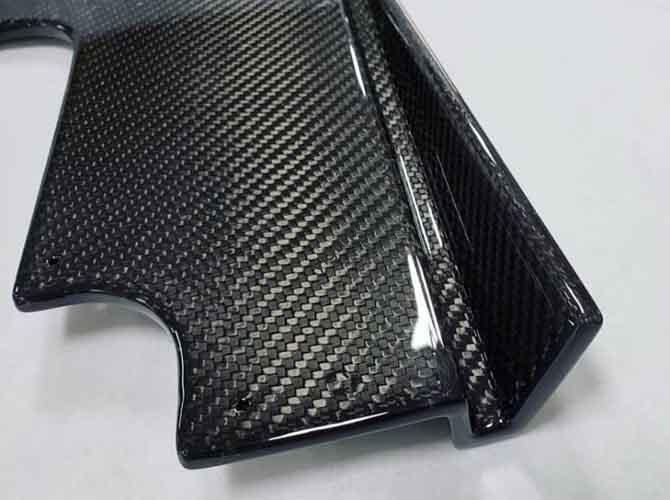
This plastic mixes nylon with carbon fiber. It’s as strong as aluminum but much lighter. It’s used for structural parts like chassis brackets, suspension mounts, and aerodynamic parts. For performance cars, this is a game-changer.
A custom car builder used PA-CF to print a rear wing for a Subaru WRX. The wing is 40% lighter than a metal one but just as strong. It also improved the car’s speed on the track.
Can 3D Print Metal Car Parts Safely?
Plastics are great for many parts, but the toughest jobs need metal. Metal 3D printing (like DMLS and Binder Jetting) now makes safety-critical parts like brake pedals and exhaust manifolds. These parts are lighter, stronger, and more efficient than traditional ones.
The real magic is topology optimization. This software designs parts to use material only where needed. It creates organic, bone-like shapes that are impossible to make with casting or machining. These shapes are lighter but just as strong—perfect for cars.
Example: 3D Printed Brake Pedals
A traditional brake pedal is a solid piece of steel or aluminum. It’s heavy and uses more material than needed. A 3D printed, topology-optimized pedal is different.
Engineers first define the forces on the pedal (like when you hit the brakes hard). They then use software to remove any material that doesn’t help with strength. The result is a web-like shape that’s 30-50% lighter. It’s also just as strong—maybe even stronger.
Koenigsegg, a hypercar maker, uses 3D printed titanium brake pedals for its Jesko model. The pedals are 40% lighter than traditional ones, which improves the car’s performance and handling.
Case Study: 3D Printed Exhaust Manifolds
Exhaust manifolds collect gas from engine cylinders and route it out. Their shape affects engine power. Traditional manifolds are made from cast iron or welded steel—they have rough inner surfaces that slow gas flow.
3D printed manifolds solve this. They’re made from Inconel, a superalloy that handles high heat. Engineers design them with smooth, curved inner channels that let gas flow better. This improves engine power by 5-10%.
Porsche used 3D printing to make exhaust manifolds for its 911 GT2 RS. The manifolds are one piece (no welds) and have perfect gas flow. They helped the car’s engine make 700 horsepower—10% more than the traditional manifold.
Top Metals for 3D Printing Car Parts
- Titanium (Ti64): Light and strong—used for chassis and suspension parts. It’s expensive but worth it for high-performance cars.
- Aluminum (AlSi10Mg): Cheap and lightweight—used for heat exchangers and electronic housings.
- Inconel/Stainless Steel: Handles high heat and corrosion—used for exhaust parts and turbochargers.
Does 3D Printing Fix Spare Parts Shortages?
One of 3D printing’s biggest wins is solving the spare parts problem. For old cars, rare models, or low-volume vehicles, spare parts are hard to find. OEMs stop making them, and tooling is scrapped. 3D printing fixes this with digital warehouses.
What’s a Digital Warehouse?
A digital warehouse is a collection of 3D CAD files for car parts. Instead of storing thousands of physical parts in a warehouse, companies store digital files. When someone needs a part, they print it on demand. This eliminates the need for physical stock and makes parts available forever.
Example: Porsche Classic Program
Porsche Classic supports old Porsche models (out of production). They used to struggle with rare parts—like clutch release levers for the 1980s Porsche 959. Now, they have a digital warehouse with over 20 3D printed parts.
When a customer orders a part, Porsche sends the digital file to a certified 3D printer. The part is printed, tested to meet original specs, and shipped. This process takes 3-5 days instead of weeks (or months) of searching for a used part. It also costs less than retooling to make new parts.
Benefits of Digital Warehouses
- Lower Costs: No more expensive warehouses or stockpiling parts.
- No Minimum Orders: Print one part or 100—cost per part is the same.
- More Sustainable: No waste from overproduction or obsolete parts.
- Better Parts: Fix weak points in the original design when printing.
Why Is 3D Printing Key for EVs?
The shift to electric vehicles is the biggest change in the car industry in 100 years. EVs need lighter parts, better thermal management, and new designs. 3D printing is perfect for all three—it’s essential for the future of EVs.
Lightweighting for Longer EV Range
EV range depends on weight. Every pound saved adds more miles per charge. 3D printing lets engineers make parts that are lighter but just as strong. For example, Tesla uses 3D printing to make battery enclosure brackets. The brackets are 30% lighter than traditional ones, adding 5-10 miles of range per charge.
EV startups like Rivian use 3D printing for chassis parts. Their R1T pickup truck has 3D printed suspension brackets that cut weight by 25%. This helps the truck get 314 miles of range—more than many competitors.
Better Thermal Management for EVs
EV batteries and electronics get hot. If they overheat, they lose power or break. 3D printing makes cooling parts with complex internal channels that maximize heat transfer. These parts are one piece (no welds), so they don’t leak.
Volkswagen uses 3D printed cold plates for its ID.4 EV. The cold plates have tiny channels that circulate coolant around the battery. They keep the battery 10-15°C cooler, which extends its life and improves performance.
More Design Freedom for EVs
EVs have a “skateboard” design—battery, motors, and suspension are under the floor. This gives designers more space for unique body styles. 3D printing lets them turn these ideas into reality without expensive tooling.
Lucid Motors used 3D printing to prototype its Air sedan. They printed over 100 parts for the interior and chassis. This let them test new designs in weeks instead of months. The Air now has a sleek, futuristic look that stands out from other EVs.
Conclusion
3D printing car parts is no longer a future idea—it’s here now. It’s used by big OEMs to make factories faster and cheaper, by aftermarket shops to restore classic cars and make custom parts, and by EV makers to build lighter, better vehicles. The materials (from crash-tested plastics to strong metals) are reliable, and the benefits (lower costs, better parts, less waste) are clear.
This technology is preserving the past (saving classic cars with rare parts) and building the future (enabling the next generation of EVs). It’s not replacing traditional manufacturing—it’s working with it to make the car industry better. As printers get faster and materials get cheaper, 3D printing will become even more common in cars we drive every day. The road ahead for car manufacturing is being printed one layer at a time.
FAQ
Is 3D printing car parts safe? Yes—if you use the right materials. Engineering-grade plastics and metals pass strict safety tests (like FMVSS) and are used for safety-critical parts like brake pedals and manifolds.
How much does a 3D printed car part cost? It depends on size and material. Small plastic parts (like clips) cost $20-$100. Large metal parts (like exhaust manifolds) cost $500-$5,000. It’s often cheaper than traditional parts for rare or custom items.
How long does it take to 3D print a car part? Small parts take 1-4 hours. Large or complex parts (like metal brackets) take 12-48 hours. This is faster than waiting for traditional parts (which can take weeks).
Can 3D printed parts replace all traditional car parts? No—mass-produced parts (like door handles) are still cheaper to make with casting or injection molding. But 3D printing is perfect for rare parts, custom parts, and small batches.
Do all car brands use 3D printing? Most major brands (BMW, Ford, Porsche, Tesla) use 3D printing for tools or parts. Smaller brands and aftermarket shops are also adopting it quickly.
Discuss Your Projects with Yigu Rapid Prototyping
Whether you’re an OEM looking to optimize factory tools, an aftermarket shop needing custom or restoration parts, or an EV team designing lightweight components, Yigu Rapid Prototyping can help. Our team has years of experience in 3D printing car parts—from crash-tested plastics to high-strength metals. We offer fast turnaround times, competitive pricing, and certified quality. Contact us today to discuss your project and see how 3D printing can bring your car parts ideas to life.