
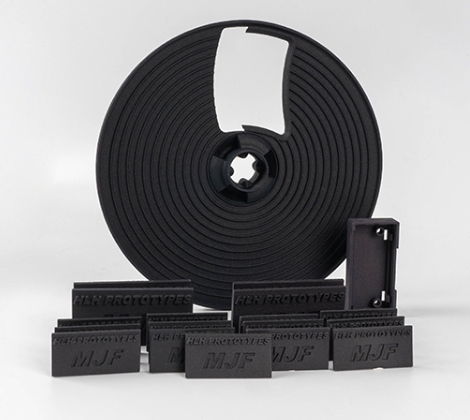
Selecting the optimal high-strength 3D printing material requires balancing tensile strength, thermal stability, chemical resistance, and manufacturability against specific application demands. From advanced thermoplastics like PEEK and ULTEM to engineering alloys such as titanium and tool steels, the modern palette of materials enables the production of end-use parts that rival and sometimes surpass traditional manufacturing. This guide provides engineers and procurement specialists with a technical, application-driven framework to navigate the top 10 high-performance materials, ensuring informed decisions for functional prototyping, tooling, and direct digital manufacturing.
Introduction: The Evolution of Strength in Additive Manufacturing
Gone are the days when 3D printing was synonymous with brittle prototypes and visual models. Today, high-strength 3D printing materials form the backbone of functional applications in aerospace, automotive, medical, and industrial sectors. The definition of “strength” in this context is multidimensional, encompassing not just tensile and yield strength, but also fatigue endurance, impact toughness, heat deflection temperature (HDT), and environmental stability. Choosing the correct material is a critical engineering decision that impacts part performance, total cost, and project timeline. This guide cuts through marketing specs to deliver a clear, comparative analysis of the leading materials, backed by key data and real-world use cases.
How Do You Define “High-Strength” for 3D Printed Parts?
Strength is not a single number but a portfolio of properties. A comprehensive evaluation for engineering applications must consider:
- Mechanical Properties: Tensile Strength (resistance to pulling), Yield Strength (point of permanent deformation), Elongation at Break (ductility), Flexural Modulus (stiffness), and Impact Strength (Izod or Charpy, resistance to sudden shock).
- Thermal Performance: The Heat Deflection Temperature (HDT) is critical—the temperature at which a polymer deforms under load. For metals, continuous service temperature and creep resistance are key.
- Chemical & Environmental Resistance: Resistance to oils, solvents, UV radiation, and moisture absorption, which can plasticize polymers and degrade performance over time.
- Additive Manufacturing Suitability: This includes warpage tendency, layer adhesion strength, need for a heated chamber, and post-processing requirements like thermal annealing or Hot Isostatic Pressing (HIP) for metals.
What Are the Leading High-Strength Polymer Materials?
Polymer materials offer an excellent strength-to-weight ratio and are accessible via powder bed fusion and extrusion technologies.
1. PEEK (Polyether Ether Ketone)
The pinnacle of high-performance thermoplastics.
- Key Strengths: Exceptional long-term thermal resistance (continuous use up to 250°C), innate flame retardancy, outstanding chemical resistance to hydrocarbons and solvents, and excellent fatigue and wear resistance.
- AM Process: FFF/FDM with a high-temperature, fully enclosed printer chamber (often >120°C ambient) is required.
- Typical Applications: Aerospace brackets, semiconductor manufacturing components, chemically resistant seals and valves, and sterilizable medical guides.
- Data Point: Tensile Strength: 90-100 MPa, HDT @ 1.8 MPa: 315°C.
2. PEI (Polyetherimide) – ULTEM™ 9085 & 1010
A family of amorphous thermoplastics known for balance and certification.
- Key Strengths: High strength-to-weight ratio, inherent flame, smoke, and toxicity (FST) compliance (crucial for aerospace interiors), good chemical resistance, and bio-compatibility (for 1010).
- AM Process: FFF/FDM with a heated chamber.
- Typical Applications: 9085: Aircraft ducting, cabin components, drone frames. 1010: Medical sterilization trays, food-processing tools.
- Data Point: ULTEM 9085 Tensile Strength: 72 MPa, HDT: 153°C.
3. Carbon Fiber-Reinforced Nylons (PA-CF)
Nylon (PA12, PA6) infused with chopped or continuous carbon fiber.
- Key Strengths: Outstanding stiffness-to-weight ratio, reduced warpage compared to unreinforced nylon, and good fatigue resistance. Continuous fiber prints (using systems like Markforged) offer quasi-isotropic strength approaching aluminum.
- AM Process: FFF/FDM (chopped fiber) or dedicated continuous fiber processes.
- Typical Applications: Robotic end-effectors, composite molding tools, jigs, fixtures, and structural brackets replacing machined aluminum.
- Data Point: PA12-CF (chopped) Tensile Strength: 85 MPa, Flexural Modulus: 7.9 GPa.
4. High-Temperature Resins (e.g., Somos® PerFORM)
Advanced photopolymers engineered for stereolithography.
- Key Strengths: Extreme stiffness and thermal stability rivaling some thermoplastics, with the fine feature resolution of resin printing. Excellent for detailed, heat-resistant parts.
- AM Process: SLA/DLP.
- Typical Applications: Wind tunnel testing models, under-the-hood automotive prototypes, hot air ducts.
- Data Point: Tensile Strength: 60-80 MPa, HDT: 280°C+.
What Are the Dominant High-Strength Metal Alloys?
Metal additive manufacturing delivers fully dense parts with properties meeting wrought standards.
5. Ti-6Al-4V (Grade 5 & 23 ELI)
The titanium workhorse for weight-critical, high-strength applications.
- Key Strengths: Excellent strength-to-weight ratio, outstanding corrosion resistance, and biocompatibility (Grade 23 ELI).
- AM Process: Laser Powder Bed Fusion (LPBF/DMLS/SLM), Electron Beam Melting (EBM).
- Typical Applications: Aerospace structural components, biomedical implants, high-performance automotive parts.
- Data Point: Yield Strength: 1100 MPa, Ultimate Tensile Strength: 1200 MPa.
6. Aluminum Alloys (AlSi10Mg, AISi7Mg)
Lightweight, good strength, and excellent thermal conductivity.
- Key Strengths: Low density, good specific strength, and high thermal conductivity. AlSi10Mg offers high strength and hardness; newer Scalmalloy® offers enhanced damage tolerance.
- AM Process: LPBF.
- Typical Applications: Heat exchangers, lightweight brackets, drone components, automotive cooling systems.
- Data Point: AlSi10Mg Yield Strength: 240 MPa, UTS: 460 MPa.
7. Stainless Steels (17-4 PH, 316L)
Corrosion-resistant alloys for demanding environments.
- 17-4 PH: A precipitation-hardening martensitic steel. After heat treatment, it achieves high strength and hardness with good corrosion resistance.
- 316L: An austenitic stainless steel prized for its superior corrosion resistance and biocompatibility, with good ductility.
- AM Process: LPBF.
- Typical Applications: 17-4 PH: Turbine blades, injection molding inserts. 316L: Marine components, chemical processing parts, surgical instruments.
- Data Point: 17-4 PH (H900) UTS: 1310 MPa; 316L UTS: 580 MPa.
8. Nickel-Based Superalloys (Inconel 718, 625)
Designed for extreme environments.
- Key Strengths: Exceptional high-temperature strength, oxidation and corrosion resistance, and retention of mechanical properties under stress at temperatures exceeding 700°C.
- AM Process: LPBF, EBM.
- Typical Applications: Gas turbine engine components (nozzles, blades), rocket engine parts, high-temperature fixtures.
- Data Point: Inconel 718 Yield Strength (RT): 1100 MPa; (650°C): 1000 MPa.
9. Tool Steels (H13, Maraging Steel 1.2709)
For demanding tooling and high-wear applications.
- H13: A hot-work tool steel with high toughness and thermal fatigue resistance.
- Maraging Steel (1.2709): Achieves exceptional strength and hardness through aging heat treatment, with good dimensional stability during processing.
- AM Process: LPBF.
- Typical Applications: H13: Conformal-cooled injection molds, die-casting cores. Maraging Steel: High-strength aerospace brackets, mold inserts.
- Data Point: Maraging Steel UTS: 1150+ MPa after aging.
10. Cobalt-Chrome Alloys (CoCr)
For wear and corrosion resistance in biocompatible or high-temperature settings.
- Key Strengths: Excellent wear resistance, high stiffness, corrosion resistance, and biocompatibility.
- AM Process: LPBF, EBM.
- Typical Applications: Dental crowns and bridges, orthopedic implants, turbine blades.
- Data Point: UTS: 900-1200 MPa.
How Do You Select the Right Material? (Decision Framework)
Choosing involves a systematic trade-off analysis. Use the following comparative table as a starting point:
| Material Category | Exemplary Materials | Key Strength | Primary Limitation | Ideal Use Case |
|---|---|---|---|---|
| High-Temp Polymer | PEEK, ULTEM | Thermal/Chemical Resistance | High Cost, Difficult Printing | Sterilizable Medical, Aerospace Interiors |
| Reinforced Polymer | PA-CF, PA-GF | Stiffness/Weight Ratio | Anisotropic, Brittle | Lightweight Structural Brackets, Tooling |
| Titanium Alloy | Ti-6Al-4V | Strength/Weight, Biocompatibility | High Cost, Refractory | Aerospace Structures, Implants |
| Aluminum Alloy | AlSi10Mg | Light Weight, Thermal Conductivity | Lower Strength vs. Steel/ Ti | Thermal Management, Lightweight Framing |
| Stainless Steel | 17-4 PH, 316L | Corrosion Resistance, Strength | Weight | Corrosive Environments, Tooling |
| Nickel Superalloy | Inconel 718 | Extreme Temp Strength | Very High Cost, Difficult to Machine | Jet Engine/ Rocket Components |
| Tool Steel | Maraging Steel | Ultra-High Strength & Hardness | Requires Post-Heat Treat | High-Stress Tooling, Aerospace Fixtures |
Selection Process:
- Define Functional Requirements: Load cases, service temperature, environmental exposure.
- Identify Constraining Priority: Is it maximum temperature (PEEK/Inconel), weight (Ti/Al), corrosion (316L/CoCr), or stiffness (CF-Nylon)?
- Consider Manufacturing Reality: Do you have in-house capability for high-temp FFF or metal LPBF? What is the budget for printing and post-processing?
- Prototype and Test: When in doubt, print and mechanically test material coupons or small-scale prototypes.
What Are the Critical Post-Processing Steps for Maximum Strength?
Achieving datasheet properties often requires deliberate post-processing:
- Polymers (PEEK, ULTEM, Nylon): Thermal Annealing is crucial. It relieves internal stresses from layer-by-layer deposition, increases crystallinity (for semi-crystalline polymers like PEEK), and can improve interlayer bonding, boosting tensile and impact strength.
- Metals (Ti, Steel, Inconel): Stress Relief & HIP. Hot Isostatic Pressing (HIP) is a standard for critical aerospace parts. It uses high heat and isostatic gas pressure to eliminate internal micro-porosity, significantly improving fatigue life and ductility. Solution Aging and Heat Treatment (e.g., for 17-4 PH, Maraging Steel) are mandatory to achieve peak strength.
Conclusion: Matching Material to Mission
The landscape of high-strength 3D printing materials is rich and specialized. Success lies in moving beyond a simple “strongest material” mindset to a systems-engineering approach. For instance, a carbon-fiber nylon may be the optimal choice for a lightweight automated fixture, while a titanium alloy is non-negotiable for a flight-critical aerospace bracket, and PEEK is unparalleled for a chemical pump component. By rigorously defining application requirements, understanding the nuances of each material family, and factoring in the entire manufacturing workflow—from print preparation to essential post-processing—engineers and buyers can confidently leverage these advanced materials to create lighter, stronger, and more innovative end-use products.
FAQ:
Q: Can 3D printed parts truly match the strength of forged or machined metal?
A: Yes, for many alloys when processed correctly. LPBF-produced Ti-6Al-4V and Inconel 718, after proper heat treatment and HIP, can meet or exceed the tensile and yield strength of their wrought equivalents. The primary difference often lies in anisotropy; vertically printed parts may have slightly lower Z-axis properties. For the highest reliability, critical aerospace components are often redesigned for AM and validated with rigorous testing.
Q: Is continuous carbon fiber stronger than chopped carbon fiber in 3D printing?
A: Significantly, in the direction of the fiber. Chopped CF increases stiffness and reduces warpage but behaves like an isotropic composite. Continuous carbon fiber placement (along stress paths) creates a composite part where the fiber carries the load, offering tensile strength and stiffness an order of magnitude higher in that direction, truly competing with metals.
Q: Why is a heated build chamber essential for printing PEEK or ULTEM?
A: To control crystallization and prevent warping. These materials have very high glass transition and melting temperatures. A hot chamber (often >120°C for PEEK) keeps the entire part at an elevated temperature during the print, allowing controlled, slow cooling. This minimizes residual thermal stress that causes layer delamination and warping, and is critical for achieving proper crystallinity and mechanical properties.
Q: What is the single most important factor for achieving high strength in FDM/FFF prints?
A: Perfect layer adhesion. Strength is fundamentally limited by the bond between layers. This is achieved through: 1) Optimal extrusion temperature (for full polymer melting), 2) A hot chamber (to keep previous layers warm), and **3) Sufficient *interlayer compression* (from proper extrusion flow and nozzle height). Without this, the part will fail at the layer lines regardless of the base material strength.
Discuss Your Projects with Yigu Rapid Prototyping
Selecting and processing high-strength materials requires specialized expertise and equipment. Are you developing a part that must withstand extreme temperatures, corrosive chemicals, or high mechanical loads?
At Yigu Rapid Prototyping, we provide end-to-end support for high-performance additive manufacturing:
- Material Expertise: We guide clients through the selection of engineering-grade polymers (PEEK, ULTEM, CF-Nylon) and certified metal alloys (Ti-6Al-4V, Inconel, AlSi10Mg) based on your technical requirements.
- Industrial-Grade Equipment: Our facility houses high-temperature FFF systems, LPBF metal printers, and industrial SLA capable of processing these advanced materials under controlled conditions.
- Critical Post-Processing: We offer essential services including thermal annealing ovens, Hot Isostatic Pressing (HIP) partnerships, and CNC post-machining to ensure your parts achieve their maximum potential strength and dimensional accuracy.
- Validation & Testing: We can provide material test reports, coordinate measuring machine (CMM) inspection, and connect you with labs for mechanical and chemical resistance testing.
Contact our engineering team for a consultation. Let’s analyze your project’s demands and determine the optimal high-strength material and process to deliver a part that performs reliably in the most demanding environments.