
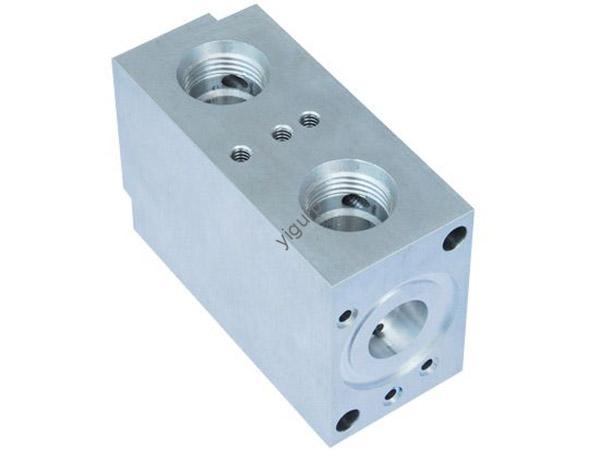
Aço inoxidável XM-19 (também conhecido como UNS S20910) é uma liga austenítica de alto desempenho projetada para extrema resistência e resistência à corrosão. Its unique composição química—rich in chromium, níquel, molibdênio, e nitrogênio – o diferencia dos aços inoxidáveis padrão, tornando-o ideal para ambientes agressivos, como fábricas de processamento químico ou sistemas de água marinha. Neste guia, vamos detalhar suas principais características, usos no mundo real, processos de fabricação, e como ele se compara a outros materiais, helping you select it for projects that demand reliability in tough conditions.
1. Key Material Properties of XM-19 Stainless Steel
The superiority of XM-19 stainless steel starts with its carefully balanced composição química, which shapes its exceptional propriedades mecânicas, reliable propriedades físicas, and other critical characteristics.
Composição Química
XM-19’s formula is optimized for corrosion resistance and strength, with key elements including:
- Conteúdo de cromo: 20-22% (forms a thick, stable oxide layer—core to its excellent corrosion resistance)
- Nickel content: 11-13% (stabilizes the austenitic structure for ductility and enhances toughness)
- Conteúdo de molibdênio: 2.5-3.5% (aumenta pitting resistance e stress corrosion cracking resistance in chloride-rich environments)
- Conteúdo de carbono: ≤0.06% (low carbon minimizes intergranular corrosion, critical for welded parts like piping)
- Manganese content: ≤2% (improves strength without reducing flexibility)
- Silicon content: ≤1% (aids in deoxidation during manufacturing, ensuring purity)
- Phosphorus content: ≤0.045% (controlled to avoid brittleness, which could lead to mechanical failure)
- Sulfur content: ≤0.03% (ultra-low to maintain corrosion resistance and prevent contamination in food/pharmaceutical applications)
- Nitrogen content: 0.2-0.4% (a key additive—enhances high tensile strength without sacrificing ductility)
Propriedades Físicas
| Propriedade | Typical Value for XM-19 Stainless Steel |
| Densidade | 7.8 g/cm³ |
| Condutividade Térmica | 15 C/(m·K) (a 20ºC) |
| Capacidade Específica de Calor | 0.46 J/(g·K) (a 20ºC) |
| Coeficiente de Expansão Térmica | 16 × 10⁻⁶/°C (20-500°C) |
| Propriedades Magnéticas | Non-magnetic (even after cold working—ideal for applications where magnetism is a concern, like medical devices) |
Propriedades Mecânicas
XM-19 delivers impressive strength while retaining the ductility needed for forming and fabrication:
- High tensile strength: 750-900 MPa (25% higher than standard austenitic grades like 316L)
- Força de rendimento: 400-550 MPa (2x higher than 316L, reducing material thickness needs for structural parts)
- Alongamento: 30-40% (em 50 mm—allows bending and forming of complex shapes like storage tank seams)
- Dureza: 180-220 Brinell, 80-90 Rockwell B, 190-230 Vickers (harder than 316L but still machinable)
- Força de fadiga: 320-380 MPa (at 10⁷ cycles—critical for parts under repeated stress, like pump shafts)
- Resistência ao impacto: 100-150 J. (at room temperature—resists cracking from sudden impacts, like marine equipment collisions)
Outras propriedades críticas
- Excellent corrosion resistance: Outperforms 316L in harsh environments—resists acids (por exemplo, sulfuric acid), industrial chemicals, and saltwater.
- Pitting resistance: Superior—molybdenum and nitrogen prevent pitting in chloride concentrations up to 50,000 ppm (por exemplo, seawater or chemical brines).
- Stress corrosion cracking resistance: Very good—handles tensile stress in corrosive settings (por exemplo, chemical reactor vessels) better than 316L.
- Resistência ao desgaste: Good—harder than standard austenitic grades, making it suitable for parts with friction (por exemplo, food processing blades).
- Usinabilidade: Moderate—easier to machine than duplex stainless steels; requires sharp carbide tools and cooling to avoid overheating.
- Weldability: Excellent—can be welded via MIG, TIG, or stick methods without preheating; welds retain strength and corrosion resistance with proper passivation.
2. Real-World Applications of XM-19 Stainless Steel
XM-19’s blend of excellent corrosion resistance e high tensile strength makes it ideal for industries where materials face aggressive chemicals, saltwater, or frequent sterilization. Here are its most common uses:
Chemical Processing Industry
- Storage tanks: Tanks holding acids (por exemplo, hydrochloric acid) or solvents use XM-19—its corrosion resistance prevents leaks and contamination of chemicals.
- Piping systems: Pipes transporting corrosive fluids (por exemplo, caustic soda) use XM-19—thinner walls (due to high strength) reduce installation costs.
- Reactors: Chemical reaction vessels use XM-19—handles high temperatures (até 600ºC) and corrosive reactants without degrading.
Exemplo de caso: A chemical plant replaced 316L stainless steel with XM-19 for its sulfuric acid storage tanks. The XM-19 tanks lasted 12 years (contra. 5 years for 316L) and eliminated $200,000 in annual replacement costs.
Food and Beverage & Pharmaceutical Industries
- Food and beverage industry: Processing equipment (por exemplo, tomato paste mixers) and sanitary fittings use XM-19—resists corrosion from food acids and meets FDA standards. Its smooth surface (after electropolishing) prevents bacteria buildup.
- Pharmaceutical industry: Sterile mixing vessels and pill presses use XM-19—ultra-pure (low sulfur) and withstands repeated autoclaving (121°C) without losing biocompatibility.
Pulp and Paper & Marine Industries
- Pulp and paper industry: Bleach plant equipment (por exemplo, chlorine dioxide reactors) uses XM-19—resists corrosion from harsh bleach chemicals that damage standard steels.
- Marine industry: Seawater cooling systems and ship hull components use XM-19—resists saltwater pitting and reduces maintenance compared to 316L.
Medical Industry
- Instrumentos cirúrgicos: Scalpels and forceps use XM-19—non-magnetic (compatible with MRI machines), corrosion-resistant to bodily fluids, and easy to sterilize.
- Medical devices: Insulin pumps and catheter housings use XM-19—small, preciso, and safe for repeated skin contact.
3. Manufacturing Techniques for XM-19 Stainless Steel
Producing XM-19 stainless steel requires precision to maintain its chemical balance and performance. Here’s the process:
1. Metallurgical Processes (Chemical Control)
- Electric Arc Furnace (EAF): Melts scrap steel, cromo, níquel, and molybdenum at 1,650-1,750°C. Nitrogen gas is injected into the molten alloy to reach the target 0.2-0.4% content—critical for strength.
- Basic Oxygen Furnace (BOF): For large-scale production—blows oxygen to remove impurities (por exemplo, carbono, fósforo), then adds alloying elements to fine-tune the composition.
2. Rolling Processes
- Hot rolling: The molten alloy is cast into slabs, heated to 1,100-1,200°C, and rolled into thick shapes (plates, bars) for structural parts like storage tanks or reactor vessels.
- Cold rolling: Cold-rolled to make thin sheets (por exemplo, for pharmaceutical equipment or medical device casings) with a smooth surface—improves dimensional accuracy and hardness.
3. Tratamento térmico
- Solution annealing: Heated to 1,050-1,150°C and held for 30-60 minutos, then water-quenched. This dissolves any precipitated carbides, restoring corrosion resistance and ductility—essential for welded parts.
- Stress relief annealing: Heated to 800-900°C for 1-2 horas, then cooled slowly. Reduces internal stress from welding or forming (por exemplo, tank bending) without lowering strength.
- Quenching and tempering: Rarely used—XM-19’s strength comes from its chemical composition (not heat treatment), so solution annealing is typically sufficient.
4. Forming and Surface Treatment
- Forming methods:
- Press forming: Uses hydraulic presses to shape parts like reactor heads or food processing bowls—done at room temperature to avoid altering the alloy’s structure.
- Bending: Creates angles for piping or tank seams—controlled bending speeds prevent cracking (due to high strength).
- Usinagem: Uses CNC machines with carbide tools to make precise shapes (por exemplo, medical instrument tips). Coolant is required to prevent overheating and tool wear.
- Welding: Uses TIG welding with XM-19 filler metal—low heat input preserves the alloy’s corrosion resistance; post-weld passivation is recommended.
- Tratamento de superfície:
- Pickling: Dipped in a nitric-hydrofluoric acid mix to remove scale from hot rolling—restores the chromium oxide layer.
- Passivation: Treated with nitric acid to enhance corrosion resistance—critical for marine or chemical applications.
- Electropolishing: For food/pharmaceutical/medical parts—creates a smooth, microbe-resistant surface (removes 5-10 μm of material) and improves biocompatibility.
5. Controle de qualidade (Stringent Standards)
- Ultrasonic testing: Checks for internal defects (por exemplo, rachaduras) in thick parts like storage tanks or reactor vessels.
- Radiographic testing: Inspects welds for flaws (por exemplo, porosidade) to ensure structural integrity—critical for pressure-containing parts like chemical piping.
- Tensile testing: Verifies high tensile strength (750-900 MPa) and yield strength (400-550 MPa) to meet XM-19 specifications.
- Análise microestrutural: Examines the alloy under a microscope to confirm a uniform austenitic structure—no unwanted phases (por exemplo, ferrita) that could reduce corrosion resistance.
- Corrosion testing: Conducts salt spray tests (per ASTM B117) and pitting resistance tests (per ASTM G48) to validate its performance in harsh environments.
4. Estudo de caso: XM-19 in Marine Seawater Cooling Systems
A shipyard used 316L stainless steel for seawater cooling systems in cargo ships. The 316L pipes developed pitting after 3 years, leading to leaks and $150,000 in annual repairs. They switched to XM-19, with the following results:
- Resistência à corrosão: After 8 years, the XM-19 pipes showed no pitting or rust—more than double the lifespan of 316L.
- Desempenho: Cooling efficiency remained 98% (contra. 85% for 316L after 3 years), reducing fuel consumption for ship engines.
- Economia de custos: The shipyard saved $1.2 million over 8 years by eliminating pipe replacements and unplanned downtime.
5. XM-19 Stainless Steel vs. Outros materiais
How does XM-19 compare to other popular stainless steels and metals? Let’s break it down with a detailed table:
| Material | Custo (contra. XM-19) | Tensile Strength | Yield Strength | Resistência à corrosão (Seawater) | Pitting Resistance (Chloride) |
| XM-19 Aço Inoxidável | Base (100%) | 750-900 MPa | 400-550 MPa | Excelente | 50,000 ppm |
| 316L Stainless Steel | 70% | 550-650 MPa | 205 MPa | Bom | 30,000 ppm |
| Duplex 2205 Aço inoxidável | 110% | 620-800 MPa | 450 MPa | Excelente | 60,000 ppm |
| Super Duplex 2507 Aço inoxidável | 150% | 800-1,000 MPa | 550-700 MPa | Excelente | 100,000 ppm |
| Liga de titânio (Ti-6Al-4V) | 400% | 860 MPa | 795 MPa | Excelente | 150,000 ppm |
Adequação da aplicação
- Chemical Processing: XM-19 is better than 316L (higher strength, melhor resistência à corrosão) and cheaper than duplex 2205.
- Marine Cooling Systems: Outperforms 316L (longer lifespan) and is more cost-effective than titanium or super duplex.
- Food/Pharmaceutical: Superior to 316L (resiste aos ácidos alimentares, easier to sterilize) and meets stricter purity standards.
- Medical Devices: Non-magnetic and biocompatible—better than duplex steels (which are magnetic) e mais barato que o titânio.
Yigu Technology’s View on XM-19 Stainless Steel
Na tecnologia Yigu, we see XM-19 as a versatile, cost-effective solution for harsh-environment applications. Its balanced composição química—high chromium, molibdênio, and nitrogen—delivers the corrosion resistance and strength our chemical, marinho, and food clients need. We often recommend XM-19 for storage tanks, seawater systems, and pharmaceutical equipment—where it cuts maintenance costs without the premium price of duplex or titanium. Its excellent weldability also simplifies fabrication, aligning with our goal of sustainable, reliable materials.
Perguntas frequentes
1. What makes XM-19 stainless steel different from 316L?
XM-19 has higher nitrogen content (0.2-0.4% contra. ≤0.1% in 316L) e molybdenum content (2.5-3.5% contra. 2-3% in 316L), giving it 25% higher tensile strength and better pitting resistance in chloride environments. It also retains non-magnetic properties, making it ideal for sensitive applications like medical devices.
2. Can XM-19 stainless steel be used in food or pharmaceutical applications?
Sim. XM-19 meets FDA and pharmaceutical standards (low sulfur, high purity). It resists corrosion from food acids and can be electropolished to a smooth, bacteria-resistant surface—safe for processing or storing food/pharmaceutical products.
3. Is XM-19 stainless steel difficult to weld?
Não. XM-19 has excellent weldability—can be welded with standard methods (MIG, TIG) without preheating. Use XM-19 filler metal and post-weld passivation to retain corrosion resistance. It’s easier to weld than duplex stainless steels, making it suitable for large projects like storage tanks.