
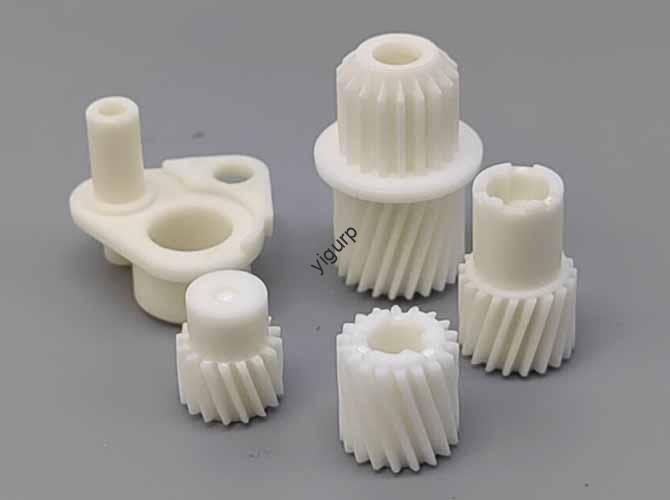
Silicone mold injection molding is an advanced manufacturing technology that uses liquid silicone rubber (LSR) como matéria-prima, injetando-o em moldes de alta precisão sob temperatura e pressão controladas para produzir produtos de silicone de alta qualidade. Ao contrário da fabricação manual tradicional de moldes, é excelente na produção em massa, alta precisão dimensional, and stable product performance—making it a core process in medical, eletrônico, e indústrias automotivas. But what are its core principles? How to control key processes? And how to address its unique challenges? This article answers these questions in detail.
1. Core Principles & Material Characteristics
To understand silicone mold injection molding, we first break down its working mechanism and the properties of its key raw material—liquid silicone.
UM. Core Working Principle
The process follows a simple but precise 因果链 (cause-and-effect chain):
- Raw Material Melting: Liquid silicone (two-component: main agent + curing agent) is fed into the injection machine’s barrel, where it is heated to a flowable state (no melting—silicone is thermoset, so this step softens it for injection).
- High-Pressure Injection: The injection machine pushes the softened silicone into a high-precision mold cavity (tolerance ±0.01mm) at a controlled speed (5–20mm/s) e pressão (10–50MPa).
- Cura & Vulcanization: O molde é aquecido (120–180ºC) to trigger a chemical reaction in the silicone, turning it from liquid to elastic solid. Curing time depends on product thickness—e.g., 1mm-thick parts take 10–15 seconds; 10mm-thick parts take 60–90 seconds.
- Desmoldagem & Acabamento: Uma vez curado, o molde abre, and the product is ejected. Pós-processamento (rebarbação, aparar) removes excess material, resulting in a finished part.
B. Material chave: Liquid Silicone Rubber (LSR)
LSR’s unique properties determine the process’s advantages. The table below highlights its critical characteristics:
| Material Characteristic | Specific Performance | Role in Injection Molding |
| Fluidity | Baixa viscosidade (5,000–20,000 cP) | Flows into micro-details of the mold (por exemplo, 0.1mm-thick sealing lips) |
| Resistência ao Calor | Withstands -60°C to +250°C (short-term +300°C) | Suitable for high-temperature applications (por exemplo, automotive engine gaskets) |
| Chemical Stability | Resiste a ácidos, álcalis, óleos, e solventes | Ideal para dispositivos médicos (sterilized with alcohol) and electronic parts (resists coolants) |
| Elasticidade | Elongation at break >500%; Shore hardness 20–80A | Ensures products (por exemplo, phone buttons, Anéis de vedação) maintain flexibility after repeated use |
| Biocompatibilidade | Medical-grade LSR meets FDA 21 CFR §177.2600 | Safe for skin-contact products (por exemplo, baby pacifiers, medical catheters) |
2. Step-by-Step Production Process
Silicone mold injection molding follows a standardized, linear workflow—each step requires strict parameter control to avoid defects.
Etapa 1: Raw Material Preparation & Teste
- Component Mixing: Blend LSR main agent and curing agent in a precise ratio (common 1:1 ou 10:1) using an automated mixer. For colored products, add 1–3% non-toxic pigments to the mixture.
- Inspeção de Qualidade: Conduct 3 key tests:
- Viscosity Test: Ensure viscosity is 5,000–15,000 cP (too high = poor flow; too low = leakage).
- Curing Test: Cure a small sample at 160°C for 30 seconds—check for full solidification (no sticky surface).
- Impurity Check: Filter the mixture through a 5μm sieve to remove particles (prevents mold clogging).
Etapa 2: Projeto de molde & Fabricação
Molds are the “heart” of the process—their precision directly impacts product quality.
- Design Considerations:
- Gate Location: Place gates (injection inlets) at thick sections to avoid air traps. Para peças pequenas (por exemplo, conectores eletrônicos), use pinpoint gates (0.5–1mm diameter).
- Sistema de resfriamento: Add water channels around the cavity to control mold temperature (±2°C tolerance)—prevents uneven curing.
- Tratamento de superfície: Apply chrome plating (5–10μm thickness) or nitriding to the mold surface. This improves wear resistance (extends mold life to 100,000+ ciclos) and release performance (reduces sticking).
- Manufacturing Equipment: Use CNC machining centers (accuracy ±0.005mm) to mill the mold cavity. For complex shapes (por exemplo, componentes de dispositivos médicos), add EDM (Usinagem de Descarga Elétrica) for micro-details.
Etapa 3: Injection Molding Parameter Setup
Key parameters must be optimized—incorrect settings cause defects like bubbles or shrinkage. The table below lists critical parameters and their ideal ranges:
| Parâmetro | Ideal Range | Impact of Incorrect Settings |
| Temperatura do barril | 40–60ºC (zone 1: 40°C; zone 2: 50°C; zone 3: 60°C) | Too high (>70°C) = premature curing (blocks the barrel); muito baixo (<30°C) = poor flow |
| Pressão de injeção | 15–30MPa | Too high (>40MPa) = mold deformation; muito baixo (<10MPa) = incomplete cavity filling |
| Velocidade de injeção | 8–15mm/s (staged: slow start → fast middle → slow end) | Too fast (>20mm/s) = air trapping (bolhas); muito lento (<5mm/s) = cold slugs (uneven texture) |
| Temperatura do Molde | 140–160°C | Too high (>180°C) = over-curing (brittle parts); muito baixo (<120°C) = under-curing (sticky surface) |
| Tempo de cura | 10–120 segundos (1 second per mm of thickness) | Too short = under-curing; too long = reduced production efficiency |
Etapa 4: Cura, Desmoldagem & Pós-processamento
- Cura: The mold remains closed for the set time—use a mold temperature controller to maintain stable heat.
- Desmoldagem: Use robotic ejectors (para produção em massa) ou ferramentas manuais (para pequenos lotes) to remove parts. Apply a thin layer of silicone release agent if sticking occurs (avoid excess—causes surface defects).
- Pós-processamento:
- Rebarbação: Trim gate residues with a laser cutter (for precision parts) or sharp scissors (para peças não críticas).
- Cleaning: Wash parts with deionized water to remove release agent residue.
- Secondary Vulcanization (Opcional): For high-temperature parts (por exemplo, selos automotivos), bake at 200°C for 2–4 hours to improve heat resistance.
3. Vantagens & Desafios: A Comparative Analysis
Silicone mold injection molding has clear strengths compared to traditional manufacturing methods (por exemplo, moldagem por compressão, manual casting). It also faces unique challenges—understanding both helps users decide if it’s the right process.
UM. Advantages Over Traditional Methods
| Vantagem | Silicone Mold Injection Molding | Moldagem por compressão | Manual Casting |
| Production Efficiency | Alto (30–60 parts per minute for small components) | Médio (5–10 parts per minute) | Baixo (1–2 parts per hour) |
| Precisão Dimensional | ±0,01 mm (ideal for precision parts) | ±0,1 mm (limited by mold pressure) | ±0,5 mm (human error) |
| Product Consistency | 99.5% uniformity (processo automatizado) | 90% uniformity (depende da habilidade do operador) | 70% uniformity (high variability) |
| Tratamento de Complexidade | Excelente (can produce parts with undercuts, micro-furos) | Pobre (requires split molds for complexity) | Very poor (limited to simple shapes) |
| Desperdício de materiais | Baixo (<5% scrap—excess can be recycled) | Médio (10–15% scrap) | Alto (20–30% scrap) |
B. Key Challenges & Mitigation Strategies
| Desafio | Root Cause | Mitigation Strategy |
| High Initial Investment | Mold manufacturing (Usinagem CNC + tratamento de superfície) custos \(10,000–\)100,000; injection machines cost \(50,000–\)200,000 | – Para pequenos lotes: Use shared molds (reduces cost by 50%).- For long-term projects: Choose high-wear-resistant mold materials (por exemplo, Aço H13) to extend life (100,000+ ciclos) |
| Mold Clogging | Impurities in LSR or low fluidity | – Filter LSR through 5μm sieves before injection.- Preheat LSR to 50°C (improves fluidity) |
| Bubble Formation | Air trapped during injection or incomplete venting | – Add vent grooves (0.01–0.02mm depth) to the mold.- Use vacuum-assisted injection (removes air from the cavity) |
| Shrinkage Defects | Uneven cooling or over-curing | – Optimize mold cooling channels (ensure uniform temperature).- Add 1–2% shrinkage allowance to the mold design |
4. Application Fields: Where It Shines
Silicone mold injection molding is widely used in industries that demand precision, durabilidade, e biocompatibilidade. The table below highlights key applications with specific examples:
| Indústria | Typical Products | LSR Grade | Key Process Requirements |
| Dispositivos Médicos | Dicas de cateter, surgical instrument gaskets, baby pacifiers | Grau médico (FDA 21 CFR §177.2600) | – Cleanroom production (Aula 100,000).- No release agent (avoids contamination).- Biocompatibility testing post-production |
| Eletrônica | Phone buttons, LED lamp seals, sensor O-rings | Nível industrial (high insulation) | – Alta precisão (±0.005mm for button travel).- Low volatility (no VOCs to damage electronics) |
| Automotivo | Engine gaskets, fuel system seals, componentes do painel | High-temperature grade (resists 250°C) | – Resistência química (para óleos, coolants).- Vibration resistance (alongamento >500%) |
| Bens de consumo | Silicone kitchen utensils (spatulas), waterproof watch bands | Food-grade (Aprovado pela FDA) | – Non-toxic pigments.- Superfície lisa (Rá <0.8μm) para fácil limpeza |
5. Yigu Technology’s Perspective on Silicone Mold Injection Molding
Na tecnologia Yigu, we see silicone mold injection molding as a cornerstone of high-precision manufacturing—especially for industries like medical and automotive. Para clientes médicos, our custom injection molds (tolerância ±0,008 mm) and medical-grade LSR have enabled the production of 100,000+ catheter tips with 0% biocompatibility failures. For automotive partners, our high-temperature LSR (resists 280°C) and optimized cooling systems reduce engine gasket shrinkage to <0.5%, improving product lifespan by 30%.
We’re addressing key challenges by: 1) Developing low-cost mold materials (por exemplo, coated aluminum) that cut mold costs by 40% enquanto mantém 50,000+ ciclos; 2) Integrating AI into parameter control (automatically adjusts temperature/pressure to reduce defects by 25%). Our goal is to make this technology accessible to mid-sized businesses—balancing precision with affordability.
Perguntas frequentes
- Qual é a quantidade mínima de pedido (Quantidade mínima) for silicone mold injection molding?
MOQ depends on mold cost: Para peças padrão (por exemplo, Anéis de vedação), MOQ is 10,000–50,000 units (to offset mold costs). Para peças personalizadas, we offer shared molds with MOQ as low as 1,000 unidades (ideal for small-batch testing).
- Can silicone mold injection molding produce transparent silicone products?
Yes—use high-purity LSR (impurity content <0.1%) and polished molds (Rá <0.02μm). We’ve produced transparent medical connectors with 90% transmitância de luz, meeting optical requirements for device visualization.
- How long does it take to develop a custom silicone mold and start production?
Mold development takes 4–6 weeks (Usinagem CNC + testando). After mold approval, production can start within 1 semana. Para projetos urgentes (por exemplo, medical device emergencies), we offer expedited mold development (2–3 semanas) with priority production.