
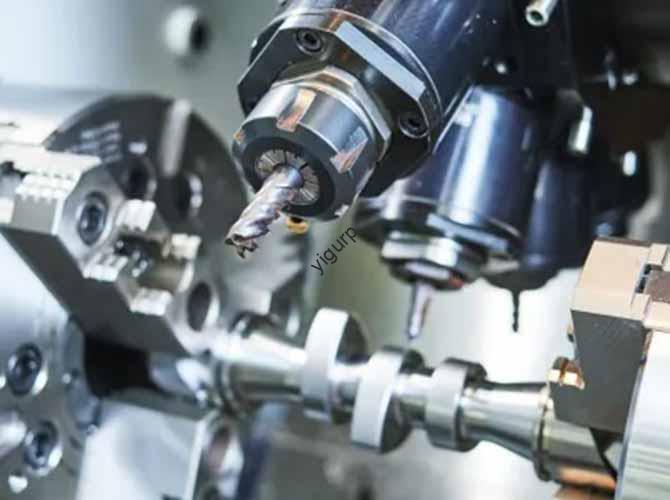
Se você estiver adquirindo peças ABS usinadas em CNC para protótipos, bens de consumo, ou componentes industriais, compreender a estrutura de preços é fundamental para fazer um orçamento e evitar gastos excessivos. O preço do ABS usinado CNC não é fixo – varia de 20 RMB/piece for simple parts para 1,000 RMB/peça para complexo, componentes de alta precisão—shaped by material costs, complexidade de usinagem, tamanho do lote, e mais. This guide breaks down the core price drivers, fornece referências práticas, shares cost-saving tips, and answers common questions to help you make informed decisions.
1. 6 Core Factors That Affect the Price of CNC Machined ABS
Every component of the price ties to tangible factors—from raw material costs to post-processing needs. Below is a detailed breakdown with real numbers to illustrate their impact:
(1) ABS Material Cost
Material cost forms the baseline of the total price. Standard ABS resin is affordable, but special grades (por exemplo, retardador de chama, seguro para alimentos) add to the cost:
| ABS Grade Type | Price Range (RMB/kg) | Key Characteristics | Typical Applications |
| ABS padrão | 10 ~ 20 | Boa usinabilidade, basic impact resistance | General prototypes, non-critical shells |
| ABS retardador de chamas | 20 ~ 35 | Atende aos padrões de segurança contra incêndio (por exemplo, UL94V-0) | Gabinetes eletrônicos (por exemplo, router shells) |
| Food-Grade ABS | 25 ~ 40 | Não tóxico, compliant with FDA/GB 4806 | Food contact parts (por exemplo, small appliance interiors) |
| High-Toughness ABS | 30 ~ 50 | Enhanced durability for repeated use | Peças funcionais (por exemplo, toy hinges, cabos de ferramentas) |
Exemplo: A 100g simple part made with standard ABS costs 1–2 RMB in material (10–20 RMB/kg × 0.1kg). The same part made with food-grade ABS would cost 2.5–4 RMB in material—2.5x more.
(2) Machining Cost (Equipamento + Labor)
Machining cost is the largest variable, combining equipment hourly rates and labor fees. It depends on the type of CNC machine and operator skill:
Equipment Hourly Rates
| CNC Machine Type | Hourly Rate (RMB/Hour) | Nível de precisão | Melhor para |
| Ordinary 3-Axis Machining Center | 60 ~ 150 | Médio | Peças simples (por exemplo, flat plates, basic holes) |
| High-Precision 3-Axis Machine | 150 ~ 300 | Alto | Parts with tight tolerances (±0,05 mm) |
| 5-Axis Machining Center | 500 ~ 1,000 | Ultra-High | Complex curved parts (por exemplo, custom shells) |
Labor Costs
- Operator Salary: 50 ~ 100 RMB/hour (varies by region—coastal areas like Guangdong have lower rates due to competition).
- Programming Fee: 200 ~ 1,000 RMB for complex parts (por exemplo, multi-surface shells) that require custom G-code; simple parts often include programming in the hourly rate.
Exemplo: A simple ABS part taking 1 hour on an ordinary 3-axis machine (80 RMB/hour) com um 60 RMB/hour operator costs 140 RMB in machining labor—far more than the material cost.
(3) Part Complexity
Complexity directly increases machining time and skill requirements, pushing prices higher. Below is how complexity impacts per-piece costs:
| Complexity Level | Key Traits | Machining Time (Per Piece) | Price Range (RMB/Piece) |
| Simples | Flat surfaces, no curves, 1–2 holes | 0.5 ~ 1 hora | 20 ~ 50 |
| Médio | Multiple holes, simple curves, paredes finas (≥2mm) | 1 ~ 3 horas | 50 ~ 200 |
| Alto | Complex curved surfaces, paredes finas (<2milímetros), porous structures | 3 ~ 8 horas | 200 ~ 1,000 |
Exemplo: A simple 10cm×10cm ABS plate (10mm de espessura) takes 0.5 hours to machine and costs 20–50 RMB. A curved ABS shell with 5 holes and thin walls takes 4 hours and costs 200–500 RMB—5–10x more.
(4) Tamanho do lote
Batch size unlocks volume discounts, as fixed costs (programação, configurar, trial cuts) are spread across more parts. The larger the order, the lower the unit price:
| Tamanho do lote | Discount vs. Single Piece | Exemplo: Simple ABS Part (Original Price: 50 RMB/Piece) | Unit Price (RMB/Piece) |
| Single Piece/Small Batch (1–10) | 0% (No Discount) | 50 × 10 = 500 RMB (total) | 50 |
| Medium Batch (11–100) | 10 ~ 30% | 50 × 50 × 0.8 = 2,000 RMB (total) | 40 |
| Large Batch (>100) | 30 ~ 60% | 50 × 200 × 0.5 = 5,000 RMB (total) | 25 |
Key Tip: Even small batch increases (por exemplo, de 5 para 20 pedaços) can cut unit costs by 10–20%. Por exemplo, 20 simple parts cost 40 RMB/piece instead of 50 RMB—saving 200 RMB total.
(5) Post-Processing Requirements
Basic CNC-machined ABS parts have a matte finish, but additional treatments add to the price. Common post-processing steps and their costs:
| Post-Processing Step | Custo (RMB/Piece) | Propósito |
| Polimento | 10 ~ 30 | Superfície lisa (reduces roughness from Ra 1.6μm to Ra 0.8μm) |
| Painting/Oil Spraying | 20 ~ 50 | Add color or protective coating |
| Silk Screen Printing | 15 ~ 40 | Add logos or text (por exemplo, control panel labels) |
| Galvanoplastia | 30 ~ 80 | Add metallic finish (por exemplo, chrome-like coating) |
Exemplo: A basic ABS part costs 30 RMB. Adding polishing (20 RMB) and silk screen printing (25 RMB) raises the total to 75 RMB—2.5x more.
(6) Regional Differences
Prices vary by region due to labor and competition levels:
- Coastal Areas (Guangdong, Zhejiang): Lower prices (10–20% cheaper than inland) due to high competition and mature supply chains. Por exemplo, a medium-complexity part costs 50–180 RMB vs. 60–220 RMB inland.
- Central/Western Regions: Slightly higher prices, but may offer faster delivery for local clients.
2. Practical Price Reference Table for CNC Machined ABS
To quickly gauge reasonable prices, below is a table of common ABS part types, their prices, and key notes:
| Part Type | Price Range (RMB/Piece) | Fatores-chave | Typical Use Cases |
| Simple Flat Plate (por exemplo, 10cm×10cm×10mm) | 20 ~ 50 | ABS padrão, 3-usinagem de eixo, sem pós-processamento | Prototyping bases, spacers |
| Medium-Complexity Shell (curvado + 3–5 holes) | 50 ~ 200 | Standard/flame-retardant ABS, 3-usinagem de eixo, optional polishing | Electronic device shells, toy casings |
| High-Precision Curved Part (paredes finas + tolerâncias apertadas) | 200 ~ 1,000 | High-toughness ABS, 5-usinagem de eixo, pintura | Componentes industriais, high-end appliance parts |
| Large-Batch Simple Parts (>100 pedaços) | 10 ~ 50 | Bulk ABS, optimized machining paths, sem pós-processamento | Mass-produced spacers, colchetes básicos |
3. 4 Proven Tips to Reduce the Price of CNC Machined ABS
You don’t have to compromise on quality to lower costs. Try these strategies:
(1) Optimize Part Design
- Simplify geometry: Remove unnecessary curves or thin walls (por exemplo, use straight edges instead of complex arcs) to cut machining time by 20–40%.
- Reduce part count: Merge multiple small parts into one (por exemplo, a 2-piece bracket becomes 1 piece) to eliminate assembly and reduce clamping time.
(2) Choose the Right Batch Size
- Combine orders: If you need 30 parts over 3 meses, order all 30 at once to qualify for a 10–30% discount instead of 10 peças mensalmente.
- Negotiate “future batch” discounts: Ask suppliers for a lower rate if you commit to reordering (por exemplo, 5% off if you buy 50+ parts within 6 meses).
(3) Select Cost-Effective Post-Processing
- Skip unnecessary steps: For internal, non-visible parts, skip polishing or painting—save 10–50 RMB/piece.
- Use batch post-processing: Group parts for painting or silk screening to get volume discounts (por exemplo, 15 RMB/piece instead of 25 RMB for 50+ peças).
(4) Work with Coastal Suppliers
Suppliers in Guangdong (por exemplo, Dongguan, Shenzhen) or Zhejiang offer lower prices due to competition and efficient supply chains. Por exemplo, a medium-complexity part costs 50–180 RMB vs. 60–220 RMB from inland suppliers—saving 10–20%.
4. Key Precautions When Quoting CNC Machined ABS
To avoid unexpected costs, keep these in mind:
- Proofing Costs: Pequenos lotes (1–5 pieces) often have higher unit prices (20–50% more) due to setup and trial cuts. Confirm proofing fees upfront.
- Tolerance Requirements: Tolerâncias mais restritas (por exemplo, ± 0,05 mm versus. ±0,1 mm) add 10–30% to the price—only specify tight tolerances if necessary.
- Delivery Time: Pedidos urgentes (por exemplo, 3-day turnaround vs. 7 dias) may add a 20–50% premium. Plan ahead to avoid rush fees.
Yigu Technology’s Perspective on CNC Machined ABS Pricing
Na tecnologia Yigu, we believe design optimization and batch strategy are the biggest cost-saving levers for CNC machined ABS. Many clients overspend by overcomplicating designs (por exemplo, adding unnecessary curves) or ordering small batches frequently. Our team helps simplify designs—for example, a curved shell with 8 holes becomes a simpler shape with 4 buracos, cutting machining time by 30%. We also assist with batch planning: combinando 3 clients’ 20-piece orders into a 60-piece batch to unlock a 25% discount. For special grades, we source cost-effective flame-retardant or food-grade ABS from trusted suppliers, saving 10–15% on material costs. Our goal is to deliver high-quality CNC machined ABS parts at the lowest possible price, balancing performance and budget.
Perguntas frequentes
- Why does a 5-axis machined ABS part cost so much more than a 3-axis part?
5-axis machines offer ultra-high precision (±0,02mm) and can machine complex curved surfaces in one setup—eliminating the need for multiple clampings. No entanto, they’re more expensive to purchase (10–20x cost of 3-axis machines) e manter, leading to higher hourly rates (500–1,000 RMB/hour vs. 60–150 RMB/hour for 3-axis). This translates to 2–5x higher part prices.
- How much does flame-retardant ABS add to the total price compared to standard ABS?
Flame-retardant ABS costs 20–35 RMB/kg vs. 10–20 RMB/kg for standard ABS—2x more in material cost. For a 100g part, this adds 1–1.5 RMB to the material cost. If the part requires machining, the total price increases by 5–15% (por exemplo, 50 RMB standard part becomes 55–58 RMB).
- Can I get a discount if I provide my own ABS material?
Yes—most suppliers offer a 5–15% discount if you supply the ABS resin. Por exemplo, um 100 RMB part becomes 85–95 RMB. No entanto, ensure your material is suitable for CNC machining (por exemplo, no impurities) to avoid machining defects that require rework (which could erase the discount).