
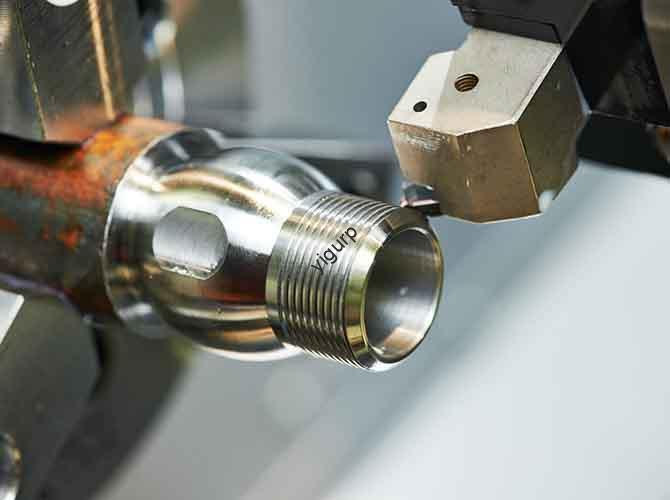
Precision die casting aluminum has emerged as a cornerstone of high-end manufacturing, mesclando tecnologia avançada de conformação de metal com as vantagens inerentes do alumínio (leve, resistência à corrosão) para produzir componentes com precisão e desempenho excepcionais. Ao contrário da fundição convencional, fornece precisão dimensional dentro 0.05 milímetros, rugosidade superficial (Rá) tão baixo quanto 1.6 μm, and strict shape/position tolerances—meeting the demands of industries from automotive to aerospace. This article breaks down its core characteristics, fluxo de trabalho de produção, tecnologias-chave, cenários de aplicação, and industry trends, helping you leverage its potential for high-quality manufacturing.
1. Core Definitions & Características principais
To understand precision die casting aluminum, start with its precise definition and standout traits. Below is a 总分结构 explaining these fundamentals, supported by clear metrics and comparisons:
1.1 Definição: What Qualifies as Precision Die Casting Aluminum?
Precision die casting aluminum refers to aluminum alloy components produced via high-pressure die casting, meeting three strict quality criteria:
- Precisão Dimensional: Tolerance within ±0,05mm (contra. ±0.1–0.2 mm for conventional die casting).
- Acabamento de superfície: Rugosidade superficial (Rá) ≤ 1.6 μm (achieving a smooth, near-machined appearance without extensive post-processing).
- Forma & Tolerância de posição: ≤ 0.1 mm/300 mm (ensuring consistent alignment for assembly-critical parts).
These standards distinguish it from traditional die casting, making it suitable for high-precision applications like 5G base station components and automotive powertrain parts.
1.2 Standout Characteristics
Precision die casting aluminum’s unique properties address modern manufacturing needs. The table below contrasts its key traits with conventional die casting:
| Característica | Precision Die Casting Aluminum | Conventional Die Casting | Impact on Applications |
| Structural Traits | Paredes finas (até 0.5 milímetros), leve (densidade 2.7 g/cm³), alta resistência (tensile strength 220–300 MPa) | Thicker walls (≥1 mm), menor resistência (170–220 MPa) | Enables lightweighting in EVs (reducing battery load) and miniaturization in consumer electronics. |
| Nível de precisão | Dimensional accuracy ±0.05 mm; Ra ≤1.6 μm | Dimensional accuracy ±0.1–0.2 mm; Ra 3,2–6,3 μm | Eliminates 80% of post-machining for precision parts (por exemplo, smartphone middle frames). |
| Desempenho | Excelente resistência à corrosão (via natural oxide layer or surface treatment); resistência a altas temperaturas (up to 200°C for ADC12); boa condutividade térmica (200–230 W/(m·K)) | Resistência moderada à corrosão (requires additional plating); lower thermal conductivity (150–180 W/(m·K)) | Suitable for heat-sensitive parts (por exemplo, Dissipadores de calor LED) and harsh-environment components (por exemplo, ferragens marítimas). |
2. Production Process & Key Technical Points
The production of precision die casting aluminum follows a linear, rigorous workflow—each step critical to meeting quality standards. The table below details the process stages, key actions, and technical requirements:
| Process Stage | Operações-chave | Critical Technical Requirements |
| 1. Die Casting Molding | – Heat aluminum alloy (por exemplo, ADC12, A380) to 650–700°C until molten.- Inject molten aluminum into a precision steel mold at 50–150 MPa pressure and 1–3 m/s speed.- Apply sustained holding pressure (30–80 MPa) durante a solidificação (10–30 segundos). | – Mold material: Use high-performance tool steel (por exemplo, 8407) resistir 100,000+ cycles.- Sistema de refrigeração: Uniform water channels to ensure solidification time variation ≤5 seconds (evita empenamento). |
| 2. Post-Molding Treatment | – Aparar: Remove excess material (sprues, corredores) via CNC trimmers (tolerance ±0.03 mm).- Tratamento de superfície: Choose from polishing (Ra ≤0.8 μm), electrophoresis (resistência à corrosão), pulverização de óleo (estética), or anodizing (resistência ao desgaste).- Quality Testing: Conduct salt spray testing (48 hours for corrosion resistance) and dimensional inspection. | – Surface treatment must meet environmental standards (por exemplo, RoHS para eletrônicos).- Trimming tools: Carbide blades to avoid surface burrs (≤0.01 mm). |
| 3. Final Quality Inspection | – Metallographic Analysis: Observe grain structure and precipitated phase distribution (ensures uniform mechanical properties).- Testes Não Destrutivos: Use X-ray flaw detection (for internal porosity) and eddy current detection (for surface defects).- Dimensional Verification: Measure key features via coordinate measuring machine (CMM) with ±0.001 mm accuracy. | – Internal porosity ≤2% (reject parts with larger voids).- CMM inspection coverage: 100% of critical dimensions (por exemplo, mounting holes for automotive parts). |
3. Key Application Scenarios
Precision die casting aluminum serves diverse high-demand industries, each leveraging its unique properties. The table below highlights key applications and their rationales:
| Indústria | Target Components | Escolha de liga | Principais benefícios |
| Automotivo | – Traditional Vehicles: Power system parts (suportes do motor), caixas de transmissão, steering components, body hubs.- New Energy Vehicles (NEVs): Integrated battery housings, carcaças de motor, peças estruturais leves. | ADC12 (econômico, boa moldabilidade); A380 (high strength for powertrain). | Lightweighting reduces NEV range anxiety (10% weight reduction = 5–8% range increase); high precision ensures battery housing sealing (prevents water leakage). |
| Eletrônicos de consumo | Smartphone middle frames, tablet chassis brackets, laptop hinge components, Dissipadores de calor LED. | ADC12 (thin-wall capability); 6061 (good thermal conductivity for heat sinks). | Miniaturização (0.5 paredes finas mm) fits sleek device designs; acabamento superficial liso (Ra ≤1.6 μm) eliminates post-polishing, reduzindo o tempo de produção em 30%. |
| Communication Equipment | 5G base station structural parts (suportes de antena), heat dissipation modules, router housings. | A356 (alta relação resistência-peso); ADC12 (resistência à corrosão). | Withstands outdoor environmental stress (chuva, mudanças de temperatura); good thermal conductivity dissipates 5G equipment heat (preventing overheating-related failures). |
| Other Fields | – Equipamentos Industriais: Carcaças de sensores, pump components.- Aeroespacial: Lightweight auxiliary parts (cabin interior brackets).- LED Lighting: Heat sinks for high-power LEDs. | A380 (equipamentos industriais); 7075 (aeroespacial, alta resistência); ADC12 (Dissipadores de calor LED). | High precision ensures sensor accuracy; lightweighting reduces aircraft fuel consumption; thermal conductivity protects LEDs from overheating. |
4. Industry Status & Development Trends
The precision die casting aluminum industry is growing steadily, driven by technological innovation and market demand. Below is a breakdown of its current status and future direction:
4.1 Market Status (2024 Dados)
- Tamanho do mercado: China’s precision die casting aluminum industry reached 221 trilhão de yuans em 2024, um aumento anual de 6.5% de 2023. This growth is fueled by NEV expansion and 5G infrastructure deployment.
- Regional Clusters: Three key manufacturing hubs dominate production:
- Yangtze River Delta (Xangai, Suzhou): Focuses on high-precision automotive and aerospace parts.
- Pearl River Delta (Shenzhen, Dongguan): Leads in consumer electronics and communication equipment components.
- Bohai Rim (Tianjin, Qingdao): Specializes in industrial equipment and traditional automotive parts.
4.2 Tendências Futuras
Three trends are shaping the industry’s evolution:
| Trend | Technical Details | Impacto |
| Technological Innovation | Fundição sob pressão semissólida está ganhando força: It processes aluminum in a semi-solid state (50–60% solid), combining liquid die casting’s efficiency with solid forging’s strength. Parts have 15–20% higher tensile strength than conventional precision die casting. | Enables use in high-load NEV parts (por exemplo, suportes de suspensão) that previously required forging. |
| Fabricação Verde | – Promote eco-friendly surface treatments (por exemplo, water-based electrophoresis instead of solvent-based painting) to reduce VOC emissions by 40%.- Increase recycled aluminum usage (alvo 50% por 2026) to lower energy consumption (recycling uses 95% less energy than producing virgin aluminum). | Aligns with global carbon neutrality goals; reduces manufacturing costs by 15–20% via recycled materials. |
| Cross-Field Expansion | Demand is growing in emerging sectors: |
- Inteligência artificial (IA): Precision heat sinks for high-power AI chips.
- Dispositivos Médicos: Biocompatible aluminum parts (por exemplo, caixas de equipamentos de diagnóstico).
- Drones: Lightweight structural components for extended flight time. | Expands market size beyond traditional industries; creates new opportunities for high-value-added parts. |
Perspectiva da Tecnologia Yigu
Na tecnologia Yigu, we see precision die casting aluminum as a driver of high-end manufacturing innovation. Para clientes automotivos, nós usamos 8407 mold steel and semi-solid die casting to produce NEV battery housings with ±0.03 mm accuracy and 280 MPa tensile strength—meeting IP67 waterproof standards. For 5G clients, our anodized ADC12 components achieve Ra 0.8 μm surface finish and 48-hour salt spray resistance, ensuring long-term outdoor reliability. We also prioritize green manufacturing: 45% of our aluminum is recycled, reduzir as emissões de carbono através 35%. Em última análise, precision die casting aluminum isn’t just about making parts—it’s about delivering solutions that balance precision, desempenho, and sustainability for the future of industry.
Perguntas frequentes
- What is the minimum wall thickness achievable with precision die casting aluminum?
Precision die casting aluminum can produce parts with wall thicknesses as thin as 0.5 milímetros (contra. 1 mm for conventional die casting). The key is using high injection pressure (100–120 MPa), fast filling speed (2–3 m/s), and a well-designed cooling system to prevent premature solidification.
- Can precision die casting aluminum parts be used in high-temperature environments?
Yes—depending on the alloy:
- ADC12 and A380 alloys withstand temperatures up to 200°C (suitable for LED heat sinks, automotive engine bay parts).
- For higher temperatures (200–300ºC), use heat-resistant alloys like A356-T6 (resistência à tracção 300 MPa) ou 6061 (condutividade térmica 230 C/(m·K)).
- How does precision die casting aluminum compare to CNC machining for high-precision parts?
Precision die casting aluminum is more cost-effective for high-volume production (10,000+ peças):
- Custo: 30–50% lower per unit than CNC machining (reduces material waste to 5–10% vs. 60–70% para usinagem).
- Eficiência: 5–10x faster (produz 200+ smartphone frames/hour vs. 20–30 via machining).
- Limitation: Less suitable for low-volume (≤1.000 peças) due to high mold costs (\(50,000–)200,000).