
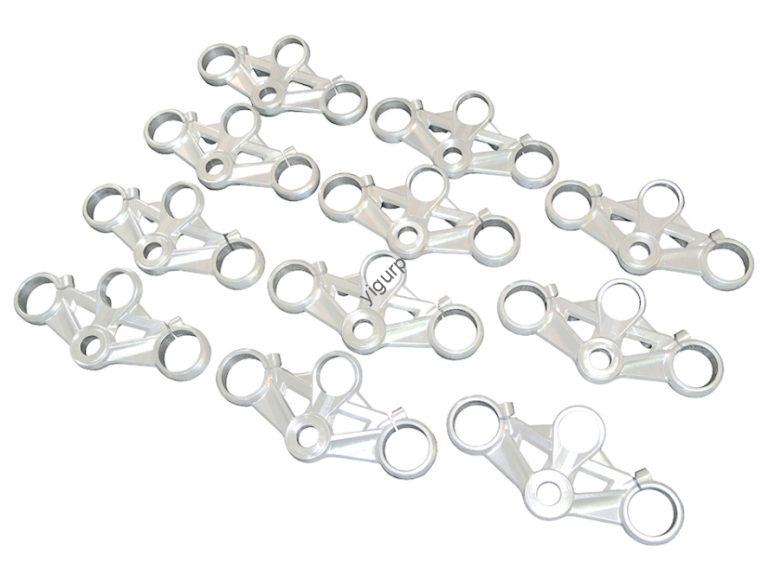
Choosing the right material for your amostragem de protótipo is make-or-break for product development. O material que você escolhe afeta o quão bem o seu protótipo testa a funcionalidade, mostra detalhes do design, e se alinha com o uso no mundo real. Esteja você construindo uma casa de plástico (habitação) para um gadget ou uma peça de metal para um carro, understanding your material options helps you avoid rework, economizar dinheiro, and create a prototype that truly represents your final product.
Abaixo, we’ll break down the most common prototype sampling materials, their key features, ideal uses, and practical tips—with easy-to-read tables and real-world examples to guide your choice.
1. Plastic Materials for Prototype Sampling: Versatile and Cost-Effective
Plastics are the most popular choice for amostragem de protótipo because they’re lightweight, easy to shape, and mimic the properties of mass-produced plastic parts. From transparent lenses to durable gears, there’s a plastic for nearly every need. Let’s compare the top options:
| Material | Propriedades principais | Ideal Prototype Uses | Surface Treatment Options | Faixa de custo (Por kg) |
| ABS | Good welding strength, matches injection molding plastic performance; available in standard and flame-retardant grades | General product housings (por exemplo, capas de telefone, controles remotos), electronic device shells | Galvanoplastia (water/plating), vacuum evaporation plating, pintura | \(2.50 – \)4.00 |
| PC | Excellent strength, resistência, e transparência; glass fiber-reinforced versions boost rigidity and heat resistance | Lens parts (por exemplo, lentes de câmera, LED covers), high-strength structural components (por exemplo, quadros de laptop) | Polimento, pintura, silk-screen printing | \(3.80 – \)5.50 |
| PMMA (Acrylic/Organic Glass) | High transparency (92% transmissão de luz), fácil de tingir | Transparent parts (por exemplo, capas de exibição, light fixtures) | Dyeing, galvanoplastia, pintura, silk-screen printing | \(3.20 – \)4.80 |
| PP | Semi-transparent, alta resistência ao impacto, flexível | Impact-resistant products (por exemplo, car cup holders, packaging boxes, children’s toy parts) | Surface grinding, impressão | \(2.20 – \)3.50 |
| PA66 + GF30 | Alta resistência, special thermal stability, hydrolysis resistance | Mechanical part shields (por exemplo, gear boxes, motor covers) requiring rigidity and dimension stability | Jateamento de areia, pintura | \(5.00 – \)7.20 |
| POM | Excellent mechanical properties (alta resistência, resistência ao desgaste) due to regular molecular structure and crystallinity | High-strength moving parts (por exemplo, engrenagens, rotating shafts, colchetes) | Polimento, lubricant coating | \(4.50 – \)6.00 |
Why this matters: Por exemplo, if you’re prototyping a wireless earbud case, ABS is a great fit—it’s cheap, easy to plate (for a shiny finish), and acts just like the plastic you’ll use in mass production. If your prototype needs to be transparent (like a smartwatch screen cover), PMMA ou PC would work better—just note that PMMA is more brittle, so it’s not ideal for parts that get frequent impact.
2. Metal Materials for Prototype Sampling: Força e durabilidade
When your prototype needs to mimic metal parts (por exemplo, in aerospace or automotive projects), metal amostragem de protótipo materials are the way to go. They offer rigidity, resistência ao calor, and a premium feel that plastics can’t match. Here are the most widely used options:
2.1 Liga de alumínio: The Go-To for Lightweight Rigidity
Liga de alumínio is a favorite for amostragem de protótipo because it’s:
- Fácil de usinar (faster and cheaper than steel)
- Leve (1/3 o peso do aço) but rigid
- Available in a wide range of anodizing colors (preto, prata, ouro, etc.)
Common uses: Componentes aeroespaciais (por exemplo, quadros de drones), peças automotivas (por exemplo, dashboard brackets), e eletrônicos de consumo (por exemplo, laptop bottom cases).
Data point: According to the Aluminum Association, aluminum alloy prototypes have a 30% faster machining time than steel prototypes—saving you 1-2 weeks on sample production.
2.2 Magnesium Alloy: Ultra-Light for 3C Products
Liga de magnésio is the lightest structural metal, making it perfect for amostragem de protótipo in consumer 3C products (computadores, communications, eletrônicos de consumo). Its key benefits include:
- Alta relação resistência-peso (stronger than plastic, mais leve que o alumínio)
- Good heat dissipation (ideal for parts near batteries or chips)
Critical note: Magnesium alloy is flammable during machining, so it requires strict environmental control (por exemplo, low-temperature cutting fluids, well-ventilated workshops).
Exemplo: Many smartphone manufacturers use magnesium alloy prototypes for phone middle frames—they reduce the device’s overall weight while keeping it sturdy.
2.3 Latão: A Cost-Effective Stainless Steel Alternative
Latão (an alloy of copper and zinc) is great for amostragem de protótipo when you need the look and feel of stainless steel but want to save on machining costs. Its advantages are:
- Alta resistência ao desgaste (lasts longer than plastic in moving parts)
- Easy to polish and plate—after treatment, its surface and texture are nearly identical to stainless steel
- Lower machining difficulty than stainless steel (stainless steel is hard and can damage tools)
Ideal uses: Prototype parts that need a metallic finish (por exemplo, maçanetas, watch casings) or require wear resistance (por exemplo, engrenagens pequenas).
3. Key Factors to Consider When Choosing Prototype Sampling Materials
Picking a material isn’t just about its properties—it also needs to align with your prototype’s goals, orçamento, e linha do tempo. Aqui estão os 3 most important factors to weigh:
3.1 Prototype Purpose: What Do You Need to Test?
- If testing appearance: Prioritize materials with good surface treatment options (por exemplo, ABS for plating, PMMA para transparência). Por exemplo, a prototype of a luxury speaker would use ABS (electroplated for a metallic shine) to show off the final look.
- If testing functionality: Choose materials that match the final product’s strength or flexibility. For a prototype of a folding chair hinge, POM (alta resistência) ou latão (resistência ao desgaste) would work—they mimic how the hinge will perform in real use.
- If testing heat resistance: Go for glass fiber-reinforced PC ou liga de alumínio—these materials hold up in high-temperature environments (por exemplo, a prototype for a coffee machine part).
3.2 Custo: Balance Performance and Budget
Materials vary widely in price—PP ou ABS are budget-friendly (great for early-stage prototypes), enquanto PA66 + GF30 ou liga de magnésio cost more (better for late-stage prototypes that need to match final product specs).
Tip: For initial design validation, use a cheaper material (por exemplo, ABS) to test shape and fit. Once the design is locked in, switch to a material that matches mass production (por exemplo, PA66 + GF30 for mechanical parts) for final testing.
3.3 Usinabilidade: Will It Slow Down Your Timeline?
Some materials are harder to shape than others. Por exemplo:
- ABS e liga de alumínio are easy to machine—prototypes can be ready in 1-3 dias.
- Aço inoxidável (often replaced by latão para protótipos) is hard and may take 5-7 days to machine.
If you’re on a tight deadline, choose materials with high machinability to avoid delays.
Yigu Technology’s Perspective
Na tecnologia Yigu, we believe prototype sampling material choice directly impacts product success. Sobre 10 anos, we’ve helped clients select materials that balance functionality, custo, and timeline—from startups using ABS for early phone case prototypes to automotive firms using liga de alumínio para peças de motor. We always advise: Don’t just pick a material for its properties—align it with your prototype’s goal. Por exemplo, if you need to test both appearance and impact resistance, nós recomendamos PC (transparent and tough) sobre PMMA (frágil). Our team provides material samples and machining support to ensure your prototype accurately reflects the final product.
Perguntas frequentes
- Can I use PMMA for prototype parts that need to be impact-resistant?
No—PMMA is highly transparent but brittle. It’s prone to cracking if dropped or hit, so it’s not suitable for impact-resistant parts. Escolher PC (tough and transparent) ou PP (flexible and impact-resistant) instead.
- Is magnesium alloy a good choice for low-budget prototype sampling?
Usually not. Magnesium alloy costs more than liga de alumínio and requires special machining (to prevent flammability), which adds to expenses. For budget-friendly metal prototypes, liga de alumínio is a better option.
- How do I know if a material matches my mass-produced product?
Prioritize materials with the same “base properties” as your final production material. Por exemplo, if your final product uses flame-retardant ABS, use flame-retardant ABS for prototyping (not standard ABS). Ask your material supplier for a “property sheet” to compare—this ensures your prototype behaves like the final product.