
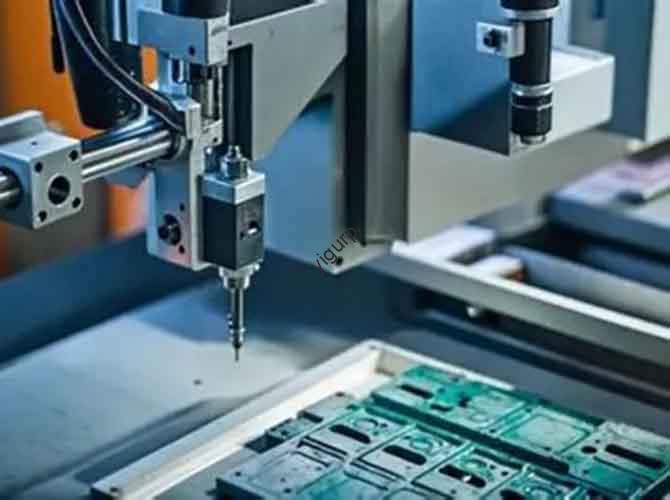
Na era do peso leve, economia de energia, e produção de alta eficiência – a partir de novos veículos energéticos (NEVs) to consumer electronics—light metal die casting has become an irreplaceable manufacturing technology. Injeta metais leves fundidos (alumínio, magnésio, ligas de zinco) em moldes de precisão em alta pressão e velocidade, formando complexo, componentes de alto desempenho que equilibram a redução de peso, resistência estrutural, e eficiência de custos. Este artigo detalha seus princípios básicos, material characteristics, tipos de processo, cenários de aplicação, and solutions to industry challenges, helping you fully grasp its value and practical application.
1. What Are the Core Principles and Features of Light Metal Die Casting?
To understand its advantages, we first clarify the technical logic and unique traits that distinguish it from traditional casting processes.
1.1 Core Working Principle
Light metal die casting relies on a “high-pressure filling + rapid solidification” mechanism:
- Fusão: Light metals (por exemplo, liga de alumínio) are melted in a crucible to form a molten state (temperatura: 650-720°C for aluminum, 380-450°C for zinc).
- High-Pressure Injection: The molten metal is pushed into a closed steel mold cavity at pressures of 30-120MPa and speeds of 0.5-120m/s—ensuring it fills even thin-walled (0.5-3milímetros) or complex structures.
- Rapid Solidification: The mold’s cooling system (water or oil circulation) accelerates solidification (0.05-0.5 segundos), locking in the part’s shape and dimensional accuracy.
- Desmoldagem: O molde abre, and an ejection system pushes out the finished part—ready for post-processing (por exemplo, rebarbação, tratamento de superfície).
1.2 Three Key Features
| Recurso | Technical Advantage | Practical Impact |
| Alta eficiência | Standardized molds enable rapid cycle production (10-60 seconds per part for zinc alloys; 30-120 seconds for aluminum alloys) | Mass production of small/medium parts (por exemplo, 10,000+ NEV battery brackets per day) |
| Formação de Precisão | Tolerância dimensional: IT8-IT10; Rugosidade superficial: Ra 1.6-6.3μm | Reduces post-processing by 50-70% (por exemplo, aluminum alloy electronic housings need no extra grinding) |
| Material Adaptability | Optimizes process parameters for light metals’ properties (por exemplo, aluminum’s corrosion resistance, magnesium’s lightweight) | Maximizes material advantages—e.g., magnesium alloy parts are 33% lighter than aluminum while maintaining strength |
2. Which Light Metals Are Commonly Used, and What Are Their Traits?
Material selection directly determines part performance and application scope. Alumínio, magnésio, and zinc alloys are the three mainstream options, each with distinct strengths:
2.1 Comparison of Common Light Metals for Die Casting
| Metal/Alloy | Características principais | Densidade (g/cm³) | Propriedades Mecânicas | Typical Application Areas |
| Liga de alumínio (A380, A356) | – Excelente resistência à corrosão (resists oxidation in humid environments)- Good thermal conductivity (205 C/(m·K), 2x better than steel)- Econômico (1/3 the price of magnesium alloy) | 2.7 | – Resistência à tracção: 200-350MPa- Alongamento: 3-12% | – NEV: Battery shells, motor housings- Eletrônica: 5G base station antenna brackets- Aeroespacial: Cabin structural parts |
| Liga de magnésio (AZ91D, AM60B) | – Ultraleve (lightest structural metal for die casting)- High specific strength/stiffness (strength-to-weight ratio better than aluminum)- Strong electromagnetic shielding (protects electronic components from interference) | 1.8 | – Resistência à tracção: 170-280MPa- Alongamento: 2-10% | – Automotivo: Dashboards, cubos de roda- Eletrônica: Laptop shells, molduras para smartphones- Médico: Lightweight device casings |
| Liga de Zinco (ZA27, Zamak5) | – Baixo ponto de fusão (fácil de processar, economiza energia)- Excelente fluidez (fills tiny mold details <0.1milímetros)- Longa vida útil do molde (100,000+ ciclos, 2x longer than aluminum alloy molds) | 6.4 | – Resistência à tracção: 280-400MPa- Dureza: HB 80-120 | – Pequenas peças de precisão: Toy gears, stationery accessories- Componentes decorativos: Maçanetas das portas, controles deslizantes de zíper- Eletrônica: Carcaças de sensores |
3. What Are the Main Process Types of Light Metal Die Casting?
Process selection depends on metal melting points, complexidade da peça, e requisitos de qualidade. Traditional processes meet basic needs, while improved technologies solve defects like porosity:
3.1 Traditional Die Casting Processes
| Tipo de processo | Core Mechanism | Suitable Metals | Vantagens | Limitações |
| Fundição sob pressão em câmara fria | Molten metal is poured into an independent cold chamber before injection | High-melting-point metals (alumínio, magnésio) | – Handles large/complex parts (por exemplo, NEV battery trays)- Avoids mold overheating | – Longer cycle time (30-120 seconds/part)- Higher equipment cost |
| Fundição sob pressão de câmara quente | The injection system is immersed in a molten metal pool (integrated design) | Low-melting-point metals (zinco, liderar) | – Ultra-fast cycle time (10-30 seconds/part)- Operação simples, baixo consumo de energia | – Limited to small parts (<5kg)- Mold prone to corrosion (short life for zinc alloys) |
3.2 Melhorou & Innovative Processes
These technologies address traditional defects (por exemplo, porosidade) and expand application scope:
| Innovative Process | Key Improvement | Suitable Scenarios | Performance Gain |
| Fundição sob pressão a vácuo | Extracts air from the mold cavity (vacuum degree: -0.095 para -0.098MPa) antes da injeção | Peças de alta qualidade (por exemplo, automotive engine cylinder heads) | Reduces porosity by 80-90%; Improves tensile strength by 15-20% |
| Oxygenated Die Casting | Injects oxygen into the cavity to form oxide particles (diffused distribution) | Parts requiring heat treatment (por exemplo, aluminum alloy suspension arms) | Eliminates internal pores; Enables T6 heat treatment (força +25%) |
| Fundição sob pressão semi-sólida | Controls solid phase rate (40-60%) of molten metal; Uses laminar flow filling | Thin-walled, peças de alta precisão (por exemplo, smartphone midframes) | Reduces shrinkage by 70%; Improves structural uniformity |
| Apertar Fundição | Applies external pressure (100-200MPa) durante a solidificação | Thick-walled structural parts (por exemplo, suportes aeroespaciais) | Increases density to ≥99.5%; Boosts impact resistance by 30-40% |
4. What Are the Key Application Scenarios and Industry Trends?
Light metal die casting is widely used in industries driven by lightweight and precision demands. Below are its core application fields and future development directions:
4.1 Core Application Fields
| Indústria | Exemplos de aplicação | Driving Demand |
| Automotivo (NEVs) | – Liga de alumínio: Battery shells, motor housings, shock absorber towers- Liga de magnésio: Interior door panels, armações de assento | Leve (every 100kg weight reduction increases range by ~100km); Structural strength (resists collision impacts) |
| Eletrônicos de consumo | – Liga de magnésio: Laptop shells, tablet backplanes- Liga de alumínio: Smart TV frames, wireless charger housings | Thinness/lightness (por exemplo, laptop weight <1kg); Qualidade de superfície (Ra ≤3.2μm for aesthetics) |
| Aeroespacial | – High-performance aluminum alloy: Componentes do motor, cabin partitions | Redução de peso (lowers fuel consumption); Estabilidade em altas temperaturas (works at 150-200°C) |
| Fabricação Verde | – Recycled aluminum/magnesium alloys: Ferragens para móveis, ferramentas de jardim | Environmental protection (usos de alumínio reciclado 5% of the energy of primary aluminum); Circular economy |
4.2 Tendências Futuras (2024-2030)
- Intelligent Production: AI-based process monitoring (real-time adjustment of injection pressure/speed) reduces defect rates to <1%; Digital twins simulate mold life (extends service life by 20-30%).
- Inovação de Materiais: Development of “heat-resistant magnesium alloys” (works at 200-250°C) to replace aluminum in high-temperature automotive parts (por exemplo, carcaças de motor).
- Large Integrated Casting: NEV body-in-white (BIW) integration—one die-cast part replaces 50+ stamped parts (reduces assembly time by 60%; cuts body weight by 15%).
5. What Are the Industry Challenges and Practical Solutions?
Despite its advantages, light metal die casting faces technical and operational hurdles. Below are targeted solutions:
| Desafio | Causa raiz | Solução | Expected Outcome |
| Magnesium Alloy Oxidation/Burning | Magnesium has low ignition point (550°C); Reacts with oxygen easily | – Use SF₆ + CO₂ mixed inert gas protection during melting- Add 0.5-1% calcium to magnesium alloy (improves oxidation resistance) | Burning risk reduced to <0.1%; Alloy yield increased by 10-15% |
| High Silicon Aluminum Alloy Mold Adhesion | Silicon in the alloy (por exemplo, 7.5-9.5% in A380) adheres to mold surfaces during solidification | – Coat mold cavity with TiN (nitreto de titânio) revestimento- Optimize mold temperature (maintain 180-220°C for aluminum alloys) | Adhesion defect rate reduced from 5% para <0.5% |
| Low Production Efficiency for Complex Parts | Traditional cold chamber processes have long cycle times | – Adopt robotic automatic pouring systems (reduces loading time by 40%)- Use multi-cavity molds (por exemplo, 4-cavity for zinc alloy sensor housings) | Capacidade de produção aumentada em 50-80% |
| High Equipment Investment | Large die-casting machines (por exemplo, 9000T for NEV BIW) cost $10M+ | – Small/medium enterprises: Lease equipment (reduces upfront cost by 80%)- Industry collaboration: Share mold development costs (cuts R&D expenses by 30-40%) | Lowers entry barrier; Promotes technology popularization |
6. Yigu Technology’s Perspective on Light Metal Die Casting
Na tecnologia Yigu, we view light metal die casting as the “core enabler of lightweight manufacturing”—especially for NEVs and consumer electronics. Our practice shows that 65% of clients achieve 20-30% weight reduction by switching from steel to aluminum/magnesium die-cast parts.
We recommend a “material-process matching” approach: For NEV battery shells, we use vacuum die casting + Liga de alumínio A356 (ensures air tightness; reduces porosity to <0.3%); For laptop shells, we adopt semi-solid die casting + Liga de magnésio AZ91D (achieves 1.2mm thin walls; cuts weight by 25%). We also integrate IoT sensors to monitor mold temperature in real time, reducing defect rates to <0.8%. Olhando para frente, combining this technology with recycled materials will be key to balancing performance and sustainability.
7. Perguntas frequentes: Common Questions About Light Metal Die Casting
1º trimestre: Can light metal die-cast parts undergo heat treatment to improve strength?
Sim, but it depends on the process: Vacuum or oxygenated die casting eliminates pores, making parts suitable for heat treatment (por exemplo, T6 solution aging for aluminum alloys—tensile strength +25%). Traditional die-cast parts with high porosity cannot be heat-treated (heat causes pore expansion and cracking).
2º trimestre: Which is more cost-effective for NEV parts—aluminum alloy or magnesium alloy die casting?
Aluminum alloy is more cost-effective for most cases: It has 1/3 the material cost of magnesium alloy and uses mature cold chamber processes (lower equipment maintenance). Magnesium alloy is better for high-end NEVs where weight reduction is critical (por exemplo, premium electric sedans)—the extra cost is offset by extended driving range.
3º trimestre: What is the maximum part size achievable with light metal die casting?
Atualmente, the practical limit is parts weighing 50-80kg and measuring 2-3m (por exemplo, NEV BIW rear floors). Para peças maiores (por exemplo, 3m+ truck frames), multi-part die casting + welding is used. With 12,000T+ large die-casting machines, the limit will extend to 100kg+ parts by 2025.